

 登录
登录
Ⅳ.阅读与回答问题(每小题2分,共10分)
多模态语篇(2024·大同一模)Science is everywhere. The school bus is a product of many areas of science and technology, including engineering and creativity. And the smartphone in the student's hand is a magic of modern computer engineering.
Ⅰ. The importance of science in education
Many educators believe science education should begin much earlier. Kids usually form a basic opinion about the science shortly after beginning school. Showing young students interesting materials and experiences will drive them to learn and use science in life.
Science education is one of the most important subjects in school because it can improve students' problem-solving and critical(批判的)thinking skills. These are lifelong skills that allow students to produce ideas and make decisions intelligently. Teaching technology, critical thinking, and problem-solving through science education give students the knowledge they need to get great achievements when they grow up.
Ⅱ.
How much do you know about science? Biology, chemistry, archaeology ... They are all quite different. Here is the basic introduction of some common fields.
●Chemistry is about the smallest things that other bigger things are made of, and what happens when they change. For example, the cheese you put on top of your tomato sauce is itself made out of a chemical change from milk.
●Climatology is the study of the climate. The climate doesn't always stay the same. It changes slowly over hundreds or even thousands of years. But today's climate is changing very quickly. The Earth's temperature is getting warmer faster than ever before.
●Biology is about all the things in our world that are alive plants, animals, as well as very small living things that we cannot see. Biology tries to explain why life is like it is.
Ⅲ. Young people's opinions to science and scientific spirit
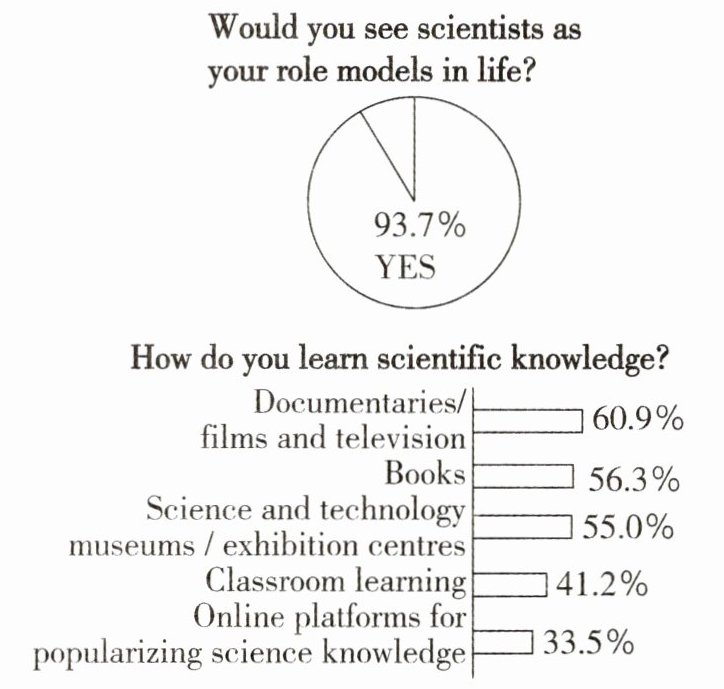
On June 2, 2022, China Youth Daily showed results from a survey on what young Chinese people think of science and scientific spirit. The graphs(图表) on the following reflect the opinions of 1,560 people aged 14-35.
根据短文内容,回答下列问题。(每题答案不超过8个词)
1. What examples are used to show “Science is everywhere.”?
2. According to the passage, how can we make young students interested in learning science?
3. What is the best subtitle(小标题) for the blank?
4. What is the most used way that young Chinese people learn knowledge according to the graphs?
5. Do you see scientists as your role models? Why or why not?
多模态语篇(2024·大同一模)Science is everywhere. The school bus is a product of many areas of science and technology, including engineering and creativity. And the smartphone in the student's hand is a magic of modern computer engineering.
Ⅰ. The importance of science in education
Many educators believe science education should begin much earlier. Kids usually form a basic opinion about the science shortly after beginning school. Showing young students interesting materials and experiences will drive them to learn and use science in life.
Science education is one of the most important subjects in school because it can improve students' problem-solving and critical(批判的)thinking skills. These are lifelong skills that allow students to produce ideas and make decisions intelligently. Teaching technology, critical thinking, and problem-solving through science education give students the knowledge they need to get great achievements when they grow up.
Ⅱ.
Science in different fields/The introduction of science in some common fields
How much do you know about science? Biology, chemistry, archaeology ... They are all quite different. Here is the basic introduction of some common fields.
●Chemistry is about the smallest things that other bigger things are made of, and what happens when they change. For example, the cheese you put on top of your tomato sauce is itself made out of a chemical change from milk.
●Climatology is the study of the climate. The climate doesn't always stay the same. It changes slowly over hundreds or even thousands of years. But today's climate is changing very quickly. The Earth's temperature is getting warmer faster than ever before.
●Biology is about all the things in our world that are alive plants, animals, as well as very small living things that we cannot see. Biology tries to explain why life is like it is.
Ⅲ. Young people's opinions to science and scientific spirit
On June 2, 2022, China Youth Daily showed results from a survey on what young Chinese people think of science and scientific spirit. The graphs(图表) on the following reflect the opinions of 1,560 people aged 14-35.
根据短文内容,回答下列问题。(每题答案不超过8个词)
1. What examples are used to show “Science is everywhere.”?
The school bus and the smartphone.
2. According to the passage, how can we make young students interested in learning science?
By showing them interesting materials and experiences.
3. What is the best subtitle(小标题) for the blank?
4. What is the most used way that young Chinese people learn knowledge according to the graphs?
Documentaries or films and television.
5. Do you see scientists as your role models? Why or why not?
Yes. Because they make the world better.
答案
1. The school bus and the smartphone.
2. By showing them interesting materials and experiences.
3. Science in different fields/The introduction of science in some common fields
4. Documentaries or films and television.
5. Yes. Because they make the world better.
2. By showing them interesting materials and experiences.
3. Science in different fields/The introduction of science in some common fields
4. Documentaries or films and television.
5. Yes. Because they make the world better.
解析
【分析】
本题是多模态英语阅读理解题,包含文字材料与图表信息。解题思路为:1. 针对细节题,先定位原文对应内容,提取关键信息作答;2. 针对小标题题,需结合段落核心内容概括;3. 针对图表题,准确读取图表中的最高占比数据;4. 最后一题结合文意合理作答,注意答案字数限制。
【解析】
1. 问题1:定位原文第一段,找到“Science is everywhere.”后的例子为校车和智能手机,提取对应内容。
2. 问题2:定位Ⅰ部分最后一句,找到让学生对科学感兴趣的方法是展示有趣的材料和体验,直接提取。
3. 问题3:Ⅱ部分围绕不同科学领域的介绍展开,结合段落核心概括小标题。
4. 问题4:读取第二个图表,找到占比最高的学习方式是纪录片/电影和电视。
5. 问题5:结合文意,给出符合逻辑的开放回答,注意字数要求。
【答案】
1. The school bus and the smartphone.
2. By showing them interesting materials and experiences.
3. Science in different fields/The introduction of science in some common fields
4. Documentaries or films and television.
5. Yes. Because they make the world better.
【知识点】
英语阅读理解;多模态语篇阅读;图表信息提取
【点评】
本题结合文字与图表的多模态语篇,考查学生信息定位、概括及提取能力,需仔细阅读原文和图表,准确对应问题,开放题需结合文意合理作答。
【难度系数】
0.6
本题是多模态英语阅读理解题,包含文字材料与图表信息。解题思路为:1. 针对细节题,先定位原文对应内容,提取关键信息作答;2. 针对小标题题,需结合段落核心内容概括;3. 针对图表题,准确读取图表中的最高占比数据;4. 最后一题结合文意合理作答,注意答案字数限制。
【解析】
1. 问题1:定位原文第一段,找到“Science is everywhere.”后的例子为校车和智能手机,提取对应内容。
2. 问题2:定位Ⅰ部分最后一句,找到让学生对科学感兴趣的方法是展示有趣的材料和体验,直接提取。
3. 问题3:Ⅱ部分围绕不同科学领域的介绍展开,结合段落核心概括小标题。
4. 问题4:读取第二个图表,找到占比最高的学习方式是纪录片/电影和电视。
5. 问题5:结合文意,给出符合逻辑的开放回答,注意字数要求。
【答案】
1. The school bus and the smartphone.
2. By showing them interesting materials and experiences.
3. Science in different fields/The introduction of science in some common fields
4. Documentaries or films and television.
5. Yes. Because they make the world better.
【知识点】
英语阅读理解;多模态语篇阅读;图表信息提取
【点评】
本题结合文字与图表的多模态语篇,考查学生信息定位、概括及提取能力,需仔细阅读原文和图表,准确对应问题,开放题需结合文意合理作答。
【难度系数】
0.6
