

 登录
登录
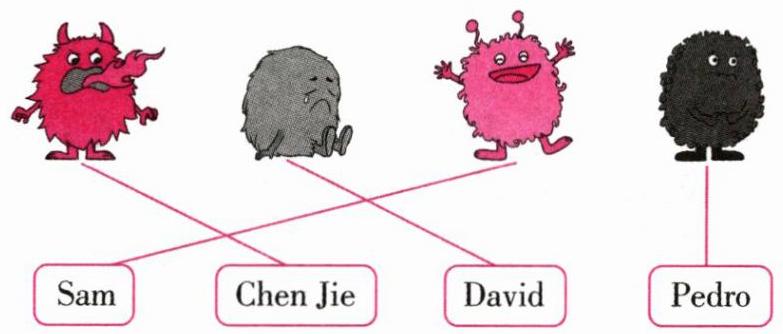
Ⅰ 听录音,根据你所听到的内容连线。
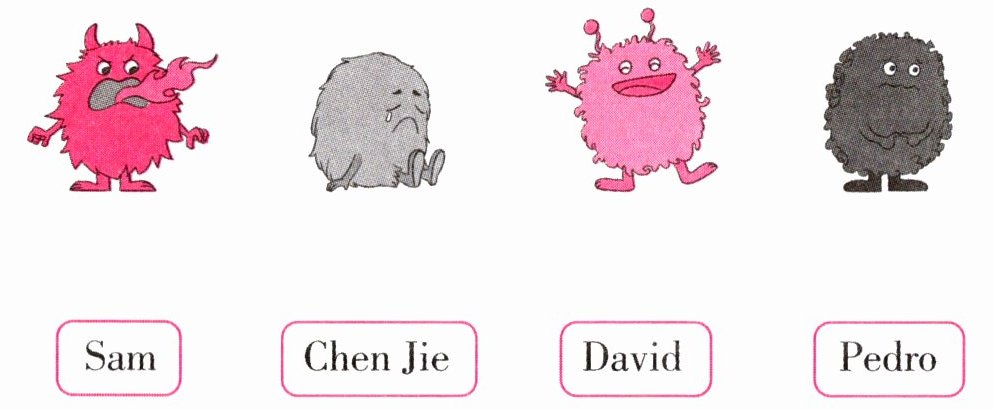
答案
Ⅱ. 听录音,判断下列句子与你所听到的内容是否相符。相符的写“T”,不相符的写“F”。
(
(
(
(
(
(
F
) 1. John feels happy.(
F
) 2. John is good at Chinese.(
T
) 3. Zhang Peng can help John learn Chinese.(
T
) 4. John can ask his Chinese teacher for help.(
F
) 5. Watching Chinese cartoons can help John learn Chinese well.答案
1.F 2.F 3.T 4.T 5.F
Ⅲ. 从方框中选择合适的单词补全短文,每个单词仅用一次。
sad clever angry excited worried
Mike has a pet dog. Its name is Fido. It is
Fido is
sad clever angry excited worried
Mike has a pet dog. Its name is Fido. It is
clever
.Fido is
excited
when Mike is back home from school. It runs to the door and wags its tail(摇尾巴). When Fido does the wrong thing, Mike is angry
. When Fido is not feeling well, Mike is worried
. When Mike is sad
, Fido always makes him happy again.答案
1.clever 2.excited 3.angry 4.worried 5.sad
解析
【分析】
先明确方框内单词的词义:sad(难过的)、clever(聪明的)、angry(生气的)、excited(兴奋的)、worried(担心的)。解题时需结合每个空的上下文语境,匹配对应情绪或属性的单词,且每个单词仅用一次:第一个空描述宠物狗的特质,选clever;第二个空对应Mike回家时狗的兴奋反应,选excited;第三个空对应狗做错事时Mike的生气情绪,选angry;第四个空对应狗不舒服时Mike的担心情绪,选worried;第五个空对应Mike难过时需要被安抚的语境,选sad。
【解析】
1. 第一个空:句子介绍宠物狗的属性,clever(聪明的)符合描述狗特质的语境,故填clever;
2. 第二个空:Mike放学回家,狗摇尾巴跑向门口,表现出兴奋的状态,excited符合语境,故填excited;
3. 第三个空:狗做错事时,Mike会产生生气的情绪,angry符合语境,故填angry;
4. 第四个空:狗身体不舒服时,Mike会感到担心,worried符合语境,故填worried;
5. 第五个空:Mike处于难过情绪时,狗会让他开心,sad符合语境,故填sad。
【答案】
1.clever 2.excited 3.angry 4.worried 5.sad
【知识点】
形容词词义辨析;选词填空
【点评】
本题考查形容词词义理解与语境运用,属于基础题型,需结合上下文匹配合适的形容词,注意每个单词仅用一次即可。
【难度系数】
0.6
先明确方框内单词的词义:sad(难过的)、clever(聪明的)、angry(生气的)、excited(兴奋的)、worried(担心的)。解题时需结合每个空的上下文语境,匹配对应情绪或属性的单词,且每个单词仅用一次:第一个空描述宠物狗的特质,选clever;第二个空对应Mike回家时狗的兴奋反应,选excited;第三个空对应狗做错事时Mike的生气情绪,选angry;第四个空对应狗不舒服时Mike的担心情绪,选worried;第五个空对应Mike难过时需要被安抚的语境,选sad。
【解析】
1. 第一个空:句子介绍宠物狗的属性,clever(聪明的)符合描述狗特质的语境,故填clever;
2. 第二个空:Mike放学回家,狗摇尾巴跑向门口,表现出兴奋的状态,excited符合语境,故填excited;
3. 第三个空:狗做错事时,Mike会产生生气的情绪,angry符合语境,故填angry;
4. 第四个空:狗身体不舒服时,Mike会感到担心,worried符合语境,故填worried;
5. 第五个空:Mike处于难过情绪时,狗会让他开心,sad符合语境,故填sad。
【答案】
1.clever 2.excited 3.angry 4.worried 5.sad
【知识点】
形容词词义辨析;选词填空
【点评】
本题考查形容词词义理解与语境运用,属于基础题型,需结合上下文匹配合适的形容词,注意每个单词仅用一次即可。
【难度系数】
0.6
Ⅳ. 将下列句子按正确顺序排列,组成一段完整的对话。
(首句已给出)
(
( 1 )Hi, Amy. You look sad. What's the matter?
(
(
(
(
(首句已给出)
(
3
)I see. So you don't agree with each other.( 1 )Hi, Amy. You look sad. What's the matter?
(
2
)I want to go to the library, but Tom wants to go to the cinema.(
6
)That's a good idea!(
5
)Why not do both? I can help. We can work together.(
4
)That's right. And we need to finish our project by Friday. I'm so worried!答案
3 1 2 6 5 4
解析
【分析】首先,首句已给出为(1),是问候并询问对方难过的原因,需先找到回答该问题的句子,即“I want to go to the library, but Tom wants to go to the cinema.”,确定其为第2句;接着,对方听到情况后会表达理解,对应句子“I see. So you don't agree with each other.”为第3句;随后,说话人补充自己的担忧,对应句子“That's right. And we need to finish our project by Friday. I'm so worried!”为第4句;之后,对方提出解决建议,对应句子“Why not do both? I can help. We can work together.”为第5句;最后,说话人对建议表示赞同,对应句子“That's a good idea!”为第6句,因此括号内依次填3、1、2、6、5、4。
【解析】1. 首句(1)为问候并询问原因,需找回答问题的句子:“I want to go to the library, but Tom wants to go to the cinema.”是对问题的回应,故为第2句;2. 对方理解情况后会表达看法:“I see. So you don't agree with each other.”为第3句;3. 说话人补充担忧:“That's right. And we need to finish our project by Friday. I'm so worried!”为第4句;4. 对方提出建议:“Why not do both? I can help. We can work together.”为第5句;5. 说话人赞同建议:“That's a good idea!”为第6句。因此括号内依次填写3、1、2、6、5、4。
【答案】3 1 2 6 5 4
【知识点】英语对话排序、日常交际用语
【点评】本题考查英语日常对话的逻辑排序,需结合语境梳理对话的连贯性,难度适中,适合学生巩固日常交际用语的运用。
【难度系数】0.5
【解析】1. 首句(1)为问候并询问原因,需找回答问题的句子:“I want to go to the library, but Tom wants to go to the cinema.”是对问题的回应,故为第2句;2. 对方理解情况后会表达看法:“I see. So you don't agree with each other.”为第3句;3. 说话人补充担忧:“That's right. And we need to finish our project by Friday. I'm so worried!”为第4句;4. 对方提出建议:“Why not do both? I can help. We can work together.”为第5句;5. 说话人赞同建议:“That's a good idea!”为第6句。因此括号内依次填写3、1、2、6、5、4。
【答案】3 1 2 6 5 4
【知识点】英语对话排序、日常交际用语
【点评】本题考查英语日常对话的逻辑排序,需结合语境梳理对话的连贯性,难度适中,适合学生巩固日常交际用语的运用。
【难度系数】0.5
