

 登录
登录
A(2024·南通市通州区期末)
Do you know a “shore keeper(海岸卫士)”?In fact,it’s not a job for people like zookeepers. It is a job for a special kind of forest—mangrove forest. In China,we call it *hongshulin* or “red forest”. Let’s go into a mangrove forest to have a look.
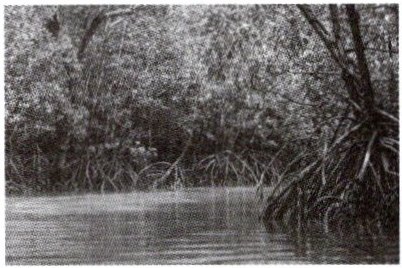
Mangrove trees grow near the sea. They keep the land from the sea. This way,they protect the land from strong winds and waves. The trees stand in a tidy team,with shorter ones standing at the front and taller ones at the back. When typhoons(台风) come,they protect the towns nearby.
Like other trees,mangrove trees take in CO₂ to make oxygen. They are helping to keep the air clean and slow down weather change on the earth. Mangrove trees can grow up to 10 metres. Many wild birds live here. Many birds stop by for food during their trip.
Are the trees red?No,mangrove trees don’t have red leaves or flowers. They are green. But they have special bark(树皮). Their bark can be used to make red dyes(染料). The bark gets air through small holes. The holes can close during high tides(满潮). This way,the trees won’t die.
Some parts of the roots(根) grow out of the water. They need more oxygen to live. They are also home to snakes and lizards. The roots grow in salty water. They are not easy to get through. They make great homes for baby sea animals,like baby lobsters,baby turtles and baby fish. They can keep away from big animals.
(
A. How mangrove trees help the earth.
B. Where mangrove trees always grow.
C. What mangrove trees do during high tides.
D. How mangrove forests make the air fresh.
(
a. It protects us from bad weather. b. It gives out oxygen.
c. It gives food to migratory birds. d. It builds more houses.
A. abc B. abd C. acd D. bcd
(
A. Because the trees have red leaves and flowers.
B. Because the trees live freely along the Red Sea.
C. Because red dyes can be made from the bark of the trees.
D. Because the trees’ roots are red when they meet the water.
(
A. They only get air through roots and can keep the air clean.
B. They are one of the oldest trees and can grow up to 10 metres.
C. They may die during high tides because there are many large holes.
D. They grow in salty water and are home to some baby sea animals.
Do you know a “shore keeper(海岸卫士)”?In fact,it’s not a job for people like zookeepers. It is a job for a special kind of forest—mangrove forest. In China,we call it *hongshulin* or “red forest”. Let’s go into a mangrove forest to have a look.
Mangrove trees grow near the sea. They keep the land from the sea. This way,they protect the land from strong winds and waves. The trees stand in a tidy team,with shorter ones standing at the front and taller ones at the back. When typhoons(台风) come,they protect the towns nearby.
Like other trees,mangrove trees take in CO₂ to make oxygen. They are helping to keep the air clean and slow down weather change on the earth. Mangrove trees can grow up to 10 metres. Many wild birds live here. Many birds stop by for food during their trip.
Are the trees red?No,mangrove trees don’t have red leaves or flowers. They are green. But they have special bark(树皮). Their bark can be used to make red dyes(染料). The bark gets air through small holes. The holes can close during high tides(满潮). This way,the trees won’t die.
Some parts of the roots(根) grow out of the water. They need more oxygen to live. They are also home to snakes and lizards. The roots grow in salty water. They are not easy to get through. They make great homes for baby sea animals,like baby lobsters,baby turtles and baby fish. They can keep away from big animals.
(
A
)1. What does the third paragraph tell us?A. How mangrove trees help the earth.
B. Where mangrove trees always grow.
C. What mangrove trees do during high tides.
D. How mangrove forests make the air fresh.
(
A
)2. 新考法 组合选择 How does the mangrove forest help us?a. It protects us from bad weather. b. It gives out oxygen.
c. It gives food to migratory birds. d. It builds more houses.
A. abc B. abd C. acd D. bcd
(
C
)3. Why is the mangrove forest called “red forest”?A. Because the trees have red leaves and flowers.
B. Because the trees live freely along the Red Sea.
C. Because red dyes can be made from the bark of the trees.
D. Because the trees’ roots are red when they meet the water.
(
D
)4. What do we know about mangrove trees?A. They only get air through roots and can keep the air clean.
B. They are one of the oldest trees and can grow up to 10 metres.
C. They may die during high tides because there are many large holes.
D. They grow in salty water and are home to some baby sea animals.
答案
1. A 【解析】根据第三段内容可知,红树林吸收二氧化碳来制造氧气,保持空气清新,减缓气候变化,是许多野生鸟类的栖息地,也为许多候鸟提供食物,由此可知,第三段主要讲述红树林是如何帮助地球的。
2. A 【解析】根据第二段内容可知,红树林保护我们免受恶劣天气的影响(a),根据第三段内容可知,红树林释放氧气(b),给候鸟提供食物(c)。
3. C 4. D
2. A 【解析】根据第二段内容可知,红树林保护我们免受恶劣天气的影响(a),根据第三段内容可知,红树林释放氧气(b),给候鸟提供食物(c)。
3. C 4. D
解析
【分析】
1. 第1题:解题时先定位到第三段,梳理段落内容:红树林吸收二氧化碳制造氧气、净化空气、减缓气候变化,还是野生鸟类栖息地,为候鸟提供食物。总结这些内容的核心是红树林对地球的帮助,再对比选项选出符合主旨的答案。
2. 第2题:这是组合选择题,需要逐个核对选项中的四个点:a项对应第二段中红树林抵御大风、海浪、台风,保护城镇;b项对应第三段吸收二氧化碳制造氧气;c项对应第三段候鸟在此觅食;d项文中未提及红树林建造房屋,据此排除错误选项,确定正确组合。
3. 第3题:要找“red forest”的命名原因,定位到第四段,文中明确说明红树林的叶子和花不是红色,但树皮可制作红色染料,由此确定答案。
4. 第4题:需要逐个分析选项,结合原文细节判断对错:A选项“仅通过根获取空气”错误,文中提到树皮通过小孔获取空气;B选项“最古老的树”文中未提及;C选项“满潮会死亡”错误,文中说小孔会关闭,树木不会死亡;D选项符合最后段中红树林生长在咸水,是幼海生物栖息地的内容。
【解析】
1. 第1题:根据第三段内容,红树林吸收二氧化碳制造氧气、净化空气、减缓气候变化,同时为野生鸟类和候鸟提供栖息与觅食场所,这些内容都围绕红树林对地球的帮助展开,所以选A。
2. 第2题:根据第二段“they protect the land from strong winds and waves...When typhoons come,they protect the towns nearby”可知a项正确;根据第三段“mangrove trees take in CO₂ to make oxygen”可知b项正确;根据第三段“Many birds stop by for food during their trip”可知c项正确;文中未提及红树林能建造房屋,d项错误,所以正确组合是abc,选A。
3. 第3题:根据第四段“But they have special bark(树皮). Their bark can be used to make red dyes(染料)”可知,红树林的树皮可制作红色染料,因此被称为“red forest”,选C。
4. 第4题:A选项:文中提到树皮通过小孔获取空气,并非仅通过根,错误;B选项:文中未提及红树林是最古老的树,错误;C选项:文中说明满潮时树皮的小孔会关闭,树木不会死亡,错误;D选项:根据最后一段“The roots grow in salty water...They make great homes for baby sea animals”可知该选项正确,选D。
【答案】
1. A
2. A
3. C
4. D
【知识点】
阅读理解主旨归纳、细节信息查找、推理判断
【点评】
本文围绕“海岸卫士”红树林展开介绍,考查学生的主旨概括能力与细节信息查找能力,其中第2题的组合选择是新考法,需要学生逐一核对信息,排除干扰项,有助于提升学生的信息筛选与整合能力。
【难度系数】
0.6
1. 第1题:解题时先定位到第三段,梳理段落内容:红树林吸收二氧化碳制造氧气、净化空气、减缓气候变化,还是野生鸟类栖息地,为候鸟提供食物。总结这些内容的核心是红树林对地球的帮助,再对比选项选出符合主旨的答案。
2. 第2题:这是组合选择题,需要逐个核对选项中的四个点:a项对应第二段中红树林抵御大风、海浪、台风,保护城镇;b项对应第三段吸收二氧化碳制造氧气;c项对应第三段候鸟在此觅食;d项文中未提及红树林建造房屋,据此排除错误选项,确定正确组合。
3. 第3题:要找“red forest”的命名原因,定位到第四段,文中明确说明红树林的叶子和花不是红色,但树皮可制作红色染料,由此确定答案。
4. 第4题:需要逐个分析选项,结合原文细节判断对错:A选项“仅通过根获取空气”错误,文中提到树皮通过小孔获取空气;B选项“最古老的树”文中未提及;C选项“满潮会死亡”错误,文中说小孔会关闭,树木不会死亡;D选项符合最后段中红树林生长在咸水,是幼海生物栖息地的内容。
【解析】
1. 第1题:根据第三段内容,红树林吸收二氧化碳制造氧气、净化空气、减缓气候变化,同时为野生鸟类和候鸟提供栖息与觅食场所,这些内容都围绕红树林对地球的帮助展开,所以选A。
2. 第2题:根据第二段“they protect the land from strong winds and waves...When typhoons come,they protect the towns nearby”可知a项正确;根据第三段“mangrove trees take in CO₂ to make oxygen”可知b项正确;根据第三段“Many birds stop by for food during their trip”可知c项正确;文中未提及红树林能建造房屋,d项错误,所以正确组合是abc,选A。
3. 第3题:根据第四段“But they have special bark(树皮). Their bark can be used to make red dyes(染料)”可知,红树林的树皮可制作红色染料,因此被称为“red forest”,选C。
4. 第4题:A选项:文中提到树皮通过小孔获取空气,并非仅通过根,错误;B选项:文中未提及红树林是最古老的树,错误;C选项:文中说明满潮时树皮的小孔会关闭,树木不会死亡,错误;D选项:根据最后一段“The roots grow in salty water...They make great homes for baby sea animals”可知该选项正确,选D。
【答案】
1. A
2. A
3. C
4. D
【知识点】
阅读理解主旨归纳、细节信息查找、推理判断
【点评】
本文围绕“海岸卫士”红树林展开介绍,考查学生的主旨概括能力与细节信息查找能力,其中第2题的组合选择是新考法,需要学生逐一核对信息,排除干扰项,有助于提升学生的信息筛选与整合能力。
【难度系数】
0.6
