

 登录
用方框中所给单词的适当形式补全短文
(有两词多余)
新风向·语篇串考课本新词
stop, avoid, wait, noise, make, follow, behave, respect, quiet, passenger, passport, opposite
Yesterday, I went to the airport. There were many passengers 1.
Later, I noticed another 4.
his ticket. He was very worried. Luckily the staff helped him find it. They told him to keep important things safe to 5.
Finally, when it was time to get on the plane, everyone showed their 9.
(有两词多余)
新风向·语篇串考课本新词
stop, avoid, wait, noise, make, follow, behave, respect, quiet, passenger, passport, opposite
Yesterday, I went to the airport. There were many passengers 1.
waiting
for their planes. A man wanted to cut in line instead of waiting for his turn. A guard 2. stopped
him and said, “Please follow the rules and wait in line.” The man looked embarrassed but agreed 3. to follow
the rules.Later, I noticed another 4.
passenger
who losthis ticket. He was very worried. Luckily the staff helped him find it. They told him to keep important things safe to 5.
avoid
problems. At the boarding gate, a child was running around and making a lot of 6. noise
. His parents told him to calm down and that it's important to be 7. quiet
in public places. He should watch his 8. behavior/behaviour
.Finally, when it was time to get on the plane, everyone showed their 9.
passport(s)
. This experience taught me that in public places, it's important to behave well and 10. respect
others. At the same time, we should always be careful.答案
1. waiting 2. stopped 3. to follow 4. passenger
5. avoid 6. noise 7. quiet 8. behavior/behaviour
9. passport(s) 10. respect
5. avoid 6. noise 7. quiet 8. behavior/behaviour
9. passport(s) 10. respect
解析
【分析】
本题为语篇型词汇运用题,需结合短文语境、句子结构、语法规则及固定搭配,从方框所给单词中选择合适的词并调整为适当形式补全短文,同时排除多余单词。解题时先通读全文把握机场场景的语境,再逐句分析每个空格的语法成分(如时态、词性、非谓语形式等),结合词义匹配单词,最后验证逻辑通顺。
【解析】
1. 句意为“有许多乘客在等他们的飞机”,there be句型后接动词现在分词表伴随,passengers与wait为主动关系,故填waiting;
2. 全文为一般过去时,guard的动作是“拦住”插队的人,stop的过去式为stopped,故填stopped;
3. 固定搭配agree to do sth(同意做某事),此处表示同意遵守规则,故填to follow;
4. another后接可数名词单数,结合语境指“另一位乘客”,故填passenger;
5. 不定式表目的,句意为“告诉他保管好重要物品以避免问题”,avoid符合词义,故填avoid;
6. 固定搭配make noise(制造噪音),a lot of后接名词,故填noise;
7. be动词后接形容词,句意为“在公共场所保持安静很重要”,quiet符合,故填quiet;
8. 固定搭配watch one's behavior(注意某人的行为),此处需名词,behavior(或英式拼写behaviour)符合,故填behavior/behaviour;
9. 登机时需要的证件,passport(护照),单复数均可,故填passport(s);
10. 与behave并列,需动词原形,句意为“尊重他人”,respect符合,故填respect;
【答案】
1. waiting 2. stopped 3. to follow 4. passenger 5. avoid 6. noise 7. quiet 8. behavior/behaviour 9. passport(s) 10. respect
【知识点】
非谓语动词、固定搭配、词形变化
【点评】
本题以机场场景为载体,考查词汇在语篇中的适当形式运用,涵盖非谓语、时态、固定搭配等基础知识点,注重语境理解,是初中英语常见的词汇运用题型,难度适中。
【难度系数】
0.5
阅读理解 数据共享 素养:思维品质 难度:难 用时:8分钟
新素材 多模态语篇·海报 [2025无锡滨湖区一模]
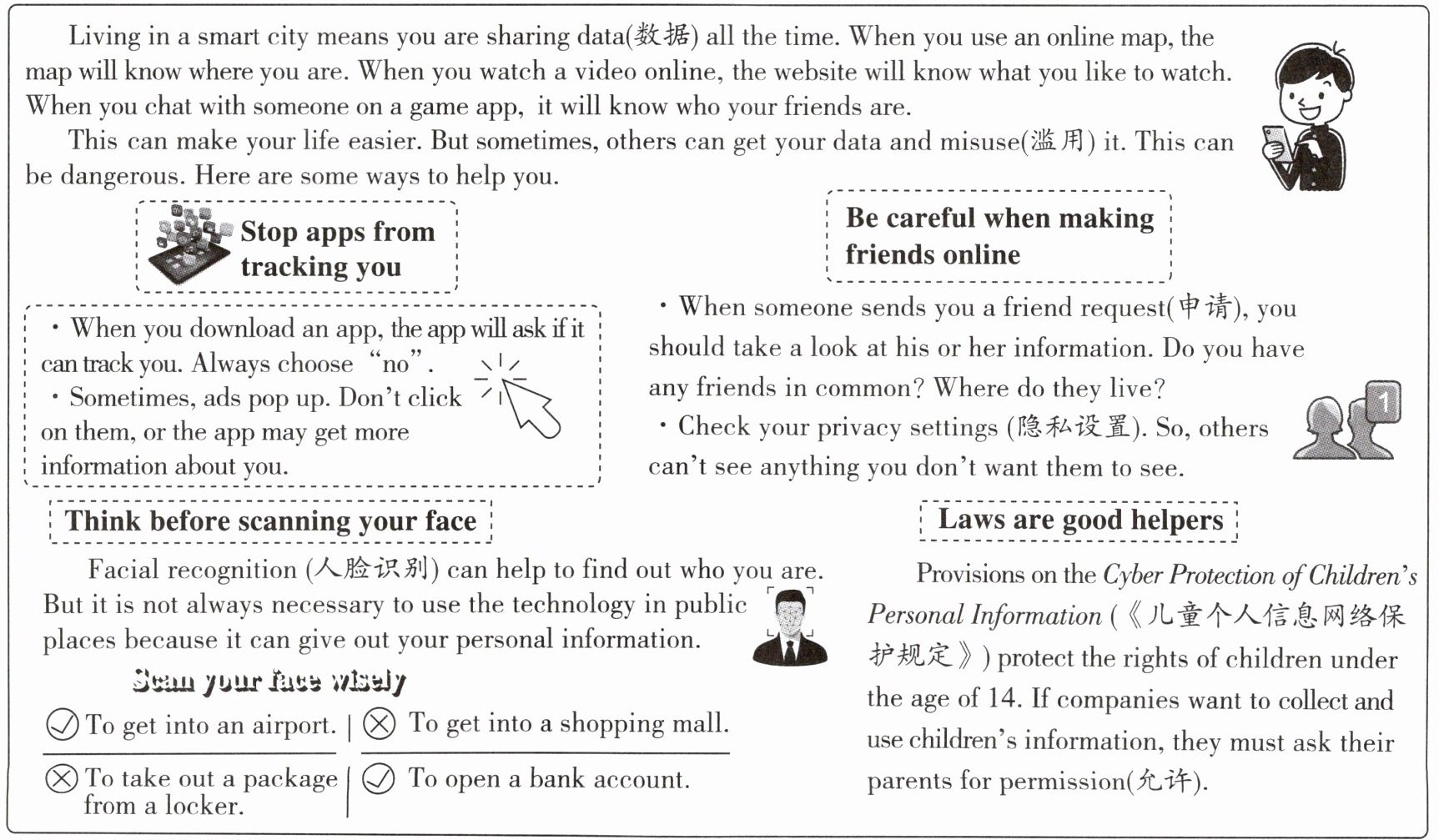
1. Which part of a newspaper is the passage most probably taken from?
A. SMART CITY.
B. MAGIC WORLD.
C. CHILDREN'S LAWS.
D. SCHOOL TIME.
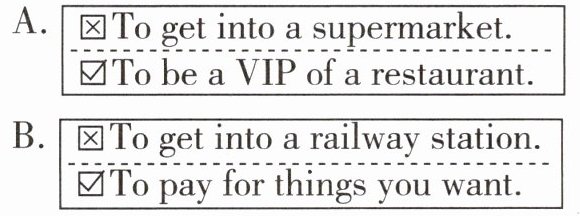
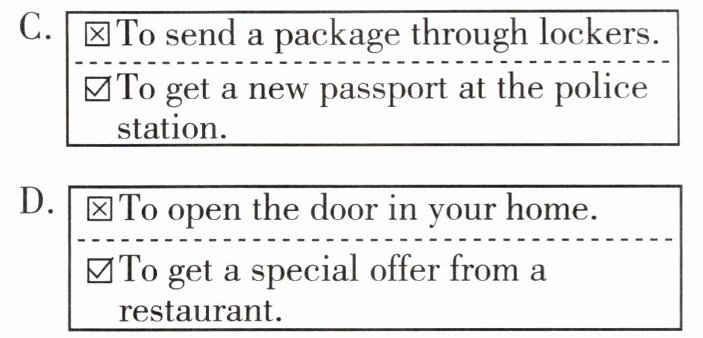
2. 新考法·迁移运用题 Which of the following shows the wise use of facial recognition?
3. What is the passage mainly about?
A. How to use facial recognition correctly.
B. The risks of using smart city technology.
C. Ways to protect personal data in smart cities.
D. Suggestions on making friends in online games.
新素材 多模态语篇·海报 [2025无锡滨湖区一模]
1. Which part of a newspaper is the passage most probably taken from?
A. SMART CITY.
B. MAGIC WORLD.
C. CHILDREN'S LAWS.
D. SCHOOL TIME.
2. 新考法·迁移运用题 Which of the following shows the wise use of facial recognition?
3. What is the passage mainly about?
A. How to use facial recognition correctly.
B. The risks of using smart city technology.
C. Ways to protect personal data in smart cities.
D. Suggestions on making friends in online games.
答案
【解题导语】 本文主要讲述了智能城市中数据共享带来的问题以及一些应对措施。
1. A 文章出处题。根据“Living in a smart city means you are sharing data(数据) all the time”并通读全文可知,本文主要讲述了智能城市中数据共享所带来的问题,所以,文章可能摘自智能城市版块。故选A。
2. C 推理判断题。根据“Think before scanning your face”部分中的“But it is not always necessary”以及“Scan your face wisely”下面所给的例子可知,A项中的“To be a VIP of a restaurant”不适合使用人脸识别;B项中的“To get into a railway station”可以使用;D项中的“To get a special offer from a restaurant”不适合使用。故选C。
3. C 主旨大意题。通读全文可知,本文主要讲述了智能城市中数据共享带来的问题以及一些应对措施,C项符合文章大意。
解析
【分析】
本题为多模态语篇阅读理解,共3道题。第1题是文章出处题,需结合全文主题判断报纸版块;第2题是迁移运用的推理判断题,需根据文本提示判断人脸识别的合理使用场景;第3题是主旨大意题,需通读全文归纳核心内容。解题时需紧扣文本细节,结合主题逻辑分析。
【解析】
1. 文章出处题:根据文中“Living in a smart city means you are sharing data all the time”及全文围绕智能城市数据共享展开的内容,可知本文最可能出自报纸的SMART CITY版块,故选A。
2. 推理判断题:根据文中“Think before scanning your face”部分的“But it is not always necessary”及“Scan your face wisely”的提示,A项(成为餐厅VIP)、D项(获取餐厅优惠)无需人脸识别,B项(进入火车站)是必要场景,C项符合明智使用要求,故选C。
3. 主旨大意题:通读全文,本文主要讲述智能城市中数据共享带来的问题及应对措施,C项契合文章大意,故选C。
【答案】
1.A 2.C 3.C
【知识点】
阅读理解(文章出处、推理判断、主旨大意)
【点评】
本题结合智能城市数据共享的热点主题,考查多模态语篇的阅读理解能力,涵盖文章出处判断、迁移推理、主旨归纳等考点,需学生结合文本细节与主题逻辑解题,难度适中偏难。
【难度系数】
0.5
