

 登录
登录
Ⅳ. 句子翻译
1. 一些海龟可以活到八十岁甚至更久。
2. 然而,现在它们中的许多都面临着夭折的风险。
3. 它们经常被深海中危险的塑料垃圾所伤害。
4. 在任何地方,向海洋倾倒垃圾都应该是违法的。
5. 我们必须阻止人们污染海洋,以挽救这些生命。
1. 一些海龟可以活到八十岁甚至更久。
Some sea turtles can live up to eighty years or even much longer.
2. 然而,现在它们中的许多都面临着夭折的风险。
However, many of them are at risk of dying young now.
3. 它们经常被深海中危险的塑料垃圾所伤害。
They often get hurt by dangerous plastic waste in the deep sea.
4. 在任何地方,向海洋倾倒垃圾都应该是违法的。
Throwing trash into the ocean should be against the law everywhere.
5. 我们必须阻止人们污染海洋,以挽救这些生命。
We must stop people from polluting the sea to save these lives.
答案
1. Some sea turtles can live up to eighty years or even much longer.
2. However, many of them are at risk of dying young now.
3. They often get hurt by dangerous plastic waste in the deep sea.
4. Throwing trash into the ocean should be against the law everywhere.
5. We must stop people from polluting the sea to save these lives.
2. However, many of them are at risk of dying young now.
3. They often get hurt by dangerous plastic waste in the deep sea.
4. Throwing trash into the ocean should be against the law everywhere.
5. We must stop people from polluting the sea to save these lives.
解析
【分析】本题为汉译英题型,需准确匹配中文句子的语义,运用常用英语词汇、短语及符合英语表达习惯的句式进行翻译。逐句拆解思路:1. 确定主语“一些海龟”对应Some sea turtles,“活到”用live up to,“八十岁”为eighty years,“甚至更久”用or even much longer;2. 转折词“然而”对应However,“面临夭折的风险”用固定短语be at risk of dying young;3. “被...伤害”用get hurt by,“深海中危险的塑料垃圾”对应dangerous plastic waste in the deep sea;4. “向海洋倾倒垃圾”作主语用动名词短语Throwing trash into the ocean,“违法的”为against the law;5. “阻止某人做某事”用固定搭配stop sb. from doing sth.,“挽救这些生命”对应to save these lives。
【解析】1. Some sea turtles can live up to eighty years or even much longer.
2. However, many of them are at risk of dying young now.
3. They often get hurt by dangerous plastic waste in the deep sea.
4. Throwing trash into the ocean should be against the law everywhere.
5. We must stop people from polluting the sea to save these lives.
【答案】1. Some sea turtles can live up to eighty years or even much longer.
2. However, many of them are at risk of dying young now.
3. They often get hurt by dangerous plastic waste in the deep sea.
4. Throwing trash into the ocean should be against the law everywhere.
5. We must stop people from polluting the sea to save these lives.
【知识点】汉译英、常用英语短语运用
【点评】本题为基础汉译英练习题,围绕海洋保护话题展开,考查核心词汇及常用固定短语的运用,难度适中,适合巩固基础翻译能力。
【难度系数】0.7
【解析】1. Some sea turtles can live up to eighty years or even much longer.
2. However, many of them are at risk of dying young now.
3. They often get hurt by dangerous plastic waste in the deep sea.
4. Throwing trash into the ocean should be against the law everywhere.
5. We must stop people from polluting the sea to save these lives.
【答案】1. Some sea turtles can live up to eighty years or even much longer.
2. However, many of them are at risk of dying young now.
3. They often get hurt by dangerous plastic waste in the deep sea.
4. Throwing trash into the ocean should be against the law everywhere.
5. We must stop people from polluting the sea to save these lives.
【知识点】汉译英、常用英语短语运用
【点评】本题为基础汉译英练习题,围绕海洋保护话题展开,考查核心词汇及常用固定短语的运用,难度适中,适合巩固基础翻译能力。
【难度系数】0.7
Ⅴ. 阅读理解
Have you noticed that people speak differently to babies compared to adults? Carers, especially mothers, change their speech when talking to young children. How? Their speech includes higher pitches(音高) and a wider pitch range(范围). They use shorter sentences and repeat words more often. You can think of it as baby talk. Researchers have recently discovered that dolphins also use baby talk with their babies.
The research team recorded sounds of 19 mother dolphins living in the Sarasota Bay area. The sounds of the same female dolphins were compared when they were with and without their babies. Chart 1 shows the sound of a female dolphin without her baby. The researchers found that when dolphins were with their babies, dolphin mothers had a wider range of frequencies(频率) of the sound—the maximum(最高) frequencies were higher and the lowest frequencies were lower.
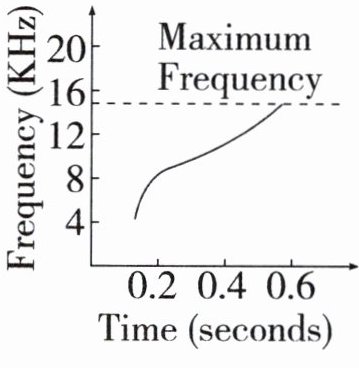
Chart 1
The findings mirror the way that humans change the speech when speaking to babies. Dolphin “baby talk” may have a similar purpose to human “baby talk”: It may help babies learn how to phonate. We humans don't only “baby talk” with little babies, but with the children who are still learning to speak. As a result, our children are able to talk. That's exactly what happens to dolphins. The changes in speech don't just happen when dolphin mothers stay with very young babies, but also between mothers and babies that are closer to “toddler(蹒跚学步的孩子)” age. Another possible reason for using specific pitches is to catch the children's attention. It's really important for a young dolphin to know “Oh, Mum is talking to me now.”
The research about baby talk in dolphins reminds us how important it is in humans. Whenever we speak with a young child, how we say things could be as important as what we say.
1. What's one of the features of baby talk according to the first paragraph?
A. Lower pitches.
B. Longer sentences.
C. A smaller pitch range.
D. More same words.
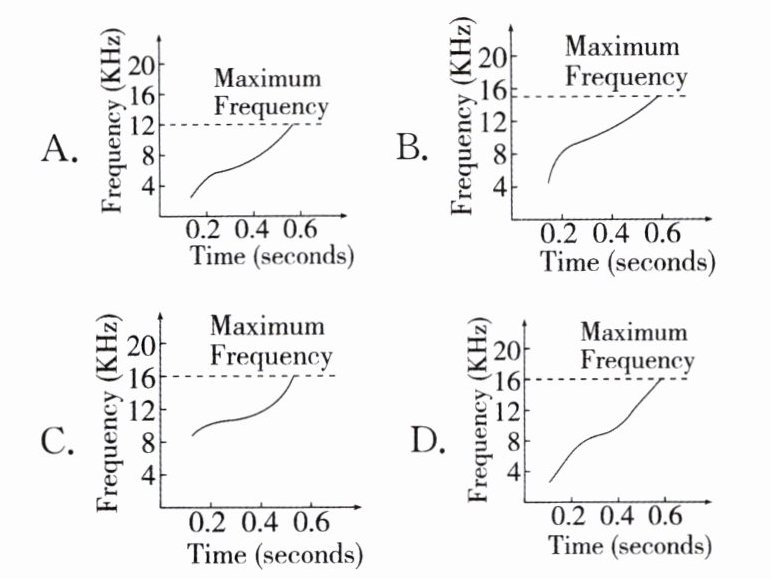
2. 新考法 图示理解 Which chart shows the sound that dolphin mothers make when with babies?
3. What does the underlined word “phonate” mean in Paragraph 3?
A. Produce the sound.
B. Understand baby talk.
C. Change the speech.
D. Catch people's attention.
4. 语言能力 推断能力 Why does the writer write this passage?
A. To help people understand the sounds made by dolphins.
B. To ask people to build a good relationship with dolphins.
C. To remind people to communicate with children more often.
D. To let people be careful with the way of talking with children.
Have you noticed that people speak differently to babies compared to adults? Carers, especially mothers, change their speech when talking to young children. How? Their speech includes higher pitches(音高) and a wider pitch range(范围). They use shorter sentences and repeat words more often. You can think of it as baby talk. Researchers have recently discovered that dolphins also use baby talk with their babies.
The research team recorded sounds of 19 mother dolphins living in the Sarasota Bay area. The sounds of the same female dolphins were compared when they were with and without their babies. Chart 1 shows the sound of a female dolphin without her baby. The researchers found that when dolphins were with their babies, dolphin mothers had a wider range of frequencies(频率) of the sound—the maximum(最高) frequencies were higher and the lowest frequencies were lower.
Chart 1
The findings mirror the way that humans change the speech when speaking to babies. Dolphin “baby talk” may have a similar purpose to human “baby talk”: It may help babies learn how to phonate. We humans don't only “baby talk” with little babies, but with the children who are still learning to speak. As a result, our children are able to talk. That's exactly what happens to dolphins. The changes in speech don't just happen when dolphin mothers stay with very young babies, but also between mothers and babies that are closer to “toddler(蹒跚学步的孩子)” age. Another possible reason for using specific pitches is to catch the children's attention. It's really important for a young dolphin to know “Oh, Mum is talking to me now.”
The research about baby talk in dolphins reminds us how important it is in humans. Whenever we speak with a young child, how we say things could be as important as what we say.
1. What's one of the features of baby talk according to the first paragraph?
A. Lower pitches.
B. Longer sentences.
C. A smaller pitch range.
D. More same words.
2. 新考法 图示理解 Which chart shows the sound that dolphin mothers make when with babies?
3. What does the underlined word “phonate” mean in Paragraph 3?
A. Produce the sound.
B. Understand baby talk.
C. Change the speech.
D. Catch people's attention.
4. 语言能力 推断能力 Why does the writer write this passage?
A. To help people understand the sounds made by dolphins.
B. To ask people to build a good relationship with dolphins.
C. To remind people to communicate with children more often.
D. To let people be careful with the way of talking with children.
答案
1.D 2.D 3.A 4.D
【语篇解读】本文是一篇说明文。文章主要介绍了一项研究发现,海豚妈妈在与宝宝交流时也会使用类似于人类的“儿语”方式,即调高音调、扩大音调范围,并且这种变化不仅出现在与幼小的宝宝交流时,也出现在与接近“学步”阶段的宝宝交流时。
1. D 解析:细节理解题。根据“Their speech includes higher pitches and a wider pitch range. They use shorter sentences and repeat words more often.”可知,她们的语言包括更高的音高和更宽的音高范围。她们使用较短的句子,并且更频繁地重复词语。故选D。
2. D 解析:图示理解题。根据“dolphin mothers had a wider range of frequencies of the sound—the maximum frequencies were higher and the lowest frequencies were lower”可知,当海豚妈妈和幼崽在一起时,海豚妈妈发出的声音频率范围更广——最高频率更高,最低频率更低。结合文中图表1,D选项符合最高频率高于图表1的最高值,最低频率低于图表1中的最低值。故选D。
3. A 解析:词义猜测题。根据“but with the children who are still learning to speak. As a result, our children are able to talk”可知,我们人类会和还在学习说“儿语”话的孩子们说“儿语”是为了孩子能够说话。所以海豚的“儿语”也是为了帮助幼崽学习发声说话,因此“phonate”表示发声。故选A。
4. D 解析:写作意图题。文章的最后一段说到关于海豚的儿语的研究提醒我们其在人类中的重要性。每当我们和幼儿交谈时,我们如何说话可能和我们说什么一样重要。由此可知作者想让人们注意与孩子说话的方式。故选D。
【语篇解读】本文是一篇说明文。文章主要介绍了一项研究发现,海豚妈妈在与宝宝交流时也会使用类似于人类的“儿语”方式,即调高音调、扩大音调范围,并且这种变化不仅出现在与幼小的宝宝交流时,也出现在与接近“学步”阶段的宝宝交流时。
1. D 解析:细节理解题。根据“Their speech includes higher pitches and a wider pitch range. They use shorter sentences and repeat words more often.”可知,她们的语言包括更高的音高和更宽的音高范围。她们使用较短的句子,并且更频繁地重复词语。故选D。
2. D 解析:图示理解题。根据“dolphin mothers had a wider range of frequencies of the sound—the maximum frequencies were higher and the lowest frequencies were lower”可知,当海豚妈妈和幼崽在一起时,海豚妈妈发出的声音频率范围更广——最高频率更高,最低频率更低。结合文中图表1,D选项符合最高频率高于图表1的最高值,最低频率低于图表1中的最低值。故选D。
3. A 解析:词义猜测题。根据“but with the children who are still learning to speak. As a result, our children are able to talk”可知,我们人类会和还在学习说“儿语”话的孩子们说“儿语”是为了孩子能够说话。所以海豚的“儿语”也是为了帮助幼崽学习发声说话,因此“phonate”表示发声。故选A。
4. D 解析:写作意图题。文章的最后一段说到关于海豚的儿语的研究提醒我们其在人类中的重要性。每当我们和幼儿交谈时,我们如何说话可能和我们说什么一样重要。由此可知作者想让人们注意与孩子说话的方式。故选D。
解析
【分析】
1. 第1题是细节理解题,需定位第一段关于“baby talk”的特征描述,逐一比对选项排除错误答案;
2. 第2题是图示理解题,需提取文中海豚妈妈与幼崽在一起时的声音频率特征,结合图表判断符合的选项;
3. 第3题是词义猜测题,需结合上下文人类用儿语帮助孩子学习说话的目的,推断划线词含义;
4. 第4题是写作意图题,需聚焦最后一段总结内容,明确作者通过海豚儿语研究想传递的核心提醒。
【解析】
1. 第1题:根据第一段“ Their speech includes higher pitches and a wider pitch range. They use shorter sentences and repeat words more often.”可知,儿语特征为更高音高、更宽音高范围、更短句子、更频繁重复词语,选项A(更低音高)、B(更长句子)、C(更小音高范围)均错误,D(更多重复词语)正确,故选D;
2. 第2题:根据第二段“dolphin mothers had a wider range of frequencies of the sound—the maximum frequencies were higher and the lowest frequencies were lower”,可知海豚妈妈与幼崽在一起时,声音最高频率更高、最低频率更低,频率范围更广,对比图表1,D选项符合该特征,故选D;
3. 第3题:根据第三段“ It may help babies learn how to phonate. We humans... are able to talk.”可知,人类用儿语帮助孩子学会说话,对应海豚儿语是帮助幼崽学习发声,故“phonate”意为“发声”,选A;
4. 第4题:根据最后一段“ The research... reminds us how important it is in humans. Whenever we speak with a young child, how we say things could be as important as what we say.”可知,作者想提醒人们和孩子说话时,说话方式与内容同样重要,即注意与孩子说话的方式,故选D;
【答案】1.D 2.D 3.A 4.D
【知识点】细节理解,词义猜测,写作意图
【点评】本文为说明文,围绕海豚“儿语”展开,考查多种阅读题型,需学生精准定位原文信息并结合上下文推断,难度适中。
【难度系数】0.6
1. 第1题是细节理解题,需定位第一段关于“baby talk”的特征描述,逐一比对选项排除错误答案;
2. 第2题是图示理解题,需提取文中海豚妈妈与幼崽在一起时的声音频率特征,结合图表判断符合的选项;
3. 第3题是词义猜测题,需结合上下文人类用儿语帮助孩子学习说话的目的,推断划线词含义;
4. 第4题是写作意图题,需聚焦最后一段总结内容,明确作者通过海豚儿语研究想传递的核心提醒。
【解析】
1. 第1题:根据第一段“ Their speech includes higher pitches and a wider pitch range. They use shorter sentences and repeat words more often.”可知,儿语特征为更高音高、更宽音高范围、更短句子、更频繁重复词语,选项A(更低音高)、B(更长句子)、C(更小音高范围)均错误,D(更多重复词语)正确,故选D;
2. 第2题:根据第二段“dolphin mothers had a wider range of frequencies of the sound—the maximum frequencies were higher and the lowest frequencies were lower”,可知海豚妈妈与幼崽在一起时,声音最高频率更高、最低频率更低,频率范围更广,对比图表1,D选项符合该特征,故选D;
3. 第3题:根据第三段“ It may help babies learn how to phonate. We humans... are able to talk.”可知,人类用儿语帮助孩子学会说话,对应海豚儿语是帮助幼崽学习发声,故“phonate”意为“发声”,选A;
4. 第4题:根据最后一段“ The research... reminds us how important it is in humans. Whenever we speak with a young child, how we say things could be as important as what we say.”可知,作者想提醒人们和孩子说话时,说话方式与内容同样重要,即注意与孩子说话的方式,故选D;
【答案】1.D 2.D 3.A 4.D
【知识点】细节理解,词义猜测,写作意图
【点评】本文为说明文,围绕海豚“儿语”展开,考查多种阅读题型,需学生精准定位原文信息并结合上下文推断,难度适中。
【难度系数】0.6
