

 登录
五 每个人的心情盒子里都装满了各种小情绪。阅读短文,判断句子正(T)误(F)。
We have different feelings at different time. Sometimes we are happy. Sometimes we are sad. Sometimes we are worried and sometimes we are bored(厌倦的). When we feel sad, we can think about happy things. When we feel worried, we can talk with our parents or teachers. When we feel angry, we can listen to music or do exercise. When we feel bored, we can play with friends or read books. We can do different things when we have different feelings and that is how life is.
(
(
(
(
(
We have different feelings at different time. Sometimes we are happy. Sometimes we are sad. Sometimes we are worried and sometimes we are bored(厌倦的). When we feel sad, we can think about happy things. When we feel worried, we can talk with our parents or teachers. When we feel angry, we can listen to music or do exercise. When we feel bored, we can play with friends or read books. We can do different things when we have different feelings and that is how life is.
(
F
)1. We have the same feelings every day.(
T
)2. When we are sad, we can think about happy things.(
F
)3. When we are worried, we can listen to music or do exercise.(
T
)4. When we are bored, we can play with friends or read books.(
T
)5. We can do different things when we have different feelings.答案
1. F 2. T 3. F 4. T 5. T
解析
【分析】本题是英语阅读理解的细节判断题,解题思路为:首先通读短文,理解短文关于不同情绪及对应应对方法的内容;然后逐题提取题目中的关键信息,回到短文中定位对应语句,将题目表述与原文内容逐一比对,判断是否一致,从而得出答案。
【解析】1. 原文第一句提到“We have different feelings at different time.”,题目说“每天有相同的感受”,与原文不符,故判断为F;2. 原文明确表述“When we feel sad, we can think about happy things.”,与题目一致,故判断为T;3. 原文提到“当我们担心时,可和父母或老师交流”,而“听音乐或做运动”是生气时的做法,题目表述错误,故判断为F;4. 原文提到“When we feel bored, we can play with friends or read books.”,与题目一致,故判断为T;5. 原文最后一句“We can do different things when we have different feelings...”,与题目一致,故判断为T。
【答案】1.F 2.T 3.F 4.T 5.T
【知识点】英语阅读理解、细节判断
【点评】本题为基础的英语阅读理解细节判断题,考查学生对短文关键信息的定位与理解能力,难度较低,只要仔细比对原文即可正确解答。
【难度系数】0.8
六 阅读短文,选择正确的答案。
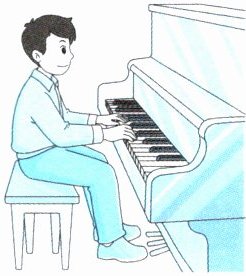
Mr Liang is a famous pianist. He loves playing the piano very much.
He lives a simple and regular life. He gets up at six every day. After breakfast, he practises(练习) the piano for hours. He plays different pieces of music carefully. He never gives up easily. He always tries hard to make his music perfect(完美的).
In his free time, he teaches young children to play the piano. He tells them it is important to have good learning habits. If you want to play well, you must practise every day and listen to your teachers carefully.
Mr Liang is kind and patient. Many children like him. His hard work and good habits make him successful(成功的).
(
A. A famous doctor. B. A famous pianist. C. A famous teacher.
(
A. At 6:00. B. At 8:00. C. We don't know.
(
A. He dances for hours. B. He practises the piano. C. He plays games.
(
A. He goes travelling(旅行). B. He reads storybooks.
C. He teaches kids to play the piano.
(
A. Good habits and hard work. B. Playing games. C. Going to bed late.
Mr Liang is a famous pianist. He loves playing the piano very much.
He lives a simple and regular life. He gets up at six every day. After breakfast, he practises(练习) the piano for hours. He plays different pieces of music carefully. He never gives up easily. He always tries hard to make his music perfect(完美的).
In his free time, he teaches young children to play the piano. He tells them it is important to have good learning habits. If you want to play well, you must practise every day and listen to your teachers carefully.
Mr Liang is kind and patient. Many children like him. His hard work and good habits make him successful(成功的).
(
B
)1. What's Mr Liang's job?A. A famous doctor. B. A famous pianist. C. A famous teacher.
(
A
)2. When does Mr Liang get up every day?A. At 6:00. B. At 8:00. C. We don't know.
(
B
)3. What does Mr Liang do every day?A. He dances for hours. B. He practises the piano. C. He plays games.
(
C
)4. What does Mr Liang do in his free time?A. He goes travelling(旅行). B. He reads storybooks.
C. He teaches kids to play the piano.
(
A
)5. What makes Mr Liang successful?A. Good habits and hard work. B. Playing games. C. Going to bed late.
答案
1. B 2. A 3. B 4. C 5. A
解析
【分析】本题为英语阅读理解细节选择题,需根据短文内容定位每个问题对应的关键信息,逐一匹配选项得出答案。解题时先明确每个问题的核心,再回到短文中查找相关语句,对比选项选出正确答案即可。
【解析】1. 根据短文第一句“Mr Liang is a famous pianist.”可知,梁先生是著名钢琴家,对应选项B;2. 根据短文“He gets up at six every day.”可知,他每天六点起床,对应选项A;3. 根据短文“After breakfast, he practises the piano for hours.”可知,他每天练习钢琴数小时,对应选项B;4. 根据短文“In his free time, he teaches young children to play the piano.”可知,空闲时他教孩子弹钢琴,对应选项C;5. 根据短文最后一句“His hard work and good habits make him successful.”可知,努力和好习惯让他成功,对应选项A。
【答案】1.B 2.A 3.B 4.C 5.A
【知识点】英语阅读理解、细节理解
【点评】本题考查英语阅读中提取具体信息的能力,题目设置简单,答案均能从原文直接找到,适合基础阶段学生练习。
【难度系数】0.8
