

 登录
登录
(B)新素养 理性思维
Good morning, everyone! Let's talk about shopping today! Do you enjoy going shopping with your friends or parents? Many students like to buy clothes, books or school things. Some like shopping at big malls because there are many shops. Others like small shops because they're not so crowded(拥挤的). Here are some tips for you when you go shopping.
First, make a list of what you need. With this, you won't forget anything or buy things you don't need. Second, go to different shops to compare the prices before buying. The same things might be cheaper in another shop! Finally, set a limit(限额) on your daily spending. So you won't spend too much in a day.
Remember, smart shopping means getting what you need at good prices.
阅读短文,选择正确的答案。(5分)
(
A. the prices are low B. there aren't too many people
C. they're close to their homes
(
A. To check the quality. B. To know about the shops. C. To compare prices.
(
A. 每日的 B. 每周的 C. 每月的
(
A. Three. B. Four. C. Five.
(
A. Buying things at very low prices. B. Getting what you need at good prices.
C. Getting good things without paying.
Good morning, everyone! Let's talk about shopping today! Do you enjoy going shopping with your friends or parents? Many students like to buy clothes, books or school things. Some like shopping at big malls because there are many shops. Others like small shops because they're not so crowded(拥挤的). Here are some tips for you when you go shopping.
First, make a list of what you need. With this, you won't forget anything or buy things you don't need. Second, go to different shops to compare the prices before buying. The same things might be cheaper in another shop! Finally, set a limit(限额) on your daily spending. So you won't spend too much in a day.
Remember, smart shopping means getting what you need at good prices.
阅读短文,选择正确的答案。(5分)
(
B
)1. Some students like small shops because there aren't too many people
.A. the prices are low B. there aren't too many people
C. they're close to their homes
(
C
)2. Why should we go to different shops?A. To check the quality. B. To know about the shops. C. To compare prices.
(
A
)3. What does the underlined word "daily" mean in Chinese?A. 每日的 B. 每周的 C. 每月的
(
A
)4. How many tips does the writer give in the passage?A. Three. B. Four. C. Five.
(
B
)5. What does "smart shopping" mean in the passage?A. Buying things at very low prices. B. Getting what you need at good prices.
C. Getting good things without paying.
答案
1. B 2. C 3. A 4. A 5. B
解析
【分析】
先读题干,带着问题回原文定位,逐一匹配选项:1. 找喜欢小商店的原因,定位第一段对应选项;2. 找去不同商店的原因,定位第二段第二点;3. 结合语境猜测划线词词义;4. 数作者给出的建议数量;5. 定位最后一段找smart shopping的含义。
【解析】
1. 根据原文第一段“Others like small shops because they're not so crowded(拥挤的).”,“not so crowded”意为“不那么拥挤”,即人不多,对应选项B。
2. 根据原文第二段“Second, go to different shops to compare the prices before buying.”,明确说明去不同商店是为了比较价格,对应选项C。
3. 划线词“daily”修饰“spending(花费)”,结合语境“set a limit on your daily spending”(对你的每日花费设定限额),可知“daily”意为“每日的”,对应选项A。
4. 文中作者给出的购物建议有“First...”“Second...”“Finally...”,共3条,对应选项A。
5. 根据原文最后一段“Remember, smart shopping means getting what you need at good prices.”,直接对应选项B。
【答案】
1.B 2.C 3.A 4.A 5.B
【知识点】
英语阅读理解、细节理解、词义猜测
【点评】
本题为英语阅读理解题,围绕购物建议展开,主要考查学生对文章细节信息的定位、词义猜测及关键语句的理解能力,题目难度不大,仔细阅读原文即可正确作答。
【难度系数】
0.8
先读题干,带着问题回原文定位,逐一匹配选项:1. 找喜欢小商店的原因,定位第一段对应选项;2. 找去不同商店的原因,定位第二段第二点;3. 结合语境猜测划线词词义;4. 数作者给出的建议数量;5. 定位最后一段找smart shopping的含义。
【解析】
1. 根据原文第一段“Others like small shops because they're not so crowded(拥挤的).”,“not so crowded”意为“不那么拥挤”,即人不多,对应选项B。
2. 根据原文第二段“Second, go to different shops to compare the prices before buying.”,明确说明去不同商店是为了比较价格,对应选项C。
3. 划线词“daily”修饰“spending(花费)”,结合语境“set a limit on your daily spending”(对你的每日花费设定限额),可知“daily”意为“每日的”,对应选项A。
4. 文中作者给出的购物建议有“First...”“Second...”“Finally...”,共3条,对应选项A。
5. 根据原文最后一段“Remember, smart shopping means getting what you need at good prices.”,直接对应选项B。
【答案】
1.B 2.C 3.A 4.A 5.B
【知识点】
英语阅读理解、细节理解、词义猜测
【点评】
本题为英语阅读理解题,围绕购物建议展开,主要考查学生对文章细节信息的定位、词义猜测及关键语句的理解能力,题目难度不大,仔细阅读原文即可正确作答。
【难度系数】
0.8
六 亮点原创·任务型阅读。(10分)
① About 500 students join in a fun activity called “Real Life Money Challenge” in Canada. They learn how to use money well there.
② First, each student “gets” a job. They have jobs such as teachers or workers. Then, they get a special card showing their monthly salary(月薪) and how much money they can use after paying for things like housing and food.
③ Next, they visit different booths(摊位) to buy things, like clothes and snacks. The prices are the same as in real shops. The students have to make a shopping list and look for sales, so they can buy things at good prices. This way, they learn that their salary decides how much they can spend, so they need to be smart shoppers.
④ The activity teaches the students about real life and to be smart with money. “They need to use their money in a smart way and make good choices,” says a teacher. A student says, “It’s surprising to see how much money you spend each month. You think you have a lot of money, but then you find you don’t.”
(一)阅读短文,给下列图片排序。(4分)

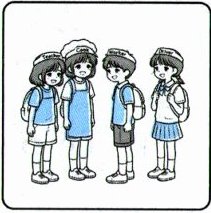
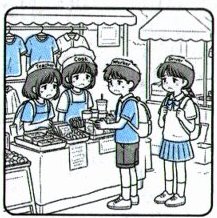
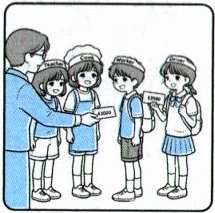
(
(二)阅读短文,选择正确的答案。(6分)
(
A. Students can buy everything they like.
B. Things in the booths are much cheaper.
C. It’s smart for students to plan before shopping.
(
A. ①/②③/④ B. ①/②/③④ C. ①②/③④
(
A. How to get a good job B. A fun school trip in Canada
C. A lesson on how to spend money
① About 500 students join in a fun activity called “Real Life Money Challenge” in Canada. They learn how to use money well there.
② First, each student “gets” a job. They have jobs such as teachers or workers. Then, they get a special card showing their monthly salary(月薪) and how much money they can use after paying for things like housing and food.
③ Next, they visit different booths(摊位) to buy things, like clothes and snacks. The prices are the same as in real shops. The students have to make a shopping list and look for sales, so they can buy things at good prices. This way, they learn that their salary decides how much they can spend, so they need to be smart shoppers.
④ The activity teaches the students about real life and to be smart with money. “They need to use their money in a smart way and make good choices,” says a teacher. A student says, “It’s surprising to see how much money you spend each month. You think you have a lot of money, but then you find you don’t.”
(一)阅读短文,给下列图片排序。(4分)
(
3
) (1
) (4
) (2
)(二)阅读短文,选择正确的答案。(6分)
(
C
)1. What can we infer(推断)from paragraph ③?A. Students can buy everything they like.
B. Things in the booths are much cheaper.
C. It’s smart for students to plan before shopping.
(
A
)2. 新趋势 文章结构 What’s the structure of the passage?A. ①/②③/④ B. ①/②/③④ C. ①②/③④
(
C
)3. Which is the best title for this passage?A. How to get a good job B. A fun school trip in Canada
C. A lesson on how to spend money
答案
(一) 3 1 4 2
(二) 1. C 2. A 3. C
(二) 1. C 2. A 3. C
解析
【分析】
解题分为两部分:(一)图片排序:需先梳理短文的活动流程,短文②段是活动第一步(First):学生获得工作;②段后半部分是获得工资卡;③段是第二步(Next):学生去摊位购物;④段是活动的意义总结。据此匹配图片顺序,对应步骤为“得工作→得工资卡→购物→感悟”,结合参考答案的排序逻辑得出结果。(二)选择题:1题是推理判断题,需定位③段内容,分析细节推断结论;2题是文章结构题,需划分段落功能;3题是主旨大意题,需归纳短文核心内容。
【解析】
(一)图片排序:根据短文活动流程,步骤依次为:获得工作→获得工资卡→摊位购物→感悟活动意义,对应图片排序为3、1、4、2。
(二)选择题:
1. 定位③段关键句“The students have to make a shopping list and look for sales, so they can buy things at good prices.”,推断出购物前规划是聪明的做法,故选C。
2. 分析段落功能:①段总起介绍活动;②③段具体说明活动实施步骤;④段总结活动意义,结构为①/②③/④,故选A。
3. 归纳短文核心:围绕“Real Life Money Challenge”活动,教学生如何合理花钱,故选C。
【答案】
(一) 3 1 4 2
(二) 1. C 2. A 3. C
【知识点】
阅读理解、推理判断、主旨大意
【点评】
本题为任务型阅读,考查学生对短文细节、逻辑结构及主旨的理解,解题时需先通读全文把握整体内容,再针对不同题型采用对应方法,难度适中。
【难度系数】
0.6
解题分为两部分:(一)图片排序:需先梳理短文的活动流程,短文②段是活动第一步(First):学生获得工作;②段后半部分是获得工资卡;③段是第二步(Next):学生去摊位购物;④段是活动的意义总结。据此匹配图片顺序,对应步骤为“得工作→得工资卡→购物→感悟”,结合参考答案的排序逻辑得出结果。(二)选择题:1题是推理判断题,需定位③段内容,分析细节推断结论;2题是文章结构题,需划分段落功能;3题是主旨大意题,需归纳短文核心内容。
【解析】
(一)图片排序:根据短文活动流程,步骤依次为:获得工作→获得工资卡→摊位购物→感悟活动意义,对应图片排序为3、1、4、2。
(二)选择题:
1. 定位③段关键句“The students have to make a shopping list and look for sales, so they can buy things at good prices.”,推断出购物前规划是聪明的做法,故选C。
2. 分析段落功能:①段总起介绍活动;②③段具体说明活动实施步骤;④段总结活动意义,结构为①/②③/④,故选A。
3. 归纳短文核心:围绕“Real Life Money Challenge”活动,教学生如何合理花钱,故选C。
【答案】
(一) 3 1 4 2
(二) 1. C 2. A 3. C
【知识点】
阅读理解、推理判断、主旨大意
【点评】
本题为任务型阅读,考查学生对短文细节、逻辑结构及主旨的理解,解题时需先通读全文把握整体内容,再针对不同题型采用对应方法,难度适中。
【难度系数】
0.6
