

 登录
登录
二、阅读理解(本题有 15 小题,每小题2分,共计30分)
阅读下面的材料,从各题所给的四个选项中选出一个最佳答案。
A
The History of Corn

(
A. Science.
B. History.
C. Health.
D. Travel.
(
A. China.
B. Mexico.
C. America.
D. England.
(
A. People eat half of corn for food.
B. Corn is a kind of unhealthy food.
C. Growing only corn is bad for land.
D. It is difficult to grow corn in Europe.
阅读下面的材料,从各题所给的四个选项中选出一个最佳答案。
A
The History of Corn
(
B
)16. In which part of a magazine can you find the text?A. Science.
B. History.
C. Health.
D. Travel.
(
B
)17. Where did corn first come from?A. China.
B. Mexico.
C. America.
D. England.
(
C
)18. Which of the following is TRUE according to the text?A. People eat half of corn for food.
B. Corn is a kind of unhealthy food.
C. Growing only corn is bad for land.
D. It is difficult to grow corn in Europe.
答案
16.B 17.B 18.C
解析
【分析】做这类阅读理解题,需先明确每个问题的核心,再回到原文定位关键信息,逐一比对选项判断正误:16题需结合文章主题判断所属杂志板块;17题需定位玉米起源的原文信息;18题需逐一核对选项与原文细节是否一致,排除错误选项得出答案。
【解析】
16题:问题询问文章所属杂志板块,文章围绕玉米的起源、传播、影响等历史内容展开,属于历史范畴,对应选项B。
17题:问题询问玉米的最初来源,定位到原文“Origin & Culture”部分第一句“Corn came from a wild grass in Mexico.”,可知玉米来自墨西哥,对应选项B。
18题:问题要求选出正确表述,A选项对应原文“40% of corn is eaten”,并非一半,错误;B选项原文未提及玉米不健康,错误;C选项对应原文“Impact & Problems”部分“Growing only corn hurt the land.”,表述正确;D选项原文提到“it easy to grow, so it became important in Europe”,可知玉米在欧洲易种植,错误,故答案为C。
【答案】16.B 17.B 18.C
【知识点】英语阅读理解,细节理解,主旨大意
【点评】本题为英语阅读理解基础题,以玉米的相关知识为载体,考查学生快速定位原文细节、理解文章主旨的能力,难度较低,适合巩固基础。
【难度系数】0.8
【解析】
16题:问题询问文章所属杂志板块,文章围绕玉米的起源、传播、影响等历史内容展开,属于历史范畴,对应选项B。
17题:问题询问玉米的最初来源,定位到原文“Origin & Culture”部分第一句“Corn came from a wild grass in Mexico.”,可知玉米来自墨西哥,对应选项B。
18题:问题要求选出正确表述,A选项对应原文“40% of corn is eaten”,并非一半,错误;B选项原文未提及玉米不健康,错误;C选项对应原文“Impact & Problems”部分“Growing only corn hurt the land.”,表述正确;D选项原文提到“it easy to grow, so it became important in Europe”,可知玉米在欧洲易种植,错误,故答案为C。
【答案】16.B 17.B 18.C
【知识点】英语阅读理解,细节理解,主旨大意
【点评】本题为英语阅读理解基础题,以玉米的相关知识为载体,考查学生快速定位原文细节、理解文章主旨的能力,难度较低,适合巩固基础。
【难度系数】0.8
B
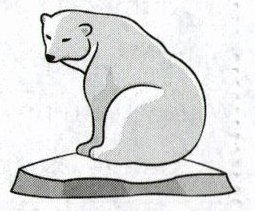
Polar Bears in a Warming World
We use fuel for energy, but it is making the climate warmer. As a result, the ice melts, and the sea level rises. It is bad news for polar bears!
Polar bears live in the cold Arctic. The frozen Arctic is their home and the ice is their hunting ground. A polar bear usually stands on the sea ice to hunt for seals when they come up for air. But the ice has started to melt earlier each year. As the ice melts, some polar bears have lost their homes. Homeless polar bears have to move from ice to land earlier and stay on land longer. They starve because they can't find enough food.
These changes are a result of global warming. Global warming is making life difficult for polar bears. Their future is in our hands. We mustn't let them down. Let's save polar bears before it's too late.
(
A. Global warming is making our life difficult.
B. Using too much fuel can cause global warming.
C. Polar bears are in danger because of global warming.
D. The ice in Arctic melts earlier because of global warming.
(
A. They break the sea ice to find seals.
B. They wait on the ice for seals to appear.
C. They swim underwater to pull seals.
D. They produce special sounds to get seals.
(
A. Get sick.
B. Feel cold.
C. Lose home.
D. Become hungry.
(
A. To explain how the climate changes.
B. To introduce what global warming is.
C. To call for help to protect polar bears.
D. To invite people to travel to the Arctic.
Polar Bears in a Warming World
We use fuel for energy, but it is making the climate warmer. As a result, the ice melts, and the sea level rises. It is bad news for polar bears!
Polar bears live in the cold Arctic. The frozen Arctic is their home and the ice is their hunting ground. A polar bear usually stands on the sea ice to hunt for seals when they come up for air. But the ice has started to melt earlier each year. As the ice melts, some polar bears have lost their homes. Homeless polar bears have to move from ice to land earlier and stay on land longer. They starve because they can't find enough food.
These changes are a result of global warming. Global warming is making life difficult for polar bears. Their future is in our hands. We mustn't let them down. Let's save polar bears before it's too late.
(
C
)19. What is the main idea of the text?A. Global warming is making our life difficult.
B. Using too much fuel can cause global warming.
C. Polar bears are in danger because of global warming.
D. The ice in Arctic melts earlier because of global warming.
(
B
)20. How do polar bears hunt seals?A. They break the sea ice to find seals.
B. They wait on the ice for seals to appear.
C. They swim underwater to pull seals.
D. They produce special sounds to get seals.
(
D
)21. What does the underlined word "starve" in Paragraph 2 probably mean?A. Get sick.
B. Feel cold.
C. Lose home.
D. Become hungry.
(
C
)22. What is the writer's purpose of writing the text?A. To explain how the climate changes.
B. To introduce what global warming is.
C. To call for help to protect polar bears.
D. To invite people to travel to the Arctic.
答案
19.C 20.B 21.D 22.C
解析
【分析】
19题:本题考查主旨大意,需通读全文梳理核心内容。文章围绕全球变暖导致北极冰融化,北极熊失去家园、食物不足的困境展开,核心是北极熊因全球变暖面临危险,据此判断选项。
20题:本题考查细节理解,需定位原文相关语句。找到第二段中关于北极熊捕猎的描述,匹配选项。
21题:本题考查词义猜测,需结合上下文语境。根据划线词所在句的前文“stay on land longer”和后文“can't find enough food”,推断词义。
22题:本题考查作者写作意图,需关注结尾段的呼吁内容。作者在结尾明确提出要拯救北极熊,据此判断写作目的。
【解析】
19题:通读全文可知,文章先说明全球变暖的原因(使用燃料),接着阐述北极冰融化对北极熊的影响(失去家园、挨饿),最后呼吁拯救北极熊,核心是北极熊因全球变暖处于危险中,A选项侧重影响人类生活,B选项仅提及全球变暖的原因,D选项仅提及冰融化,均片面,故选C。
20题:定位原文第二段“A polar bear usually stands on the sea ice to hunt for seals when they come up for air.”,可知北极熊是等在冰上捕猎海豹,A、C、D选项原文未提及,故选B。
21题:划线词所在句前文说北极熊在陆地停留更久,后文说找不到足够食物,因此“starve”意为挨饿,即变得饥饿,A(生病)、B(寒冷)、C(失去家园)均不符合语境,故选D。
22题:定位原文最后一段“We mustn't let them down. Let's save polar bears before it's too late.”,可知作者写作目的是呼吁大家帮助保护北极熊,A(解释气候变化)、B(介绍全球变暖)、D(邀请去北极)均不符,故选C。
【答案】
19.C 20.B 21.D 22.C
【知识点】
阅读理解主旨大意、细节理解、词义猜测、作者写作意图
【点评】
本文是环保主题的阅读理解题,考察学生对文章主旨、细节信息、词义及作者意图的理解,题型为常见阅读选择题,难度适中,需学生准确把握原文关键信息。
【难度系数】
0.7
19题:本题考查主旨大意,需通读全文梳理核心内容。文章围绕全球变暖导致北极冰融化,北极熊失去家园、食物不足的困境展开,核心是北极熊因全球变暖面临危险,据此判断选项。
20题:本题考查细节理解,需定位原文相关语句。找到第二段中关于北极熊捕猎的描述,匹配选项。
21题:本题考查词义猜测,需结合上下文语境。根据划线词所在句的前文“stay on land longer”和后文“can't find enough food”,推断词义。
22题:本题考查作者写作意图,需关注结尾段的呼吁内容。作者在结尾明确提出要拯救北极熊,据此判断写作目的。
【解析】
19题:通读全文可知,文章先说明全球变暖的原因(使用燃料),接着阐述北极冰融化对北极熊的影响(失去家园、挨饿),最后呼吁拯救北极熊,核心是北极熊因全球变暖处于危险中,A选项侧重影响人类生活,B选项仅提及全球变暖的原因,D选项仅提及冰融化,均片面,故选C。
20题:定位原文第二段“A polar bear usually stands on the sea ice to hunt for seals when they come up for air.”,可知北极熊是等在冰上捕猎海豹,A、C、D选项原文未提及,故选B。
21题:划线词所在句前文说北极熊在陆地停留更久,后文说找不到足够食物,因此“starve”意为挨饿,即变得饥饿,A(生病)、B(寒冷)、C(失去家园)均不符合语境,故选D。
22题:定位原文最后一段“We mustn't let them down. Let's save polar bears before it's too late.”,可知作者写作目的是呼吁大家帮助保护北极熊,A(解释气候变化)、B(介绍全球变暖)、D(邀请去北极)均不符,故选C。
【答案】
19.C 20.B 21.D 22.C
【知识点】
阅读理解主旨大意、细节理解、词义猜测、作者写作意图
【点评】
本文是环保主题的阅读理解题,考察学生对文章主旨、细节信息、词义及作者意图的理解,题型为常见阅读选择题,难度适中,需学生准确把握原文关键信息。
【难度系数】
0.7
