

 登录
登录
一、阅读理解。
If you fly across several time zones, you may have jet lag (时差反应). You arrive in a new time zone, but your body is still living on the time in the old time zone. You may be ready for dinner at midnight, and you may want to sleep all day.
People have jet lag because all living things have a biological clock (生物钟). For example, plants begin to work at sunrise. When winter comes, birds fly to warm places. Some insects (昆虫) like bees also seem to set their alarm clocks to look for food.
Some scientists did an experiment (实验) with bees in Paris. They put out sugar water at 4:00 p.m. every day, and the bees came to drink the water at exactly the right time. Then the scientists put bees in a dark room. The bees still came out at the same time. Later the scientists took the bees to New York. The bees came for the food at the right time again, when it was only 10:00 a.m. in New York. Their bodies were still on Paris time.
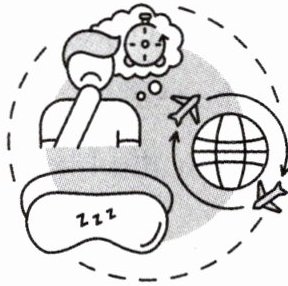
Humans have a biological clock, too. It tells us when to sleep and eat. Our bodies are controlled by a biological clock, but we can learn to adjust (调整) it to different time.
()1. What is the passage about?
A. Bees.
B. An experiment.
C. Time zones.
D. Biological clocks.
()2. How many examples of the biological clock does the writer show in Paragraph (段落)2?
A. Two.
B. Three.
C. Four.
D. Five.
()3. When did bees come out for food in New York?
A. At 10:00 a.m. (Paris time).
B. At 4:00 p.m. (Paris time).
C. At 4:00 a.m. (New York time).
D. At 10:00 p.m. (New York time).
()4. What is the purpose of showing the
If you fly across several time zones, you may have jet lag (时差反应). You arrive in a new time zone, but your body is still living on the time in the old time zone. You may be ready for dinner at midnight, and you may want to sleep all day.
People have jet lag because all living things have a biological clock (生物钟). For example, plants begin to work at sunrise. When winter comes, birds fly to warm places. Some insects (昆虫) like bees also seem to set their alarm clocks to look for food.
Some scientists did an experiment (实验) with bees in Paris. They put out sugar water at 4:00 p.m. every day, and the bees came to drink the water at exactly the right time. Then the scientists put bees in a dark room. The bees still came out at the same time. Later the scientists took the bees to New York. The bees came for the food at the right time again, when it was only 10:00 a.m. in New York. Their bodies were still on Paris time.
Humans have a biological clock, too. It tells us when to sleep and eat. Our bodies are controlled by a biological clock, but we can learn to adjust (调整) it to different time.
()1. What is the passage about?
A. Bees.
B. An experiment.
C. Time zones.
D. Biological clocks.
()2. How many examples of the biological clock does the writer show in Paragraph (段落)2?
A. Two.
B. Three.
C. Four.
D. Five.
()3. When did bees come out for food in New York?
A. At 10:00 a.m. (Paris time).
B. At 4:00 p.m. (Paris time).
C. At 4:00 a.m. (New York time).
D. At 10:00 p.m. (New York time).
()4. What is the purpose of showing the
答案
1.D 2.B 3.B
解析
【分析】本题是科普类阅读理解题,解题思路为:先通读全文把握文章核心内容,再针对每个问题,回到原文定位对应信息,结合选项逐一分析排除,得出正确答案。
【解析】1. 主旨大意题:文章围绕“生物钟”展开,介绍了时差反应与生物钟的关系,列举了植物、鸟类、蜜蜂的生物钟例子,还通过蜜蜂实验说明生物钟的作用,核心主题是生物钟,因此选D。
2. 细节理解题:第二段中提到的生物钟相关例子有:①植物日出时开始活动;②冬季鸟类飞往温暖地区;③蜜蜂定时觅食,共3个例子,因此选B。
3. 细节理解题:根据第三段内容,科学家在巴黎每天下午4点放置糖水,蜜蜂会按巴黎时间来取食;将蜜蜂带到纽约后,蜜蜂仍遵循巴黎时间的规律,在巴黎时间下午4点来取食,此时纽约时间为上午10点,因此选B。
【答案】1.D 2.B 3.B
【知识点】阅读理解、主旨大意、细节理解
【点评】本题为科普类阅读理解,侧重考查学生对文章主旨和细节信息的提取能力,难度适中,需要学生仔细阅读原文,准确定位关键内容。
【难度系数】0.6
【解析】1. 主旨大意题:文章围绕“生物钟”展开,介绍了时差反应与生物钟的关系,列举了植物、鸟类、蜜蜂的生物钟例子,还通过蜜蜂实验说明生物钟的作用,核心主题是生物钟,因此选D。
2. 细节理解题:第二段中提到的生物钟相关例子有:①植物日出时开始活动;②冬季鸟类飞往温暖地区;③蜜蜂定时觅食,共3个例子,因此选B。
3. 细节理解题:根据第三段内容,科学家在巴黎每天下午4点放置糖水,蜜蜂会按巴黎时间来取食;将蜜蜂带到纽约后,蜜蜂仍遵循巴黎时间的规律,在巴黎时间下午4点来取食,此时纽约时间为上午10点,因此选B。
【答案】1.D 2.B 3.B
【知识点】阅读理解、主旨大意、细节理解
【点评】本题为科普类阅读理解,侧重考查学生对文章主旨和细节信息的提取能力,难度适中,需要学生仔细阅读原文,准确定位关键内容。
【难度系数】0.6
