

 登录
B
①Liuchixiang is a famous place in Tongcheng, Anhui. It is 100 metres long and 6 feet (尺) wide. People built it over 300 years ago.
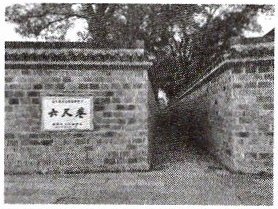
②In the Qing Dynasty, the Zhangs and the Wus were neighbours. Next to the Zhang family's house was an empty piece of land. When the Wu family built their house, they used this land. The Zhang family was very unhappy and wrote a letter to Zhang Ying, the head of their family and a top official (官员).
③When Zhang Ying got the letter, he wasn't angry and wrote a poem back to his family, "Why not let them have three feet? The Great Wall still stands, but where is Qin Shi Huang?" His family followed his advice and moved their wall three feet back. The Wu family thought they were kind and also moved three feet back. Together, they made Liuchixiang.
④Now, the meaning of Liuchixiang still helps people. When there is a problem, taking a small step back can help find peaceful ways to solve it. Liuchixiang teaches us to respect each other and live in harmony—helping one another, sharing things, and living in peace, just like the Zhang and Wu families did long ago.
(
A. Over 100 years ago.
B. Over 300 years ago.
C. Over 500 years ago.
D. Over 600 years ago.
(
A. To keep fighting with the Wu family.
B. To build a house on the Wu's land.
C. To build a wall between their houses.
D. To let the Wu family have three feet.
(
A. 喧哗
B. 富裕
C. 和谐
D. 宁静
(
①Liuchixiang is a famous place in Tongcheng, Anhui. It is 100 metres long and 6 feet (尺) wide. People built it over 300 years ago.
②In the Qing Dynasty, the Zhangs and the Wus were neighbours. Next to the Zhang family's house was an empty piece of land. When the Wu family built their house, they used this land. The Zhang family was very unhappy and wrote a letter to Zhang Ying, the head of their family and a top official (官员).
③When Zhang Ying got the letter, he wasn't angry and wrote a poem back to his family, "Why not let them have three feet? The Great Wall still stands, but where is Qin Shi Huang?" His family followed his advice and moved their wall three feet back. The Wu family thought they were kind and also moved three feet back. Together, they made Liuchixiang.
④Now, the meaning of Liuchixiang still helps people. When there is a problem, taking a small step back can help find peaceful ways to solve it. Liuchixiang teaches us to respect each other and live in harmony—helping one another, sharing things, and living in peace, just like the Zhang and Wu families did long ago.
(
B
)14. When did people build Liuchixiang?A. Over 100 years ago.
B. Over 300 years ago.
C. Over 500 years ago.
D. Over 600 years ago.
(
D
)15. What was Zhang Ying's advice to his family?A. To keep fighting with the Wu family.
B. To build a house on the Wu's land.
C. To build a wall between their houses.
D. To let the Wu family have three feet.
(
C
)16. What does the underlined word "harmony" mean in Chinese in Paragraph 4?A. 喧哗
B. 富裕
C. 和谐
D. 宁静
(
B
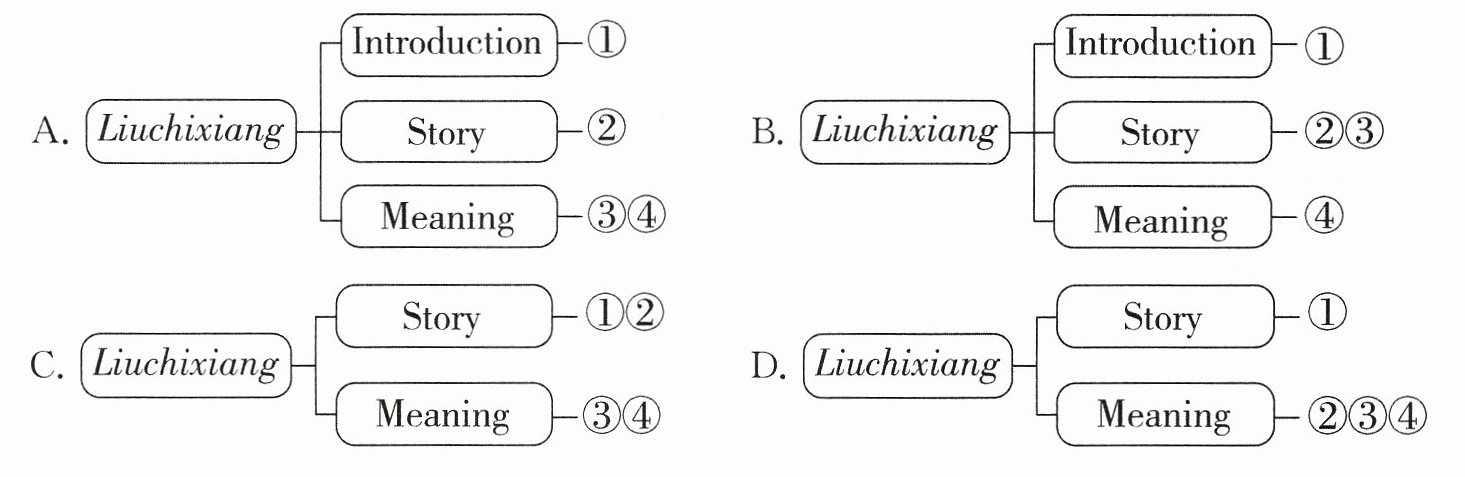
)17. Which of the following shows the structure of the passage?答案
【文章大意】本文是一篇记叙文,主要介绍了安徽桐城六尺巷,含其长度、宽度、建造时间,并讲述了清朝张吴两家因宅基地起纠纷,张英以诗劝家人退让三尺,吴家也同样退让三尺,共同形成六尺巷的故事。
14. B 细节理解题。根据“People built it over 300 years ago.”可知,六尺巷是人们 300 多年前建造的。故选 B。
15. D 细节理解题。根据“Why not let them have three feet? The Great Wall still stands, but where is Qin Shi Huang?”可知,张英建议让吴家三尺。故选 D。
16. C 词义猜测题。根据“Liuchixiang teaches us to respect each other and live in harmony—helping one another, sharing things, and living in peace”可知,六尺巷的故事教导我们互相尊重、互相帮助、分享东西、和平相处,由此可猜测,harmony 的意思是“和谐”。故选 C。
17. B 篇章结构题。通读全文可知,第①段是对六尺巷的介绍,第②③段讲述有关六尺巷由来的故事,第④段阐述其寓意,文章结构对应 B 选项。故选 B。
解析
【分析】
本题是关于桐城六尺巷的英语阅读理解题,包含4道不同类型的题目,解题思路如下:1. 细节理解题(14、15题):需根据题干关键词快速定位原文对应内容,提取准确信息;2. 词义猜测题(16题):结合上下文语境,利用破折号后的解释内容推断生词含义;3. 篇章结构题(17题):梳理每段核心内容,划分段落层次,确定文章结构。
【解析】
14. 题干问六尺巷的建造时间,根据原文第①段最后一句“People built it over 300 years ago.”,可知建造时间是300多年前,对应选项B,故选B。
15. 题干问张英给家人的建议,根据原文第③段张英的诗句“Why not let them have three feet?”,可知建议让吴家三尺,对应选项D,故选D。
16. 题干问“harmony”的汉语意思,根据原文第④段破折号后的解释“respect each other and live in harmony—helping one another, sharing things, and living in peace”,可知此处强调互相尊重、和平相处,由此推断“harmony”意为“和谐”,对应选项C,故选C。
17. 题干问文章结构,第①段介绍六尺巷的基本信息;第②③段讲述六尺巷的由来故事;第④段阐述六尺巷的寓意,对应选项B的结构,故选B。
【答案】
14.B 15.D 16.C 17.B
【知识点】
细节理解题、词义猜测题、篇章结构题
【点评】
本题以中国传统美德故事六尺巷为阅读材料,考查学生英语阅读理解的核心能力,涵盖细节查找、词义推断、篇章分析等基础题型,既考查语言能力,又渗透传统文化教育。
【难度系数】
0.8
