

 登录
登录
五、阅读理解
阅读下列短文,从每个小题的四个选项中,选出能回答所提问题或完成所给句子的最佳答案。
You may use your phone to remember some perfect moments in your life. But before you do this, here's a surprising finding that photo-takers need to know: Taking photos is not as perfect a memory-retention(记忆储存)tool as you think. “In fact, taking too many pictures could harm the brain's ability to keep memories,” says Elizabeth Loftus, a science professor at the University of California. So you may get the photos but kind of lose memories.
It works in two ways. Loftus explains: We either forget the duty of remembering moments when we take pictures of them, or are so distracted(使分心)by the process of taking a photo that we miss the moment. For example, if you write down someone's phone number, you're less likely to remember it at any time because your brain tells you there's just no need. That's OK until that piece of paper goes missing.
But photo-takers don't need to feel down. Here are some tips on how to make taking photos help, not harm your memories.
Have someone else take the photos. Ask a friend or family member to take photos for you at important events so you can fully enjoy the activity.
Pay more attention to the details(细节). If you pay attention to the details of a scene before taking a photo, that process can help keep memories.
Look at your photos from time to time. Photos are a useful tool for memory keeping only if we spend time looking through photos, but not everyone can do that.
1. How can photo taking influence people?
A. People are easily distracted.
B. It harms people's brains seriously.
C. People can remember telephone numbers well.
D. People can remember important moments well.
2. How does the writer support his opinion in Paragraph 2?
A. By giving an example.
B. By listing numbers.
C. By telling the differences.
D. By asking a question.
3. How many ways are there to make taking photos help?
A. 2
B. 3
C. 4
D. 5
4. What is the writer's attitude(态度)towards taking photos?
A. He is against it.
B. He never does that.
C. He takes photos as often as possible.
D. He wants to make it helpful.
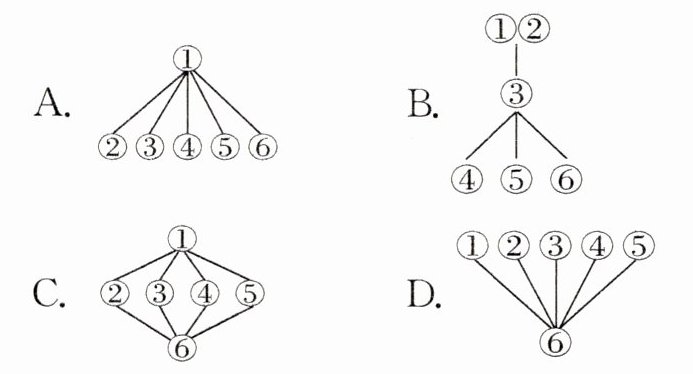
5. Which of the following shows the structure of the text?
阅读下列短文,从每个小题的四个选项中,选出能回答所提问题或完成所给句子的最佳答案。
You may use your phone to remember some perfect moments in your life. But before you do this, here's a surprising finding that photo-takers need to know: Taking photos is not as perfect a memory-retention(记忆储存)tool as you think. “In fact, taking too many pictures could harm the brain's ability to keep memories,” says Elizabeth Loftus, a science professor at the University of California. So you may get the photos but kind of lose memories.
It works in two ways. Loftus explains: We either forget the duty of remembering moments when we take pictures of them, or are so distracted(使分心)by the process of taking a photo that we miss the moment. For example, if you write down someone's phone number, you're less likely to remember it at any time because your brain tells you there's just no need. That's OK until that piece of paper goes missing.
But photo-takers don't need to feel down. Here are some tips on how to make taking photos help, not harm your memories.
Have someone else take the photos. Ask a friend or family member to take photos for you at important events so you can fully enjoy the activity.
Pay more attention to the details(细节). If you pay attention to the details of a scene before taking a photo, that process can help keep memories.
Look at your photos from time to time. Photos are a useful tool for memory keeping only if we spend time looking through photos, but not everyone can do that.
1. How can photo taking influence people?
A. People are easily distracted.
B. It harms people's brains seriously.
C. People can remember telephone numbers well.
D. People can remember important moments well.
2. How does the writer support his opinion in Paragraph 2?
A. By giving an example.
B. By listing numbers.
C. By telling the differences.
D. By asking a question.
3. How many ways are there to make taking photos help?
A. 2
B. 3
C. 4
D. 5
4. What is the writer's attitude(态度)towards taking photos?
A. He is against it.
B. He never does that.
C. He takes photos as often as possible.
D. He wants to make it helpful.
5. Which of the following shows the structure of the text?
答案
1. A 2. A 3. B 4. D 5. B
解析
【分析】
本题为阅读理解题,需结合原文内容逐一分析每个小题:
1. 第1题:定位原文相关内容,判断拍照对人的影响,排除错误选项;
2. 第2题:分析第二段的论证方法,确定支撑观点的方式;
3. 第3题:查找文中让拍照帮助记忆的建议数量;
4. 第4题:结合原文建议部分,判断作者对拍照的态度;
5. 第5题:梳理文章结构,匹配对应的图示。
【解析】
1. 第1题:原文提到拍照会让人分心,或降低大脑记忆的能力,A选项“People are easily distracted”符合;B选项“seriously”表述过重,C、D与原文不符,故选A。
2. 第2题:第二段通过“写电话号码”的例子解释拍照影响记忆的方式,属于举例论证,故选A。
3. 第3题:文中给出让拍照帮助记忆的建议共3种:让他人拍照、注意细节、定期看照片,故选B。
4. 第4题:作者提出拍照的负面影响后,给出了让拍照帮助记忆的建议,态度是想让拍照对记忆有帮助,故选D。
5. 第5题:文章结构为:第一段提出观点,第二段解释原因,第三段引出建议,后续分述3条建议,对应图示B,故选B。
【答案】
1. A 2. A 3. B 4. D 5. B
【知识点】
阅读理解、细节理解、文章结构分析
【点评】
本题围绕拍照与记忆的关系展开,考查学生对原文细节的查找、论证方式的判断、文章结构的梳理及作者态度的把握,需仔细定位原文关键信息。
【难度系数】
0.6
本题为阅读理解题,需结合原文内容逐一分析每个小题:
1. 第1题:定位原文相关内容,判断拍照对人的影响,排除错误选项;
2. 第2题:分析第二段的论证方法,确定支撑观点的方式;
3. 第3题:查找文中让拍照帮助记忆的建议数量;
4. 第4题:结合原文建议部分,判断作者对拍照的态度;
5. 第5题:梳理文章结构,匹配对应的图示。
【解析】
1. 第1题:原文提到拍照会让人分心,或降低大脑记忆的能力,A选项“People are easily distracted”符合;B选项“seriously”表述过重,C、D与原文不符,故选A。
2. 第2题:第二段通过“写电话号码”的例子解释拍照影响记忆的方式,属于举例论证,故选A。
3. 第3题:文中给出让拍照帮助记忆的建议共3种:让他人拍照、注意细节、定期看照片,故选B。
4. 第4题:作者提出拍照的负面影响后,给出了让拍照帮助记忆的建议,态度是想让拍照对记忆有帮助,故选D。
5. 第5题:文章结构为:第一段提出观点,第二段解释原因,第三段引出建议,后续分述3条建议,对应图示B,故选B。
【答案】
1. A 2. A 3. B 4. D 5. B
【知识点】
阅读理解、细节理解、文章结构分析
【点评】
本题围绕拍照与记忆的关系展开,考查学生对原文细节的查找、论证方式的判断、文章结构的梳理及作者态度的把握,需仔细定位原文关键信息。
【难度系数】
0.6
