

 登录
阅读理解 摆脱“讨好型人格”
素养:学习能力 难度:中 用时:7分钟
新素材 ①Do you often find it difficult to say "no" when someone asks for your help? Do you feel bad when you can't help them? Do you often pretend (假装) to agree with people though you think differently? If so, you might be a "people-pleaser".
②Being friendly and helpful is a good thing. It helps you make friends. But, if you always try to make others happy and forget about your own feelings, you might feel stressed. The good news is that there are ways to stop being a people-pleaser.
③First, know your limits (限度) and set boundaries (界限) in your life. Decide what you really want to do. When someone asks for your help, ask yourself: Do I really want to do this? Thinking about it will help you make a better decision.
④Second, build up your confidence. Many people try to please others because they don't feel confident. When thinking of others, don't forget your own needs matter too.
⑤Third, start with small steps. For example, you can send a message to say "no". Then, try saying "no" face to face. Practise in different situations, like talking to a shopkeeper or ordering food at a restaurant.
⑥Remember, stopping being a people-pleaser doesn't mean you have to stop being kind. You can still do good things, but make sure they're right for you.
1. 新考法·写作手法题 How does the writer start the passage?
A. By giving reasons. B. By listing numbers.
C. By giving examples. D. By asking questions.
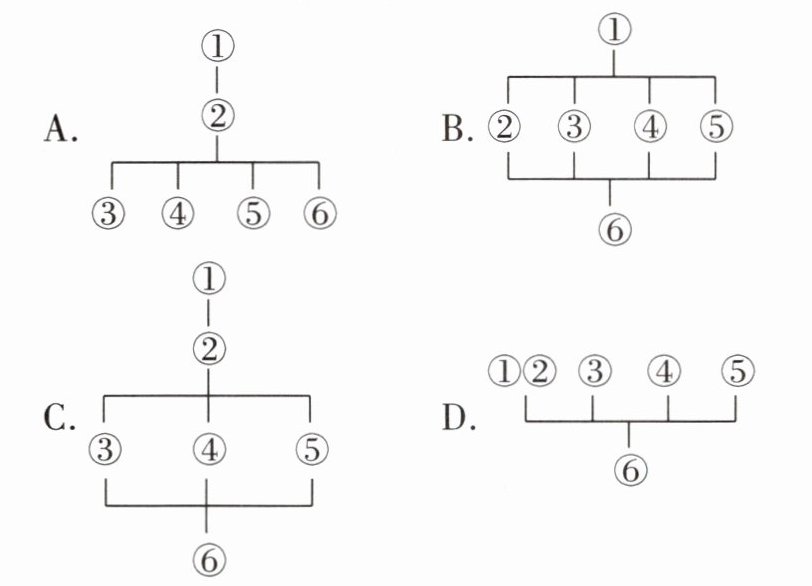
2. 新考法·篇章结构题 Which picture best shows the structure of the passage?
3. What's the writer's purpose of writing the passage?
A. To advise us not to always please others.
B. To help us build confidence in ourselves.
C. To encourage us to help people in need.
D. To make us be clear about our needs.
素养:学习能力 难度:中 用时:7分钟
新素材 ①Do you often find it difficult to say "no" when someone asks for your help? Do you feel bad when you can't help them? Do you often pretend (假装) to agree with people though you think differently? If so, you might be a "people-pleaser".
②Being friendly and helpful is a good thing. It helps you make friends. But, if you always try to make others happy and forget about your own feelings, you might feel stressed. The good news is that there are ways to stop being a people-pleaser.
③First, know your limits (限度) and set boundaries (界限) in your life. Decide what you really want to do. When someone asks for your help, ask yourself: Do I really want to do this? Thinking about it will help you make a better decision.
④Second, build up your confidence. Many people try to please others because they don't feel confident. When thinking of others, don't forget your own needs matter too.
⑤Third, start with small steps. For example, you can send a message to say "no". Then, try saying "no" face to face. Practise in different situations, like talking to a shopkeeper or ordering food at a restaurant.
⑥Remember, stopping being a people-pleaser doesn't mean you have to stop being kind. You can still do good things, but make sure they're right for you.
1. 新考法·写作手法题 How does the writer start the passage?
A. By giving reasons. B. By listing numbers.
C. By giving examples. D. By asking questions.
2. 新考法·篇章结构题 Which picture best shows the structure of the passage?
3. What's the writer's purpose of writing the passage?
A. To advise us not to always please others.
B. To help us build confidence in ourselves.
C. To encourage us to help people in need.
D. To make us be clear about our needs.
答案
【解题导语】本文主要讲述了"讨好型人格"的特征、负面影响以及关于如何摆脱"讨好型人格"的建议。
1. D 写作手法题。文章开篇以三个连续问句"Do you often find it... though you think differently?"引入话题,因此作者是通过提问的方式开篇,D 项正确。
2. C 篇章结构题。文章第一段定义"讨好型人格",引出话题;第二段点明"讨好型人格"的危害,总述有方法可摆脱;第三至五段分三点介绍摆脱"讨好型人格"的方法;第六段总结全文,强调拒绝讨好不代表失去善意。C 项最符合本文结构。
3. A 写作意图题。通读全文可知,本文围绕"讨好型人格"展开,提到了其表现与影响,并提出了三条具体的改善建议,旨在引导读者不要一味讨好他人,而应关注自身感受。A 项符合文意。
解析
【分析】
本题为英语阅读理解题,包含写作手法、篇章结构、主旨大意三类题型。解题思路:1. 第1题需定位文章开篇,判断作者引入话题的方式;2. 第2题需梳理文章整体结构,匹配对应图示;3. 第3题需通读全文,提炼作者写作的核心目的。
【解析】
1. 第1题:文章第一段以三个连续问句(Do you often find it... though you think differently?)引入“讨好型人格”话题,作者通过提问方式开篇,对应选项D。
2. 第2题:文章结构为:①段引出“讨好型人格”话题;②段总述“讨好型人格”有危害且有方法可摆脱;③-⑤段分述摆脱讨好型人格的三个具体方法;⑥段总结全文。选项C的图示符合该结构:①→②,②分出③④⑤,③④⑤共同连接⑥,对应文章的分总结构。
3. 第3题:全文围绕“讨好型人格”的表现、影响展开,重点给出摆脱讨好型人格的建议,核心目的是引导读者不要一味讨好他人,关注自身感受,对应选项A。
【答案】
1.D 2.C 3.A
【知识点】
阅读理解,写作手法,篇章结构
【点评】
本题考查阅读理解的核心题型,需学生具备梳理文章结构、分析写作手法及把握主旨的能力,素材贴近生活,难度适中。
【难度系数】
0.5
