

 登录
登录
D(真题·绍兴越城)
The MBTI(Myers-Briggs Type Indicator)is a popular personality(性格、气质) test. It helps people understand themselves and their personality better. Taking the MBTI test is quite easy. For 15—20 minutes, you answer a set of questions about things you like or dislike and how you usually act or behave. These questions show four important dimensions(方面、维度)of your personality:
Extroversion (E) vs. Introversion (I) This dimension shows if you are more outgoing and energetic by social activities (E) or if you feel more energetic after being alone (For example, you like to think about your feelings or write in a diary. )
because big groups make you feel tired (I).
Sensing (S) vs. Intuition (N) This looks at how you get information. Sensing (S) types depend on facts, details, and practicality, while Intuitive (N) types focus on possibilities, patterns, and big-picture thinking.
Thinking (T) vs. Feeling (F) This dimension shows how you make decisions. Thinking (T) types look for logic and objectivity(逻辑和客观性), while Feeling (F) types consider values, feelings, and personal matters.
Judging (J) vs. Perceiving (P) How do you get things done? This part shows how you finish homework or projects. Judging (J) people like to plan ahead, keep things organized and stick to(坚持) plans, while Perceiving (P) people often make last-minute decisions and enjoy changing plans.
Once you have answered all the questions, you receive a four-letter code like “ENFP” or “ISTJ”. This code tells about your personality. For example, if you get “ENTJ”, it means you are an Extroverted, Intuitive, Thinking, and Judging person. Some companies use MBTI to help test if a candidate’s(应聘者) personality goes with a job role. This seems unfair. People are varied, and a simple four-letter code cannot fully express their future abilities.
The MBTI is fun, but remember it’s mainly a test to learn about yourself. It can show what you naturally do and help you see your strong and weak points. However, it should not be used for big decisions like choosing your future job or picking whom to be friends with, etc.
(
A. Two. B. Four. C. Eight. D. Sixteen.
(
A. Kevin likes to talk with his friends and change plans.
B. Judy is used to keeping quiet in her class and she always helps others.
C. Danny likes to join different activities and is good at logic thinking.
D. Kim always checks details carefully and she cares about her own feelings inside.
(
A. Personal. B. Different. C. Natural. D. Outgoing.
(
A. MBTI brings danger to people.
B. MBTI can fully explain people’s abilities.
C. MBTI helps people to know themselves better.
D. MBTI helps a lot in making important decisions.
The MBTI(Myers-Briggs Type Indicator)is a popular personality(性格、气质) test. It helps people understand themselves and their personality better. Taking the MBTI test is quite easy. For 15—20 minutes, you answer a set of questions about things you like or dislike and how you usually act or behave. These questions show four important dimensions(方面、维度)of your personality:
Extroversion (E) vs. Introversion (I) This dimension shows if you are more outgoing and energetic by social activities (E) or if you feel more energetic after being alone (For example, you like to think about your feelings or write in a diary. )
because big groups make you feel tired (I).
Sensing (S) vs. Intuition (N) This looks at how you get information. Sensing (S) types depend on facts, details, and practicality, while Intuitive (N) types focus on possibilities, patterns, and big-picture thinking.
Thinking (T) vs. Feeling (F) This dimension shows how you make decisions. Thinking (T) types look for logic and objectivity(逻辑和客观性), while Feeling (F) types consider values, feelings, and personal matters.
Judging (J) vs. Perceiving (P) How do you get things done? This part shows how you finish homework or projects. Judging (J) people like to plan ahead, keep things organized and stick to(坚持) plans, while Perceiving (P) people often make last-minute decisions and enjoy changing plans.
Once you have answered all the questions, you receive a four-letter code like “ENFP” or “ISTJ”. This code tells about your personality. For example, if you get “ENTJ”, it means you are an Extroverted, Intuitive, Thinking, and Judging person. Some companies use MBTI to help test if a candidate’s(应聘者) personality goes with a job role. This seems unfair. People are varied, and a simple four-letter code cannot fully express their future abilities.
The MBTI is fun, but remember it’s mainly a test to learn about yourself. It can show what you naturally do and help you see your strong and weak points. However, it should not be used for big decisions like choosing your future job or picking whom to be friends with, etc.
(
D
)27. According to the text, how many kinds of MBTI for people in all?A. Two. B. Four. C. Eight. D. Sixteen.
(
C
)28. Which one is more likely to get “ENTJ”?A. Kevin likes to talk with his friends and change plans.
B. Judy is used to keeping quiet in her class and she always helps others.
C. Danny likes to join different activities and is good at logic thinking.
D. Kim always checks details carefully and she cares about her own feelings inside.
(
B
)29. Which word can take the place of the underlined word “varied”?A. Personal. B. Different. C. Natural. D. Outgoing.
(
C
)30. What’s probably the writer’s opinion about MBTI?A. MBTI brings danger to people.
B. MBTI can fully explain people’s abilities.
C. MBTI helps people to know themselves better.
D. MBTI helps a lot in making important decisions.
答案
27.D 28.C 29.B 30.C
解析
【分析】
这是一篇关于MBTI性格测试的阅读理解题,需结合文章内容逐一分析各题:
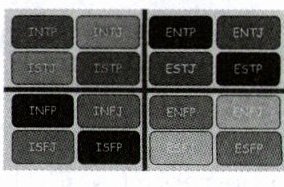
1. 第27题:考查MBTI的类型总数,文章提到MBTI有四个维度,每个维度含2种类型,结合插图的16个类型,可计算总数为16,对应选项D。
2. 第28题:考查ENTJ的特点,需明确ENTJ代表的四个维度(外向E、直觉N、思考T、判断J),再匹配选项中符合的描述,选项C中“喜欢参加不同活动(外向E)、擅长逻辑思维(思考T)”符合ENTJ的特征。
3. 第29题:考查词义猜测,需结合划线词所在句的语境,句子表达“人们是不同的,简单四字母代码无法完全表达他们未来的能力”,由此推断varied意为“不同的”,对应选项B。
4. 第30题:考查作者观点,需定位作者对MBTI的评价,最后一段明确提到MBTI主要是帮助人们了解自己,对应选项C。
【解析】
27. 文章指出MBTI包含四个维度,每个维度有2种类型,总类型数为2×2×2×2=16种,且插图中也呈现了16种MBTI类型,因此选D。
28. ENTJ代表Extroverted(外向)、Intuitive(直觉)、Thinking(思考)、Judging(判断)。选项A中“改变计划”不符合J的特点;选项B中“保持安静”不符合E的特点;选项C中“参加不同活动(外向E)、擅长逻辑思维(思考T)”符合ENTJ的特征;选项D中“关心自己的感受”不符合T的特点,因此选C。
29. 划线词所在句意为“人们是多样的,简单的四字母代码无法完全表达他们未来的能力”,varied在此处意为“不同的、多样的”,与选项B(Different)意思相近,因此选B。
30. 最后一段作者明确说明“MBTI主要是一个了解你自己的测试”,即MBTI帮助人们更好地认识自己,选项A(带来危险)、B(完全解释能力)、D(帮助做重要决定)均与作者观点不符,因此选C。
【答案】
27.D 28.C 29.B 30.C
【知识点】
英语阅读理解、细节理解题、词义猜测题
【点评】
本题围绕MBTI性格测试展开,考查学生对文章细节的查找、词义的推断以及作者观点的把握,题型基础,需要学生仔细阅读原文,定位关键信息即可解答。
【难度系数】
0.7
这是一篇关于MBTI性格测试的阅读理解题,需结合文章内容逐一分析各题:
1. 第27题:考查MBTI的类型总数,文章提到MBTI有四个维度,每个维度含2种类型,结合插图的16个类型,可计算总数为16,对应选项D。
2. 第28题:考查ENTJ的特点,需明确ENTJ代表的四个维度(外向E、直觉N、思考T、判断J),再匹配选项中符合的描述,选项C中“喜欢参加不同活动(外向E)、擅长逻辑思维(思考T)”符合ENTJ的特征。
3. 第29题:考查词义猜测,需结合划线词所在句的语境,句子表达“人们是不同的,简单四字母代码无法完全表达他们未来的能力”,由此推断varied意为“不同的”,对应选项B。
4. 第30题:考查作者观点,需定位作者对MBTI的评价,最后一段明确提到MBTI主要是帮助人们了解自己,对应选项C。
【解析】
27. 文章指出MBTI包含四个维度,每个维度有2种类型,总类型数为2×2×2×2=16种,且插图中也呈现了16种MBTI类型,因此选D。
28. ENTJ代表Extroverted(外向)、Intuitive(直觉)、Thinking(思考)、Judging(判断)。选项A中“改变计划”不符合J的特点;选项B中“保持安静”不符合E的特点;选项C中“参加不同活动(外向E)、擅长逻辑思维(思考T)”符合ENTJ的特征;选项D中“关心自己的感受”不符合T的特点,因此选C。
29. 划线词所在句意为“人们是多样的,简单的四字母代码无法完全表达他们未来的能力”,varied在此处意为“不同的、多样的”,与选项B(Different)意思相近,因此选B。
30. 最后一段作者明确说明“MBTI主要是一个了解你自己的测试”,即MBTI帮助人们更好地认识自己,选项A(带来危险)、B(完全解释能力)、D(帮助做重要决定)均与作者观点不符,因此选C。
【答案】
27.D 28.C 29.B 30.C
【知识点】
英语阅读理解、细节理解题、词义猜测题
【点评】
本题围绕MBTI性格测试展开,考查学生对文章细节的查找、词义的推断以及作者观点的把握,题型基础,需要学生仔细阅读原文,定位关键信息即可解答。
【难度系数】
0.7
