

 登录
登录
六、阅读还原(有两项多余)
Should teenagers be allowed to use the phone as much as they want? 1.
Very often, we can see young people sitting and looking at the screen of a mobile phone. But when we think of the question “How much time do they actually spend on the media?”, the answer is surprising. They spend four to five hours on the media every day.
Nowadays young people seem to have become crazy multitaskers (多任务处理者). 2.
Researchers found that two thirds of them believed watching TV or sending messages had no influence on their schoolwork. 3.
Some researchers studied more than 400 students. 4.
Teenagers’ health can be influenced, too. 5.
Should teenagers be allowed to use the phone as much as they want? 1.
B
Very often, we can see young people sitting and looking at the screen of a mobile phone. But when we think of the question “How much time do they actually spend on the media?”, the answer is surprising. They spend four to five hours on the media every day.
Nowadays young people seem to have become crazy multitaskers (多任务处理者). 2.
A
Some watch TV, some text (发短信) and some others listen to music. But what do young people think of this?Researchers found that two thirds of them believed watching TV or sending messages had no influence on their schoolwork. 3.
E
However, researchers have given a different answer—“media multitaskers” did worse in tests.Some researchers studied more than 400 students. 4.
C
On the other hand, students without the habit of texting during a lesson took down a lot more notes and got better grades. Similar studies also showed that students texting when doing schoolwork did worse in the tests.Teenagers’ health can be influenced, too. 5.
G
They may be woken up by messages. Even the light from the screen could influence their sleep. As a result, they go to bed later, get fewer hours of sleep each week, and become tired more easily during the daytime.答案
【主旨大意】本文主要讲述了青少年是否应该被允许随意使用手机。
1.B 2.A 3.E 4.C 5.G
1.B 2.A 3.E 4.C 5.G
解析
【分析】本题为阅读还原题,解题思路是先通读全文把握主旨(青少年使用手机/媒体的情况及影响),再结合每个空前后文的语境、逻辑关系,逐一匹配选项,确保所选内容能承上启下、符合语篇逻辑。
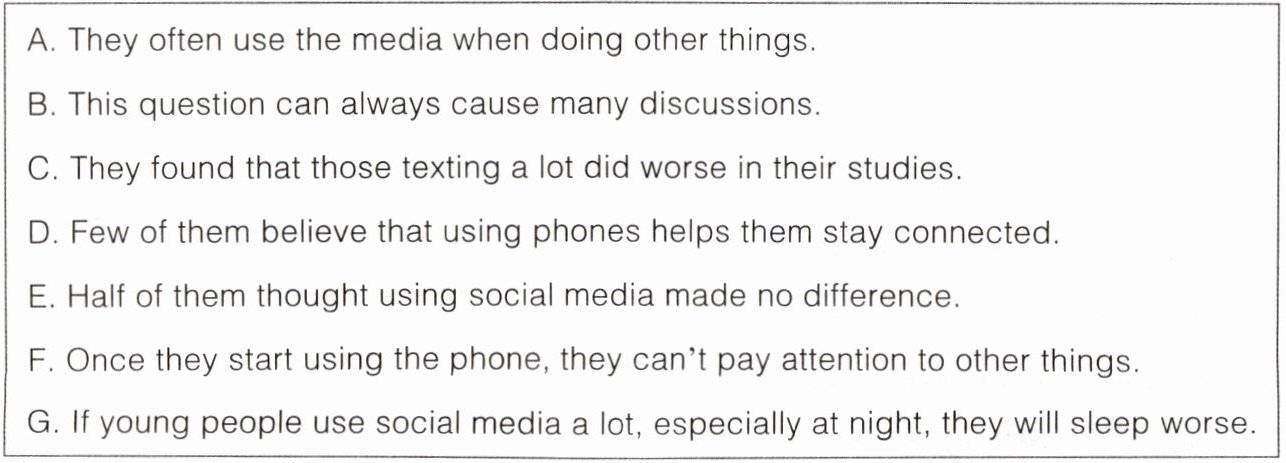
【解析】1. 第1空:前文提出“青少年是否应被允许随意使用手机”的问题,后文围绕该问题展开讨论,选项B“这个问题总能引发很多讨论”起到承上启下的作用,符合语境,故选B。2. 第2空:前文提到年轻人是“疯狂的多任务处理者”,后文举例说明他们同时做不同事(看电视、发短信等),选项A“他们做其他事时经常使用媒体”符合多任务处理的语境,故选A。3. 第3空:前文说三分之二的青少年认为看电视或发短信对学业无影响,后文转折指出研究结果相反,选项E“一半人认为使用社交媒体没有影响”承接前文观点,且与后文形成转折,故选E。4. 第4空:前文提到研究了400多名学生,后文对比上课发短信和不发短信的学生的表现,选项C“他们发现发短信多的学生学业更差”是研究的结果,符合上下文逻辑,故选C。5. 第5空:前文提到青少年健康受影响,后文具体说明睡眠被消息吵醒、屏幕光影响睡眠等,选项G“如果年轻人大量使用社交媒体尤其是在晚上,他们会睡眠更差”承接健康影响的话题,与后文内容呼应,故选G。
【答案】1.B 2.A 3.E 4.C 5.G
【知识点】阅读还原、语篇逻辑、细节理解
【点评】本题围绕青少年使用手机/媒体的话题,通过研究结果说明过度使用媒体对学业和健康的影响,引导学生合理使用媒体,解题需注重上下文的逻辑衔接。
【难度系数】0.6
【解析】1. 第1空:前文提出“青少年是否应被允许随意使用手机”的问题,后文围绕该问题展开讨论,选项B“这个问题总能引发很多讨论”起到承上启下的作用,符合语境,故选B。2. 第2空:前文提到年轻人是“疯狂的多任务处理者”,后文举例说明他们同时做不同事(看电视、发短信等),选项A“他们做其他事时经常使用媒体”符合多任务处理的语境,故选A。3. 第3空:前文说三分之二的青少年认为看电视或发短信对学业无影响,后文转折指出研究结果相反,选项E“一半人认为使用社交媒体没有影响”承接前文观点,且与后文形成转折,故选E。4. 第4空:前文提到研究了400多名学生,后文对比上课发短信和不发短信的学生的表现,选项C“他们发现发短信多的学生学业更差”是研究的结果,符合上下文逻辑,故选C。5. 第5空:前文提到青少年健康受影响,后文具体说明睡眠被消息吵醒、屏幕光影响睡眠等,选项G“如果年轻人大量使用社交媒体尤其是在晚上,他们会睡眠更差”承接健康影响的话题,与后文内容呼应,故选G。
【答案】1.B 2.A 3.E 4.C 5.G
【知识点】阅读还原、语篇逻辑、细节理解
【点评】本题围绕青少年使用手机/媒体的话题,通过研究结果说明过度使用媒体对学业和健康的影响,引导学生合理使用媒体,解题需注重上下文的逻辑衔接。
【难度系数】0.6
