

 登录
登录
六、信息还原。
阅读下面短文,从短文后的选项中选出可以填入空白处的最佳选项。选项中有两项为多余选项。
“How do you get to school?” This question often gets an answer like “By bus”,“By car” or “On foot”. But not always. There are children in many different parts of the world who,every day,have to go on a difficult journey to get to school. They travel several kilometres on foot,or by boat,bicycle,donkey(驴)or train. They cross deserts(沙漠),mountains,rivers,snow and ice. 1
To get to school on time,some children in Indonesia have to cross a dangerous bridge. 2 Then they walk many more kilometres through the forest to their school.
3 He has to ride it with his friends for over an hour through a desert in the very dry area of North-eastern Brazil. Their school is in a tiny village. Very few people live there.
Some children live in houses in Delhi,India. 4 Every morning they walk along the railway to get to their school,40 minutes away.
Why do the children do this? Do their parents make them do it? The answer,in many cases,is no. 5 They hope to get a job and make money so they can help their families and neighbours. And this is why rivers,deserts or danger won't stop them on their way to school.
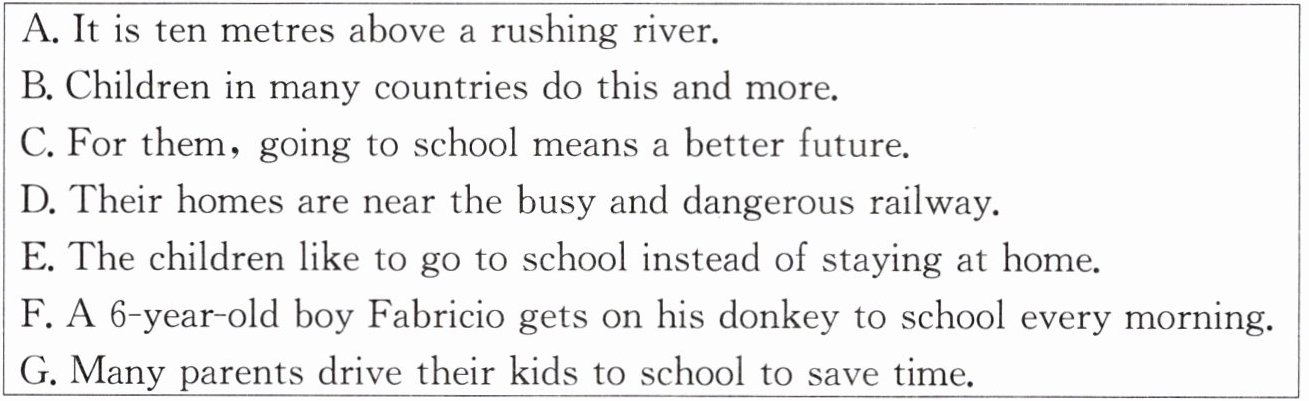
A. It is ten metres above a rushing river.
B. Children in many countries do this and more.
C. For them,going to school means a better future.
D. Their homes are near the busy and dangerous railway.
E. The children like to go to school instead of staying at home.
F. A 6-year-old boy Fabricio gets on his donkey to school every morning.
G. Many parents drive their kids to school to save time.
1.
阅读下面短文,从短文后的选项中选出可以填入空白处的最佳选项。选项中有两项为多余选项。
“How do you get to school?” This question often gets an answer like “By bus”,“By car” or “On foot”. But not always. There are children in many different parts of the world who,every day,have to go on a difficult journey to get to school. They travel several kilometres on foot,or by boat,bicycle,donkey(驴)or train. They cross deserts(沙漠),mountains,rivers,snow and ice. 1
To get to school on time,some children in Indonesia have to cross a dangerous bridge. 2 Then they walk many more kilometres through the forest to their school.
3 He has to ride it with his friends for over an hour through a desert in the very dry area of North-eastern Brazil. Their school is in a tiny village. Very few people live there.
Some children live in houses in Delhi,India. 4 Every morning they walk along the railway to get to their school,40 minutes away.
Why do the children do this? Do their parents make them do it? The answer,in many cases,is no. 5 They hope to get a job and make money so they can help their families and neighbours. And this is why rivers,deserts or danger won't stop them on their way to school.
A. It is ten metres above a rushing river.
B. Children in many countries do this and more.
C. For them,going to school means a better future.
D. Their homes are near the busy and dangerous railway.
E. The children like to go to school instead of staying at home.
F. A 6-year-old boy Fabricio gets on his donkey to school every morning.
G. Many parents drive their kids to school to save time.
1.
B
2. A
3. F
4. D
5. C
答案
1. B 2. A 3. F 4. D 5. C
解析
【分析】
这是一道英语七选五信息还原题,解题思路是先通读全文,把握文章核心主旨:介绍世界各地不同地区的孩子需要克服重重困难才能上学的相关内容。之后逐空定位空格前后的核心线索,通过指代关系、话题呼应匹配对应选项,最后排除和全文话题无关的多余选项。
具体思考逻辑:
1. 第一空前文已经列举了孩子们上学途中要徒步、乘坐各类交通工具,穿越沙漠、山河冰雪等艰难行程,后文开始逐个举不同国家孩子的上学案例,需要一个承上启下的过渡句;
2. 第二空前句明确提到印尼孩子要穿过一座危险的桥,空格内容需要和“桥的危险性”相关;
3. 第三空后文出现了人称代词He,说明空格处必须引出具体的男性人物,和后文的描述对应;
4. 第四空后文提到孩子们每天要沿着铁路步行40分钟到校,空格内容需要和“铁路”的话题呼应;
5. 第五空前文设问孩子为什么要主动克服困难上学,后文提到他们希望未来找工作赚钱帮扶家人,空格内容需要点明上学的意义,呼应后文的原因。
【解析】
1. 空1:前文列举了世界各地孩子上学途中的各类艰难行程,后文开始逐一列举不同国家的求学案例,B选项“很多国家的孩子都要经历这些,甚至更多”完美承上启下,符合语境。
2. 空2:前句提到印尼的孩子需要穿过一座危险的桥,A选项的it指代前文的危险桥梁,“它距离湍急的河面有10米高”直接解释了桥梁危险的原因,衔接自然。
3. 空3:后文出现人称代词He,F选项引出6岁男孩Fabricio的人物信息,和后文“他和朋友骑驴穿越巴西东北部沙漠”的描述完全对应,逻辑通顺。
4. 空4:后文提到孩子们每天沿着铁路步行上学,D选项“他们的家靠近繁忙且危险的铁路”直接呼应后文的铁路相关内容,话题连贯。
5. 空5:前文设问孩子主动克服困难上学的原因,后文提到他们希望未来工作赚钱帮扶家人邻里,C选项“对他们而言,上学意味着更美好的未来”点明核心动因,契合上下文逻辑。
多余选项G“很多家长开车送孩子上学节省时间”和全文“艰难求学路”的核心话题无关,E“孩子喜欢上学而不愿待在家”不符合后文对上学意义的阐释,均排除。
【答案】
1. B 2. A 3. F 4. D 5. C
【知识点】
七选五信息还原,语篇逻辑衔接,上下文指代
【点评】
本题难度适中,所有正确选项都有非常明确的前后文线索提示,学生只要抓住空格前后的核心话题、人称指代关系就能快速匹配答案,同时题目内容也能让学生了解不同地区孩子求学的不易,兼具知识性和人文教育意义。
【难度系数】
0.7
这是一道英语七选五信息还原题,解题思路是先通读全文,把握文章核心主旨:介绍世界各地不同地区的孩子需要克服重重困难才能上学的相关内容。之后逐空定位空格前后的核心线索,通过指代关系、话题呼应匹配对应选项,最后排除和全文话题无关的多余选项。
具体思考逻辑:
1. 第一空前文已经列举了孩子们上学途中要徒步、乘坐各类交通工具,穿越沙漠、山河冰雪等艰难行程,后文开始逐个举不同国家孩子的上学案例,需要一个承上启下的过渡句;
2. 第二空前句明确提到印尼孩子要穿过一座危险的桥,空格内容需要和“桥的危险性”相关;
3. 第三空后文出现了人称代词He,说明空格处必须引出具体的男性人物,和后文的描述对应;
4. 第四空后文提到孩子们每天要沿着铁路步行40分钟到校,空格内容需要和“铁路”的话题呼应;
5. 第五空前文设问孩子为什么要主动克服困难上学,后文提到他们希望未来找工作赚钱帮扶家人,空格内容需要点明上学的意义,呼应后文的原因。
【解析】
1. 空1:前文列举了世界各地孩子上学途中的各类艰难行程,后文开始逐一列举不同国家的求学案例,B选项“很多国家的孩子都要经历这些,甚至更多”完美承上启下,符合语境。
2. 空2:前句提到印尼的孩子需要穿过一座危险的桥,A选项的it指代前文的危险桥梁,“它距离湍急的河面有10米高”直接解释了桥梁危险的原因,衔接自然。
3. 空3:后文出现人称代词He,F选项引出6岁男孩Fabricio的人物信息,和后文“他和朋友骑驴穿越巴西东北部沙漠”的描述完全对应,逻辑通顺。
4. 空4:后文提到孩子们每天沿着铁路步行上学,D选项“他们的家靠近繁忙且危险的铁路”直接呼应后文的铁路相关内容,话题连贯。
5. 空5:前文设问孩子主动克服困难上学的原因,后文提到他们希望未来工作赚钱帮扶家人邻里,C选项“对他们而言,上学意味着更美好的未来”点明核心动因,契合上下文逻辑。
多余选项G“很多家长开车送孩子上学节省时间”和全文“艰难求学路”的核心话题无关,E“孩子喜欢上学而不愿待在家”不符合后文对上学意义的阐释,均排除。
【答案】
1. B 2. A 3. F 4. D 5. C
【知识点】
七选五信息还原,语篇逻辑衔接,上下文指代
【点评】
本题难度适中,所有正确选项都有非常明确的前后文线索提示,学生只要抓住空格前后的核心话题、人称指代关系就能快速匹配答案,同时题目内容也能让学生了解不同地区孩子求学的不易,兼具知识性和人文教育意义。
【难度系数】
0.7
