

 登录
登录
三、阅读下面短文,在空白处填入1个适当的单词或括号内单词的正确形式。
主题群:环境保护 子主题:动物保护 语篇类型:说明文 难度:★★
Which animal do you think is "the king of the animals", the elephant, the lion 1.
Many tigers come from China and India. Tigers are dangerous animals. They like eating meat. They have yellow and 4.
Most people think tigers are dangerous, but they don't know tigers are 7.
主题群:环境保护 子主题:动物保护 语篇类型:说明文 难度:★★
Which animal do you think is "the king of the animals", the elephant, the lion 1.
or
the tiger? I think the tiger is "the king of the animals", because you can find some black stripes on the 2. tiger's
(tiger) forehead(前额). The stripes look like 3. the
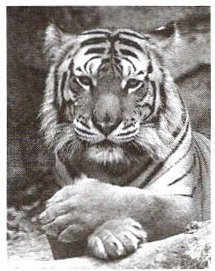
Chinese word "王".Many tigers come from China and India. Tigers are dangerous animals. They like eating meat. They have yellow and 4.
beautiful
(beauty) fur with black stripes. They usually weigh about 65 kg to 250 kg. Tigers can run very fast. People like 5. to watch/watching
(watch) them in the zoo, but they usually feel 6. scared
(scare) when tigers walk to them.Most people think tigers are dangerous, but they don't know tigers are 7.
in
danger now. People cut down many trees, so tigers 8. are losing
(lose) their homes now. There are only more than two hundred South China Tigers in the world. Lots of people want to kill 9. them
(they) for their fur. We must save tigers and not buy things made of their fur. They 10. truly
(true) need our help!答案
1. or 2. tiger's 3. the 4. beautiful 5. to watch/watching 6. scared 7. in 8. are losing
9. them 10. truly
9. them 10. truly
解析
【分析】
本题是一篇关于动物保护的说明文,需结合句子结构、语境、固定搭配、词性变化等语法知识逐个填空。先通读全文理解大意,再针对每个空格分析:1. 选择疑问句用or连接并列成分;2. 表示所属关系用名词所有格;3. 特指某事物用定冠词;4. 修饰名词用形容词;5. like的非谓语用法;6. 修饰人用-ed形容词;7. 固定搭配in danger;8. 现在进行时的用法;9. 动词后用代词宾格;10. 修饰动词用副词。
【解析】
1. 考查连词。此处为选择疑问句,连接两个并列的名词短语,故填or。
2. 考查名词所有格。表示“老虎的前额”,需用名词所有格修饰名词forehead,故填tiger's。
3. 考查冠词。此处特指“中国的‘王’字”,用定冠词the,故填the。
4. 考查形容词。修饰名词fur,需用beauty的形容词形式,故填beautiful。
5. 考查非谓语动词。like to do/doing sth为固定用法,意为“喜欢做某事”,故填to watch/watching。
6. 考查形容词。主语指代人,需用-ed形式的形容词表示“感到害怕的”,故填scared。
7. 考查固定搭配。in danger是固定短语,意为“处于危险中”,故填in。
8. 考查时态。根据时间状语now,用现在进行时,主语tigers为复数,故填are losing。
9. 考查代词。作动词kill的宾语,需用they的宾格形式,故填them。
10. 考查副词。修饰动词need,需用true的副词形式,故填truly。
【答案】
1. or 2. tiger's 3. the 4. beautiful 5. to watch/watching 6. scared 7. in 8. are losing 9. them 10. truly
【知识点】
名词所有格、冠词用法、固定搭配
【点评】
本题围绕动物保护主题,考查初中英语基础语法,涵盖词性变化、冠词、固定搭配等知识点,难度适中,需结合语境和语法规则解题。
【难度系数】
0.6
本题是一篇关于动物保护的说明文,需结合句子结构、语境、固定搭配、词性变化等语法知识逐个填空。先通读全文理解大意,再针对每个空格分析:1. 选择疑问句用or连接并列成分;2. 表示所属关系用名词所有格;3. 特指某事物用定冠词;4. 修饰名词用形容词;5. like的非谓语用法;6. 修饰人用-ed形容词;7. 固定搭配in danger;8. 现在进行时的用法;9. 动词后用代词宾格;10. 修饰动词用副词。
【解析】
1. 考查连词。此处为选择疑问句,连接两个并列的名词短语,故填or。
2. 考查名词所有格。表示“老虎的前额”,需用名词所有格修饰名词forehead,故填tiger's。
3. 考查冠词。此处特指“中国的‘王’字”,用定冠词the,故填the。
4. 考查形容词。修饰名词fur,需用beauty的形容词形式,故填beautiful。
5. 考查非谓语动词。like to do/doing sth为固定用法,意为“喜欢做某事”,故填to watch/watching。
6. 考查形容词。主语指代人,需用-ed形式的形容词表示“感到害怕的”,故填scared。
7. 考查固定搭配。in danger是固定短语,意为“处于危险中”,故填in。
8. 考查时态。根据时间状语now,用现在进行时,主语tigers为复数,故填are losing。
9. 考查代词。作动词kill的宾语,需用they的宾格形式,故填them。
10. 考查副词。修饰动词need,需用true的副词形式,故填truly。
【答案】
1. or 2. tiger's 3. the 4. beautiful 5. to watch/watching 6. scared 7. in 8. are losing 9. them 10. truly
【知识点】
名词所有格、冠词用法、固定搭配
【点评】
本题围绕动物保护主题,考查初中英语基础语法,涵盖词性变化、冠词、固定搭配等知识点,难度适中,需结合语境和语法规则解题。
【难度系数】
0.6
四、完形填空。
主题群:自然生态 子主题:与自然和谐共生 语篇类型:记叙文 难度:★★★
Mishak rubs(擦) his eyes when he prepares warm milk. Like other people looking after babies, he is 1. It is 5:30 a. m., and he hasn't had much sleep. Mishak sits next to the baby elephant, smiles and makes sure she finishes the breakfast.
Mishak is a 2 from an elephant rescue(救援) centre. 3, many elephants meet problems, so they need rescuing here. For one thing, hunters 4 elephants for their ivory. For another, people build homes where 5 used to live. Hungry elephants walk into the villages and fields to look for food. They often cause serious damage(破坏), so farmers kill 6. As a result, adult elephants often leave their babies behind.
When a baby elephant 7 its mother, it's also in great danger. This is because it needs its mother's milk for about four years. 8 this milk, the baby has little chance to survive. Research shows that elephants, like people, have 9. If the mother elephant dies, the baby elephant often becomes sad and ill.
The centre's job is to raise these baby elephants and send them back to the 10 step by step. First, keepers take turns to 11 the baby elephants because they don't want an elephant to depend on one of the keepers too much. Then keepers take the elephants into the forest. This is a(n) 12 part of the process because the elephants learn how to eat in the wild and communicate with others. When an elephant is four and no longer needs 13, keepers move it to the wild. This makes elephants become 14. It often takes them eight to ten years to get used to the wild.
At bedtime, Mishak has to lie down and 15 with his baby elephant. Mishak says that when he leaves the babies, they cry. Does he need an alarm to wake up? "Oh, no," he says. "The elephants are our alarms."
(
(
(
(
(
(
(
(
(
(
(
(
(
(
(
主题群:自然生态 子主题:与自然和谐共生 语篇类型:记叙文 难度:★★★
Mishak rubs(擦) his eyes when he prepares warm milk. Like other people looking after babies, he is 1. It is 5:30 a. m., and he hasn't had much sleep. Mishak sits next to the baby elephant, smiles and makes sure she finishes the breakfast.
Mishak is a 2 from an elephant rescue(救援) centre. 3, many elephants meet problems, so they need rescuing here. For one thing, hunters 4 elephants for their ivory. For another, people build homes where 5 used to live. Hungry elephants walk into the villages and fields to look for food. They often cause serious damage(破坏), so farmers kill 6. As a result, adult elephants often leave their babies behind.
When a baby elephant 7 its mother, it's also in great danger. This is because it needs its mother's milk for about four years. 8 this milk, the baby has little chance to survive. Research shows that elephants, like people, have 9. If the mother elephant dies, the baby elephant often becomes sad and ill.
The centre's job is to raise these baby elephants and send them back to the 10 step by step. First, keepers take turns to 11 the baby elephants because they don't want an elephant to depend on one of the keepers too much. Then keepers take the elephants into the forest. This is a(n) 12 part of the process because the elephants learn how to eat in the wild and communicate with others. When an elephant is four and no longer needs 13, keepers move it to the wild. This makes elephants become 14. It often takes them eight to ten years to get used to the wild.
At bedtime, Mishak has to lie down and 15 with his baby elephant. Mishak says that when he leaves the babies, they cry. Does he need an alarm to wake up? "Oh, no," he says. "The elephants are our alarms."
(
C
)1. A. nervous B. down C. tired D. shy(
B
)2. A. teacher B. keeper C. doctor D. policeman(
A
)3. A. Unluckily B. Finally C. Excitedly D. Suddenly(
B
)4. A. buy B. kill C. keep D. collect(
B
)5. A. hunters B. elephants C. adults D. keepers(
D
)6. A. us B. it C. her D. them(
A
)7. A. loses B. helps C. saves D. follows(
D
)8. A. By B. For C. As D. Without(
D
)9. A. foods B. homes C. friends D. feelings(
C
)10. A. centre B. zoo C. wild D. city(
D
)11. A. look out B. look for C. look at D. look after(
C
)12. A. easy B. fast C. important D. strange(
A
)13. A. milk B. fruit C. grass D. leaves(
A
)14. A. brave B. popular C. friendly D. patient(
D
)15. A. work B. play C. study D. sleep答案
1. C 2. B 3. A 4. B 5. B 6. D 7. A 8. D 9. D 10. C 11. D 12. C 13. A 14. A 15. D
解析
【分析】
这是一篇以“与自然和谐共生”为主题的记叙文,讲述大象救援中心工作人员照顾孤儿象并助力其回归野外的故事。解题时需结合上下文语境、词汇含义及逻辑关系逐一分析选项:1. 由“没睡多少”判断人物状态;2. 由救援中心的工作场景判断职业;3. 由大象面临的困境判断副词;4. 由猎人的行为动机判断动词;5. 由栖息地被占用的背景判断名词;6. 由指代对象的单复数判断代词;7. 由小象的处境判断动词;8. 由母乳的重要性判断介词;9. 由后文情绪描述判断名词;10. 由回归的目标地点判断名词;11. 由照顾小象的方式判断动词短语;12. 由带象进入森林的意义判断形容词;13. 由小象的成长阶段判断名词;14. 由适应野外的要求判断形容词;15. 由睡前的行为判断动词。
【解析】
1. 前文提到“5:30 a.m.,and he hasn't had much sleep”,说明Mishak疲惫,选C(tired);2. Mishak在大象救援中心专职照顾小象,身份是饲养员,选B(keeper);3. 大象面临诸多生存问题,此处表“不幸地”,选A(Unluckily);4. 猎人为获取象牙杀害大象,选B(kill);5. 人们建房的区域原本是大象的栖息地,选B(elephants);6. 指代前文复数名词“elephants”,作动词kill的宾语,选D(them);7. 小象失去妈妈后陷入危险,选A(loses);8. 没有母乳,小象几乎无法存活,选D(Without);9. 后文提到小象失去妈妈会伤心生病,说明大象有情感,选D(feelings);10. 救援中心的工作是将小象送回野外,选C(wild);11. 饲养员轮流照顾小象,避免其过度依赖某一人,选D(look after);12. 带象进入森林是重要环节,因为要学习野外生存技能,选C(important);13. 小象四岁时不再需要母乳,选A(milk);14. 适应野外生活需要勇敢,选A(brave);15. 睡前Mishak要躺下和小象一起睡,选D(sleep)。
【答案】
1.C 2.B 3.A 4.B 5.B 6.D 7.A 8.D 9.D 10.C 11.D 12.C 13.A 14.A 15.D
【知识点】
完形填空(语境理解)、词汇辨析、记叙文语篇分析
【点评】
本文紧扣“与自然和谐共生”主题,通过记叙文形式考察学生对上下文逻辑的把握、词汇的运用能力,是符合初中水平的中等难度完形填空,能引导学生关注生态保护。
【难度系数】
0.5
这是一篇以“与自然和谐共生”为主题的记叙文,讲述大象救援中心工作人员照顾孤儿象并助力其回归野外的故事。解题时需结合上下文语境、词汇含义及逻辑关系逐一分析选项:1. 由“没睡多少”判断人物状态;2. 由救援中心的工作场景判断职业;3. 由大象面临的困境判断副词;4. 由猎人的行为动机判断动词;5. 由栖息地被占用的背景判断名词;6. 由指代对象的单复数判断代词;7. 由小象的处境判断动词;8. 由母乳的重要性判断介词;9. 由后文情绪描述判断名词;10. 由回归的目标地点判断名词;11. 由照顾小象的方式判断动词短语;12. 由带象进入森林的意义判断形容词;13. 由小象的成长阶段判断名词;14. 由适应野外的要求判断形容词;15. 由睡前的行为判断动词。
【解析】
1. 前文提到“5:30 a.m.,and he hasn't had much sleep”,说明Mishak疲惫,选C(tired);2. Mishak在大象救援中心专职照顾小象,身份是饲养员,选B(keeper);3. 大象面临诸多生存问题,此处表“不幸地”,选A(Unluckily);4. 猎人为获取象牙杀害大象,选B(kill);5. 人们建房的区域原本是大象的栖息地,选B(elephants);6. 指代前文复数名词“elephants”,作动词kill的宾语,选D(them);7. 小象失去妈妈后陷入危险,选A(loses);8. 没有母乳,小象几乎无法存活,选D(Without);9. 后文提到小象失去妈妈会伤心生病,说明大象有情感,选D(feelings);10. 救援中心的工作是将小象送回野外,选C(wild);11. 饲养员轮流照顾小象,避免其过度依赖某一人,选D(look after);12. 带象进入森林是重要环节,因为要学习野外生存技能,选C(important);13. 小象四岁时不再需要母乳,选A(milk);14. 适应野外生活需要勇敢,选A(brave);15. 睡前Mishak要躺下和小象一起睡,选D(sleep)。
【答案】
1.C 2.B 3.A 4.B 5.B 6.D 7.A 8.D 9.D 10.C 11.D 12.C 13.A 14.A 15.D
【知识点】
完形填空(语境理解)、词汇辨析、记叙文语篇分析
【点评】
本文紧扣“与自然和谐共生”主题,通过记叙文形式考察学生对上下文逻辑的把握、词汇的运用能力,是符合初中水平的中等难度完形填空,能引导学生关注生态保护。
【难度系数】
0.5
