

 登录
登录
B
①“Your personality(性格) has three different layers (层),” says Robyn Fivush, a psychologist at Emory University.
②First, there are your most basic personality traits(特征), including how open you are to new experiences, and whether you like to be with other people or prefer to be alone, and how stressed out you get in difficult situations. Your basic traits are pretty obvious even when you're a baby. “Some babies are a little bit fussier(一惊一乍的) or a little bit more active or a little bit more smiley. Those can develop into more stable personality traits,” Fivush says. “They stay pretty much the same as you grow up.”
③The next layer of your personality is your experiences. “If your family is loving and responsive when you're a baby, that teaches you ‘the world is a safe and trusting place, I'm going to be OK, my needs are going to be met, and if anything bad happens, I have people to take care of me’,” Fivush says. That feeling of trust and security lasts for your whole life, and it tends to make you more confident and capable
of dealing with difficulties when you are an adult(成年人).
④“The third layer is the stories you tell about yourself,” Fivush says. “We all tell stories about our lives, both to ourselves and to other people. Those stories give meaning to your experiences. They can be stories about your own life—like how much you loved your science teacher, what a great time you had when she helped you with your science fair project, and how that made you want to be a scientist. But your family's stories are equally important.” Knowing about how your parents met, or what your grandmother's childhood was like, helps you see where you come from. And talking with your family about both the happy and sad times you've experienced can help you understand those events more clearly and learn different ways to deal with challenges. Family stories don't just teach you who you are—they help you find out who you want to be.
6. According to the passage, which of the following is one of a person's most basic personality traits?
A. Not liking being with others.
B. Growing up in a rich family.
C. Sharing family stories with teachers.
D. Understanding events in an easy way.
7. What does the underlined word “obvious” in Paragraph 2 mean?
A. Easy to see.
B. Hard to see.
C. Easy to study.
D. Hard to understand.
8. What will a man most probably be like if he grows up in a loving family?
A. Careful.
B. Kind.
C. Confident.
D. Helpful.
9. Why are family stories important?
A. Because they can make your dream come true.
B. Because they can make you feel happy and relaxed.
C. Because they can help you understand who you want to be.
D. Because they can help you deal with any difficulties you meet.
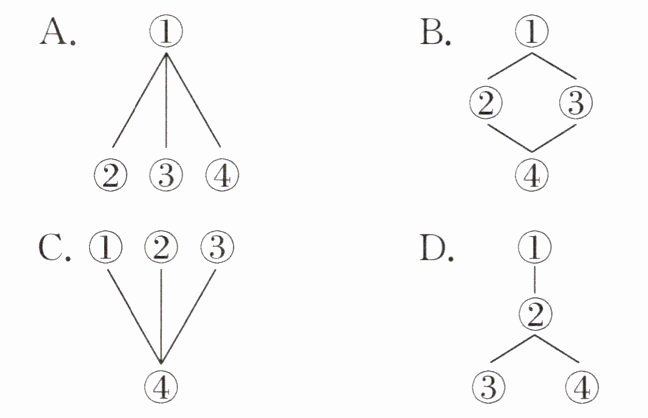
10. 新考法 篇章结构 Which of the following best shows the structure of the passage?
①“Your personality(性格) has three different layers (层),” says Robyn Fivush, a psychologist at Emory University.
②First, there are your most basic personality traits(特征), including how open you are to new experiences, and whether you like to be with other people or prefer to be alone, and how stressed out you get in difficult situations. Your basic traits are pretty obvious even when you're a baby. “Some babies are a little bit fussier(一惊一乍的) or a little bit more active or a little bit more smiley. Those can develop into more stable personality traits,” Fivush says. “They stay pretty much the same as you grow up.”
③The next layer of your personality is your experiences. “If your family is loving and responsive when you're a baby, that teaches you ‘the world is a safe and trusting place, I'm going to be OK, my needs are going to be met, and if anything bad happens, I have people to take care of me’,” Fivush says. That feeling of trust and security lasts for your whole life, and it tends to make you more confident and capable
of dealing with difficulties when you are an adult(成年人).
④“The third layer is the stories you tell about yourself,” Fivush says. “We all tell stories about our lives, both to ourselves and to other people. Those stories give meaning to your experiences. They can be stories about your own life—like how much you loved your science teacher, what a great time you had when she helped you with your science fair project, and how that made you want to be a scientist. But your family's stories are equally important.” Knowing about how your parents met, or what your grandmother's childhood was like, helps you see where you come from. And talking with your family about both the happy and sad times you've experienced can help you understand those events more clearly and learn different ways to deal with challenges. Family stories don't just teach you who you are—they help you find out who you want to be.
6. According to the passage, which of the following is one of a person's most basic personality traits?
A. Not liking being with others.
B. Growing up in a rich family.
C. Sharing family stories with teachers.
D. Understanding events in an easy way.
7. What does the underlined word “obvious” in Paragraph 2 mean?
A. Easy to see.
B. Hard to see.
C. Easy to study.
D. Hard to understand.
8. What will a man most probably be like if he grows up in a loving family?
A. Careful.
B. Kind.
C. Confident.
D. Helpful.
9. Why are family stories important?
A. Because they can make your dream come true.
B. Because they can make you feel happy and relaxed.
C. Because they can help you understand who you want to be.
D. Because they can help you deal with any difficulties you meet.
10. 新考法 篇章结构 Which of the following best shows the structure of the passage?
答案
6.A 7.A 8.C 9.C 10.A
B
【语篇解读】本文主要介绍了人的个性养成的三个不同的层次。
6. A 解析:细节理解题。根据第二段“First, there are your most basic personality traits, including ... and whether you like to be with other people or prefer to be alone”可知,最基本的性格特征之一包括是否喜欢与他人相处。选项A“不喜欢与其他人相处”符合,故选A。
7. A 解析:词义猜测题。根据“Some babies are a little bit fussier or a little bit more active or a little bit more smiley.”以及“They stay pretty much the same as you grow up.”可知小孩的性格很容易看懂看透,基本性格特征从婴儿时期开始几乎保持不变,说明基础性格特征容易看懂看透。故obvious的意思是“明显的”。故选A。
8. C 解析:细节理解题。根据第三段“That feeling of trust and security lasts for your whole life, and it tends to make you more confident and capable of dealing with difficulties when you are an adult.”可知,来自有爱的家庭的人会更有信心和能力去应对困难。故选C。
9. C 解析:细节理解题。根据最后一段“Family stories don't just teach you who you are—they help you find out who you want to be.”可知,家庭故事帮助我们了解自身想成为怎样的人。故选C。
10. A 解析:篇章结构题。分析文章内容可知,本篇文章第一段总领全文,介绍人的性格有三层,第二到四段分别介绍了三层性格。故本篇文章的结构是“总—分”。故选A。
B
【语篇解读】本文主要介绍了人的个性养成的三个不同的层次。
6. A 解析:细节理解题。根据第二段“First, there are your most basic personality traits, including ... and whether you like to be with other people or prefer to be alone”可知,最基本的性格特征之一包括是否喜欢与他人相处。选项A“不喜欢与其他人相处”符合,故选A。
7. A 解析:词义猜测题。根据“Some babies are a little bit fussier or a little bit more active or a little bit more smiley.”以及“They stay pretty much the same as you grow up.”可知小孩的性格很容易看懂看透,基本性格特征从婴儿时期开始几乎保持不变,说明基础性格特征容易看懂看透。故obvious的意思是“明显的”。故选A。
8. C 解析:细节理解题。根据第三段“That feeling of trust and security lasts for your whole life, and it tends to make you more confident and capable of dealing with difficulties when you are an adult.”可知,来自有爱的家庭的人会更有信心和能力去应对困难。故选C。
9. C 解析:细节理解题。根据最后一段“Family stories don't just teach you who you are—they help you find out who you want to be.”可知,家庭故事帮助我们了解自身想成为怎样的人。故选C。
10. A 解析:篇章结构题。分析文章内容可知,本篇文章第一段总领全文,介绍人的性格有三层,第二到四段分别介绍了三层性格。故本篇文章的结构是“总—分”。故选A。
解析
【分析】
首先明确文章主旨为介绍人的性格的三个层次,针对不同题型采用对应解题方法:细节理解题需定位题干关键词到原文匹配信息;词义猜测题结合上下文语境推断词义;篇章结构题梳理段落逻辑判断结构类型。
【解析】
6. 细节理解题:根据题干“most basic personality traits”定位到第二段,原文提到基本性格特征包含“whether you like to be with other people or prefer to be alone”,选项A“Not liking being with others”对应原文“prefer to be alone”,符合要求,故选A。
7. 词义猜测题:根据划线词后文“Some babies are a little bit fussier or a little bit more active or a little bit more smiley”及“They stay pretty much the same as you grow up”,可知婴儿的性格表现明显易观察,故“obvious”意为“容易看到的”,选A。
8. 细节理解题:根据题干“loving family”定位到第三段,原文提到“if your family is loving and responsive... that feeling... makes you more confident”,故选C。
9. 细节理解题:根据题干“family stories important”定位到第四段,原文明确“Family stories don't just teach you who you are—they help you find out who you want to be”,故选C。
10. 篇章结构题:第一段总述“personality has three different layers”,第二到四段分别介绍三层性格,为“总-分”结构,对应选项A。
【答案】
6.A 7.A 8.C 9.C 10.A
【知识点】
英语阅读理解、细节理解题、篇章结构题
【点评】
本文围绕性格三层结构展开,题型涵盖细节理解、词义猜测、篇章结构,考查学生定位原文、语境推断、梳理结构的能力,难度适中。
【难度系数】
0.6
首先明确文章主旨为介绍人的性格的三个层次,针对不同题型采用对应解题方法:细节理解题需定位题干关键词到原文匹配信息;词义猜测题结合上下文语境推断词义;篇章结构题梳理段落逻辑判断结构类型。
【解析】
6. 细节理解题:根据题干“most basic personality traits”定位到第二段,原文提到基本性格特征包含“whether you like to be with other people or prefer to be alone”,选项A“Not liking being with others”对应原文“prefer to be alone”,符合要求,故选A。
7. 词义猜测题:根据划线词后文“Some babies are a little bit fussier or a little bit more active or a little bit more smiley”及“They stay pretty much the same as you grow up”,可知婴儿的性格表现明显易观察,故“obvious”意为“容易看到的”,选A。
8. 细节理解题:根据题干“loving family”定位到第三段,原文提到“if your family is loving and responsive... that feeling... makes you more confident”,故选C。
9. 细节理解题:根据题干“family stories important”定位到第四段,原文明确“Family stories don't just teach you who you are—they help you find out who you want to be”,故选C。
10. 篇章结构题:第一段总述“personality has three different layers”,第二到四段分别介绍三层性格,为“总-分”结构,对应选项A。
【答案】
6.A 7.A 8.C 9.C 10.A
【知识点】
英语阅读理解、细节理解题、篇章结构题
【点评】
本文围绕性格三层结构展开,题型涵盖细节理解、词义猜测、篇章结构,考查学生定位原文、语境推断、梳理结构的能力,难度适中。
【难度系数】
0.6
