

 登录
登录
五、阅读理解
For centuries, China has been known as "a
state of ceremonies", which means Liyi Zhibang.
There was much greeting etiquette in ancient
China. And the fist-and-palm salute(拱手礼) was
quite a classic example. Today, although Chinese
people usually shake hands when meeting friends
and relatives, people still make fist-and-palm
salutes when they are paying a visit to someone
during the Spring Festival or attending someone's
wedding or birthday party.
The fist-and-palm salute has a history of more
than 3,000 years. Since the Western Zhou Dynasty,
people had already performed it when meeting
peers. In ancient times, if people met a stranger,
they would prepare for a fight if necessary, and their
hands were always ready for holding any weapons.
By clasping(紧握) their hands in front of their
chest, people signaled, "I have no weapons and
mean no harm." Later, it became the etiquette when
people met each other or showed thanks.
So, how should people do the fist-and-palm
salute properly? Firstly, stand at attention. If
you're a man, make a half fist(拳) with your right
hand, then hold the right hand with your left hand
in front of your chest, look at the person, raise
both hands to the eyebrow, bend down and shake
hands gently three times. At the same time, you
can also say some lucky greeting words. If you're a
woman, you should do it the other way—the right
hand on the top.
People may be more familiar with the hold-fist
salute, called Baoquan Li in Chinese. It is widely
used among the kung fu masters and students. This
gesture is formed by holding the right fist very
tightly closed and covering it with the left hand
open, and extending both arms a little forward in
front of the chest. Make sure the left thumb(拇
指) is close to the index finger(食指) and don't
point it at yourself, as it shows impoliteness.
1. What does the underlined word "etiquette" in
Paragraph 1 mean?
A. Need. B. Manners.
C. Time. D. Groups.
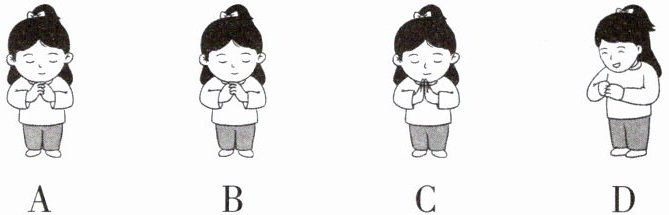
2. Which picture shows the correct way for
women to do the fist-and-palm salute?
3. If Mike wants to do the hold-fist salute, he
should
A. keep his right hand open
B. put his right hand on his left
C. not point his left thumb at himself
D. not hold out his arms
For centuries, China has been known as "a
state of ceremonies", which means Liyi Zhibang.
There was much greeting etiquette in ancient
China. And the fist-and-palm salute(拱手礼) was
quite a classic example. Today, although Chinese
people usually shake hands when meeting friends
and relatives, people still make fist-and-palm
salutes when they are paying a visit to someone
during the Spring Festival or attending someone's
wedding or birthday party.
The fist-and-palm salute has a history of more
than 3,000 years. Since the Western Zhou Dynasty,
people had already performed it when meeting
peers. In ancient times, if people met a stranger,
they would prepare for a fight if necessary, and their
hands were always ready for holding any weapons.
By clasping(紧握) their hands in front of their
chest, people signaled, "I have no weapons and
mean no harm." Later, it became the etiquette when
people met each other or showed thanks.
So, how should people do the fist-and-palm
salute properly? Firstly, stand at attention. If
you're a man, make a half fist(拳) with your right
hand, then hold the right hand with your left hand
in front of your chest, look at the person, raise
both hands to the eyebrow, bend down and shake
hands gently three times. At the same time, you
can also say some lucky greeting words. If you're a
woman, you should do it the other way—the right
hand on the top.
People may be more familiar with the hold-fist
salute, called Baoquan Li in Chinese. It is widely
used among the kung fu masters and students. This
gesture is formed by holding the right fist very
tightly closed and covering it with the left hand
open, and extending both arms a little forward in
front of the chest. Make sure the left thumb(拇
指) is close to the index finger(食指) and don't
point it at yourself, as it shows impoliteness.
1. What does the underlined word "etiquette" in
Paragraph 1 mean?
A. Need. B. Manners.
C. Time. D. Groups.
2. Which picture shows the correct way for
women to do the fist-and-palm salute?
3. If Mike wants to do the hold-fist salute, he
should
C
.A. keep his right hand open
B. put his right hand on his left
C. not point his left thumb at himself
D. not hold out his arms
答案
五、【语篇导读】本文是一篇说明文,主要介
绍了中国的拱手礼与抱拳礼。
1. B 提示:词义猜测题。根据第一段中"There
was much greeting etiquette in ancient China.
And the fist-and-palm salute was quite a classic
example."可知,中国古代有很多打招呼的礼
仪。拱手礼是一个相当典型的例子。由此推
断,etiquette意为"礼仪",与manners词义
相近。
2. A 提示:推理判断题。根据第三段中"Firstly,
stand at attention. If you're a man, make a half fist
with your right hand, then hold the right hand with
your left hand in front of your chest... If you're a
woman, you should do it the other way—the right
hand on the top."可知,女士做拱手礼时应该用
左手握半拳,然后将右手放在胸前握住左手。
3. C 提示:细节理解题。根据最后一段中
"Make sure the left thumb is close to the index
finger and don't point it at yourself, as it shows
impoliteness."可知,做抱拳礼时,左手拇指应
靠近食指,但不要指向自己。
绍了中国的拱手礼与抱拳礼。
1. B 提示:词义猜测题。根据第一段中"There
was much greeting etiquette in ancient China.
And the fist-and-palm salute was quite a classic
example."可知,中国古代有很多打招呼的礼
仪。拱手礼是一个相当典型的例子。由此推
断,etiquette意为"礼仪",与manners词义
相近。
2. A 提示:推理判断题。根据第三段中"Firstly,
stand at attention. If you're a man, make a half fist
with your right hand, then hold the right hand with
your left hand in front of your chest... If you're a
woman, you should do it the other way—the right
hand on the top."可知,女士做拱手礼时应该用
左手握半拳,然后将右手放在胸前握住左手。
3. C 提示:细节理解题。根据最后一段中
"Make sure the left thumb is close to the index
finger and don't point it at yourself, as it shows
impoliteness."可知,做抱拳礼时,左手拇指应
靠近食指,但不要指向自己。
解析
【分析】
1. 第1题是词义猜测题,解题思路是结合上下文语境,文中提到古代中国有很多问候的etiquette,且拱手礼是典型例子,由此推断该词和“礼仪”相关,再对比选项选出同义词汇。
2. 第2题是推理判断题,需要先在文中找到关于女士行拱手礼的具体描述,再将描述和图片进行对应,选出符合要求的图片。
3. 第3题是细节理解题,解题时要定位到文中介绍抱拳礼的段落,找到其中的具体要求,再逐一对比选项,选出符合要求的选项。
【解析】
1. 第1题:根据第一段中"There was much greeting etiquette in ancient China. And the fist-and-palm salute was quite a classic example."可知,中国古代有很多打招呼的礼仪,拱手礼是典型例子,由此可推断"etiquette"意为“礼仪”,和选项B的"Manners"词义相近,故选B。
2. 第2题:根据第三段中"Firstly, stand at attention. If you're a man, make a half fist with your right hand, then hold the right hand with your left hand in front of your chest... If you're a woman, you should do it the other way—the right hand on the top."可知,女士行拱手礼时是右手在上,左手在下握半拳,对应图片A,故选A。
3. 第3题:根据最后一段中"Make sure the left thumb is close to the index finger and don't point it at yourself, as it shows impoliteness."可知,行抱拳礼时,左手拇指不能指向自己,选项C符合要求,故选C。
【答案】
1. B;2. A;3. C
【知识点】
词义猜测、细节查找、推理判断
【点评】
本文是一篇介绍中国传统礼仪(拱手礼和抱拳礼)的说明文,题目考查了阅读理解的核心技能,既需要学生结合上下文推测词义,也需要精准查找细节、进行合理推理,在解题的同时也能加深对中国传统文化的了解。
【难度系数】
0.7
1. 第1题是词义猜测题,解题思路是结合上下文语境,文中提到古代中国有很多问候的etiquette,且拱手礼是典型例子,由此推断该词和“礼仪”相关,再对比选项选出同义词汇。
2. 第2题是推理判断题,需要先在文中找到关于女士行拱手礼的具体描述,再将描述和图片进行对应,选出符合要求的图片。
3. 第3题是细节理解题,解题时要定位到文中介绍抱拳礼的段落,找到其中的具体要求,再逐一对比选项,选出符合要求的选项。
【解析】
1. 第1题:根据第一段中"There was much greeting etiquette in ancient China. And the fist-and-palm salute was quite a classic example."可知,中国古代有很多打招呼的礼仪,拱手礼是典型例子,由此可推断"etiquette"意为“礼仪”,和选项B的"Manners"词义相近,故选B。
2. 第2题:根据第三段中"Firstly, stand at attention. If you're a man, make a half fist with your right hand, then hold the right hand with your left hand in front of your chest... If you're a woman, you should do it the other way—the right hand on the top."可知,女士行拱手礼时是右手在上,左手在下握半拳,对应图片A,故选A。
3. 第3题:根据最后一段中"Make sure the left thumb is close to the index finger and don't point it at yourself, as it shows impoliteness."可知,行抱拳礼时,左手拇指不能指向自己,选项C符合要求,故选C。
【答案】
1. B;2. A;3. C
【知识点】
词义猜测、细节查找、推理判断
【点评】
本文是一篇介绍中国传统礼仪(拱手礼和抱拳礼)的说明文,题目考查了阅读理解的核心技能,既需要学生结合上下文推测词义,也需要精准查找细节、进行合理推理,在解题的同时也能加深对中国传统文化的了解。
【难度系数】
0.7
六、信息还原
(2024 常州期中)It's nice to receive a gift.
another person or donating it. Is it impolite to
regift a present?
Yes!
thought or care into choosing something special,
and the recipient(收礼人) can usually tell. This
can hurt their feelings.
Also, the giver of the gift may ask if you like
it or may want to see you use it. What would you
do if you had given it away? If you tell the truth,
you're being unkind. And if you don't, you'll have
lied.
No!
There's an old saying about receiving a gift:
It's the thought that counts. The gift may go to
someone else, but the thought in it stays. You can
still be thankful to the giver, even if you choose to
give away the gift.
and make them really happy!
A. It's hard to choose between giving it away and using it
yourself.
B. Also, when you regift something, you're preventing
waste.
C. Regifting makes the gift not special or thoughtful.
D. Instead of regifting, it's better to find a creative way to
use the gift yourself.
E. So forget about others, and put your happiness first.
F. But if you don't want or need it, would you regift it?
1.
4.
(2024 常州期中)It's nice to receive a gift.
But if you don't want or need it, would you regift it?
1 Regifting(转送) means giving the gift toanother person or donating it. Is it impolite to
regift a present?
Yes!
Regifting makes the gift not special or thoughtful.
2 When you regift, you're not puttingthought or care into choosing something special,
and the recipient(收礼人) can usually tell. This
can hurt their feelings.
Also, the giver of the gift may ask if you like
it or may want to see you use it. What would you
do if you had given it away? If you tell the truth,
you're being unkind. And if you don't, you'll have
lied.
Instead of regifting, it's better to find a creative way to use the gift yourself.
3No!
There's an old saying about receiving a gift:
It's the thought that counts. The gift may go to
someone else, but the thought in it stays. You can
still be thankful to the giver, even if you choose to
give away the gift.
Also, when you regift something, you're preventing waste.
4 The gift can be great for someone elseand make them really happy!
A. It's hard to choose between giving it away and using it
yourself.
B. Also, when you regift something, you're preventing
waste.
C. Regifting makes the gift not special or thoughtful.
D. Instead of regifting, it's better to find a creative way to
use the gift yourself.
E. So forget about others, and put your happiness first.
F. But if you don't want or need it, would you regift it?
1.
F
2. C
3. D
4.
B
答案
六、【语篇导读】本文主要讨论了转送礼物是
否礼貌。
1. F 2. C 3. D 4. B
否礼貌。
1. F 2. C 3. D 4. B
解析
【分析】
这是一篇议论文,围绕“转送礼物是否礼貌”展开正反两方讨论。解题时需遵循以下思路:
1. 抓语篇结构:先总起引出话题,再分“是”和“否”两个角度论述,需根据段落位置和前后句语义衔接选择合适选项。
2. 逐空分析:
第1空:前文讲收到礼物的愉悦,后文开始解释“Regifting”的定义并提出核心问题,需选能引出转送礼物话题的句子,衔接前后内容。
第2空:前文明确“转送礼物不礼貌”的观点,后文解释转送缺乏用心会伤害他人,需选能阐释该观点、呼应后文原因的句子。
第3空:前文分析转送礼物后面对送礼人询问的两难困境,需选针对该困境给出合理建议的句子。
第4空:前文在论述“转送礼物并非不礼貌”的观点,后文提到礼物对他人的积极作用,需选能补充转送礼物好处的句子,完善论证逻辑。
【解析】
1. 第1空:前文提到“It's nice to receive a gift.”,后文开始解释“Regifting”的含义并提出“Is it impolite to regift a present?”的问题。F选项“But if you don't want or need it, would you regift it?”自然地引出转送礼物的话题,起到承上启下的作用,故选F。
2. 第2空:前文表明“Yes!”(即转送礼物不礼貌)的观点,后文指出“When you regift, you're not putting thought or care into choosing something special...”。C选项“Regifting makes the gift not special or thoughtful.”是对“转送礼物不礼貌”这一观点的具体阐释,与后文内容紧密呼应,故选C。
3. 第3空:前文分析了转送礼物后,面对送礼人询问时“说实话不友善、说谎又不妥”的两难处境。D选项“Instead of regifting, it's better to find a creative way to use the gift yourself.”针对这种困境给出了合理的解决建议,衔接自然,故选D。
4. 第4空:前文在阐述“转送礼物并非不礼貌”的观点,后文提到“The gift can be great for someone else and make them really happy!”。B选项“Also, when you regift something, you're preventing waste.”补充了转送礼物的另一好处,丰富了论证逻辑,与后文内容衔接顺畅,故选B。
【答案】
1.F 2.C 3.D 4.B
【知识点】
信息还原(七选五)、语境逻辑衔接、议论文语篇理解
【点评】
本文围绕“转送礼物是否礼貌”展开正反两方论述,语篇逻辑清晰,考查学生对上下文语义衔接和逻辑关系的把握能力。解题时需紧扣段落主旨,结合前后句的语义关联进行选项筛选,同时要理解议论文的论证结构,提升语篇理解能力。
【难度系数】
0.6
这是一篇议论文,围绕“转送礼物是否礼貌”展开正反两方讨论。解题时需遵循以下思路:
1. 抓语篇结构:先总起引出话题,再分“是”和“否”两个角度论述,需根据段落位置和前后句语义衔接选择合适选项。
2. 逐空分析:
第1空:前文讲收到礼物的愉悦,后文开始解释“Regifting”的定义并提出核心问题,需选能引出转送礼物话题的句子,衔接前后内容。
第2空:前文明确“转送礼物不礼貌”的观点,后文解释转送缺乏用心会伤害他人,需选能阐释该观点、呼应后文原因的句子。
第3空:前文分析转送礼物后面对送礼人询问的两难困境,需选针对该困境给出合理建议的句子。
第4空:前文在论述“转送礼物并非不礼貌”的观点,后文提到礼物对他人的积极作用,需选能补充转送礼物好处的句子,完善论证逻辑。
【解析】
1. 第1空:前文提到“It's nice to receive a gift.”,后文开始解释“Regifting”的含义并提出“Is it impolite to regift a present?”的问题。F选项“But if you don't want or need it, would you regift it?”自然地引出转送礼物的话题,起到承上启下的作用,故选F。
2. 第2空:前文表明“Yes!”(即转送礼物不礼貌)的观点,后文指出“When you regift, you're not putting thought or care into choosing something special...”。C选项“Regifting makes the gift not special or thoughtful.”是对“转送礼物不礼貌”这一观点的具体阐释,与后文内容紧密呼应,故选C。
3. 第3空:前文分析了转送礼物后,面对送礼人询问时“说实话不友善、说谎又不妥”的两难处境。D选项“Instead of regifting, it's better to find a creative way to use the gift yourself.”针对这种困境给出了合理的解决建议,衔接自然,故选D。
4. 第4空:前文在阐述“转送礼物并非不礼貌”的观点,后文提到“The gift can be great for someone else and make them really happy!”。B选项“Also, when you regift something, you're preventing waste.”补充了转送礼物的另一好处,丰富了论证逻辑,与后文内容衔接顺畅,故选B。
【答案】
1.F 2.C 3.D 4.B
【知识点】
信息还原(七选五)、语境逻辑衔接、议论文语篇理解
【点评】
本文围绕“转送礼物是否礼貌”展开正反两方论述,语篇逻辑清晰,考查学生对上下文语义衔接和逻辑关系的把握能力。解题时需紧扣段落主旨,结合前后句的语义关联进行选项筛选,同时要理解议论文的论证结构,提升语篇理解能力。
【难度系数】
0.6
