

 登录
登录
任务2 阅读表达
新考法 开放式谈做法 What will you do if you see
a fire?
新考法 开放式谈做法 What will you do if you see
a fire?
I will call 119 first.
答案
I will call 119 first.(开放性试题,言之有理即可)
解析
【分析】
这是一道开放式情景问答类题目,拿到题目首先要明确两个思考方向:第一,先回忆火灾发生时的正确合规应对做法,要选择安全合理、不存在危险操作的行为,不能写擅自扑火这类错误做法;第二,要匹配问句的一般将来时时态要求,用正确的英语句式组织语言,保证表达通顺、语法正确,符合题目要求即可,不需要拘泥于唯一答案。
【解析】
本题为开放性试题,作答满足两个要求即可得分:
1. 表述的做法符合消防安全常识,是遇到火灾时的正确应对行为,比如第一时间拨打火警电话119、快速远离火场求助等;
2. 句子时态和问句的一般将来时对应,语法表述准确无误。示例作答:I will call 119 first.
【答案】
I will call 119 first.(开放性试题,言之有理即可)
【知识点】
情景交际表达;一般将来时;消防安全常识
【点评】
本题属于新考法开放式表达题,没有固定唯一答案,答题门槛较低,同学们作答时要注意避开两个误区:一是不要写出不符合安全规范的危险做法,二是不要出现时态错误、句式混乱的英语表达,保证内容合理、语法正确就能拿到满分。
【难度系数】
0.9
这是一道开放式情景问答类题目,拿到题目首先要明确两个思考方向:第一,先回忆火灾发生时的正确合规应对做法,要选择安全合理、不存在危险操作的行为,不能写擅自扑火这类错误做法;第二,要匹配问句的一般将来时时态要求,用正确的英语句式组织语言,保证表达通顺、语法正确,符合题目要求即可,不需要拘泥于唯一答案。
【解析】
本题为开放性试题,作答满足两个要求即可得分:
1. 表述的做法符合消防安全常识,是遇到火灾时的正确应对行为,比如第一时间拨打火警电话119、快速远离火场求助等;
2. 句子时态和问句的一般将来时对应,语法表述准确无误。示例作答:I will call 119 first.
【答案】
I will call 119 first.(开放性试题,言之有理即可)
【知识点】
情景交际表达;一般将来时;消防安全常识
【点评】
本题属于新考法开放式表达题,没有固定唯一答案,答题门槛较低,同学们作答时要注意避开两个误区:一是不要写出不符合安全规范的危险做法,二是不要出现时态错误、句式混乱的英语表达,保证内容合理、语法正确就能拿到满分。
【难度系数】
0.9
情境4 常言道“水火无情”。火灾每年都令成千上万的人失去生命。你知道在家里如何防止火灾发生吗?让我们一起阅读下文了解一下吧。
答案
答案略
解析
【分析】
这是一道结合生活实际的消防安全开放性情境题,解题时首先要结合日常积累的居家安全常识,从用电安全、用火安全、易燃易爆物品存放、日常隐患排查等贴近家庭生活的维度梳理合理的防火措施,不需要复杂的推导计算,只要给出的做法符合实际、可落地即可。
【解析】
本题为开放性实践类题目,无统一固定答案,可参考以下常见家庭防火方向组织作答:
1. 用电层面:不私拉乱接电线,避免多个大功率电器同时接在同一个插排上,电器使用结束后及时断电,避免电器长时间过载发热引发火情;
2. 用火层面:烹饪使用明火时全程有人值守,用完燃气及时关闭总阀门,不卧床吸烟,不在家中楼道堆放废纸、塑料等易燃杂物;
3. 物品存放层面:打火机、高浓度酒精等易燃易爆物品放置在阴凉通风、远离热源且儿童无法触碰的位置;
4. 日常防护层面:定期检查家中电线、燃气管道是否出现老化破损,在家中配备灭火器、防烟面罩等消防应急物资。
【答案】
答案略
【知识点】
家庭消防安全常识
【点评】
本题紧密贴合生活实际,跳出纯理论考察的框架,引导学生将消防安全知识应用到日常居家场景中,帮助学生建立居家火灾防范的安全意识,作答门槛较低,只要给出的防火措施符合实际逻辑都属于合理作答。
【难度系数】
0.8
这是一道结合生活实际的消防安全开放性情境题,解题时首先要结合日常积累的居家安全常识,从用电安全、用火安全、易燃易爆物品存放、日常隐患排查等贴近家庭生活的维度梳理合理的防火措施,不需要复杂的推导计算,只要给出的做法符合实际、可落地即可。
【解析】
本题为开放性实践类题目,无统一固定答案,可参考以下常见家庭防火方向组织作答:
1. 用电层面:不私拉乱接电线,避免多个大功率电器同时接在同一个插排上,电器使用结束后及时断电,避免电器长时间过载发热引发火情;
2. 用火层面:烹饪使用明火时全程有人值守,用完燃气及时关闭总阀门,不卧床吸烟,不在家中楼道堆放废纸、塑料等易燃杂物;
3. 物品存放层面:打火机、高浓度酒精等易燃易爆物品放置在阴凉通风、远离热源且儿童无法触碰的位置;
4. 日常防护层面:定期检查家中电线、燃气管道是否出现老化破损,在家中配备灭火器、防烟面罩等消防应急物资。
【答案】
答案略
【知识点】
家庭消防安全常识
【点评】
本题紧密贴合生活实际,跳出纯理论考察的框架,引导学生将消防安全知识应用到日常居家场景中,帮助学生建立居家火灾防范的安全意识,作答门槛较低,只要给出的防火措施符合实际逻辑都属于合理作答。
【难度系数】
0.8
任务1 阅读表达
When there is a fire, it can be very dangerous for people. Every year, there are thousands of people losing their lives in fires. In many cases, these fires happened because people were careless. How to prevent fires at home? Here is some advice for you.
Use of electrical appliances(电器)
Always pay attention to the electrical appliances that you are using. Choose proper electrical appliances and use them correctly. For example, allow enough space behind your TV sets to make sure that there is room for the heat to get away. Do not put heaters near newspapers or other materials that can burn easily. When the electrical appliances are not in use, pull the plugs(插头) out. When you notice that there is something wrong with your electrical appliances, be sure to repair or replace them quickly.
Fire dangers in the kitchen
The kitchen is a place where we can find fuel(燃料), cooking stoves and many different kinds of electrical appliances. Because of this, you have to be more careful when working in the kitchen.
Before cooking, open the windows to allow fresh air to go into the kitchen. Do not leave the kitchen when a stove is in use. Keep waste paper away from a stove as well. If you smell strong gas in the kitchen, turn off the stove at once.
Matches and lighters
Put matches and lighters in safe places. It is dangerous to let children play with them.
Emergency exits(紧急出口)
Do not block(阻塞) the emergency exits or lock them. When there is a fire, the emergency exits are your main escape(逃离) paths.
1. Why did fires happen in many cases?
2. Where can we find fuel and cooking stoves?
任务2 判断正(T)误(F)
When the electrical appliances are not in use, put the plugs(插头) in. (
When there is a fire, it can be very dangerous for people. Every year, there are thousands of people losing their lives in fires. In many cases, these fires happened because people were careless. How to prevent fires at home? Here is some advice for you.
Use of electrical appliances(电器)
Always pay attention to the electrical appliances that you are using. Choose proper electrical appliances and use them correctly. For example, allow enough space behind your TV sets to make sure that there is room for the heat to get away. Do not put heaters near newspapers or other materials that can burn easily. When the electrical appliances are not in use, pull the plugs(插头) out. When you notice that there is something wrong with your electrical appliances, be sure to repair or replace them quickly.
Fire dangers in the kitchen
The kitchen is a place where we can find fuel(燃料), cooking stoves and many different kinds of electrical appliances. Because of this, you have to be more careful when working in the kitchen.
Before cooking, open the windows to allow fresh air to go into the kitchen. Do not leave the kitchen when a stove is in use. Keep waste paper away from a stove as well. If you smell strong gas in the kitchen, turn off the stove at once.
Matches and lighters
Put matches and lighters in safe places. It is dangerous to let children play with them.
Emergency exits(紧急出口)
Do not block(阻塞) the emergency exits or lock them. When there is a fire, the emergency exits are your main escape(逃离) paths.
1. Why did fires happen in many cases?
Because people were careless.
2. Where can we find fuel and cooking stoves?
In the kitchen.
任务2 判断正(T)误(F)
When the electrical appliances are not in use, put the plugs(插头) in. (
F
)答案
任务1: 1. Because people were careless.
2. In the kitchen.
任务2 F
2. In the kitchen.
任务2 F
解析
【分析】
这是一篇居家防火主题的阅读理解题,包含细节问答和正误判断两类题型。解题时所有题目都可以通过关键词定位原文的方式直接找到答案:首先处理任务1的两道问答小题,第1题提取题干关键词fires happen、many cases,回到原文对应段落查找火灾发生的原因;第2题提取关键词fuel、cooking stoves,定位到对应段落找到二者所在的位置。处理任务2的判断题时,提取题干关键词electrical appliances not in use,回到原文查找对应的操作要求,将原文描述和题干表述做对比,即可直接判断正误。
【解析】
1. 任务1第1小题:
定位到原文第一段第三句"In many cases, these fires happened because people were careless.",直接提取对应的原因即可得到答案。
2. 任务1第2小题:
定位到原文"Fire dangers in the kitchen"板块的第一句"The kitchen is a place where we can find fuel(燃料), cooking stoves and many different kinds of electrical appliances.",直接提取对应的地点即可得到答案。
3. 任务2判断题:
定位到原文"Use of electrical appliances"板块的"When the electrical appliances are not in use, pull the plugs(插头) out.",原文要求电器不用时要拔掉插头,而题干表述为不用时把插头插上,二者内容完全相反,因此该表述错误。
【答案】
任务1: 1. Because people were careless.
2. In the kitchen.
任务2: F
【知识点】
阅读理解细节定位,阅读正误判断,居家防火常识
【点评】
本题属于非常基础的阅读理解题型,所有答案都能直接从原文中找到对应内容,不需要复杂的推理和归纳,主要考察学生快速抓取文本关键信息的能力,同时也能帮助学生掌握实用的居家消防安全知识,适合初学者练习信息提取类阅读技巧。
【难度系数】
0.9
这是一篇居家防火主题的阅读理解题,包含细节问答和正误判断两类题型。解题时所有题目都可以通过关键词定位原文的方式直接找到答案:首先处理任务1的两道问答小题,第1题提取题干关键词fires happen、many cases,回到原文对应段落查找火灾发生的原因;第2题提取关键词fuel、cooking stoves,定位到对应段落找到二者所在的位置。处理任务2的判断题时,提取题干关键词electrical appliances not in use,回到原文查找对应的操作要求,将原文描述和题干表述做对比,即可直接判断正误。
【解析】
1. 任务1第1小题:
定位到原文第一段第三句"In many cases, these fires happened because people were careless.",直接提取对应的原因即可得到答案。
2. 任务1第2小题:
定位到原文"Fire dangers in the kitchen"板块的第一句"The kitchen is a place where we can find fuel(燃料), cooking stoves and many different kinds of electrical appliances.",直接提取对应的地点即可得到答案。
3. 任务2判断题:
定位到原文"Use of electrical appliances"板块的"When the electrical appliances are not in use, pull the plugs(插头) out.",原文要求电器不用时要拔掉插头,而题干表述为不用时把插头插上,二者内容完全相反,因此该表述错误。
【答案】
任务1: 1. Because people were careless.
2. In the kitchen.
任务2: F
【知识点】
阅读理解细节定位,阅读正误判断,居家防火常识
【点评】
本题属于非常基础的阅读理解题型,所有答案都能直接从原文中找到对应内容,不需要复杂的推理和归纳,主要考察学生快速抓取文本关键信息的能力,同时也能帮助学生掌握实用的居家消防安全知识,适合初学者练习信息提取类阅读技巧。
【难度系数】
0.9
实践活动
开展采访:根据情境1~4及其情境任务,请你对班里的同学做一个小采访,了解如果同学们遇到以下危险时,会采取什么应对措施,并邀请他们进行简单的介绍,将采访内容填写在下面的表格中。
| Danger | Tips |
|-----------------|------|
| Fires | |
| Floods |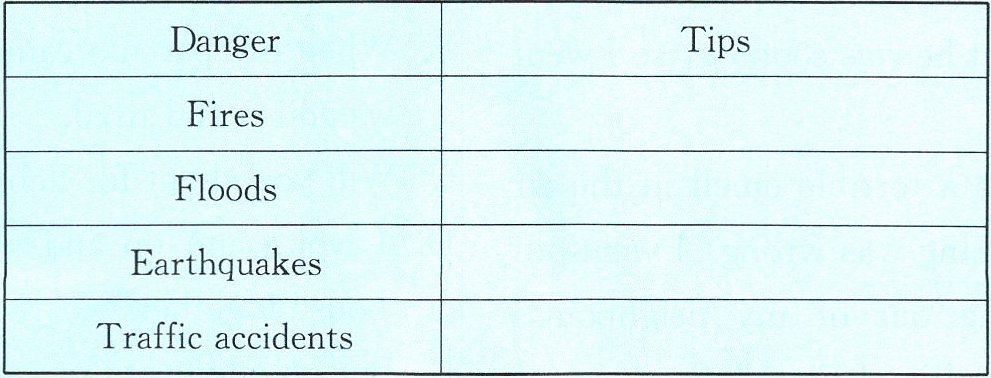 |
|
| Earthquakes | |
| Traffic accidents| |
开展采访:根据情境1~4及其情境任务,请你对班里的同学做一个小采访,了解如果同学们遇到以下危险时,会采取什么应对措施,并邀请他们进行简单的介绍,将采访内容填写在下面的表格中。
| Danger | Tips |
|-----------------|------|
| Fires | |
| Floods |
|| Earthquakes | |
| Traffic accidents| |
答案
| Danger | Tips |
| ---- | ---- |
| Fires | 1. Stay calm and leave the building quickly.
2. Call the fire department immediately.
3. Use a wet cloth to cover your mouth and nose to avoid smoke.
4. ... |
续表
| Floods | 1. Move to a higher ground away from the floodwater.
2. Avoid walking or driving through flooded areas.
3. Stay inside your home if it's safe, and turn off electricity and gas.
4. ... |
| ---- | ---- |
| Earthquakes | 1. Drop, cover, and hold on to protect yourself from falling objects.
2. Stay inside until the shaking stops to avoid injuries from debris.
3. Move to a safe open area away from buildings, trees, and streetlights once the shaking has stopped.
4. ... |
| Traffic accidents | 1. Stay calm and check if anyone is injured.
2. Call for help if needed.
3. Move your vehicle to a safe place if possible to avoid causing more traffic problems.
4. ... |
| ---- | ---- |
| Fires | 1. Stay calm and leave the building quickly.
2. Call the fire department immediately.
3. Use a wet cloth to cover your mouth and nose to avoid smoke.
4. ... |
续表
| Floods | 1. Move to a higher ground away from the floodwater.
2. Avoid walking or driving through flooded areas.
3. Stay inside your home if it's safe, and turn off electricity and gas.
4. ... |
| ---- | ---- |
| Earthquakes | 1. Drop, cover, and hold on to protect yourself from falling objects.
2. Stay inside until the shaking stops to avoid injuries from debris.
3. Move to a safe open area away from buildings, trees, and streetlights once the shaking has stopped.
4. ... |
| Traffic accidents | 1. Stay calm and check if anyone is injured.
2. Call for help if needed.
3. Move your vehicle to a safe place if possible to avoid causing more traffic problems.
4. ... |
解析
【分析】
这道题是结合实践采访的应用型题目,解题时我们可以逐个对应每一类危险场景,先回忆该场景下正确的自救避险常识,再用通顺规范的英文将应对措施整理出来即可:
1. 先处理火灾场景:优先梳理逃生、报警、防烟雾中毒等核心应对要点;
2. 再处理洪水场景:梳理向高处转移、远离积水区域、关停水电燃气等避险要点;
3. 接着处理地震场景:梳理震中就地防护、震后撤离到开阔安全区域的相关要点;
4. 最后处理交通事故场景:梳理确认人员伤情、呼救求助、规避二次事故的相关要点。
所有内容符合实际应急逻辑、表述通顺即可。
【解析】
我们按照不同危险分类,逐一整理合规的应对提示:
1. 火灾(Fires)场景:围绕快速逃生、报警求助、防烟雾伤害等维度整理措施;
2. 洪水(Floods)场景:围绕向高处避险、远离积水、切断危险源等维度整理措施;
3. 地震(Earthquakes)场景:围绕震中就地防护、震后有序撤离等维度整理措施;
4. 交通事故(Traffic accidents)场景:围绕确认伤情、求助、规避二次事故等维度整理措施。
【答案】
| Danger | Tips |
| ---- | ---- |
| Fires | 1. Stay calm and leave the building quickly.
2. Call the fire department immediately.
3. Use a wet cloth to cover your mouth and nose to avoid smoke.
4. ... |
| Floods | 1. Move to a higher ground away from the floodwater.
2. Avoid walking or driving through flooded areas.
3. Stay inside your home if it's safe, and turn off electricity and gas.
4. ... |
| Earthquakes | 1. Drop, cover, and hold on to protect yourself from falling objects.
2. Stay inside until the shaking stops to avoid injuries from debris.
3. Move to a safe open area away from buildings, trees, and streetlights once the shaking has stopped.
4. ... |
| Traffic accidents | 1. Stay calm and check if anyone is injured.
2. Call for help if needed.
3. Move your vehicle to a safe place if possible to avoid causing more traffic problems.
4. ... |
【知识点】
常见灾害应急处置,安全自救常识,英语情景表达
【点评】
本题将英语语言输出和生活安全实践结合,通过模拟采访填表的形式,既锻炼了学生的信息整理和英文表达能力,也能帮助学生系统掌握不同危险场景的正确避险方法,实用性很强,作答时注意不要出现不符合安全规范的错误自救操作即可。
【难度系数】
0.7
这道题是结合实践采访的应用型题目,解题时我们可以逐个对应每一类危险场景,先回忆该场景下正确的自救避险常识,再用通顺规范的英文将应对措施整理出来即可:
1. 先处理火灾场景:优先梳理逃生、报警、防烟雾中毒等核心应对要点;
2. 再处理洪水场景:梳理向高处转移、远离积水区域、关停水电燃气等避险要点;
3. 接着处理地震场景:梳理震中就地防护、震后撤离到开阔安全区域的相关要点;
4. 最后处理交通事故场景:梳理确认人员伤情、呼救求助、规避二次事故的相关要点。
所有内容符合实际应急逻辑、表述通顺即可。
【解析】
我们按照不同危险分类,逐一整理合规的应对提示:
1. 火灾(Fires)场景:围绕快速逃生、报警求助、防烟雾伤害等维度整理措施;
2. 洪水(Floods)场景:围绕向高处避险、远离积水、切断危险源等维度整理措施;
3. 地震(Earthquakes)场景:围绕震中就地防护、震后有序撤离等维度整理措施;
4. 交通事故(Traffic accidents)场景:围绕确认伤情、求助、规避二次事故等维度整理措施。
【答案】
| Danger | Tips |
| ---- | ---- |
| Fires | 1. Stay calm and leave the building quickly.
2. Call the fire department immediately.
3. Use a wet cloth to cover your mouth and nose to avoid smoke.
4. ... |
| Floods | 1. Move to a higher ground away from the floodwater.
2. Avoid walking or driving through flooded areas.
3. Stay inside your home if it's safe, and turn off electricity and gas.
4. ... |
| Earthquakes | 1. Drop, cover, and hold on to protect yourself from falling objects.
2. Stay inside until the shaking stops to avoid injuries from debris.
3. Move to a safe open area away from buildings, trees, and streetlights once the shaking has stopped.
4. ... |
| Traffic accidents | 1. Stay calm and check if anyone is injured.
2. Call for help if needed.
3. Move your vehicle to a safe place if possible to avoid causing more traffic problems.
4. ... |
【知识点】
常见灾害应急处置,安全自救常识,英语情景表达
【点评】
本题将英语语言输出和生活安全实践结合,通过模拟采访填表的形式,既锻炼了学生的信息整理和英文表达能力,也能帮助学生系统掌握不同危险场景的正确避险方法,实用性很强,作答时注意不要出现不符合安全规范的错误自救操作即可。
【难度系数】
0.7
