

 登录
登录
B
For centuries,lacquer fans(漆扇) have been loved for their beauty and cultural value.
Lacquer fans are special fans from China,and their history dates back to the Han Dynasty. Later,lacquer fans became one of the top collections in the art world in the Tang Dynasty. Lacquer is a natural varnish(清漆) taken from the lacquer tree. It was first used to coat wooden objects to protect them from water and insects. Interestingly,ancient workers discovered its artistic characteristics by accident when colourful patterns naturally formed on the water. Over time,workers began to use lacquer to make and decorate fans.
Lacquer fans are made of bamboo or wooden frames(框架). Traditionally,they are painted with different themes and patterns,such as landscapes,flowers and birds,and figures,to make them more beautiful. Although the methods of making fans continue to develop,skilled workers still use traditional techniques to create lacquer fans,keeping this ancient art alive.
Nowadays,lacquer fan painting is one of the most popular activities among young people,which is considered(视作) a new form of expression of lacquer art. Instead of using traditional tools such as brushes,lacquer fan painting is done with only the lacquer and water. The process is quite simple yet filled with artistic possibilities(可能性). First,people freely choose a fan and the colours they want to use. Then they carefully drop the coloured lacquer into the water. With gentle stirring(搅拌)using a thin tool,the colours blend and dance like ink in a Chinese watercolour painting,creating special shapes. Next,put the bamboo fan in the water for a few seconds and that's it.
Making each fan is like opening a blind box, ▲ . So every fan is unique(独一无二). Through this art,ancient techniques continue to amaze modern eyes,proving that true beauty lies in life's unexpected(意外的) accidents.
(
A. Protecting wooden objects.
B. Making a coat.
C. Protecting insects.
D. Making fans.
(
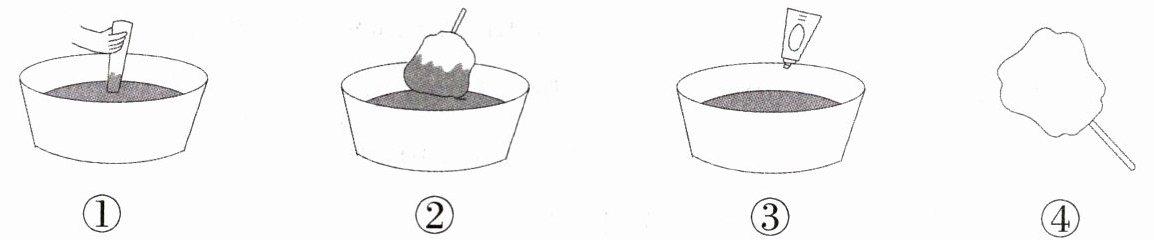
① ② ③ ④
A. ④→①→③→②
B. ①→④→③→②
C. ④→①→②→③
D. ④→③→①→②
(
A. Lacquer fans first showed up in the Tang Dynasty.
B. Bamboo or wood is used to make the frames of lacquer fans.
C. People need to use tools like brushes to make lacquer fan paintings.
D. People need to stir coloured lacquer quickly to make shapes.
(
A. because every step requires perfect skills
B. because it tells us different stories about the blind
C. because no one can know how the finished product will finally turn out
D. because young people enjoy the surprise of making fans
(
A. To encourage people to collect lacquer fans as art pieces.
B. To explain the history and modern development of lacquer fans.
C. To teach readers how to make lacquer fans with bamboo and water.
D. To show how lacquer fans are used in traditional Chinese activities.
For centuries,lacquer fans(漆扇) have been loved for their beauty and cultural value.
Lacquer fans are special fans from China,and their history dates back to the Han Dynasty. Later,lacquer fans became one of the top collections in the art world in the Tang Dynasty. Lacquer is a natural varnish(清漆) taken from the lacquer tree. It was first used to coat wooden objects to protect them from water and insects. Interestingly,ancient workers discovered its artistic characteristics by accident when colourful patterns naturally formed on the water. Over time,workers began to use lacquer to make and decorate fans.
Lacquer fans are made of bamboo or wooden frames(框架). Traditionally,they are painted with different themes and patterns,such as landscapes,flowers and birds,and figures,to make them more beautiful. Although the methods of making fans continue to develop,skilled workers still use traditional techniques to create lacquer fans,keeping this ancient art alive.
Nowadays,lacquer fan painting is one of the most popular activities among young people,which is considered(视作) a new form of expression of lacquer art. Instead of using traditional tools such as brushes,lacquer fan painting is done with only the lacquer and water. The process is quite simple yet filled with artistic possibilities(可能性). First,people freely choose a fan and the colours they want to use. Then they carefully drop the coloured lacquer into the water. With gentle stirring(搅拌)using a thin tool,the colours blend and dance like ink in a Chinese watercolour painting,creating special shapes. Next,put the bamboo fan in the water for a few seconds and that's it.
Making each fan is like opening a blind box, ▲ . So every fan is unique(独一无二). Through this art,ancient techniques continue to amaze modern eyes,proving that true beauty lies in life's unexpected(意外的) accidents.
(
A
)21. What was lacquer first used for?A. Protecting wooden objects.
B. Making a coat.
C. Protecting insects.
D. Making fans.
(
D
)22. What is the CORRECT order of making lacquer fans?① ② ③ ④
A. ④→①→③→②
B. ①→④→③→②
C. ④→①→②→③
D. ④→③→①→②
(
B
)23. What can we learn from the text?A. Lacquer fans first showed up in the Tang Dynasty.
B. Bamboo or wood is used to make the frames of lacquer fans.
C. People need to use tools like brushes to make lacquer fan paintings.
D. People need to stir coloured lacquer quickly to make shapes.
(
C
)24. Which of the following can be best put into " ▲ " in the last paragraph?A. because every step requires perfect skills
B. because it tells us different stories about the blind
C. because no one can know how the finished product will finally turn out
D. because young people enjoy the surprise of making fans
(
B
)25. What is the main purpose(目的) of writing this passage?A. To encourage people to collect lacquer fans as art pieces.
B. To explain the history and modern development of lacquer fans.
C. To teach readers how to make lacquer fans with bamboo and water.
D. To show how lacquer fans are used in traditional Chinese activities.
答案
【文章大意】本文是一篇说明文,主要介绍了中国漆扇的历史渊源、传统制作工艺及其在现代的创新发展,展现了这一传统工艺的文化魅力和艺术生命力。
21. A 细节理解题。根据第二段“It was first used to coat wooden objects to protect them from water and insects.”可知,清漆最初用于保护木制物品免受水和昆虫的侵害,故选 A。
22. D 图示理解题。根据“First, people freely choose a fan and the colours they want to use. Then they carefully drop the coloured lacquer into the water. With gentle stirring using a thin tool, the colours blend and dance like ink in a Chinese watercolour painting, creating special shapes. Next, put the bamboo fan in the water for a few seconds and that's it.”可知,制作流程为:首先选扇子和颜色(④),然后滴漆入水中(③),接着搅拌形成形状(①),最后将扇子放入水中(②),所以正确顺序为④→③→①→②。故选 D。
23. B 细节理解题。根据“Lacquer fans are made of bamboo or wooden frames.”可知,竹子或木头被用来制作漆扇的框架。故选 B。
24. C 补全文章题。根据空处前句“Making each fan is like opening a blind box”可知,制作每把扇子像开盲盒,没有人知道会是什么样的。故选 C。
25. B 写作意图题。文章主要是为了介绍中国漆扇的历史渊源、传统制作工艺及其在现代的创新发展。故选 B。
21. A 细节理解题。根据第二段“It was first used to coat wooden objects to protect them from water and insects.”可知,清漆最初用于保护木制物品免受水和昆虫的侵害,故选 A。
22. D 图示理解题。根据“First, people freely choose a fan and the colours they want to use. Then they carefully drop the coloured lacquer into the water. With gentle stirring using a thin tool, the colours blend and dance like ink in a Chinese watercolour painting, creating special shapes. Next, put the bamboo fan in the water for a few seconds and that's it.”可知,制作流程为:首先选扇子和颜色(④),然后滴漆入水中(③),接着搅拌形成形状(①),最后将扇子放入水中(②),所以正确顺序为④→③→①→②。故选 D。
23. B 细节理解题。根据“Lacquer fans are made of bamboo or wooden frames.”可知,竹子或木头被用来制作漆扇的框架。故选 B。
24. C 补全文章题。根据空处前句“Making each fan is like opening a blind box”可知,制作每把扇子像开盲盒,没有人知道会是什么样的。故选 C。
25. B 写作意图题。文章主要是为了介绍中国漆扇的历史渊源、传统制作工艺及其在现代的创新发展。故选 B。
解析
【分析】
这是一篇介绍中国传统非遗漆扇的说明文阅读,解题时首先通读全文梳理文章脉络,明确文章从漆扇的历史起源、传统工艺讲到现代的创新玩法。之后逐个小题对应回原文定位线索:第21题直接找漆最初用途的原句即可选出;第22题需要把文字描述的制作步骤和四张图的动作逐一匹配,梳理出先后顺序;第23题用排除法逐个核对选项和原文表述是否一致,排除错误选项;第24题结合前后文的逻辑,抓住“开盲盒”的特点选出衔接最通顺的句子;第25题梳理全文核心内容,判断作者的写作意图。
【解析】
21. 细节理解题:根据第二段原文“It was first used to coat wooden objects to protect them from water and insects.”,可知漆最初被用来给木制品上涂层,保护它们免受水和虫蛀,对应选项A,其余选项B“制作外套”、C“保护昆虫”、D“制作扇子”均不符合原文描述。
22. 图示排序题:根据第四段的现代漆扇制作步骤:①第一步挑选想要使用的扇子和颜料,对应图④的空白带柄扇子;②第二步把彩色漆小心滴入水面,对应图③往水盆中挤漆的动作;③第三步用细工具轻轻搅拌水面的漆,晕出特殊花纹,对应图①手持细杆在水盆中搅拌的动作;④最后把竹扇浸入水中几秒完成花纹转印,对应图②把扇子浸入水盆的动作,因此正确顺序为④→③→①→②。
23. 细节判断题:逐一核对选项:A选项,原文第二段说明漆扇的历史追溯到汉代,唐代才成为顶级艺术藏品,并非唐代才首次出现,表述错误;B选项,第三段原文“Lacquer fans are made of bamboo or wooden frames.”说明漆扇的框架由竹子或木头制成,表述正确;C选项,第四段明确说明“Instead of using traditional tools such as brushes, lacquer fan painting is done with only the lacquer and water.”,不需要刷子类工具,表述错误;D选项,第四段提到搅拌动作是“gentle stirring(轻轻搅拌)”,并非快速搅拌,表述错误。
24. 语句补全题:空格前句提到制作每一把扇子就像开盲盒,空格后句说明每一把扇子都是独一无二的,盲盒的核心特点就是无法提前预知最终的内容,衔接内容需要解释“像开盲盒”的原因,即没有人能提前知道最终成品会是什么样子,对应选项C,其余选项均无法衔接前后逻辑。
25. 写作意图题:全文先后介绍了漆扇的历史渊源、传统制作工艺,以及当下在年轻人中流行的漆扇创新玩法,核心目的是介绍漆扇的历史和现代发展,对应选项B;A选项“鼓励人们收藏漆扇”原文未提及,C选项“教读者制作漆扇”只是文章部分内容,并非全文写作目的,D选项“展示漆扇在传统活动中的用途”原文没有相关表述。
【答案】
21.A 22.D 23.B 24.C 25.B
【知识点】
说明文阅读,细节定位,主旨把握
【点评】
本题属于传统文化主题的英语阅读题,既考察学生快速定位原文信息的基础阅读能力,也加入了图文匹配排序的创新题型,同时向学生科普了中国传统漆扇的相关非遗知识,难度适中,解题时只要耐心将选项和原文逐一核对,理清步骤逻辑就可以顺利选出正确答案。
【难度系数】
0.7
这是一篇介绍中国传统非遗漆扇的说明文阅读,解题时首先通读全文梳理文章脉络,明确文章从漆扇的历史起源、传统工艺讲到现代的创新玩法。之后逐个小题对应回原文定位线索:第21题直接找漆最初用途的原句即可选出;第22题需要把文字描述的制作步骤和四张图的动作逐一匹配,梳理出先后顺序;第23题用排除法逐个核对选项和原文表述是否一致,排除错误选项;第24题结合前后文的逻辑,抓住“开盲盒”的特点选出衔接最通顺的句子;第25题梳理全文核心内容,判断作者的写作意图。
【解析】
21. 细节理解题:根据第二段原文“It was first used to coat wooden objects to protect them from water and insects.”,可知漆最初被用来给木制品上涂层,保护它们免受水和虫蛀,对应选项A,其余选项B“制作外套”、C“保护昆虫”、D“制作扇子”均不符合原文描述。
22. 图示排序题:根据第四段的现代漆扇制作步骤:①第一步挑选想要使用的扇子和颜料,对应图④的空白带柄扇子;②第二步把彩色漆小心滴入水面,对应图③往水盆中挤漆的动作;③第三步用细工具轻轻搅拌水面的漆,晕出特殊花纹,对应图①手持细杆在水盆中搅拌的动作;④最后把竹扇浸入水中几秒完成花纹转印,对应图②把扇子浸入水盆的动作,因此正确顺序为④→③→①→②。
23. 细节判断题:逐一核对选项:A选项,原文第二段说明漆扇的历史追溯到汉代,唐代才成为顶级艺术藏品,并非唐代才首次出现,表述错误;B选项,第三段原文“Lacquer fans are made of bamboo or wooden frames.”说明漆扇的框架由竹子或木头制成,表述正确;C选项,第四段明确说明“Instead of using traditional tools such as brushes, lacquer fan painting is done with only the lacquer and water.”,不需要刷子类工具,表述错误;D选项,第四段提到搅拌动作是“gentle stirring(轻轻搅拌)”,并非快速搅拌,表述错误。
24. 语句补全题:空格前句提到制作每一把扇子就像开盲盒,空格后句说明每一把扇子都是独一无二的,盲盒的核心特点就是无法提前预知最终的内容,衔接内容需要解释“像开盲盒”的原因,即没有人能提前知道最终成品会是什么样子,对应选项C,其余选项均无法衔接前后逻辑。
25. 写作意图题:全文先后介绍了漆扇的历史渊源、传统制作工艺,以及当下在年轻人中流行的漆扇创新玩法,核心目的是介绍漆扇的历史和现代发展,对应选项B;A选项“鼓励人们收藏漆扇”原文未提及,C选项“教读者制作漆扇”只是文章部分内容,并非全文写作目的,D选项“展示漆扇在传统活动中的用途”原文没有相关表述。
【答案】
21.A 22.D 23.B 24.C 25.B
【知识点】
说明文阅读,细节定位,主旨把握
【点评】
本题属于传统文化主题的英语阅读题,既考察学生快速定位原文信息的基础阅读能力,也加入了图文匹配排序的创新题型,同时向学生科普了中国传统漆扇的相关非遗知识,难度适中,解题时只要耐心将选项和原文逐一核对,理清步骤逻辑就可以顺利选出正确答案。
【难度系数】
0.7
