

 登录
登录
一、听短文,根据所听内容选择正确的答案。
(
A. In a city. B. In the country.
(
A. Fish and ducks.
B. Birds, butterflies, squirrels and other small animals.
(
A. He often plays and reads books.
B. He often swims and plays football.
(
A. They water the flowers and trees.
B. They pick up rubbish.
(
A. He doesn’t like it. B. He loves it very much.
(
A
) 1. Where does Li Ming live?A. In a city. B. In the country.
(
B
) 2. What animals live in the park?A. Fish and ducks.
B. Birds, butterflies, squirrels and other small animals.
(
A
) 3. What does Li Ming often do with his friends in the park?A. He often plays and reads books.
B. He often swims and plays football.
(
B
) 4. What do Li Ming and his friends sometimes do in the morning?A. They water the flowers and trees.
B. They pick up rubbish.
(
B
) 5. How does Li Ming feel about the park?A. He doesn’t like it. B. He loves it very much.
答案
1. A 2. B 3. A 4. B 5. B
二、我们应该遵守哪些规则来保护校园环境呢?结合图片想一想,写一写。
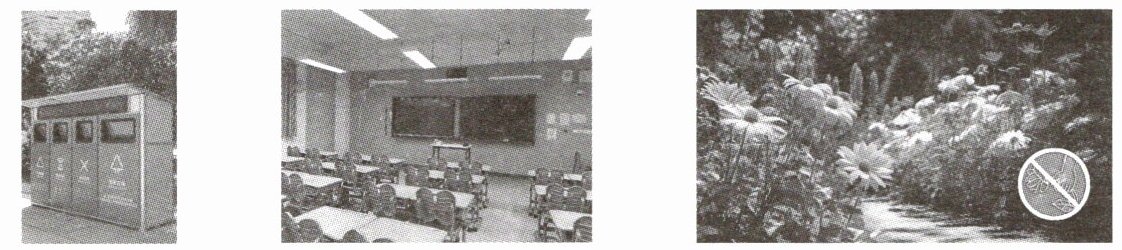
答案
(供参考)
We should put rubbish in the bin.
We should turn off the lights when we leave the classroom.
We shouldn’t pick flowers in the school garden.
We should put rubbish in the bin.
We should turn off the lights when we leave the classroom.
We shouldn’t pick flowers in the school garden.
解析
【分析】本题要求结合校园实际,用英语写出保护校园环境的规则,需围绕校园常见环保行为,使用情态动词should(应该)和shouldn't(不应该)表述,内容要贴合校园生活的实际规则。
【解析】根据题目要求,结合校园环保的具体行为,用should表述应做的环保行为,用shouldn't表述不应做的破坏环境的行为,对应校园常见的环保做法,整理出符合要求的句子。
【答案】We should put rubbish in the bin.
We should turn off the lights when we leave the classroom.
We shouldn’t pick flowers in the school garden.
【知识点】校园环保表达、情态动词用法
【点评】本题贴近校园生活,考查学生用英语表达日常环保规则的能力,难度适中,学生易结合实际作答。
【难度系数】0.3
【解析】根据题目要求,结合校园环保的具体行为,用should表述应做的环保行为,用shouldn't表述不应做的破坏环境的行为,对应校园常见的环保做法,整理出符合要求的句子。
【答案】We should put rubbish in the bin.
We should turn off the lights when we leave the classroom.
We shouldn’t pick flowers in the school garden.
【知识点】校园环保表达、情态动词用法
【点评】本题贴近校园生活,考查学生用英语表达日常环保规则的能力,难度适中,学生易结合实际作答。
【难度系数】0.3
