

 登录
登录
四、任务型阅读(每小题1.5分,满分15分)
阅读下面短文,并根据所读内容在文章后的表格里填入最恰当的单词,每个空格只填一个单词。
Yangzhou paper-cutting is known for its clear and fluent(流畅的) lines,fine and elegant patterns and novel and creative techniques. It represents(代表) the paper-cutting styles in the south of China. Yangzhou paper-cutting,with a history of more than 2,000 years,made Yangzhou one of the places where paper-cutting first became popular.
Yangzhou paper-cutting can date back to the Sui Dynasty. In the Sui Dynasty,the people of Yangzhou had the custom(习俗) of cutting colourful paper or silk to celebrate festivals. In the Tang Dynasty,the paper-making industry was highly developed and it helped speed up(加速) the development of the paper-cutting art. In the Qing Dynasty,the people of Yangzhou became interested in wearing embroidered clothing. The embroidered patterns were based on paper-cuts.
There are many different kinds of subjects of Yangzhou paper-cutting,such as birds,animals,insects,mountains,etc.
Zhang Yongshou was an excellent master of Yangzhou paper-cutting. He was the fifth-generation descendant(后裔) of Yangzhou's Magic Scissors Zhang. His daughter Zhang Muli continued his paper-cutting tradition after Zhang Yongshou passed away in 1989,and has won the title Master of Arts and Crafts in Jiangsu.
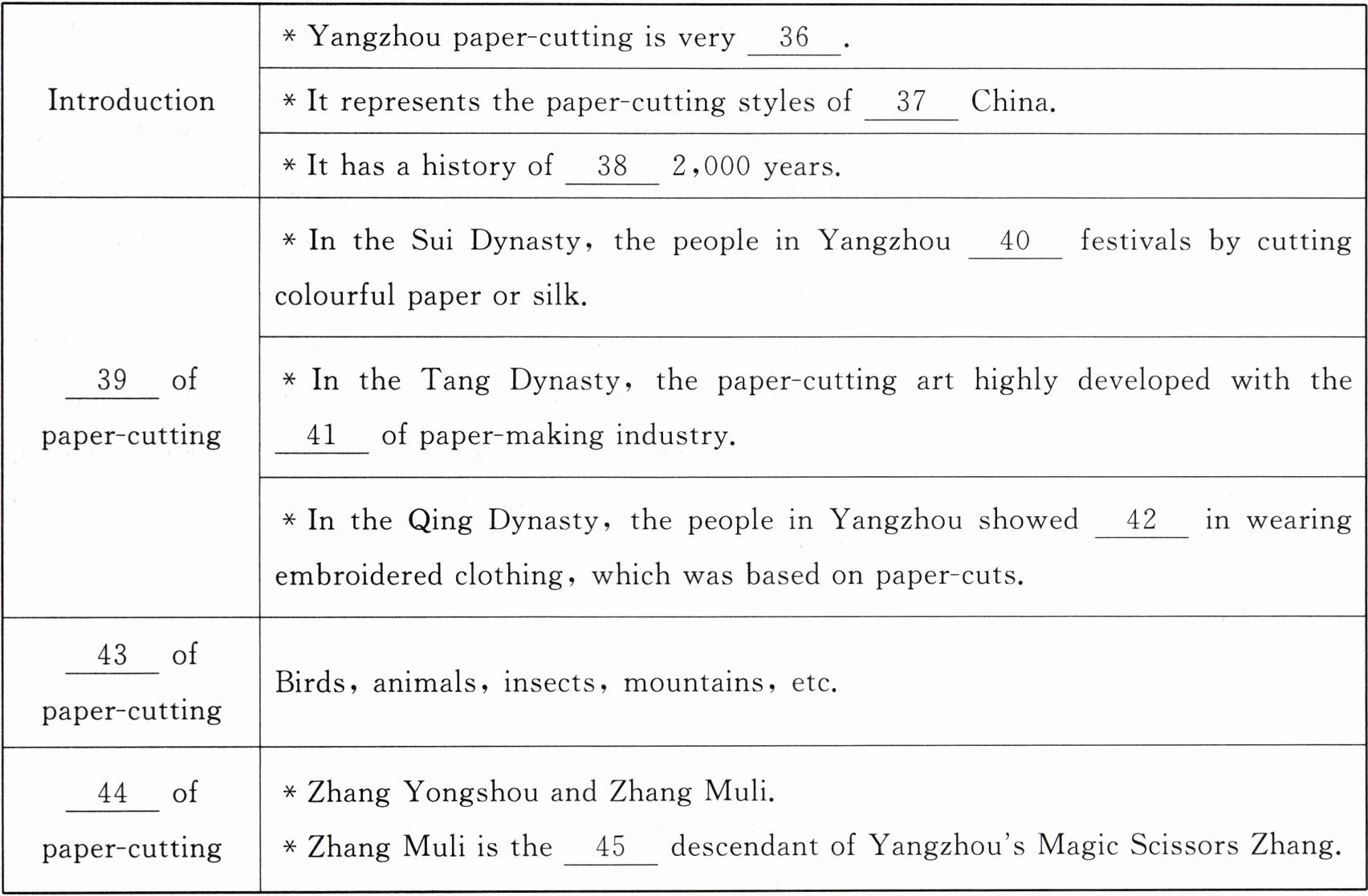
36.
37.
38.
39.
40.
41.
42.
43.
44.
45.
阅读下面短文,并根据所读内容在文章后的表格里填入最恰当的单词,每个空格只填一个单词。
Yangzhou paper-cutting is known for its clear and fluent(流畅的) lines,fine and elegant patterns and novel and creative techniques. It represents(代表) the paper-cutting styles in the south of China. Yangzhou paper-cutting,with a history of more than 2,000 years,made Yangzhou one of the places where paper-cutting first became popular.
Yangzhou paper-cutting can date back to the Sui Dynasty. In the Sui Dynasty,the people of Yangzhou had the custom(习俗) of cutting colourful paper or silk to celebrate festivals. In the Tang Dynasty,the paper-making industry was highly developed and it helped speed up(加速) the development of the paper-cutting art. In the Qing Dynasty,the people of Yangzhou became interested in wearing embroidered clothing. The embroidered patterns were based on paper-cuts.
There are many different kinds of subjects of Yangzhou paper-cutting,such as birds,animals,insects,mountains,etc.
Zhang Yongshou was an excellent master of Yangzhou paper-cutting. He was the fifth-generation descendant(后裔) of Yangzhou's Magic Scissors Zhang. His daughter Zhang Muli continued his paper-cutting tradition after Zhang Yongshou passed away in 1989,and has won the title Master of Arts and Crafts in Jiangsu.
36.
famous/well-known
37.
southern
38.
over
39.
History/Development
40.
celebrated
41.
development/help
42.
interest
43.
Subjects
44.
Masters
45.
sixth-generation
答案
【文章大意】本文是一篇说明文,主要介绍了扬州剪纸。
36. famous/well-known 37. southern 38. over
39. History/Development 40. celebrated
41. development/help 42. interest 43. Subjects
44. Masters 45. sixth-generation
36. famous/well-known 37. southern 38. over
39. History/Development 40. celebrated
41. development/help 42. interest 43. Subjects
44. Masters 45. sixth-generation
解析
【分析】
这是一篇信息匹配类的任务型阅读题,解题思路如下:1. 先通读全文,明确文章围绕扬州剪纸,从基本概况、发展历程、创作主题、代表传承人几个维度展开,和表格的栏目设置完全对应;2. 逐个定位每个空格对应的原文语句,提取核心信息后,结合空格前后的语法搭配要求,做同义替换、词性转换、时态调整,部分空格需要结合上下文逻辑推导得出答案;3. 最后检查所有空格都仅填入一个单词,符合语义和语法规则。
【解析】
36. 原文第一段提到扬州剪纸以线条流畅、图案雅致、技法新颖著称,"be known for"对应"非常有名"的含义,very后可填形容词famous/well-known,符合语义要求。
37. 原文第一段说明它代表中国南方的剪纸风格,将原文"in the south of China"转换为形容词修饰China,填southern,构成southern China(中国南方)。
38. 原文提到扬州剪纸有超过2000年的历史,"more than"同义替换为over,符合空格填写要求。
39. 该栏目按照隋朝、唐朝、清朝的时间顺序介绍扬州剪纸的发展脉络/演进历史,因此栏目标题填History/Development,首字母大写。
40. 原文提到隋朝扬州人有剪彩纸或丝绸庆祝节日的习俗,表格句子时态为一般过去时,空格作谓语,将原文的不定式celebrate变为过去式celebrated。
41. 原文提到唐代造纸业高度发展,推动了剪纸艺术的进步,固定搭配with the development of(随着...的发展)或者with the help of(在...的帮助下)都符合语境,填development/help。
42. 原文提到清代扬州人喜爱穿刺绣服饰,固定搭配show interest in表示"对...产生兴趣",此处填名词interest。
43. 该栏目列举了鸟、兽、虫、山等扬州剪纸的创作内容,对应原文提到的各类创作主题,栏目标题填Subjects,首字母大写。
44. 该栏目介绍了两位扬州剪纸的代表传承人,对应原文提到的剪纸大师,栏目标题填Masters,首字母大写。
45. 原文提到张永寿是"神剪张"的第五代传人,他的女儿张慕莉是他的下一代,也就是第六代传人,因此填sixth-generation。
【答案】
36. famous/well-known
37. southern
38. over
39. History/Development
40. celebrated
41. development/help
42. interest
43. Subjects
44. Masters
45. sixth-generation
【知识点】
任务型阅读信息提取,同义短语转换,固定搭配应用
【点评】
本题以非遗扬州剪纸为主题,既考察学生快速定位原文信息的基础能力,也兼顾了词性转换、时态变形、逻辑推导的拔高考点,大部分空格可以通过原文直接转换得出,仅最后一空需要结合人物代际关系推导,难度设置合理,同时也能帮助学生了解传统民间艺术相关知识。
【难度系数】
0.6
这是一篇信息匹配类的任务型阅读题,解题思路如下:1. 先通读全文,明确文章围绕扬州剪纸,从基本概况、发展历程、创作主题、代表传承人几个维度展开,和表格的栏目设置完全对应;2. 逐个定位每个空格对应的原文语句,提取核心信息后,结合空格前后的语法搭配要求,做同义替换、词性转换、时态调整,部分空格需要结合上下文逻辑推导得出答案;3. 最后检查所有空格都仅填入一个单词,符合语义和语法规则。
【解析】
36. 原文第一段提到扬州剪纸以线条流畅、图案雅致、技法新颖著称,"be known for"对应"非常有名"的含义,very后可填形容词famous/well-known,符合语义要求。
37. 原文第一段说明它代表中国南方的剪纸风格,将原文"in the south of China"转换为形容词修饰China,填southern,构成southern China(中国南方)。
38. 原文提到扬州剪纸有超过2000年的历史,"more than"同义替换为over,符合空格填写要求。
39. 该栏目按照隋朝、唐朝、清朝的时间顺序介绍扬州剪纸的发展脉络/演进历史,因此栏目标题填History/Development,首字母大写。
40. 原文提到隋朝扬州人有剪彩纸或丝绸庆祝节日的习俗,表格句子时态为一般过去时,空格作谓语,将原文的不定式celebrate变为过去式celebrated。
41. 原文提到唐代造纸业高度发展,推动了剪纸艺术的进步,固定搭配with the development of(随着...的发展)或者with the help of(在...的帮助下)都符合语境,填development/help。
42. 原文提到清代扬州人喜爱穿刺绣服饰,固定搭配show interest in表示"对...产生兴趣",此处填名词interest。
43. 该栏目列举了鸟、兽、虫、山等扬州剪纸的创作内容,对应原文提到的各类创作主题,栏目标题填Subjects,首字母大写。
44. 该栏目介绍了两位扬州剪纸的代表传承人,对应原文提到的剪纸大师,栏目标题填Masters,首字母大写。
45. 原文提到张永寿是"神剪张"的第五代传人,他的女儿张慕莉是他的下一代,也就是第六代传人,因此填sixth-generation。
【答案】
36. famous/well-known
37. southern
38. over
39. History/Development
40. celebrated
41. development/help
42. interest
43. Subjects
44. Masters
45. sixth-generation
【知识点】
任务型阅读信息提取,同义短语转换,固定搭配应用
【点评】
本题以非遗扬州剪纸为主题,既考察学生快速定位原文信息的基础能力,也兼顾了词性转换、时态变形、逻辑推导的拔高考点,大部分空格可以通过原文直接转换得出,仅最后一空需要结合人物代际关系推导,难度设置合理,同时也能帮助学生了解传统民间艺术相关知识。
【难度系数】
0.6
