

 登录
登录
B
Buck had never experienced such freezing cold before. When he first arrived in Alaska, the icy wind made him shake all over. Back in sunny California, the coldest days were just rainy, but here, everything was covered in thick, hard snow that never seemed to melt(融化).
The first night was especially difficult. Buck watched curiously as the other sled dogs(雪橇犬) skillfully dug holes in the snow to make warm beds. He tried to copy them, but his hole kept falling apart. Feeling frozen, he stood outside shaking until François, one of the sled drivers, noticed his problem. "Here, let me show you," François said kindly, showing how to properly shape the snow into a comfortable shelter. After several tries, Buck finally made his first successful snow nest and slept comfortably through the night.
Mealtime brought another challenge. When the men threw frozen fish to the dogs, Buck ate slowly and politely as he always had at his former home. But before he could finish, a bigger dog named Spitz pushed him away and stole his food. That night, Buck went to bed hungry, learning an important lesson. The next day, he started eating quickly and shouting angrily at any dog that came near.
As weeks passed, Buck's body got used to the terrible environment. His once-soft paws(爪子) grew hard and no longer hurt on the ice. His muscles became stronger from pulling the heavy sled daily. More importantly, his mind changed—he learned to read the other dogs' behaviours and the men's orders. The spoiled(娇惯的) house pet from California was disappearing, replaced by a stronger, wiser survivor who understood the most important rule in the North: learn to play the game or you won't survive(存活).
()21. Why did Buck keep shaking on his first night in Alaska?
A. He was scared of the drivers.
B. He couldn't make a snow nest.
C. The frozen fish made him sick.
D. Spitz attacked him in the dark.
( )22. What prevented Buck from finishing his meal at the beginning?
A. Spitz took his food away.
B. The fish was too hard to eat.
C. François ordered him to stop.
D. He wanted to save food for later.
()23. What did the author probably mean by saying the underlined sentence?
A. Follow every human order strictly.
B. Master survival rules to stay alive.
C. Fight other dogs to protect food.
D. Build perfect snow nests for safety.
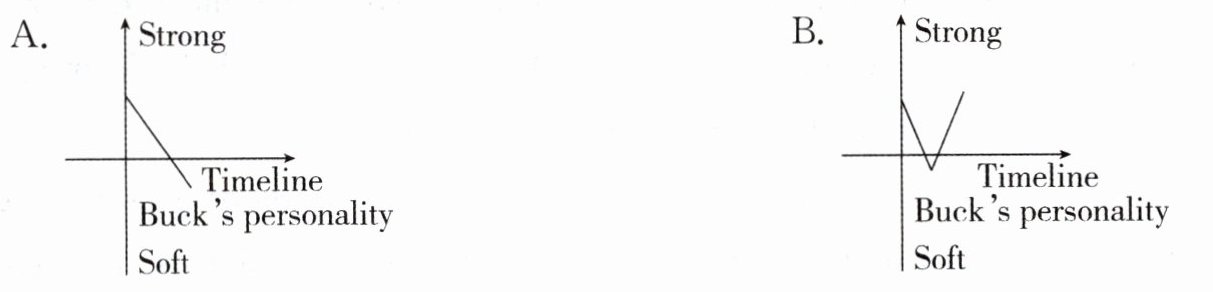
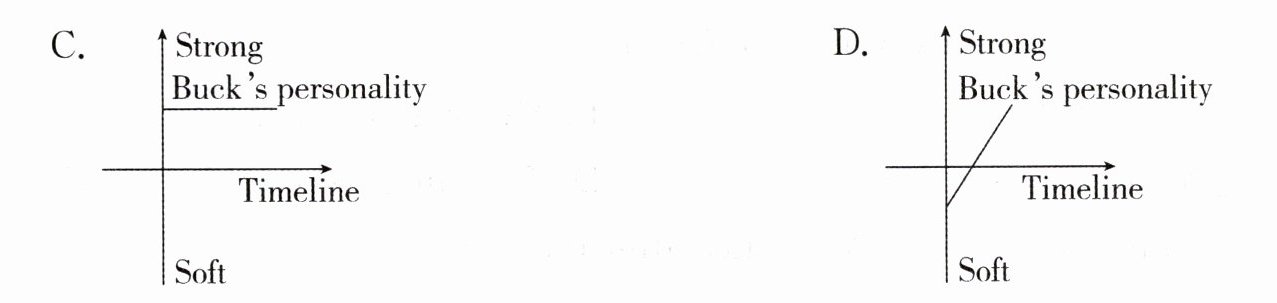
()24. Which picture shows the change of Buck's personality?
()25. What might be the best title for the story?
A. Learning to Dig Snow Nests
B. A Dog's First Night in Alaska
C. Survival Lessons in the Wild
D. Teaching a California Dog
Buck had never experienced such freezing cold before. When he first arrived in Alaska, the icy wind made him shake all over. Back in sunny California, the coldest days were just rainy, but here, everything was covered in thick, hard snow that never seemed to melt(融化).
The first night was especially difficult. Buck watched curiously as the other sled dogs(雪橇犬) skillfully dug holes in the snow to make warm beds. He tried to copy them, but his hole kept falling apart. Feeling frozen, he stood outside shaking until François, one of the sled drivers, noticed his problem. "Here, let me show you," François said kindly, showing how to properly shape the snow into a comfortable shelter. After several tries, Buck finally made his first successful snow nest and slept comfortably through the night.
Mealtime brought another challenge. When the men threw frozen fish to the dogs, Buck ate slowly and politely as he always had at his former home. But before he could finish, a bigger dog named Spitz pushed him away and stole his food. That night, Buck went to bed hungry, learning an important lesson. The next day, he started eating quickly and shouting angrily at any dog that came near.
As weeks passed, Buck's body got used to the terrible environment. His once-soft paws(爪子) grew hard and no longer hurt on the ice. His muscles became stronger from pulling the heavy sled daily. More importantly, his mind changed—he learned to read the other dogs' behaviours and the men's orders. The spoiled(娇惯的) house pet from California was disappearing, replaced by a stronger, wiser survivor who understood the most important rule in the North: learn to play the game or you won't survive(存活).
()21. Why did Buck keep shaking on his first night in Alaska?
A. He was scared of the drivers.
B. He couldn't make a snow nest.
C. The frozen fish made him sick.
D. Spitz attacked him in the dark.
( )22. What prevented Buck from finishing his meal at the beginning?
A. Spitz took his food away.
B. The fish was too hard to eat.
C. François ordered him to stop.
D. He wanted to save food for later.
()23. What did the author probably mean by saying the underlined sentence?
A. Follow every human order strictly.
B. Master survival rules to stay alive.
C. Fight other dogs to protect food.
D. Build perfect snow nests for safety.
()24. Which picture shows the change of Buck's personality?
()25. What might be the best title for the story?
A. Learning to Dig Snow Nests
B. A Dog's First Night in Alaska
C. Survival Lessons in the Wild
D. Teaching a California Dog
答案
21.B 22.A 23.B 24.D 25.C
解析
【分析】
这是一篇记叙文类阅读理解,解题时优先明确每道题干的核心关键词,带着关键词回原文精准定位对应段落:细节题直接匹配原文表述排除错误选项,句意猜测题结合划线句的前后文语境推导含义,主旨题选择能覆盖全文核心事件的选项,避免片面的局部内容干扰。逐题梳理:21题锁定关键词first night、shaking回第二段找原因;22题锁定finish his meal回第三段定位;23题结合Buck的成长转变推导划线句含义;25题梳理全文主线判断最佳标题。
【解析】
21. 定位原文第二段:Buck尝试模仿其他雪橇犬挖雪洞但洞一直塌掉,无处躲避寒冷的他站在外面冻得发抖,对应B选项“他没法挖出雪窝”。A选项“他害怕司机”、C选项“冻鱼让他生病”、D选项“Spitz在黑暗里攻击他”均未在原文提及,故选B。
22. 定位原文第三段:Buck还没吃完食物,体型更大的狗Spitz就把他推开抢走了他的饭,直接对应A选项“Spitz拿走了他的食物”。其余选项均不符合原文表述,故选A。
23. 划线句前文提到原本娇生惯养的家宠Buck已经转变为更强壮、更聪明的幸存者,他明白北方最重要的规则就是“学会适应生存的规则,否则无法存活”,对应B选项“掌握生存法则才能活下去”。A选项“严格服从所有人的命令”表述片面,C、D都只是Buck学到的零散生存技能,不能概括句子核心含义,故选B。
24. 全文展现了Buck从娇惯的家养宠物,逐步适应恶劣环境、掌握各项生存技能,最终转变为野外强者的性格变化,符合该转变逻辑的对应选项为D,故选D。
25. 全文围绕Buck初到阿拉斯加的极端环境中,不断学习各类生存技能完成蜕变的故事展开,核心主题是野外环境下的生存历练。A仅对应挖雪窝的局部事件、B仅对应第一晚的经历、D偏离故事核心,只有C“野外的生存课程”能覆盖全文主旨,故选C。
【答案】
21.B 22.A 23.B 24.D 25.C
【知识点】
阅读细节定位,句意猜测,主旨归纳
【点评】
本篇阅读改编自经典文学《野性的呼唤》的节选,情节生动易懂,大部分细节题都可以通过原文直接定位得到答案,仅句意猜测和主旨题需要结合全文逻辑判断,既考察学生快速抓取文本关键信息的能力,也能让学生理解故事传递的成长内核。
【难度系数】
0.7
这是一篇记叙文类阅读理解,解题时优先明确每道题干的核心关键词,带着关键词回原文精准定位对应段落:细节题直接匹配原文表述排除错误选项,句意猜测题结合划线句的前后文语境推导含义,主旨题选择能覆盖全文核心事件的选项,避免片面的局部内容干扰。逐题梳理:21题锁定关键词first night、shaking回第二段找原因;22题锁定finish his meal回第三段定位;23题结合Buck的成长转变推导划线句含义;25题梳理全文主线判断最佳标题。
【解析】
21. 定位原文第二段:Buck尝试模仿其他雪橇犬挖雪洞但洞一直塌掉,无处躲避寒冷的他站在外面冻得发抖,对应B选项“他没法挖出雪窝”。A选项“他害怕司机”、C选项“冻鱼让他生病”、D选项“Spitz在黑暗里攻击他”均未在原文提及,故选B。
22. 定位原文第三段:Buck还没吃完食物,体型更大的狗Spitz就把他推开抢走了他的饭,直接对应A选项“Spitz拿走了他的食物”。其余选项均不符合原文表述,故选A。
23. 划线句前文提到原本娇生惯养的家宠Buck已经转变为更强壮、更聪明的幸存者,他明白北方最重要的规则就是“学会适应生存的规则,否则无法存活”,对应B选项“掌握生存法则才能活下去”。A选项“严格服从所有人的命令”表述片面,C、D都只是Buck学到的零散生存技能,不能概括句子核心含义,故选B。
24. 全文展现了Buck从娇惯的家养宠物,逐步适应恶劣环境、掌握各项生存技能,最终转变为野外强者的性格变化,符合该转变逻辑的对应选项为D,故选D。
25. 全文围绕Buck初到阿拉斯加的极端环境中,不断学习各类生存技能完成蜕变的故事展开,核心主题是野外环境下的生存历练。A仅对应挖雪窝的局部事件、B仅对应第一晚的经历、D偏离故事核心,只有C“野外的生存课程”能覆盖全文主旨,故选C。
【答案】
21.B 22.A 23.B 24.D 25.C
【知识点】
阅读细节定位,句意猜测,主旨归纳
【点评】
本篇阅读改编自经典文学《野性的呼唤》的节选,情节生动易懂,大部分细节题都可以通过原文直接定位得到答案,仅句意猜测和主旨题需要结合全文逻辑判断,既考察学生快速抓取文本关键信息的能力,也能让学生理解故事传递的成长内核。
【难度系数】
0.7
