

 登录
登录
三、阅读理解(每小题 2 分,满分 30 分)
A
We often say,“When in Rome,do as the Romans do.” Knowing different ways of life in different countries can help us enjoy our stay there better. Here are some students talking about the eating habits in their own countries.
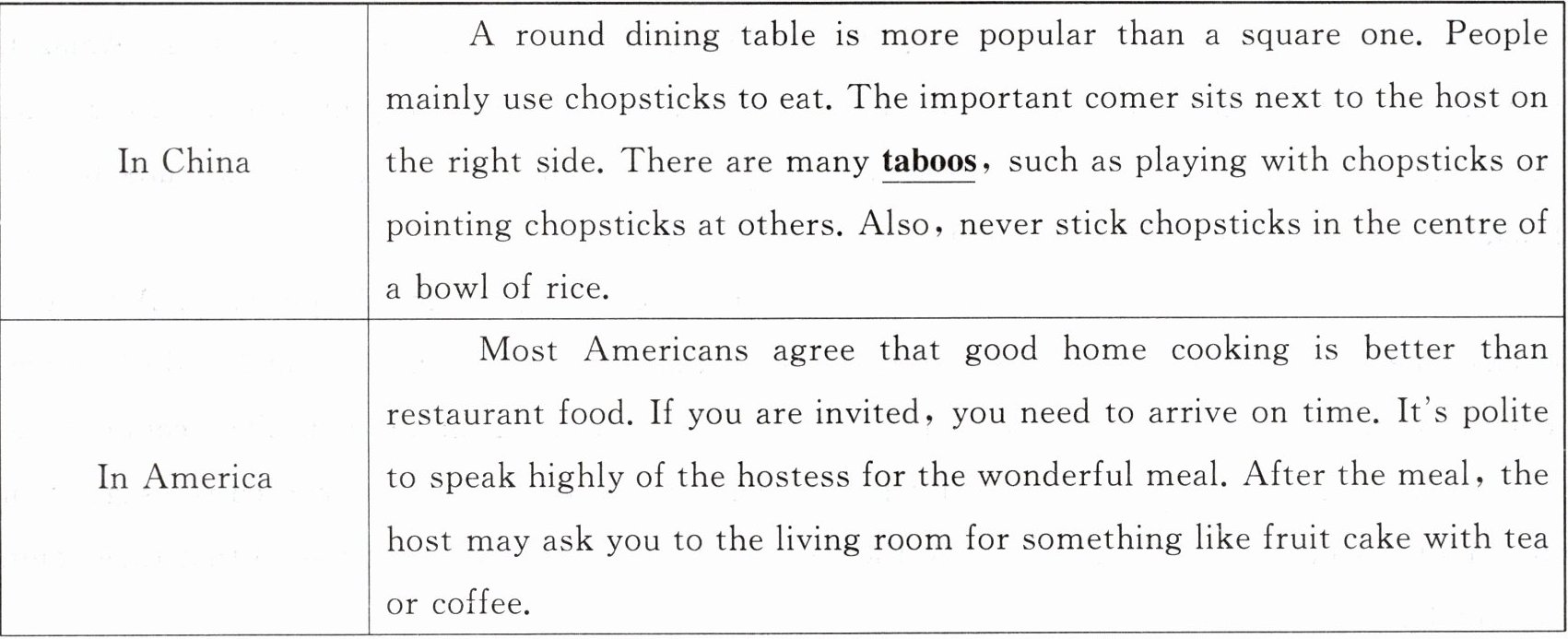
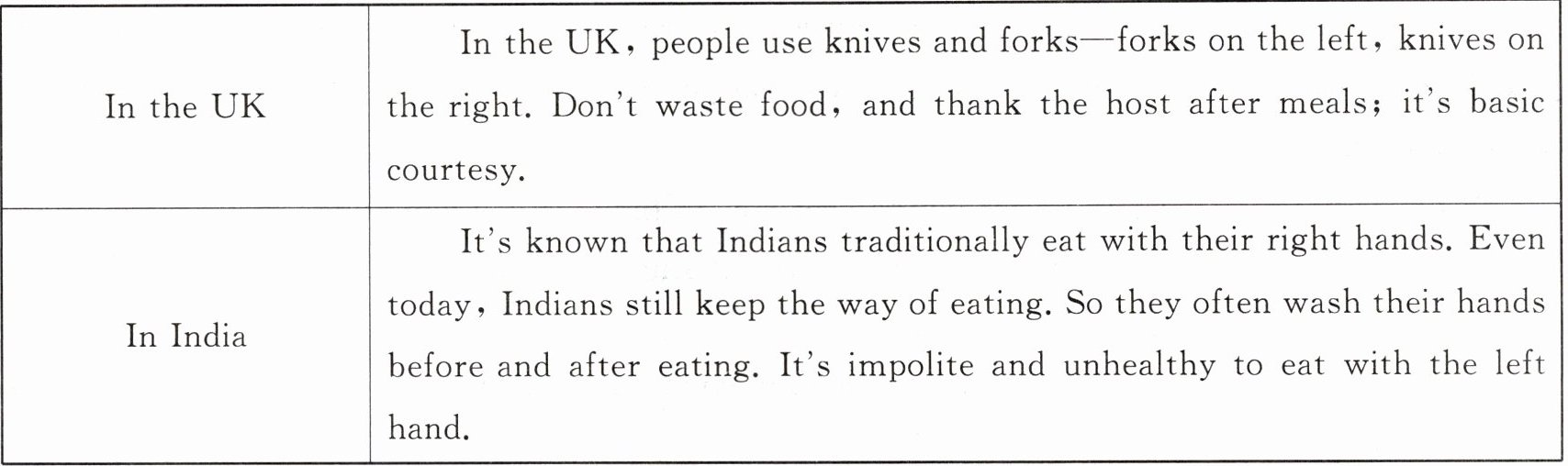
What should we do when visiting foreign countries? Ask the local people for help,watch them carefully and try to do what they do.
(
A. must
B. must-play
C. must-do
D. must-not-do
(
A. Chinese people only use chopsticks to eat.
B. We must leave at once after meals in America.
C. We can make noises when eating noodles in the UK.
D. Indians often wash their hands because they handle food with them.
(
A. A notice.
B. A culture magazine.
C. A science report.
D. A history book.
A
We often say,“When in Rome,do as the Romans do.” Knowing different ways of life in different countries can help us enjoy our stay there better. Here are some students talking about the eating habits in their own countries.
What should we do when visiting foreign countries? Ask the local people for help,watch them carefully and try to do what they do.
(
D
)26. What does the underlined word “taboos” probably mean?A. must
B. must-play
C. must-do
D. must-not-do
(
D
)27. What can we learn about the different eating habits in the four countries?A. Chinese people only use chopsticks to eat.
B. We must leave at once after meals in America.
C. We can make noises when eating noodles in the UK.
D. Indians often wash their hands because they handle food with them.
(
B
)28. Where does the text probably come from?A. A notice.
B. A culture magazine.
C. A science report.
D. A history book.
答案
26~28 DDB
解析
【分析】
本题为英语阅读理解题,包含词义猜测、细节理解、文章出处三类核心题型。解题思路:1. 第26题是词义猜测题,需结合“入乡随俗”的语境推断划线词含义;2. 第27题是细节理解题,需逐一分析选项,定位原文排除错误表述;3. 第28题是文章出处题,需根据文章主题判断来源。
【解析】
26. 词义猜测题:结合上下文“入乡随俗”的语境,taboos意为“禁忌”,即必须不做的行为,对应选项D(must-not-do),故选D。
27. 细节理解题:逐一分析选项:A项“中国人只用筷子吃饭”表述绝对,不符合实际;B项“美国饭后必须立刻离开”原文未提及;C项“在英国吃面条可以发出声响”错误,该习俗常见于日本;D项“印度人常洗手因为用手处理食物”符合原文描述,故选D。
28. 文章出处题:文章围绕不同国家的饮食文化习俗展开,属于文化类内容,最可能来自文化杂志,故选B。
【答案】
26.D 27.D 28.B
【知识点】
词义猜测题、细节理解题、文章出处题
【点评】
本题考查英语阅读理解的核心题型,侧重考查学生的词义推断、细节定位及文本逻辑分析能力,结合文化背景知识,是初中英语常见考查形式。
【难度系数】
0.6
本题为英语阅读理解题,包含词义猜测、细节理解、文章出处三类核心题型。解题思路:1. 第26题是词义猜测题,需结合“入乡随俗”的语境推断划线词含义;2. 第27题是细节理解题,需逐一分析选项,定位原文排除错误表述;3. 第28题是文章出处题,需根据文章主题判断来源。
【解析】
26. 词义猜测题:结合上下文“入乡随俗”的语境,taboos意为“禁忌”,即必须不做的行为,对应选项D(must-not-do),故选D。
27. 细节理解题:逐一分析选项:A项“中国人只用筷子吃饭”表述绝对,不符合实际;B项“美国饭后必须立刻离开”原文未提及;C项“在英国吃面条可以发出声响”错误,该习俗常见于日本;D项“印度人常洗手因为用手处理食物”符合原文描述,故选D。
28. 文章出处题:文章围绕不同国家的饮食文化习俗展开,属于文化类内容,最可能来自文化杂志,故选B。
【答案】
26.D 27.D 28.B
【知识点】
词义猜测题、细节理解题、文章出处题
【点评】
本题考查英语阅读理解的核心题型,侧重考查学生的词义推断、细节定位及文本逻辑分析能力,结合文化背景知识,是初中英语常见考查形式。
【难度系数】
0.6
