

 登录
登录
一、词汇运用
1. As the saying goes, “Mutton is
2. Glass has a
3. I like wearing
4. More and more people are interested in Chinese
5. The silk scarf
6. The Chinese New Year is the most important
1. As the saying goes, “Mutton is
popular
(广受欢迎的) when Dongzhi comes.”2. Glass has a
smooth
(光滑的) surface(表面).3. I like wearing
cotton
(棉布) clothes because they are comfortable.4. More and more people are interested in Chinese
history
(历史) and culture
(文化).5. The silk scarf
feels
(摸起来) very soft
(软). How much is it?6. The Chinese New Year is the most important
festival
(节日) in our country
(国家).答案
1. popular
2. smooth
3. cotton
4. history; culture
5. feels; soft
6. festival; country
2. smooth
3. cotton
4. history; culture
5. feels; soft
6. festival; country
解析
【分析】
本题为词汇运用题,需根据括号内的中文提示,结合句子的语境和语法结构,确定所需单词的正确形式。具体思路:先明确每个空所需单词的词性,再匹配对应中文含义写出单词,同时注意动词的形式变化(如第三人称单数)。
【解析】
1. 句意为“冬至时羊肉广受欢迎”,“广受欢迎的”是形容词,对应单词popular,故填popular;
2. 句意为“玻璃有光滑的表面”,“光滑的”是形容词,对应单词smooth,故填smooth;
3. 句意为“我喜欢穿棉布衣服因为它们舒服”,“棉布”是名词,作定语修饰clothes,对应单词cotton,故填cotton;
4. 句意为“越来越多人对中国历史和文化感兴趣”,“历史”对应名词history,“文化”对应名词culture,故填history; culture;
5. 句意为“丝绸围巾摸起来很软,多少钱?”,主语the silk scarf是单数,“摸起来”用动词feel的第三人称单数形式feels,“软”是形容词,对应soft,故填feels; soft;
6. 句意为“春节是我们国家最重要的节日”,“节日”对应名词festival,“国家”对应名词country,故填festival; country。
【答案】
1. popular;2. smooth;3. cotton;4. history; culture;5. feels; soft;6. festival; country
【知识点】
词汇运用、形容词、名词
【点评】
本题考查基础常用词汇的运用,均为课本核心词汇,难度较低,需学生掌握单词拼写及词性,注意动词的形式变化。
【难度系数】
0.8
本题为词汇运用题,需根据括号内的中文提示,结合句子的语境和语法结构,确定所需单词的正确形式。具体思路:先明确每个空所需单词的词性,再匹配对应中文含义写出单词,同时注意动词的形式变化(如第三人称单数)。
【解析】
1. 句意为“冬至时羊肉广受欢迎”,“广受欢迎的”是形容词,对应单词popular,故填popular;
2. 句意为“玻璃有光滑的表面”,“光滑的”是形容词,对应单词smooth,故填smooth;
3. 句意为“我喜欢穿棉布衣服因为它们舒服”,“棉布”是名词,作定语修饰clothes,对应单词cotton,故填cotton;
4. 句意为“越来越多人对中国历史和文化感兴趣”,“历史”对应名词history,“文化”对应名词culture,故填history; culture;
5. 句意为“丝绸围巾摸起来很软,多少钱?”,主语the silk scarf是单数,“摸起来”用动词feel的第三人称单数形式feels,“软”是形容词,对应soft,故填feels; soft;
6. 句意为“春节是我们国家最重要的节日”,“节日”对应名词festival,“国家”对应名词country,故填festival; country。
【答案】
1. popular;2. smooth;3. cotton;4. history; culture;5. feels; soft;6. festival; country
【知识点】
词汇运用、形容词、名词
【点评】
本题考查基础常用词汇的运用,均为课本核心词汇,难度较低,需学生掌握单词拼写及词性,注意动词的形式变化。
【难度系数】
0.8
(
— Ma mian qun. It dates back to the Song Dynasty.
A.When
B.How
C.What
D.Who
C
) 1. — Oh, the skirt looks amazing! do you call this in Chinese?— Ma mian qun. It dates back to the Song Dynasty.
A.When
B.How
C.What
D.Who
答案
1. C
解析
【分析】
本题考查特殊疑问词的用法,解题思路是先分析各选项疑问词的含义与适用场景,再结合答语内容匹配正确的疑问词。答语是物品的中文名称,说明问句是询问“某物用某种语言怎么称呼”,需对应合适的疑问词结构。
【解析】
逐一分析选项:A.When用于询问时间;B.How用于询问方式、程度等;C.What用于询问内容,固定结构“What do you call sth. in + 语言?”表示“某物用某种语言怎么称呼”,符合本题语境;D.Who用于询问人。结合答语“Ma mian qun”是物品的中文名称,可知问句是询问称呼内容,因此选C。
【答案】
C
【知识点】
特殊疑问词的用法
【点评】
本题考查日常交际中询问物品名称的常用表达,属于基础题型,需掌握What引导的特殊疑问句的固定结构,结合语境即可选出正确答案。
【难度系数】
0.3
本题考查特殊疑问词的用法,解题思路是先分析各选项疑问词的含义与适用场景,再结合答语内容匹配正确的疑问词。答语是物品的中文名称,说明问句是询问“某物用某种语言怎么称呼”,需对应合适的疑问词结构。
【解析】
逐一分析选项:A.When用于询问时间;B.How用于询问方式、程度等;C.What用于询问内容,固定结构“What do you call sth. in + 语言?”表示“某物用某种语言怎么称呼”,符合本题语境;D.Who用于询问人。结合答语“Ma mian qun”是物品的中文名称,可知问句是询问称呼内容,因此选C。
【答案】
C
【知识点】
特殊疑问词的用法
【点评】
本题考查日常交际中询问物品名称的常用表达,属于基础题型,需掌握What引导的特殊疑问句的固定结构,结合语境即可选出正确答案。
【难度系数】
0.3
(
— Of course. Our hometown Jiangyin is the birthplace of many Erhu masters, like Liu Tianhua.
A.formal
B.traditional
C.modern
D.quiet
B
) 2. — Do you know Erhu is one of the most instruments (乐器) in China?— Of course. Our hometown Jiangyin is the birthplace of many Erhu masters, like Liu Tianhua.
A.formal
B.traditional
C.modern
D.quiet
答案
2. B
解析
【分析】本题为形容词词义辨析题,解题时需先理解对话语境,再结合文化常识判断二胡的属性,最后分析各选项词义选出正确答案。
【解析】对话翻译:——你知道二胡是中国最______的乐器之一吗?——当然,我们家乡江阴是众多二胡大师的诞生地,比如刘天华。逐一分析选项:A. formal意为“正式的”;B. traditional意为“传统的”;C. modern意为“现代的”;D. quiet意为“安静的”。结合常识,二胡是中国传统民族乐器,因此此处应选表示“传统的”形容词,即B选项。
【答案】B
【知识点】形容词词义辨析;日常交际用语
【点评】本题考查基础形容词辨析,结合文化常识即可快速解答,属于难度较低的基础题。
【难度系数】0.9
【解析】对话翻译:——你知道二胡是中国最______的乐器之一吗?——当然,我们家乡江阴是众多二胡大师的诞生地,比如刘天华。逐一分析选项:A. formal意为“正式的”;B. traditional意为“传统的”;C. modern意为“现代的”;D. quiet意为“安静的”。结合常识,二胡是中国传统民族乐器,因此此处应选表示“传统的”形容词,即B选项。
【答案】B
【知识点】形容词词义辨析;日常交际用语
【点评】本题考查基础形容词辨析,结合文化常识即可快速解答,属于难度较低的基础题。
【难度系数】0.9
(
— Yes. It is made Hangzhou.
A.of; in
B.of; from
C.from; in
D.from; of
A
) 3. — Is the dress made silk?— Yes. It is made Hangzhou.
A.of; in
B.of; from
C.from; in
D.from; of
答案
3. A
解析
【分析】
这道题考查“be made”相关的固定搭配用法,解题思路是:先区分be made of、be made from、be made in的含义差异,再结合句子语境选择合适介词。be made of表示“由……制成(能看出原材料)”,be made from表示“由……制成(看不出原材料)”,be made in表示“在某地制造”。第一句问裙子是否由丝绸制成,裙子能看出原材料是丝绸,故第一空选of;第二句说它在杭州制造,后接地点,故第二空选in,对应选项A。
【解析】
1. 第一空:“be made of”用于制成品可直接看出原材料的情况,裙子由丝绸制成,能明确看出原材料,因此第一空填of;
2. 第二空:“be made in”后接地点,表“在某地制造”,杭州是地点名词,因此第二空填in;
综上,两个空分别为of和in,对应选项A。
【答案】
A
【知识点】
固定搭配(be made相关)、介词辨析
【点评】
本题考查初中英语核心的be made短语搭配,需掌握of/from/in的用法区别,属于基础题型,是考试常见考点。
【难度系数】
0.6
这道题考查“be made”相关的固定搭配用法,解题思路是:先区分be made of、be made from、be made in的含义差异,再结合句子语境选择合适介词。be made of表示“由……制成(能看出原材料)”,be made from表示“由……制成(看不出原材料)”,be made in表示“在某地制造”。第一句问裙子是否由丝绸制成,裙子能看出原材料是丝绸,故第一空选of;第二句说它在杭州制造,后接地点,故第二空选in,对应选项A。
【解析】
1. 第一空:“be made of”用于制成品可直接看出原材料的情况,裙子由丝绸制成,能明确看出原材料,因此第一空填of;
2. 第二空:“be made in”后接地点,表“在某地制造”,杭州是地点名词,因此第二空填in;
综上,两个空分别为of和in,对应选项A。
【答案】
A
【知识点】
固定搭配(be made相关)、介词辨析
【点评】
本题考查初中英语核心的be made短语搭配,需掌握of/from/in的用法区别,属于基础题型,是考试常见考点。
【难度系数】
0.6
(
— Sweet.
A.feature
B.material
C.style
D.energy
A
) 4. — What is the of Wuxi food?— Sweet.
A.feature
B.material
C.style
D.energy
答案
4. A
解析
【分析】首先理解对话含义:问句询问无锡食物的某一属性,答语为“甜的”。需结合语境辨析各选项名词的词义,排除不符合语境的选项,选出正确答案。
【解析】翻译对话:“——无锡食物的______是什么?——甜的。”辨析选项:A.feature意为“特征、特点”,符合语境,指无锡食物的特点是甜的;B.material意为“材料”,与“甜的”无关;C.style意为“风格”,不符合语境;D.energy意为“能量”,与味道无关。因此选A。
【答案】A
【知识点】名词词义辨析;日常交际用语
【点评】本题考查基础的名词词义辨析,结合日常对话语境即可判断,难度较低,属于易得分题。
【难度系数】0.7
【解析】翻译对话:“——无锡食物的______是什么?——甜的。”辨析选项:A.feature意为“特征、特点”,符合语境,指无锡食物的特点是甜的;B.material意为“材料”,与“甜的”无关;C.style意为“风格”,不符合语境;D.energy意为“能量”,与味道无关。因此选A。
【答案】A
【知识点】名词词义辨析;日常交际用语
【点评】本题考查基础的名词词义辨析,结合日常对话语境即可判断,难度较低,属于易得分题。
【难度系数】0.7
(
— You look so good now.
A.how to wear
B.what to wear
C.when to wear
D.where to wear
B
) 5. — I don’t know for my cousin’s wedding.— You look so good now.
A.how to wear
B.what to wear
C.when to wear
D.where to wear
答案
5. B
解析
【分析】本题考查“疑问词+不定式”作宾语的用法。首先明确句子结构:动词know后需接宾语,选项均为“疑问词+不定式”结构;再分析动词wear的词性:wear是及物动词,需要宾语,因此疑问词需用能作宾语的疑问代词,而非疑问副词;最后结合语境,对话围绕参加婚礼的穿着展开,表达“不知道穿什么”,据此判断选项。
【解析】本题为单项选择题,解题步骤如下:
1. 分析句子结构:know后接“疑问词+不定式”作宾语,需选择合适的疑问词;
2. 辨析疑问词词性:wear是及物动词,需接宾语,疑问代词what可作宾语,而how、when、where是疑问副词,无法作wear的宾语;
3. 结合语境:对话讨论参加表弟婚礼的穿着,对应“不知道穿什么”,因此选B。
【答案】B
【知识点】疑问词+不定式、及物动词用法
【点评】本题考查英语基础的疑问词+不定式结构,需结合动词词性和语境判断,属于简单题。
【难度系数】0.8
【解析】本题为单项选择题,解题步骤如下:
1. 分析句子结构:know后接“疑问词+不定式”作宾语,需选择合适的疑问词;
2. 辨析疑问词词性:wear是及物动词,需接宾语,疑问代词what可作宾语,而how、when、where是疑问副词,无法作wear的宾语;
3. 结合语境:对话讨论参加表弟婚礼的穿着,对应“不知道穿什么”,因此选B。
【答案】B
【知识点】疑问词+不定式、及物动词用法
【点评】本题考查英语基础的疑问词+不定式结构,需结合动词词性和语境判断,属于简单题。
【难度系数】0.8
(
— . They need to go on the internet for useful information.
A.I hope so
B.I agree with you
C.Sounds good
D.I can’t agree with you
D
) 6. — We should keep students away from the internet.— . They need to go on the internet for useful information.
A.I hope so
B.I agree with you
C.Sounds good
D.I can’t agree with you
答案
6. D
解析
【分析】首先明确对话逻辑:第一说话人提出“让学生远离网络”的观点,第二说话人回应“学生需要上网获取有用信息”,说明第二说话人不认同前者的观点。接下来分析各选项含义,匹配语境即可得出答案。
【解析】对话中,前者建议让学生远离网络,后者指出学生需要上网获取有用信息,表明后者不同意前者的观点。逐一分析选项:A项“I hope so”(我希望如此)不符合语境;B项“I agree with you”(我同意你)与后者态度相悖;C项“Sounds good”(听起来不错)不匹配语境;D项“I can’t agree with you”(我不同意你)符合语境,因此选D。
【答案】D
【知识点】情景交际;日常用语
【点评】本题考查日常情景对话的理解,需结合上下文判断说话人的态度,属于基础题型,难度较低,学生理清对话逻辑即可正确作答。
【难度系数】0.7
【解析】对话中,前者建议让学生远离网络,后者指出学生需要上网获取有用信息,表明后者不同意前者的观点。逐一分析选项:A项“I hope so”(我希望如此)不符合语境;B项“I agree with you”(我同意你)与后者态度相悖;C项“Sounds good”(听起来不错)不匹配语境;D项“I can’t agree with you”(我不同意你)符合语境,因此选D。
【答案】D
【知识点】情景交际;日常用语
【点评】本题考查日常情景对话的理解,需结合上下文判断说话人的态度,属于基础题型,难度较低,学生理清对话逻辑即可正确作答。
【难度系数】0.7
三、阅读理解
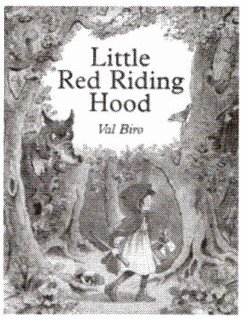
When the Little Red Riding Hood comes to the grandma’s home, the big wolf (狼) already wears the grandma’s clothes and sleeps in bed.
The Little Red Riding Hood asks, “Grandma, why are your ears so big?” The big wolf says, “I can hear you with the big ears.”
The Little Red Riding Hood asks again, “Why are your hands so big?” The wolf says, “I can hold you in my arms with the big hands.”
But the Little Red Riding Hood is still surprised, and she asks, “But why is your mouth so big, Grandma?” The big wolf says, “I can eat you with the big mouth.” It jumps down from the bed and swallows the Little Red Riding Hood. Then it sleeps in bed.
A hunter comes to see the grandma. He sees that a big wolf sleeping in bed, and something is moving in its belly (肚子). So he gets the scissors (剪刀) and cuts open the wolf’s belly. Then the Little Red Riding Hood and her grandma come out of the wolf’s belly. Because the wolf swallows them, they don’t get hurt.
The hunter and the Little Red Riding Hood put lots of stones (石头) inside the wolf’s belly, then the grandma sews (缝) up the belly. After the wolf wakes up, he feels thirsty. So he goes to the river to drink water. Because his belly is so heavy, he falls into the river and drowns.
(
A. He likes the grandma’s clothes.
B. He wears it just for great fun.
C. He wants to dress up as Grandma.
D. He likes Grandma very much.
(
A. 惊讶的 B. 兴奋的 C. 紧张的 D. 害怕的
(
A. Grandma. B. The hunter. C. The big mouth. D. The big wolf.
(
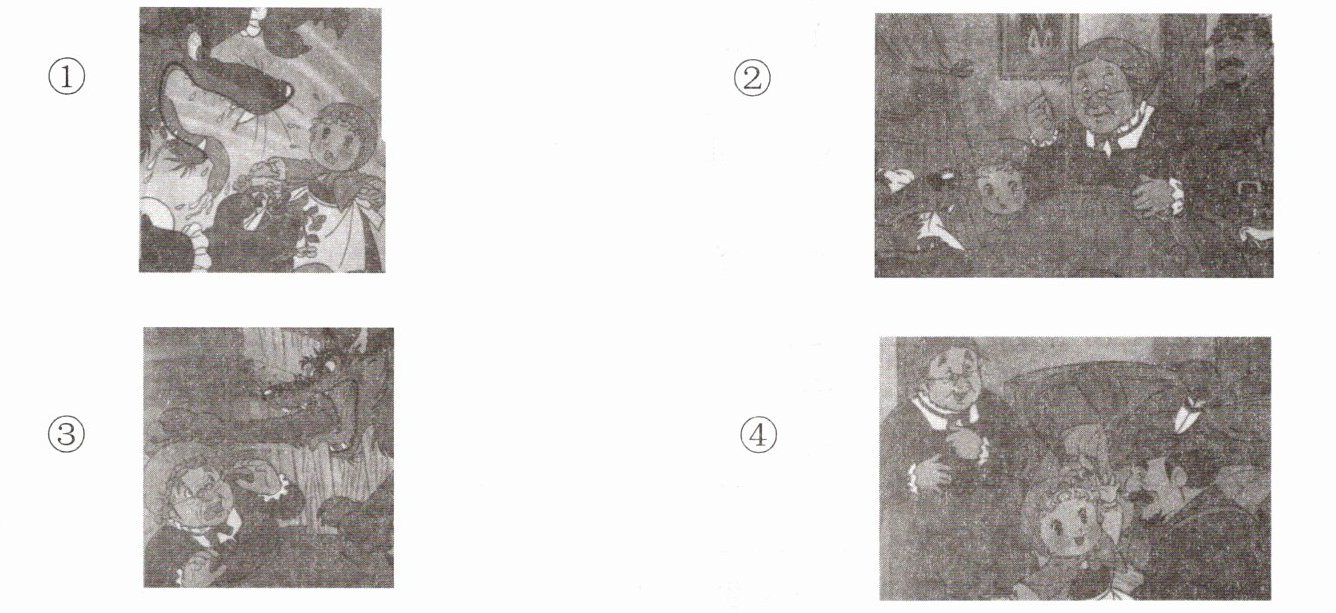
A. ①④③② B. ③①②④ C. ③④①② D. ③①④②
(
A. In an art magazine. B. In an animal magazine.
C. In a child magazine. D. In a health magazine.
When the Little Red Riding Hood comes to the grandma’s home, the big wolf (狼) already wears the grandma’s clothes and sleeps in bed.
The Little Red Riding Hood asks, “Grandma, why are your ears so big?” The big wolf says, “I can hear you with the big ears.”
The Little Red Riding Hood asks again, “Why are your hands so big?” The wolf says, “I can hold you in my arms with the big hands.”
But the Little Red Riding Hood is still surprised, and she asks, “But why is your mouth so big, Grandma?” The big wolf says, “I can eat you with the big mouth.” It jumps down from the bed and swallows the Little Red Riding Hood. Then it sleeps in bed.
A hunter comes to see the grandma. He sees that a big wolf sleeping in bed, and something is moving in its belly (肚子). So he gets the scissors (剪刀) and cuts open the wolf’s belly. Then the Little Red Riding Hood and her grandma come out of the wolf’s belly. Because the wolf swallows them, they don’t get hurt.
The hunter and the Little Red Riding Hood put lots of stones (石头) inside the wolf’s belly, then the grandma sews (缝) up the belly. After the wolf wakes up, he feels thirsty. So he goes to the river to drink water. Because his belly is so heavy, he falls into the river and drowns.
(
C
) 1. Why does the wolf wear the grandma’s clothes?A. He likes the grandma’s clothes.
B. He wears it just for great fun.
C. He wants to dress up as Grandma.
D. He likes Grandma very much.
(
A
) 2. What does the underlined word “surprised” mean in Chinese?A. 惊讶的 B. 兴奋的 C. 紧张的 D. 害怕的
(
D
) 3. What does the underlined word “It” refer to (指代)?A. Grandma. B. The hunter. C. The big mouth. D. The big wolf.
(
D
) 4. Look at the four pictures below. Which shows the correct order (顺序) of the story?A. ①④③② B. ③①②④ C. ③④①② D. ③①④②
(
C
) 5. Where can we read the story?A. In an art magazine. B. In an animal magazine.
C. In a child magazine. D. In a health magazine.
答案
1. C
2. A
3. D
4. D
5. C
2. A
3. D
4. D
5. C
解析
【分析】
本题是一篇改编自经典童话《小红帽》的英语阅读理解题,共5道选择题,分别考查细节理解、词义猜测、代词指代、故事顺序排序、文章出处判断。解题思路为:先通读全文梳理故事脉络,再针对每道题的题干定位原文对应内容,结合语境分析选项,排除错误项后选出正确答案。
【解析】
1. 第1题:题干问狼穿奶奶衣服的原因,定位原文第一段“the big wolf already wears the grandma’s clothes and sleeps in bed”,结合后文狼假扮奶奶要吃掉小红帽的情节,可知狼是为了假扮奶奶,对应选项C。
2. 第2题:词义猜测题,小红帽问完耳朵、手的问题后,又问嘴的问题,狼的回答是“我可以用大嘴吃掉你”,此时小红帽的反应应是“惊讶的”,对应选项A。
3. 第3题:代词指代题,定位到“It jumps down from the bed...”,前文主语是“the big wolf”,因此It指代狼,对应选项D。
4. 第4题:故事顺序题,结合原文情节:狼假扮奶奶(③)→小红帽问耳朵(①)→小红帽问手(④)→狼吞掉小红帽(②),正确顺序为③①④②,对应选项D。
5. 第5题:文章出处题,本文是儿童熟悉的童话,因此最可能出自儿童杂志,对应选项C。
【答案】
1.C 2.A 3.D 4.D 5.C
【知识点】
英语阅读理解细节理解、词义猜测、代词指代
【点评】
本题基于经典童话改编,题型覆盖英语阅读核心考点,难度适中,能帮助学生巩固阅读解题技巧,符合学生的认知水平。
【难度系数】
0.7
本题是一篇改编自经典童话《小红帽》的英语阅读理解题,共5道选择题,分别考查细节理解、词义猜测、代词指代、故事顺序排序、文章出处判断。解题思路为:先通读全文梳理故事脉络,再针对每道题的题干定位原文对应内容,结合语境分析选项,排除错误项后选出正确答案。
【解析】
1. 第1题:题干问狼穿奶奶衣服的原因,定位原文第一段“the big wolf already wears the grandma’s clothes and sleeps in bed”,结合后文狼假扮奶奶要吃掉小红帽的情节,可知狼是为了假扮奶奶,对应选项C。
2. 第2题:词义猜测题,小红帽问完耳朵、手的问题后,又问嘴的问题,狼的回答是“我可以用大嘴吃掉你”,此时小红帽的反应应是“惊讶的”,对应选项A。
3. 第3题:代词指代题,定位到“It jumps down from the bed...”,前文主语是“the big wolf”,因此It指代狼,对应选项D。
4. 第4题:故事顺序题,结合原文情节:狼假扮奶奶(③)→小红帽问耳朵(①)→小红帽问手(④)→狼吞掉小红帽(②),正确顺序为③①④②,对应选项D。
5. 第5题:文章出处题,本文是儿童熟悉的童话,因此最可能出自儿童杂志,对应选项C。
【答案】
1.C 2.A 3.D 4.D 5.C
【知识点】
英语阅读理解细节理解、词义猜测、代词指代
【点评】
本题基于经典童话改编,题型覆盖英语阅读核心考点,难度适中,能帮助学生巩固阅读解题技巧,符合学生的认知水平。
【难度系数】
0.7
