

 登录
登录
六、根据材料内容,从下面五个选项中选出能填入文中空缺处的最佳选项,使文章意思通顺、内容完整。
When eating, Chinese people usually use chopsticks. Chopsticks have a long history in China. Typical chopsticks are a pair of equal - length sticks made of bamboo, wood, or plastic. 1.
Chopsticks were known as *zhu* or *jia* in ancient China. It was said that they were invented by Da Yu, who successfully controlled a heavy flood. One day, he was busy dealing with the flood. In order to save time when eating, he used two tree branches to pick up hot food. 2.
In fact, the earliest chopsticks found in China were made of bronze (青铜), which were unearthed from Yinxu in Anyang City, Henan Province.
Many people may not realize the cultural meaning behind chopsticks. 3.
Today, chopsticks have become an important part of Chinese food culture. 5.
A. Their influence has spread far and wide.
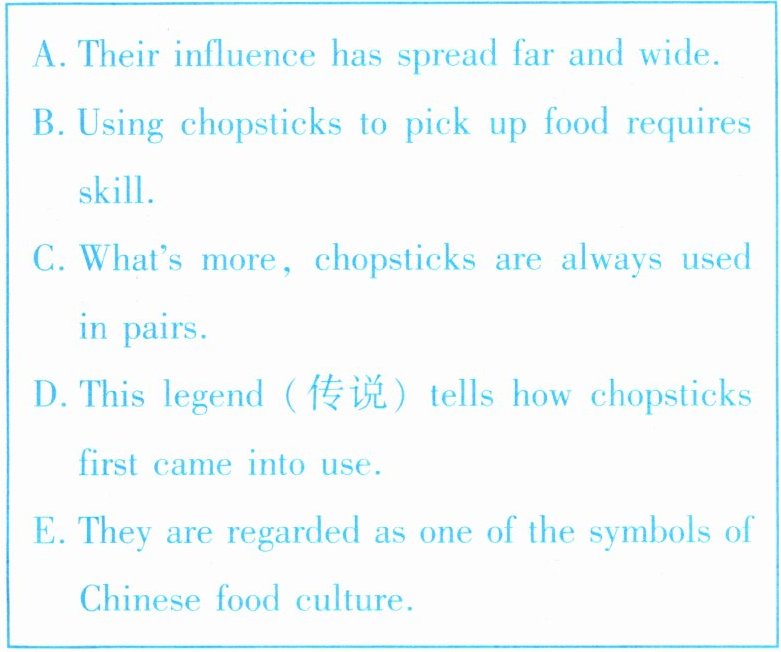
B. Using chopsticks to pick up food requires skill.
C. What's more, chopsticks are always used in pairs.
D. This legend (传说) tells how chopsticks first came into use.
E. They are regarded as one of the symbols of Chinese food culture.
When eating, Chinese people usually use chopsticks. Chopsticks have a long history in China. Typical chopsticks are a pair of equal - length sticks made of bamboo, wood, or plastic. 1.
B
For many people who try chopsticks for the first time, it's not easy to hold chopsticks well and pick up small pieces of food. They need to practise a lot.Chopsticks were known as *zhu* or *jia* in ancient China. It was said that they were invented by Da Yu, who successfully controlled a heavy flood. One day, he was busy dealing with the flood. In order to save time when eating, he used two tree branches to pick up hot food. 2.
D
In fact, the earliest chopsticks found in China were made of bronze (青铜), which were unearthed from Yinxu in Anyang City, Henan Province.
Many people may not realize the cultural meaning behind chopsticks. 3.
E
Do you notice that one end of chopsticks is square while the other end is round? In traditional Chinese thought, the round end symbolizes (象征) Heaven and the square end symbolizes Earth. 4. C
In Chinese culture, this design shows the perfect combination (结合) of *yin* and *yang*.Today, chopsticks have become an important part of Chinese food culture. 5.
A
At least 1.8 billion people are using chopsticks around the world now.A. Their influence has spread far and wide.
B. Using chopsticks to pick up food requires skill.
C. What's more, chopsticks are always used in pairs.
D. This legend (传说) tells how chopsticks first came into use.
E. They are regarded as one of the symbols of Chinese food culture.
答案
1—5 BDECA
解析
【分析】
这是一篇介绍筷子相关文化的说明文阅读还原题,解题时首先通读全文,明确文章围绕筷子的使用特点、起源传说、文化内涵、全球影响力四个部分展开,再逐空定位上下文的关键线索匹配选项:
1. 先看第1空的后文,提到初次使用筷子的人很难顺利夹起食物,需要大量练习,直接对应描述用筷子需要技巧的选项;
2. 第2空前文完整讲述了大禹发明筷子的传说故事,需要选择承接传说内容的选项;
3. 第3空前文点出筷子背后有文化含义,后文开始介绍筷子的造型寓意,需要先引出筷子的文化属性的过渡选项;
4. 第4空前文介绍筷子天圆地方的造型寓意,后文提到阴阳结合的设计理念,选择递进补充筷子成对使用特点的选项,和阴阳的对应逻辑契合;
5. 第5空后文给出全球有18亿人使用筷子的数据,对应描述筷子影响力广泛的选项,最终匹配出全部答案。
【解析】
1. 第1空:空后内容说明初次使用筷子的人很难熟练夹起小块食物,需要大量练习,和B选项“Using chopsticks to pick up food requires skill.(用筷子夹取食物需要技巧)”语义完全衔接,因此选B。
2. 第2空:前文讲述了大禹治水时用树枝夹取热食物的相关传说,D选项“This legend (传说) tells how chopsticks first came into use.(这个传说讲述了筷子最初是如何投入使用的)”承接前文的传说内容,逻辑连贯,因此选D。
3. 第3空:前文指出很多人没有意识到筷子背后的文化内涵,E选项“They are regarded as one of the symbols of Chinese food culture.(它们被视为中国饮食文化的象征之一)”引出筷子的文化属性,自然过渡到后文对筷子造型寓意的介绍,因此选E。
4. 第4空:前文介绍筷子一头圆一头方分别象征天和地,后文提到该设计体现了阴阳的完美结合,C选项“What's more, chopsticks are always used in pairs.(此外,筷子总是成对使用的)”递进补充筷子的典型特点,成对的属性也和阴阳的对应逻辑相契合,衔接上下文,因此选C。
5. 第5空:后文给出全球至少18亿人使用筷子的数据,A选项“Their influence has spread far and wide.(它们的影响力传播得又远又广)”引出后文的全球使用情况,语义匹配,因此选A。
【答案】
1—5 BDECA
【知识点】
说明文阅读还原,语篇逻辑衔接,中国饮食文化
【点评】
本题属于典型的初中英语阅读五选五题型,重点考察学生对说明文上下文语义关联、指代关系、逻辑递进线索的把握能力,同时融入了中国传统筷子文化的相关知识,引导学生在英语学习中关注本土文化内容,整体线索清晰,只要抓住前后文的对应提示就可以顺利选出答案。
【难度系数】
0.7
这是一篇介绍筷子相关文化的说明文阅读还原题,解题时首先通读全文,明确文章围绕筷子的使用特点、起源传说、文化内涵、全球影响力四个部分展开,再逐空定位上下文的关键线索匹配选项:
1. 先看第1空的后文,提到初次使用筷子的人很难顺利夹起食物,需要大量练习,直接对应描述用筷子需要技巧的选项;
2. 第2空前文完整讲述了大禹发明筷子的传说故事,需要选择承接传说内容的选项;
3. 第3空前文点出筷子背后有文化含义,后文开始介绍筷子的造型寓意,需要先引出筷子的文化属性的过渡选项;
4. 第4空前文介绍筷子天圆地方的造型寓意,后文提到阴阳结合的设计理念,选择递进补充筷子成对使用特点的选项,和阴阳的对应逻辑契合;
5. 第5空后文给出全球有18亿人使用筷子的数据,对应描述筷子影响力广泛的选项,最终匹配出全部答案。
【解析】
1. 第1空:空后内容说明初次使用筷子的人很难熟练夹起小块食物,需要大量练习,和B选项“Using chopsticks to pick up food requires skill.(用筷子夹取食物需要技巧)”语义完全衔接,因此选B。
2. 第2空:前文讲述了大禹治水时用树枝夹取热食物的相关传说,D选项“This legend (传说) tells how chopsticks first came into use.(这个传说讲述了筷子最初是如何投入使用的)”承接前文的传说内容,逻辑连贯,因此选D。
3. 第3空:前文指出很多人没有意识到筷子背后的文化内涵,E选项“They are regarded as one of the symbols of Chinese food culture.(它们被视为中国饮食文化的象征之一)”引出筷子的文化属性,自然过渡到后文对筷子造型寓意的介绍,因此选E。
4. 第4空:前文介绍筷子一头圆一头方分别象征天和地,后文提到该设计体现了阴阳的完美结合,C选项“What's more, chopsticks are always used in pairs.(此外,筷子总是成对使用的)”递进补充筷子的典型特点,成对的属性也和阴阳的对应逻辑相契合,衔接上下文,因此选C。
5. 第5空:后文给出全球至少18亿人使用筷子的数据,A选项“Their influence has spread far and wide.(它们的影响力传播得又远又广)”引出后文的全球使用情况,语义匹配,因此选A。
【答案】
1—5 BDECA
【知识点】
说明文阅读还原,语篇逻辑衔接,中国饮食文化
【点评】
本题属于典型的初中英语阅读五选五题型,重点考察学生对说明文上下文语义关联、指代关系、逻辑递进线索的把握能力,同时融入了中国传统筷子文化的相关知识,引导学生在英语学习中关注本土文化内容,整体线索清晰,只要抓住前后文的对应提示就可以顺利选出答案。
【难度系数】
0.7
七、先通读短文,掌握其大意,然后从A、B、C、D四个选项中选出一个可以填入相应空白处的最佳答案。
A young Canadian woman went to Beijing to study. When she first arrived, she knew 1 about Chinese culture.
On her first day, she went to a 2 to get some money. To her 3, the clerk asked her, "Have you eaten lunch yet?". In her culture, such a question would be considered as an indirect 4 to a meal. Between unmarried young people, it might even suggest a young man's 5 in asking the girl out on a date.
Later, at her university, she was even more surprised when one of her teachers asked her the same question. By then, she 6 that it probably wasn't an invitation. But she was 7 about why they asked the question.
In the following day, different people asked her the 8 question again and again. She spent much time thinking 9 so many people kept asking her this question. She finally concluded that people must care about her 10. She was quite thin at that time, 11 she thought they must be worried that she was not eating properly! She decided to eat more to 12 weight.
A few days later, she finally found out that the question had no special 13 at all. It was 14 a common greeting, much like saying "How are you?".
Culture 15 can certainly be puzzling sometimes, but most of the time, they make for interesting stories!
() 1. A. much
B. few
C. little
D. best
() 2. A. library
B. bank
C. restaurant
D. hospital
() 3. A. surprise
B. joy
C. shock
D. disappointment
() 4. A. answer
B. trust
C. cost
D. invitation
() 5. A. plan
B. interest
C. advice
D. success
() 6. A. realized
B. mentioned
C. preferred
D. expected
() 7. A. relaxed
B. embarrassed
C. confused
D. scared
() 8. A. different
B. serious
C. same
D. successful
() 9. A. what
B. why
C. where
D. when
() 10. A. future
B. study
C. safety
D. health
() 11. A. unless
B. so
C. though
D. if
() 12. A. keep up
B. look after
C. add to
D. put on
() 13. A. use
B. importance
C. meaning
D. problem
() 14. A. simply
B. completely
C. directly
D. probably
() 15. A. traditions
B. thoughts
C. differences
D. languages
A young Canadian woman went to Beijing to study. When she first arrived, she knew 1 about Chinese culture.
On her first day, she went to a 2 to get some money. To her 3, the clerk asked her, "Have you eaten lunch yet?". In her culture, such a question would be considered as an indirect 4 to a meal. Between unmarried young people, it might even suggest a young man's 5 in asking the girl out on a date.
Later, at her university, she was even more surprised when one of her teachers asked her the same question. By then, she 6 that it probably wasn't an invitation. But she was 7 about why they asked the question.
In the following day, different people asked her the 8 question again and again. She spent much time thinking 9 so many people kept asking her this question. She finally concluded that people must care about her 10. She was quite thin at that time, 11 she thought they must be worried that she was not eating properly! She decided to eat more to 12 weight.
A few days later, she finally found out that the question had no special 13 at all. It was 14 a common greeting, much like saying "How are you?".
Culture 15 can certainly be puzzling sometimes, but most of the time, they make for interesting stories!
() 1. A. much
B. few
C. little
D. best
() 2. A. library
B. bank
C. restaurant
D. hospital
() 3. A. surprise
B. joy
C. shock
D. disappointment
() 4. A. answer
B. trust
C. cost
D. invitation
() 5. A. plan
B. interest
C. advice
D. success
() 6. A. realized
B. mentioned
C. preferred
D. expected
() 7. A. relaxed
B. embarrassed
C. confused
D. scared
() 8. A. different
B. serious
C. same
D. successful
() 9. A. what
B. why
C. where
D. when
() 10. A. future
B. study
C. safety
D. health
() 11. A. unless
B. so
C. though
D. if
() 12. A. keep up
B. look after
C. add to
D. put on
() 13. A. use
B. importance
C. meaning
D. problem
() 14. A. simply
B. completely
C. directly
D. probably
() 15. A. traditions
B. thoughts
C. differences
D. languages
答案
1—5 CBADB 6—10 ACCBD 11—15 BDCAC
解析
【分析】
解题时首先通读全文,把握文章核心主旨:本文讲述了初到中国的加拿大年轻女性,因不了解中西方文化差异,将中国人常说的“你吃饭了吗”这一普通问候误会成特殊含义的趣事。解题思路遵循“先抓主旨,再结合上下文语境、固定搭配逐一排除错误选项”的逻辑:1. 先根据首句“她刚到中国”的背景,推断她对中国文化的了解程度;2. 结合每个空前后的线索提示,比如后文出现的原词复现、固定搭配、逻辑关系,逐一匹配最符合语境的选项,最后代入全文通读验证逻辑通顺。
【解析】
1. 第1空:前文提到她刚到北京学习,可推知她几乎不了解中国文化,culture是不可数名词,little修饰不可数名词表示“几乎没有”,few修饰可数名词复数,much表很多,best是最好的,故选C。
2. 第2空:后文目的是“取一些钱”,对应场所是银行bank,library图书馆、restaurant餐馆、hospital医院都不符合取钱的场景,故选B。
3. 第3空:固定搭配to one's surprise表示“令某人惊讶的是”,后文也出现了“she was even more surprised”的呼应线索,joy开心、shock震惊、disappointment失望均不符合语境,故选A。
4. 第4空:后文明确提到“it probably wasn't an invitation”,属于原词复现,说明在她的文化里这个问题是间接的用餐邀请,answer回答、trust信任、cost花费都不符合,故选D。
5. 第5空:固定搭配interest in doing sth.表示“做某事的兴趣”,此处指未婚年轻人之间,这个问题甚至暗示年轻男士有约女孩约会的想法/兴趣,plan计划、advice建议、success成功均不符合搭配和语境,故选B。
6. 第6空:前文提到老师也问了同样的问题,此时她意识到这大概率不是邀请,realized意识到,mentioned提及、preferred更喜欢、expected期待都不符合语境,故选A。
7. 第7空:前文说她知道这不是邀请,转折后表示她仍然很困惑大家为什么要问这个问题,confused困惑的,relaxed放松的、embarrassed尴尬的、scared害怕的都不符合,故选C。
8. 第8空:后文提到“again and again”一遍又一遍,说明不同的人反复问她同样的问题,same相同的,different不同的、serious严肃的、successful成功的都不符合,故选C。
9. 第9空:句意为她花了很多时间思考为什么这么多人要问她这个问题,why用来询问原因,what什么、where哪里、when何时都不符合逻辑,故选B。
10. 第10空:后文提到她觉得大家担心她吃得不好,对应大家关心她的健康health,future未来、study学习、safety安全都不符合语境,故选D。
11. 第11空:前半句“那时候她很瘦”,后半句“她认为大家肯定担心她吃得不合理”,前后是因果关系,so表所以,unless除非、though尽管、if如果都不符合逻辑,故选B。
12. 第12空:固定搭配put on weight表示“增重、长胖”,对应她决定多吃的目的,keep up保持、look after照顾、add to增加(后接事物)都不符合搭配,故选D。
13. 第13空:句意为最后她发现这个问题根本没有特殊的含义,meaning含义,use用途、importance重要性、problem问题都不符合,故选C。
14. 第14空:句意为它仅仅是一个普通的问候,就像“你好吗”一样,simply仅仅、只不过,completely完全地、directly直接地、probably可能地都不符合语境,故选A。
15. 第15空:全文围绕中西方对同一问候语的不同理解展开,对应的是文化差异,differences差异,traditions传统、thoughts想法、languages语言都不符合全文核心主题,故选C。
【答案】
1—5 CBADB 6—10 ACCBD 11—15 BDCAC
【知识点】
完形语境推理,固定短语搭配,中西方文化差异
【点评】
本题属于故事类完形填空,整体情节趣味性强,线索清晰,大部分选项都可以通过上下文原词复现、固定搭配直接选出,既考查了学生的完形解题基础能力,也能让学生了解中西方日常问候的文化区别,积累相关跨文化常识。
【难度系数】
0.7
解题时首先通读全文,把握文章核心主旨:本文讲述了初到中国的加拿大年轻女性,因不了解中西方文化差异,将中国人常说的“你吃饭了吗”这一普通问候误会成特殊含义的趣事。解题思路遵循“先抓主旨,再结合上下文语境、固定搭配逐一排除错误选项”的逻辑:1. 先根据首句“她刚到中国”的背景,推断她对中国文化的了解程度;2. 结合每个空前后的线索提示,比如后文出现的原词复现、固定搭配、逻辑关系,逐一匹配最符合语境的选项,最后代入全文通读验证逻辑通顺。
【解析】
1. 第1空:前文提到她刚到北京学习,可推知她几乎不了解中国文化,culture是不可数名词,little修饰不可数名词表示“几乎没有”,few修饰可数名词复数,much表很多,best是最好的,故选C。
2. 第2空:后文目的是“取一些钱”,对应场所是银行bank,library图书馆、restaurant餐馆、hospital医院都不符合取钱的场景,故选B。
3. 第3空:固定搭配to one's surprise表示“令某人惊讶的是”,后文也出现了“she was even more surprised”的呼应线索,joy开心、shock震惊、disappointment失望均不符合语境,故选A。
4. 第4空:后文明确提到“it probably wasn't an invitation”,属于原词复现,说明在她的文化里这个问题是间接的用餐邀请,answer回答、trust信任、cost花费都不符合,故选D。
5. 第5空:固定搭配interest in doing sth.表示“做某事的兴趣”,此处指未婚年轻人之间,这个问题甚至暗示年轻男士有约女孩约会的想法/兴趣,plan计划、advice建议、success成功均不符合搭配和语境,故选B。
6. 第6空:前文提到老师也问了同样的问题,此时她意识到这大概率不是邀请,realized意识到,mentioned提及、preferred更喜欢、expected期待都不符合语境,故选A。
7. 第7空:前文说她知道这不是邀请,转折后表示她仍然很困惑大家为什么要问这个问题,confused困惑的,relaxed放松的、embarrassed尴尬的、scared害怕的都不符合,故选C。
8. 第8空:后文提到“again and again”一遍又一遍,说明不同的人反复问她同样的问题,same相同的,different不同的、serious严肃的、successful成功的都不符合,故选C。
9. 第9空:句意为她花了很多时间思考为什么这么多人要问她这个问题,why用来询问原因,what什么、where哪里、when何时都不符合逻辑,故选B。
10. 第10空:后文提到她觉得大家担心她吃得不好,对应大家关心她的健康health,future未来、study学习、safety安全都不符合语境,故选D。
11. 第11空:前半句“那时候她很瘦”,后半句“她认为大家肯定担心她吃得不合理”,前后是因果关系,so表所以,unless除非、though尽管、if如果都不符合逻辑,故选B。
12. 第12空:固定搭配put on weight表示“增重、长胖”,对应她决定多吃的目的,keep up保持、look after照顾、add to增加(后接事物)都不符合搭配,故选D。
13. 第13空:句意为最后她发现这个问题根本没有特殊的含义,meaning含义,use用途、importance重要性、problem问题都不符合,故选C。
14. 第14空:句意为它仅仅是一个普通的问候,就像“你好吗”一样,simply仅仅、只不过,completely完全地、directly直接地、probably可能地都不符合语境,故选A。
15. 第15空:全文围绕中西方对同一问候语的不同理解展开,对应的是文化差异,differences差异,traditions传统、thoughts想法、languages语言都不符合全文核心主题,故选C。
【答案】
1—5 CBADB 6—10 ACCBD 11—15 BDCAC
【知识点】
完形语境推理,固定短语搭配,中西方文化差异
【点评】
本题属于故事类完形填空,整体情节趣味性强,线索清晰,大部分选项都可以通过上下文原词复现、固定搭配直接选出,既考查了学生的完形解题基础能力,也能让学生了解中西方日常问候的文化区别,积累相关跨文化常识。
【难度系数】
0.7
