

 登录
登录
一、选择合适的疑问词填空。
What Where When How Why
1. —
— Because my friend gave up the race.
2. —
— They went to Beijing.
3. —
— It was great.
4. —
— I stayed in the fields.
5. —
— In 2014.
What Where When How Why
1. —
Why
did you look sad?— Because my friend gave up the race.
2. —
Where
did they go this morning?— They went to Beijing.
3. —
How
was your Children's Day?— It was great.
4. —
What
did you do last week?— I stayed in the fields.
5. —
When
did he go to Shanghai?— In 2014.
答案
1. Why 2. Where 3. How 4. What 5. When
解析
【分析】首先明确各疑问词的含义与匹配场景:Why对应答语含because(表原因),Where对应答语表地点,How对应答语表状态/评价,What对应答语表做的事情,When对应答语表时间。解题时需根据每小题的答语内容,匹配对应的疑问词即可。
【解析】1. 答语用Because说明原因,故填Why;2. 答语是地点Beijing,故填Where;3. 答语是评价great(怎么样),故填How;4. 答语是做的事情stayed in the fields,故填What;5. 答语是时间In 2014,故填When。
【答案】1. Why 2. Where 3. How 4. What 5. When
【知识点】特殊疑问词用法
【点评】本题考查基础疑问词的辨析,需结合答语内容匹配对应疑问词,侧重对疑问词基本功能的掌握,属于英语基础题型。
【难度系数】0.8
【解析】1. 答语用Because说明原因,故填Why;2. 答语是地点Beijing,故填Where;3. 答语是评价great(怎么样),故填How;4. 答语是做的事情stayed in the fields,故填What;5. 答语是时间In 2014,故填When。
【答案】1. Why 2. Where 3. How 4. What 5. When
【知识点】特殊疑问词用法
【点评】本题考查基础疑问词的辨析,需结合答语内容匹配对应疑问词,侧重对疑问词基本功能的掌握,属于英语基础题型。
【难度系数】0.8
二、对画线部分提问。
1. Tom was on the farm yesterday afternoon.
1. Tom was on the farm yesterday afternoon.
Where
was
Tom yesterday afternoon?答案
1. Where was
解析
【分析】首先明确画线部分“on the farm”是表示地点的短语,对地点提问需使用疑问词Where;原句为一般过去时的主系表结构,be动词是was,变特殊疑问句时要将be动词提前至主语前,即可完成转换。
【解析】画线部分是地点状语,对应疑问词为Where;原句主语是Tom,be动词为was,将was提前到主语前,因此问句为Where was Tom yesterday afternoon?
【答案】Where was
【知识点】对地点提问;一般过去时的疑问句
【点评】本题考查特殊疑问句的基础构成,核心是根据画线内容确定疑问词,再调整be动词位置,属于英语句型转换的基础题型,难度较低。
【难度系数】0.8
【解析】画线部分是地点状语,对应疑问词为Where;原句主语是Tom,be动词为was,将was提前到主语前,因此问句为Where was Tom yesterday afternoon?
【答案】Where was
【知识点】对地点提问;一般过去时的疑问句
【点评】本题考查特殊疑问句的基础构成,核心是根据画线内容确定疑问词,再调整be动词位置,属于英语句型转换的基础题型,难度较低。
【难度系数】0.8
二、常见的特殊疑问词(组)
| 特殊疑问词(组) | 含义 | 用法 |
| --- | --- | --- |
| what | 什么 | 对具体的事、物、职业等进行提问 |
| when | 什么时候 | 对时间进行提问 |
| where | 在哪里 | 对地点进行提问 |
| who | 谁 |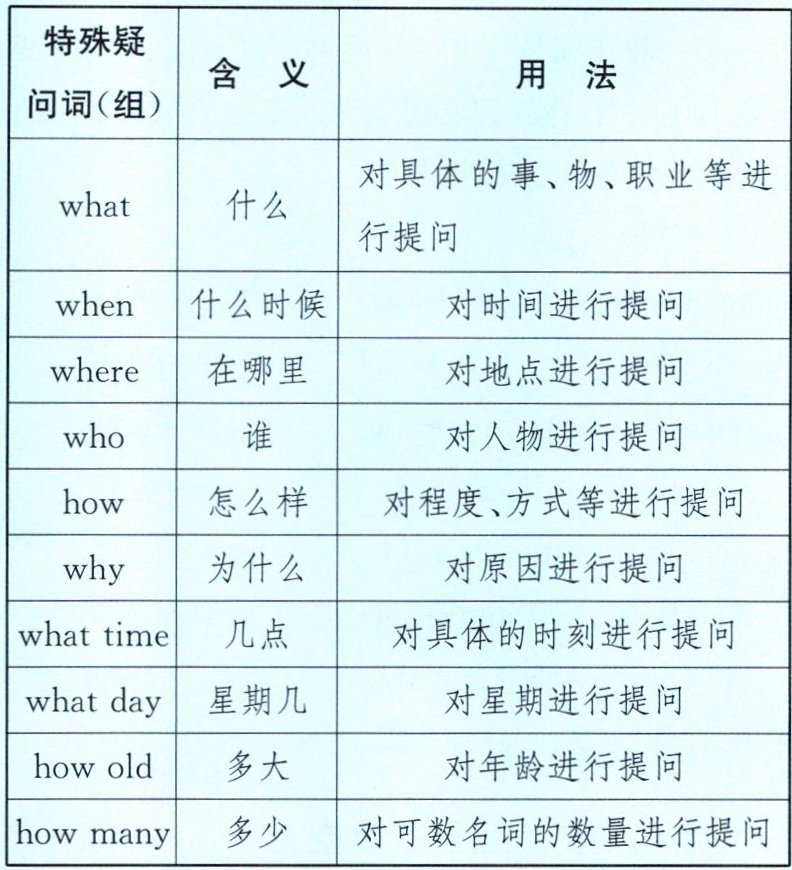 对人物进行提问 |
| how | 怎么样 | 对程度、方式等进行提问 |
| why | 为什么 | 对原因进行提问 |
| what time | 几点 | 对具体的时刻进行提问 |
| what day | 星期几 | 对星期进行提问 |
| how old | 多大 | 对年龄进行提问 |
| how many | 多少 | 对可数名词的数量进行提问 |
2. She could dance well last year.
she well last year?
3. She went to the zoo last summer.
she last summer?
4. He went to Shanghai by plane.
he to Shanghai?
5. The party began at 8 o'clock.
did the party ?
6. There were five people in the room.
people there in the room?
7. Lily was four in 2020.
Lily in 2020?
| 特殊疑问词(组) | 含义 | 用法 |
| --- | --- | --- |
| what | 什么 | 对具体的事、物、职业等进行提问 |
| when | 什么时候 | 对时间进行提问 |
| where | 在哪里 | 对地点进行提问 |
| who | 谁 |
对人物进行提问 || how | 怎么样 | 对程度、方式等进行提问 |
| why | 为什么 | 对原因进行提问 |
| what time | 几点 | 对具体的时刻进行提问 |
| what day | 星期几 | 对星期进行提问 |
| how old | 多大 | 对年龄进行提问 |
| how many | 多少 | 对可数名词的数量进行提问 |
2. She could dance well last year.
she well last year?
3. She went to the zoo last summer.
she last summer?
4. He went to Shanghai by plane.
he to Shanghai?
5. The party began at 8 o'clock.
did the party ?
6. There were five people in the room.
people there in the room?
7. Lily was four in 2020.
Lily in 2020?
答案
2. What could; do 3. What did; do 4. How did; go 5. What time; begin 6. How many; were 7. How old was
解析
【分析】
解答本题需分四步:1. 明确划线部分的内容,匹配对应的特殊疑问词(组);2. 判断句子的时态、是否有情态动词,确定特殊疑问句的助动词/情态动词;3. 将原句的be动词、助动词或情态动词提前,实义动词根据规则还原;4. 按“特殊疑问词+一般疑问句”的结构填空,注意空格数量。
【解析】
2. 划线部分为动作dance,对应疑问词what;原句含情态动词could,变疑问句时将could提前,实义动词用do代替划线动作,故填What could; do。
3. 划线部分为动作went to the zoo,对应疑问词what;原句是一般过去时,需借助助动词did,did后实义动词还原为do,故填What did; do。
4. 划线部分为出行方式by plane,对应疑问词how;原句是一般过去时,借助助动词did,实义动词go还原,故填How did; go。
5. 划线部分为具体时刻at 8 o'clock,对应疑问词组what time;原句是一般过去时,借助助动词did,实义动词begin还原,故填What time; begin。
6. 划线部分为可数名词的数量five,对应疑问词组how many;原句是there be句型的一般过去时,be动词were提前,故填How many; were。
7. 划线部分为年龄four,对应疑问词组how old;原句含be动词was,变疑问句时将was提前,故填How old was。
【答案】
2. What could; do 3. What did; do 4. How did; go 5. What time; begin 6. How many; were 7. How old was
【知识点】
特殊疑问词用法,特殊疑问句构成,一般过去时
【点评】
本题考查初中英语基础语法中特殊疑问句的用法,要求学生能根据划线内容匹配对应疑问词,并掌握不同时态下特殊疑问句的结构,是常见的基础题型,注重对核心语法的应用。
【难度系数】
0.6
解答本题需分四步:1. 明确划线部分的内容,匹配对应的特殊疑问词(组);2. 判断句子的时态、是否有情态动词,确定特殊疑问句的助动词/情态动词;3. 将原句的be动词、助动词或情态动词提前,实义动词根据规则还原;4. 按“特殊疑问词+一般疑问句”的结构填空,注意空格数量。
【解析】
2. 划线部分为动作dance,对应疑问词what;原句含情态动词could,变疑问句时将could提前,实义动词用do代替划线动作,故填What could; do。
3. 划线部分为动作went to the zoo,对应疑问词what;原句是一般过去时,需借助助动词did,did后实义动词还原为do,故填What did; do。
4. 划线部分为出行方式by plane,对应疑问词how;原句是一般过去时,借助助动词did,实义动词go还原,故填How did; go。
5. 划线部分为具体时刻at 8 o'clock,对应疑问词组what time;原句是一般过去时,借助助动词did,实义动词begin还原,故填What time; begin。
6. 划线部分为可数名词的数量five,对应疑问词组how many;原句是there be句型的一般过去时,be动词were提前,故填How many; were。
7. 划线部分为年龄four,对应疑问词组how old;原句含be动词was,变疑问句时将was提前,故填How old was。
【答案】
2. What could; do 3. What did; do 4. How did; go 5. What time; begin 6. How many; were 7. How old was
【知识点】
特殊疑问词用法,特殊疑问句构成,一般过去时
【点评】
本题考查初中英语基础语法中特殊疑问句的用法,要求学生能根据划线内容匹配对应疑问词,并掌握不同时态下特殊疑问句的结构,是常见的基础题型,注重对核心语法的应用。
【难度系数】
0.6
