

 登录
登录
六、Lucy 在向校史馆老师咨询学校的变迁史。选择合适的句子补全对话。
Lucy: Hello, Mr Li. 1.
Mr Li: No problem, Lucy.
Lucy: Were there any computers in the classrooms 25 years ago?
Mr Li: 2.
Lucy: But now we have one computer in every classroom!
Mr Li: That's right. 3.
Lucy: There was no gym in our school at that time, right?
Mr Li: 4.
Lucy: I knew it from the school newspaper.
5.
Mr Li: Yes, all of you can enjoy a better school life now.
Lucy: Yeah. Thank you for sharing these.
A. No, there wasn't the Internet either.
B. Now we can play sports in the gym.
C. Yes, how did you know that?
D. Can you tell me about our school?
E. Students can look up things with them.
Lucy: Hello, Mr Li. 1.
D
Mr Li: No problem, Lucy.
Lucy: Were there any computers in the classrooms 25 years ago?
Mr Li: 2.
A
Lucy: But now we have one computer in every classroom!
Mr Li: That's right. 3.
E
Lucy: There was no gym in our school at that time, right?
Mr Li: 4.
C
Lucy: I knew it from the school newspaper.
5.
B
Mr Li: Yes, all of you can enjoy a better school life now.
Lucy: Yeah. Thank you for sharing these.
A. No, there wasn't the Internet either.
B. Now we can play sports in the gym.
C. Yes, how did you know that?
D. Can you tell me about our school?
E. Students can look up things with them.
答案
六、1.D 2.A 3.E 4.C 5.B
解析
对话:Mr Li给Lucy讲解了学校的变化,并感慨现在
的生活变好了。
选项:A. 没有,也没有互联网。
B. 现在我们可以在体育馆里做运动。
C. 是的,你怎么知道那个的?
D. 您能给我讲讲我们的学校吗?
E. 学生们可以用它们查阅东西。
分析:1. Lucy打完招呼,Mr Li回应"没问题",说明
Lucy在提出请求,故选D。
2. Lucy问25年前教室里有没有电脑,结合But
及现在有了电脑,推测过去没有电脑,故
选A。
3. 上文在谈论电脑,此处可进一步说明电脑的
用途,故选E。
4. Lucy问"那时候我们学校没有体育馆,对
吗?",后面又补充说她是从学校报纸上知道
的,推测Mr Li在询问她是怎么知道的,故
选C。
5. 上文在聊过去体育馆相关的事情,此处可转
移到现在的体育馆,故选B。
解析
对话:Mr Li给Lucy讲解了学校的变化,并感慨现在
的生活变好了。
选项:A. 没有,也没有互联网。
B. 现在我们可以在体育馆里做运动。
C. 是的,你怎么知道那个的?
D. 您能给我讲讲我们的学校吗?
E. 学生们可以用它们查阅东西。
分析:1. Lucy打完招呼,Mr Li回应"没问题",说明
Lucy在提出请求,故选D。
2. Lucy问25年前教室里有没有电脑,结合But
及现在有了电脑,推测过去没有电脑,故
选A。
3. 上文在谈论电脑,此处可进一步说明电脑的
用途,故选E。
4. Lucy问"那时候我们学校没有体育馆,对
吗?",后面又补充说她是从学校报纸上知道
的,推测Mr Li在询问她是怎么知道的,故
选C。
5. 上文在聊过去体育馆相关的事情,此处可转
移到现在的体育馆,故选B。
解析
【分析】
做这类情景补全对话题,首先要通读全文和所有备选选项,明确对话主题是Lucy向李老师咨询学校过去和现在的变化,之后逐空结合上下文的问答逻辑、话题延续性来匹配选项:第一空后文李老师直接回应“没问题”,说明Lucy此处是提出合理请求,对应找表请求的选项;第二空是回答关于25年前教室有没有电脑的问句,结合后文转折说现在每个教室都有电脑,能判断过去相关配套设施都不完善;第三空前文刚提到现在教室都配了电脑,顺承可以讲电脑的用途;第四空后文Lucy回答自己是从校报得知相关信息的,说明老师此处是询问她得知信息的途径;第五空前文聊完过去学校没有体育馆的情况,后文老师感慨现在校园生活更好,衔接现在体育馆的使用场景就可以匹配到对应选项。
【解析】
1. 空后Mr Li回应"No problem",说明Lucy此处是提出咨询请求,D选项“Can you tell me about our school?”符合语境,故选D。
2. 空前提问25年前教室里是否有电脑,后文转折说明现在每个教室都配备了电脑,体现过去学校设施匮乏,A选项“No, there wasn't the Internet either.”符合过去的实际情况,故选A。
3. 前文提到现在每个教室都有电脑,此处顺承说明电脑的作用,E选项“Students can look up things with them.”逻辑通顺,故选E。
4. 空后Lucy说明自己是从校报得知学校过去没有体育馆这件事的,说明Mr Li此处是询问她得知该信息的途径,C选项“Yes, how did you know that?”符合问答逻辑,故选C。
5. 前文讨论过去学校没有体育馆,后文老师感慨现在大家能享受更好的校园生活,此处衔接体育馆相关的今昔变化,B选项“Now we can play sports in the gym.”逻辑连贯,故选B。
【答案】
1.D 2.A 3.E 4.C 5.B
【知识点】
情景交际,补全对话
【点评】
本题以校园变迁为生活化情景,重点考察对话的前后呼应逻辑,解题时抓住问答匹配、话题延续的线索就能快速锁定答案,同时也能帮助学生体会一般过去时和一般现在时在描述今昔变化场景下的用法区别。
【难度系数】
0.8
做这类情景补全对话题,首先要通读全文和所有备选选项,明确对话主题是Lucy向李老师咨询学校过去和现在的变化,之后逐空结合上下文的问答逻辑、话题延续性来匹配选项:第一空后文李老师直接回应“没问题”,说明Lucy此处是提出合理请求,对应找表请求的选项;第二空是回答关于25年前教室有没有电脑的问句,结合后文转折说现在每个教室都有电脑,能判断过去相关配套设施都不完善;第三空前文刚提到现在教室都配了电脑,顺承可以讲电脑的用途;第四空后文Lucy回答自己是从校报得知相关信息的,说明老师此处是询问她得知信息的途径;第五空前文聊完过去学校没有体育馆的情况,后文老师感慨现在校园生活更好,衔接现在体育馆的使用场景就可以匹配到对应选项。
【解析】
1. 空后Mr Li回应"No problem",说明Lucy此处是提出咨询请求,D选项“Can you tell me about our school?”符合语境,故选D。
2. 空前提问25年前教室里是否有电脑,后文转折说明现在每个教室都配备了电脑,体现过去学校设施匮乏,A选项“No, there wasn't the Internet either.”符合过去的实际情况,故选A。
3. 前文提到现在每个教室都有电脑,此处顺承说明电脑的作用,E选项“Students can look up things with them.”逻辑通顺,故选E。
4. 空后Lucy说明自己是从校报得知学校过去没有体育馆这件事的,说明Mr Li此处是询问她得知该信息的途径,C选项“Yes, how did you know that?”符合问答逻辑,故选C。
5. 前文讨论过去学校没有体育馆,后文老师感慨现在大家能享受更好的校园生活,此处衔接体育馆相关的今昔变化,B选项“Now we can play sports in the gym.”逻辑连贯,故选B。
【答案】
1.D 2.A 3.E 4.C 5.B
【知识点】
情景交际,补全对话
【点评】
本题以校园变迁为生活化情景,重点考察对话的前后呼应逻辑,解题时抓住问答匹配、话题延续的线索就能快速锁定答案,同时也能帮助学生体会一般过去时和一般现在时在描述今昔变化场景下的用法区别。
【难度系数】
0.8
七、请阅读对因纽特人的介绍,完成下列任务。
Long ago, the Inuit had two kinds of homes. In winter, they sometimes lived in an igloo. Igloos were made of blocks of ice. Inside, there was a stove, some animal skins for sleeping and an oil lamp for lighting. In summer, they lived in a tent. These tents were made of animal skins. Mothers and children stored berries and eggs in the tents. And fathers always went out to hunt.
Today, most Inuit live in houses just like ours. Their houses have bathrooms and fresh water. But sometimes no water comes out of the tap. So they keep the water in a big tank inside their houses. Now, the Inuit don't move homes anymore. They can live a more comfortable life.
任务一:因纽特人过去的家是什么样子的呢?根据短文内容,完成表格。
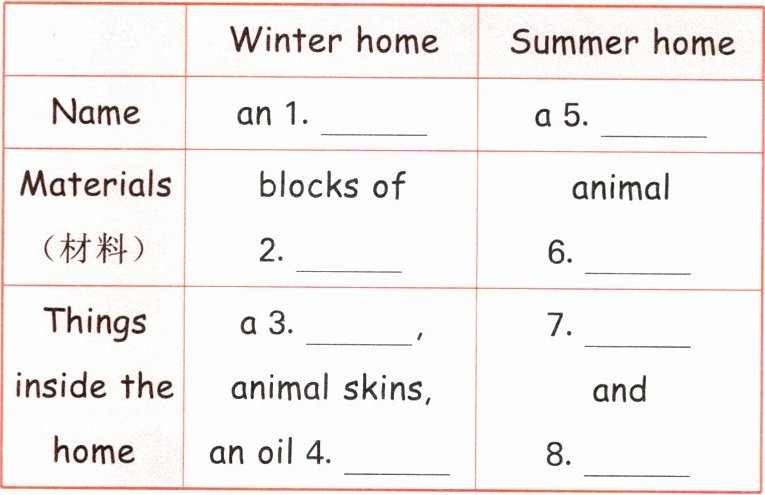
任务二:根据短文内容,选择正确的选项。
(
A. In an igloo.
B. In a tent.
C. In a house.
(
A. Because their houses don't have fresh water.
B. Because their taps don't work sometimes.
C. Because they need to move homes.
(
A. Sad.
B. Positive.
C. Worried.
Long ago, the Inuit had two kinds of homes. In winter, they sometimes lived in an igloo. Igloos were made of blocks of ice. Inside, there was a stove, some animal skins for sleeping and an oil lamp for lighting. In summer, they lived in a tent. These tents were made of animal skins. Mothers and children stored berries and eggs in the tents. And fathers always went out to hunt.
Today, most Inuit live in houses just like ours. Their houses have bathrooms and fresh water. But sometimes no water comes out of the tap. So they keep the water in a big tank inside their houses. Now, the Inuit don't move homes anymore. They can live a more comfortable life.
任务一:因纽特人过去的家是什么样子的呢?根据短文内容,完成表格。
任务二:根据短文内容,选择正确的选项。
(
C
)1. Where do the Inuit live now?A. In an igloo.
B. In a tent.
C. In a house.
(
B
)2. Why do the Inuit keep fresh water in a big tank?A. Because their houses don't have fresh water.
B. Because their taps don't work sometimes.
C. Because they need to move homes.
(
B
)3. How does the author feel about the changes in the Inuit's lives?A. Sad.
B. Positive.
C. Worried.
答案
七、任务一:1.igloo
2.ice
3.stove
4.lamp
5.tent
6.skins
7.berries
8.eggs
第7、8题答案可互换
任务二:1.C 2.B 3.B
解析
任务一:
1. 依据:"In winter, they sometimes lived in an
igloo.",故填igloo。
2. 依据:"Igloos were made of blocks of ice.",故
填ice。
3. 依据:"Inside, there was a stove, some animal
skins ...",故填stove。
4. 依据:"... an oil lamp for lighting.",故填lamp。
5. 依据:"In summer, they lived in a tent.",故填
tent。
6. 依据:"These tents were made of animal skins.",
故填skins。
7、8. 依据:"Mothers and children stored berries and
eggs in the tents.",故填berries和eggs。
任务二:
1. 句意:因纽特人现在住在哪里?
依据:Today, most Inuit live in houses just like
ours.
分析:现在因纽特人住在跟"我们"一样的房子里,
故选C。
2. 句意:因纽特人为什么把淡水储存在大水箱里?
依据:But sometimes no water comes out of the
tap. So they keep the water in a big tank
inside their houses.
分析:有时候房子里的水龙头不出水,即水龙头
"不能运转",所以因纽特人不得不在水箱里
储存淡水,故选B。
3. 句意:作者如何看待因纽特人生活的变化?
依据:They can live a more comfortable life.
分析:作者认为因纽特人现在的生活比过去舒适,
说明作者觉得这种变化是积极的positive,
故选B。
2.ice
3.stove
4.lamp
5.tent
6.skins
7.berries
8.eggs
第7、8题答案可互换
任务二:1.C 2.B 3.B
解析
任务一:
1. 依据:"In winter, they sometimes lived in an
igloo.",故填igloo。
2. 依据:"Igloos were made of blocks of ice.",故
填ice。
3. 依据:"Inside, there was a stove, some animal
skins ...",故填stove。
4. 依据:"... an oil lamp for lighting.",故填lamp。
5. 依据:"In summer, they lived in a tent.",故填
tent。
6. 依据:"These tents were made of animal skins.",
故填skins。
7、8. 依据:"Mothers and children stored berries and
eggs in the tents.",故填berries和eggs。
任务二:
1. 句意:因纽特人现在住在哪里?
依据:Today, most Inuit live in houses just like
ours.
分析:现在因纽特人住在跟"我们"一样的房子里,
故选C。
2. 句意:因纽特人为什么把淡水储存在大水箱里?
依据:But sometimes no water comes out of the
tap. So they keep the water in a big tank
inside their houses.
分析:有时候房子里的水龙头不出水,即水龙头
"不能运转",所以因纽特人不得不在水箱里
储存淡水,故选B。
3. 句意:作者如何看待因纽特人生活的变化?
依据:They can live a more comfortable life.
分析:作者认为因纽特人现在的生活比过去舒适,
说明作者觉得这种变化是积极的positive,
故选B。
解析
【分析】
这是一篇信息提取类的英语阅读理解题,解题思路非常清晰:首先明确两个任务的要求,任务一是完成因纽特人过去冬夏两种住所的信息表格,任务二是选择正确答案。我们不需要逐字逐句翻译全文,只需要带着表格里的关键词、选择题的题干关键词,回到原文对应段落扫读定位,找到和题干描述完全匹配的原句,就能直接提取出正确答案,遇到并列的信息注意顺序可以灵活调整。
【解析】
任务一:完成表格
1. 定位原文第一段"In winter, they sometimes lived in an igloo.",冬季的住所名称是igloo,填igloo。
2. 定位原文第一段"Igloos were made of blocks of ice.",冰屋的建造材料是冰块,填ice。
3. 定位原文第一段"Inside, there was a stove, some animal skins for sleeping and an oil lamp for lighting.",冰屋内部的物品第一个是stove,填stove。
4. 同上句,oil后面对应的物品是lamp,oil lamp意为油灯,填lamp。
5. 定位原文第一段"In summer, they lived in a tent.",夏季的住所名称是tent,填tent。
6. 定位原文第一段"These tents were made of animal skins.",夏季帐篷的建造材料是animal skins,填skins。
7、8. 定位原文第一段"Mothers and children stored berries and eggs in the tents.",帐篷内部存放的两样物品是浆果和鸟蛋,两个空顺序可以互换,分别填berries和eggs。
任务二:选择正确选项
1. 题干询问因纽特人现在的居住地点,定位原文第二段"Today, most Inuit live in houses just like ours.",可知现在他们住在普通房屋里,A是过去的冰屋,B是过去的夏季帐篷,都不符合,选C。
2. 题干询问因纽特人用大水箱存淡水的原因,定位原文第二段"But sometimes no water comes out of the tap. So they keep the water in a big tank inside their houses.",可知原因是水龙头有时候不出水、无法正常工作,A选项说房屋没有淡水不符合原文,C选项说他们需要搬家和原文"Now, the Inuit don't move homes anymore"矛盾,选B。
3. 题干询问作者对因纽特人生活变化的态度,定位原文最后一句"They can live a more comfortable life.",作者认为现在的生活更舒适,说明态度是积极正向的,A悲伤、C担忧都不符合,选B。
【答案】
任务一:
1. igloo
2. ice
3. stove
4. lamp
5. tent
6. skins
7. berries
8. eggs
(第7、8题答案可互换)
任务二:
1. C
2. B
3. B
【知识点】
阅读理解细节定位,文本信息提取,英语词义辨析
【点评】
本题属于基础类细节阅读题,所有答案都可以在原文中直接找到对应依据,没有复杂的推理要求,主要考察学生快速扫读文本、定位目标信息的能力,同时也能让学生了解因纽特人的生活文化常识,仅最后一道态度题需要结合词义判断,整体难度不高。
【难度系数】
0.8
这是一篇信息提取类的英语阅读理解题,解题思路非常清晰:首先明确两个任务的要求,任务一是完成因纽特人过去冬夏两种住所的信息表格,任务二是选择正确答案。我们不需要逐字逐句翻译全文,只需要带着表格里的关键词、选择题的题干关键词,回到原文对应段落扫读定位,找到和题干描述完全匹配的原句,就能直接提取出正确答案,遇到并列的信息注意顺序可以灵活调整。
【解析】
任务一:完成表格
1. 定位原文第一段"In winter, they sometimes lived in an igloo.",冬季的住所名称是igloo,填igloo。
2. 定位原文第一段"Igloos were made of blocks of ice.",冰屋的建造材料是冰块,填ice。
3. 定位原文第一段"Inside, there was a stove, some animal skins for sleeping and an oil lamp for lighting.",冰屋内部的物品第一个是stove,填stove。
4. 同上句,oil后面对应的物品是lamp,oil lamp意为油灯,填lamp。
5. 定位原文第一段"In summer, they lived in a tent.",夏季的住所名称是tent,填tent。
6. 定位原文第一段"These tents were made of animal skins.",夏季帐篷的建造材料是animal skins,填skins。
7、8. 定位原文第一段"Mothers and children stored berries and eggs in the tents.",帐篷内部存放的两样物品是浆果和鸟蛋,两个空顺序可以互换,分别填berries和eggs。
任务二:选择正确选项
1. 题干询问因纽特人现在的居住地点,定位原文第二段"Today, most Inuit live in houses just like ours.",可知现在他们住在普通房屋里,A是过去的冰屋,B是过去的夏季帐篷,都不符合,选C。
2. 题干询问因纽特人用大水箱存淡水的原因,定位原文第二段"But sometimes no water comes out of the tap. So they keep the water in a big tank inside their houses.",可知原因是水龙头有时候不出水、无法正常工作,A选项说房屋没有淡水不符合原文,C选项说他们需要搬家和原文"Now, the Inuit don't move homes anymore"矛盾,选B。
3. 题干询问作者对因纽特人生活变化的态度,定位原文最后一句"They can live a more comfortable life.",作者认为现在的生活更舒适,说明态度是积极正向的,A悲伤、C担忧都不符合,选B。
【答案】
任务一:
1. igloo
2. ice
3. stove
4. lamp
5. tent
6. skins
7. berries
8. eggs
(第7、8题答案可互换)
任务二:
1. C
2. B
3. B
【知识点】
阅读理解细节定位,文本信息提取,英语词义辨析
【点评】
本题属于基础类细节阅读题,所有答案都可以在原文中直接找到对应依据,没有复杂的推理要求,主要考察学生快速扫读文本、定位目标信息的能力,同时也能让学生了解因纽特人的生活文化常识,仅最后一道态度题需要结合词义判断,整体难度不高。
【难度系数】
0.8
