

 登录
登录
七、阅读理解。
Recently,I asked a seeing friend who had just walked in the woods what she had noticed. "Nothing special," she replied.
How was it possible,I asked myself,to walk through the woods and see nothing worthy of note? I who cannot see find hundreds of things to interest me only through touch. If I can get so much pleasure from touch,how much more beauty must be found by sight? And I have imagined what I should most like to see if I were given the use of my eyes for just three days.
On the first day,I would want to see the people who have made my life worth living and the books which have been read to me. In the afternoon,I should take a walk in the woods and admire the beauty of nature. That night,I should not be able to sleep.
On my second day,I should go to the museums to see man's progress. I should try to explore the spirit of man through art. In the evening,I should spend it at the movies.
The following day,I should spend it in the world of common people going about the business of life. At midnight permanent(永久的)night would close in on me again,and I should realize how much I had left unseen.
I who am blind can give one suggestion to those who see:Use your eyes as if tomorrow you would be blind. The same is true of other senses. Hear the songs of birds,as if you would be deaf tomorrow. Smell the flowers,as if tomorrow you could never smell again…But of all the senses,I'm sure that sight must be the most pleasant.
—Adapted from Three Days to See
1. What makes the writer start imagining the three days?
A. Walking in the woods.
B. Asking herself questions.
C. Seeing natural beauty.
D. Touching interesting things.
2. What does the writer want to do during the three days?
A. Read books to people on the first day.
B. Go to the movies on the second day.
C. Succeed in business on the third day.
D. Have a wonderful dream every day.
3. What does the last paragraph mainly talk about?
A. A description of different senses.
B. A method of living a pleasant life.
C. Encouragement to the blind people.
D. Advice to people without disabilities.
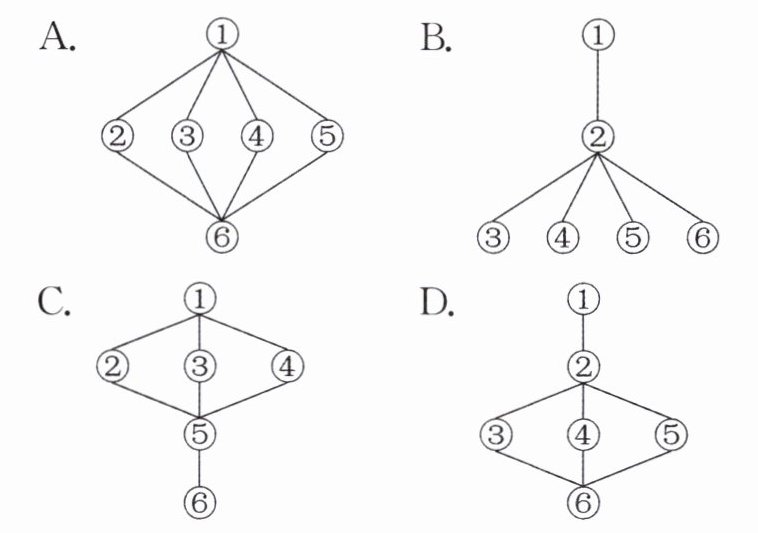
4. 创新考法·篇章结构 Which is the structure of the passage?(①=Paragraph 1 ②=Paragraph 2…)
5. Which of the following sayings may the writer agree with?
A. Time is what we want most,but what we use worst.
B. Never leave until tomorrow what you can do today.
C. Live every moment and be thankful for what you have.
D. The future belongs to those who are preparing for it now.
Recently,I asked a seeing friend who had just walked in the woods what she had noticed. "Nothing special," she replied.
How was it possible,I asked myself,to walk through the woods and see nothing worthy of note? I who cannot see find hundreds of things to interest me only through touch. If I can get so much pleasure from touch,how much more beauty must be found by sight? And I have imagined what I should most like to see if I were given the use of my eyes for just three days.
On the first day,I would want to see the people who have made my life worth living and the books which have been read to me. In the afternoon,I should take a walk in the woods and admire the beauty of nature. That night,I should not be able to sleep.
On my second day,I should go to the museums to see man's progress. I should try to explore the spirit of man through art. In the evening,I should spend it at the movies.
The following day,I should spend it in the world of common people going about the business of life. At midnight permanent(永久的)night would close in on me again,and I should realize how much I had left unseen.
I who am blind can give one suggestion to those who see:Use your eyes as if tomorrow you would be blind. The same is true of other senses. Hear the songs of birds,as if you would be deaf tomorrow. Smell the flowers,as if tomorrow you could never smell again…But of all the senses,I'm sure that sight must be the most pleasant.
—Adapted from Three Days to See
1. What makes the writer start imagining the three days?
A. Walking in the woods.
B. Asking herself questions.
C. Seeing natural beauty.
D. Touching interesting things.
2. What does the writer want to do during the three days?
A. Read books to people on the first day.
B. Go to the movies on the second day.
C. Succeed in business on the third day.
D. Have a wonderful dream every day.
3. What does the last paragraph mainly talk about?
A. A description of different senses.
B. A method of living a pleasant life.
C. Encouragement to the blind people.
D. Advice to people without disabilities.
4. 创新考法·篇章结构 Which is the structure of the passage?(①=Paragraph 1 ②=Paragraph 2…)
5. Which of the following sayings may the writer agree with?
A. Time is what we want most,but what we use worst.
B. Never leave until tomorrow what you can do today.
C. Live every moment and be thankful for what you have.
D. The future belongs to those who are preparing for it now.
答案
1. B 推理判断题。根据第二段中的问题可知,作者通过问自己问题开始想象这三天。
2. B 细节理解题。根据“On my second day... In the evening, I should spend it at the movies.”可知,作者第二天去看电影。
3. D 段落大意题。根据 suggestion 和冒号可知,最后一段介绍的是给无残障人士的建议。
4. D 篇章结构题。文章第一段是作者问朋友的话以及朋友的回答;第二段介绍作者想象自己只使用眼睛三天最想看到的是什么;第三段到第五段是作者想象的这三天做的事情;最后一段是作者给无残障人士的建议。
5. C 推理判断题。文章改编自海伦·凯勒的《假如给我三天光明》,介绍了海伦想象自己如果只使用眼睛三天会做的事情,由此告诉我们应该活在当下,感激你所拥有的一切。
2. B 细节理解题。根据“On my second day... In the evening, I should spend it at the movies.”可知,作者第二天去看电影。
3. D 段落大意题。根据 suggestion 和冒号可知,最后一段介绍的是给无残障人士的建议。
4. D 篇章结构题。文章第一段是作者问朋友的话以及朋友的回答;第二段介绍作者想象自己只使用眼睛三天最想看到的是什么;第三段到第五段是作者想象的这三天做的事情;最后一段是作者给无残障人士的建议。
5. C 推理判断题。文章改编自海伦·凯勒的《假如给我三天光明》,介绍了海伦想象自己如果只使用眼睛三天会做的事情,由此告诉我们应该活在当下,感激你所拥有的一切。
解析
【分析】
我先逐题梳理解题思路:第1题属于推理判断题,先定位到原文第二段,找作者开始想象三天光明的触发原因,对比选项排除不符合原文的内容;第2题是细节理解题,直接对应三天活动的原文描述,逐一核对选项匹配度;第3题是段落大意题,直接定位最后一段的开头核心句,明确作者的发言对象和内容属性;第4题是篇章结构题,逐段梳理全文逻辑:第1段是对话引入话题,第2段总起提出“想象三天光明”的核心设想,第3-5段并列分述三天的具体安排,第6段收尾升华给出建议,匹配对应结构图;第5题是主旨推理题,结合全文传递的核心思想,匹配符合作者观点的谚语即可。
【解析】
1. 定位原文第二段,作者接连提出多个反问后,才引出“想象自己获得三天视力最想看见什么”的内容,说明是自问问题触发了后续的想象。A选项走树林是作者朋友的行为,C选项欣赏自然美景是作者第一天下午的安排,D选项触摸有趣的事物是作者日常的行为,均不符合题意,选B。
2. 细节核对:A选项第一天作者是想见重要的人、听人为自己读书、逛树林,并非给别人读书,错误;B选项原文第二天的描述明确提到“In the evening, I should spend it at the movies”,完全匹配原文,正确;C选项第三天作者是观察普通人的日常劳作,并非要在事业上取得成功,错误;D选项全文没有提及“每天做美梦”的相关内容,错误。
3. 最后一段开篇明确说明“I who am blind can give one suggestion to those who see”,即作者作为盲人,向视力正常的非残障人士提出建议,对应D选项。A选项并非对不同感官的描述,B选项没有介绍愉悦生活的方法,C选项内容是面向健全人而非鼓励盲人,均错误。
4. 梳理全文逻辑层级:①段用和朋友的对话引入话题,②段总起提出“想要拥有三天光明”的核心设想,③④⑤段分别并列描述第一天、第二天、第三天的具体安排,⑥段总结全文向健全人提出珍惜当下的建议,该逻辑完全对应D选项的结构图。
5. 全文改编自《假如给我三天光明》,核心主旨是呼吁拥有健全身体的人珍惜自己当下拥有的一切,认真活好每一刻,对应C选项的含义。A选项“我们最渴求时间却最浪费时间”、B选项“今日事今日毕”、D选项“未来属于提前准备的人”均不符合文章传递的核心思想。
【答案】
1.B 2.B 3.D 4.D 5.C
【知识点】
细节信息查找,主旨大意归纳,篇章结构梳理
【点评】
本题选取经典名著片段作为阅读素材,考点覆盖了初中英语阅读理解的核心题型,其中篇章结构类题目需要学生跳出逐句读文的惯性,主动梳理段落之间的逻辑层级,既考察学生的阅读能力,也能引导学生体会文章传递的珍惜当下、感恩拥有的正向价值观。
【难度系数】
0.7
我先逐题梳理解题思路:第1题属于推理判断题,先定位到原文第二段,找作者开始想象三天光明的触发原因,对比选项排除不符合原文的内容;第2题是细节理解题,直接对应三天活动的原文描述,逐一核对选项匹配度;第3题是段落大意题,直接定位最后一段的开头核心句,明确作者的发言对象和内容属性;第4题是篇章结构题,逐段梳理全文逻辑:第1段是对话引入话题,第2段总起提出“想象三天光明”的核心设想,第3-5段并列分述三天的具体安排,第6段收尾升华给出建议,匹配对应结构图;第5题是主旨推理题,结合全文传递的核心思想,匹配符合作者观点的谚语即可。
【解析】
1. 定位原文第二段,作者接连提出多个反问后,才引出“想象自己获得三天视力最想看见什么”的内容,说明是自问问题触发了后续的想象。A选项走树林是作者朋友的行为,C选项欣赏自然美景是作者第一天下午的安排,D选项触摸有趣的事物是作者日常的行为,均不符合题意,选B。
2. 细节核对:A选项第一天作者是想见重要的人、听人为自己读书、逛树林,并非给别人读书,错误;B选项原文第二天的描述明确提到“In the evening, I should spend it at the movies”,完全匹配原文,正确;C选项第三天作者是观察普通人的日常劳作,并非要在事业上取得成功,错误;D选项全文没有提及“每天做美梦”的相关内容,错误。
3. 最后一段开篇明确说明“I who am blind can give one suggestion to those who see”,即作者作为盲人,向视力正常的非残障人士提出建议,对应D选项。A选项并非对不同感官的描述,B选项没有介绍愉悦生活的方法,C选项内容是面向健全人而非鼓励盲人,均错误。
4. 梳理全文逻辑层级:①段用和朋友的对话引入话题,②段总起提出“想要拥有三天光明”的核心设想,③④⑤段分别并列描述第一天、第二天、第三天的具体安排,⑥段总结全文向健全人提出珍惜当下的建议,该逻辑完全对应D选项的结构图。
5. 全文改编自《假如给我三天光明》,核心主旨是呼吁拥有健全身体的人珍惜自己当下拥有的一切,认真活好每一刻,对应C选项的含义。A选项“我们最渴求时间却最浪费时间”、B选项“今日事今日毕”、D选项“未来属于提前准备的人”均不符合文章传递的核心思想。
【答案】
1.B 2.B 3.D 4.D 5.C
【知识点】
细节信息查找,主旨大意归纳,篇章结构梳理
【点评】
本题选取经典名著片段作为阅读素材,考点覆盖了初中英语阅读理解的核心题型,其中篇章结构类题目需要学生跳出逐句读文的惯性,主动梳理段落之间的逻辑层级,既考察学生的阅读能力,也能引导学生体会文章传递的珍惜当下、感恩拥有的正向价值观。
【难度系数】
0.7
