

 登录
登录
E(2026·南通海门区期末)
阅读下面的短文,从短文后的选项中选出填入空白处的最佳选项,有一项为多余选项。
视频学重难
Earth's limited fresh water
Earth's water has refreshed itself for billions of years with the water cycle. Earth has a lot of water, but most of it isn't fresh water. Earth's fresh water is limited.
◆The Water Cycle Refreshes Water
The three parts of the water cycle are evaporation, condensation, and precipitation.
◆Earth's Usable Fresh Water
Earth's water can be found in many places, including underground and in the atmosphere.
◆
Our use of fresh water is naturally limited. But pollution and overuse make the fresh water even worse. Waste from agriculture and industry can go into the ground and end up in springs. Polluted water is dangerous to drink. It can also damage waterways, making it hard for water to travel. Even though the water cycle cleans water, pollution in the environment causes water to become polluted over and over again.
Humans, animals and plants depend on fresh water. The water cycle renews water all the time.
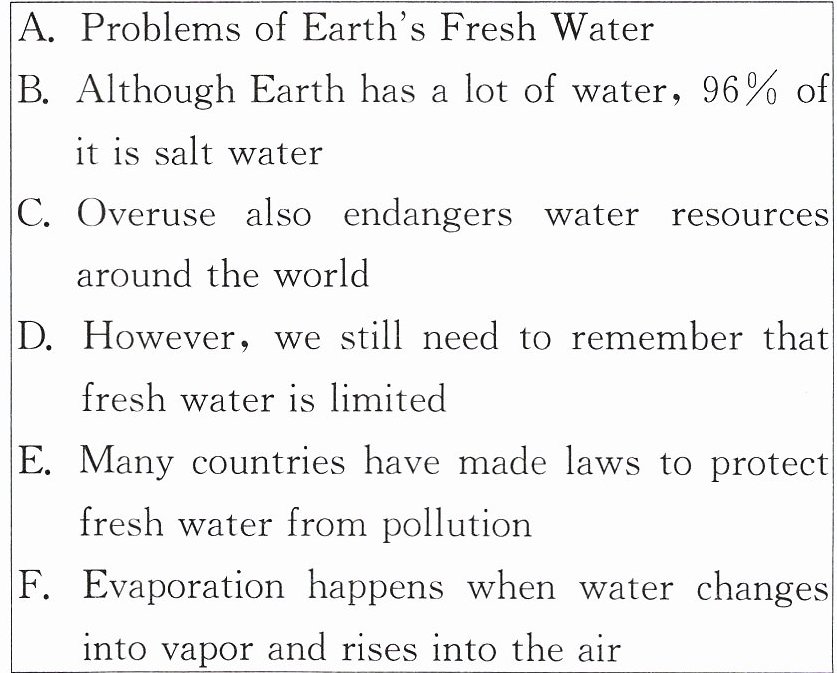
A. Problems of Earth's Fresh Water
B. Although Earth has a lot of water, 96% of it is salt water
C. Overuse also endangers water resources around the world
D. However, we still need to remember that fresh water is limited
E. Many countries have made laws to protect fresh water from pollution
F. Evaporation happens when water changes into vapor and rises into the air
1.
4.
阅读下面的短文,从短文后的选项中选出填入空白处的最佳选项,有一项为多余选项。
视频学重难
Earth's limited fresh water
Earth's water has refreshed itself for billions of years with the water cycle. Earth has a lot of water, but most of it isn't fresh water. Earth's fresh water is limited.
◆The Water Cycle Refreshes Water
The three parts of the water cycle are evaporation, condensation, and precipitation.
F
1. Condensation happens when the vapor cools and changes into water drops. Precipitation happens when the drops fall to Earth's surface. All three parts happen continuously, and they can happen at the same time.◆Earth's Usable Fresh Water
Earth's water can be found in many places, including underground and in the atmosphere.
B
2. Most of the fresh water is in glaciers and polar ice caps, where it is difficult for people to get to. Only a small part of Earth's fresh water is in rivers, lakes, and streams. The water cycle helps to keep water usable by refreshing it. But it also causes fresh water to evaporate. As a result, humans and animals can't use it.◆
A
3Our use of fresh water is naturally limited. But pollution and overuse make the fresh water even worse. Waste from agriculture and industry can go into the ground and end up in springs. Polluted water is dangerous to drink. It can also damage waterways, making it hard for water to travel. Even though the water cycle cleans water, pollution in the environment causes water to become polluted over and over again.
C
4. People use water for drinking, cleaning and other purposes. Sometimes people waste water or take far more than they need. The whole world uses so much water that the underground water sources run dry.Humans, animals and plants depend on fresh water. The water cycle renews water all the time.
D
5.A. Problems of Earth's Fresh Water
B. Although Earth has a lot of water, 96% of it is salt water
C. Overuse also endangers water resources around the world
D. However, we still need to remember that fresh water is limited
E. Many countries have made laws to protect fresh water from pollution
F. Evaporation happens when water changes into vapor and rises into the air
1.
F
2. B
3. A
4.
C
5. D
答案
1.F 2.B 3.A 4.C 5.D
解析
【分析】
这是一篇科普类六选五阅读填空题,解题时先通读全文梳理整体脉络:文章围绕地球有限的淡水展开,分别介绍水循环环节、可利用淡水分布、淡水面临的问题三个核心部分。之后逐空定位上下文线索推导答案:第一空前后点明水循环有蒸发、凝结、降水三个环节,后文已经依次介绍凝结、降水的定义,空处必然对应介绍蒸发的概念;第二空后文开始描述淡水的分布特征,空处需要铺垫地球总水量中咸水占比极高的背景,衔接前后逻辑;第三空是段落小标题,该段全部围绕淡水被污染、过度使用等负面问题展开,选择匹配主题的标题即可;第四空前文讲完水污染的危害,后文开始描述人类浪费水、过度开采地下水的行为,空处需要承上启下引出过度使用的危害;第五空在全文末尾,前文点明水循环可以不断更新水资源,空处需要转折引出核心主旨,提醒大家淡水有限,最后验证剩余干扰项不符合任意空语境,即可完成选择。
【解析】
1. 空1:前文明确水循环的三个组成部分是蒸发、凝结、降水,后文依次介绍了凝结、降水的定义,按照行文顺序空处需要介绍蒸发的概念,对应F选项内容,逻辑完全匹配。
2. 空2:前文说明地球上的水分布在多处,后文指出大部分淡水储存在难以获取的冰川中,仅少量淡水存在于河湖中,B选项补充了地球水资源的构成背景,自然衔接后文对淡水占比、分布的描述。
3. 空3:该空是段落小标题,本段内容围绕淡水被污染、人类过度用水等各类威胁淡水资源的问题展开,A选项精准概括本段核心内容,作为小标题适配性最高。
4. 空4:前文已经阐述了水污染的危害,后文描述人类无节制用水导致地下水枯竭的现象,C选项起到承上启下的作用,从污染的危害过渡到过度用水的危害,符合行文逻辑。
5. 空5:前文提到水循环一直在更新水资源,作为全文收尾,D选项既和前文内容形成转折,也呼应文章开头的核心主题,完成主旨升华。
多余选项E提到的各国立法保护淡水的内容,全文没有相关表述,属于干扰项。
【答案】1.F 2.B 3.A 4.C 5.D
【知识点】科普类阅读,语篇逻辑衔接,阅读填空
【点评】本题是初中英语典型的阅读填空题型,选材贴合环保科普主题,难度梯度设置合理,既考查学生对细节内容的定位匹配能力,也考查学生对段落主旨的概括能力,解题时重点关注行文的并列顺序、主题一致性、转折顺承逻辑,就可以快速排除干扰项得到正确答案。
【难度系数】0.7
这是一篇科普类六选五阅读填空题,解题时先通读全文梳理整体脉络:文章围绕地球有限的淡水展开,分别介绍水循环环节、可利用淡水分布、淡水面临的问题三个核心部分。之后逐空定位上下文线索推导答案:第一空前后点明水循环有蒸发、凝结、降水三个环节,后文已经依次介绍凝结、降水的定义,空处必然对应介绍蒸发的概念;第二空后文开始描述淡水的分布特征,空处需要铺垫地球总水量中咸水占比极高的背景,衔接前后逻辑;第三空是段落小标题,该段全部围绕淡水被污染、过度使用等负面问题展开,选择匹配主题的标题即可;第四空前文讲完水污染的危害,后文开始描述人类浪费水、过度开采地下水的行为,空处需要承上启下引出过度使用的危害;第五空在全文末尾,前文点明水循环可以不断更新水资源,空处需要转折引出核心主旨,提醒大家淡水有限,最后验证剩余干扰项不符合任意空语境,即可完成选择。
【解析】
1. 空1:前文明确水循环的三个组成部分是蒸发、凝结、降水,后文依次介绍了凝结、降水的定义,按照行文顺序空处需要介绍蒸发的概念,对应F选项内容,逻辑完全匹配。
2. 空2:前文说明地球上的水分布在多处,后文指出大部分淡水储存在难以获取的冰川中,仅少量淡水存在于河湖中,B选项补充了地球水资源的构成背景,自然衔接后文对淡水占比、分布的描述。
3. 空3:该空是段落小标题,本段内容围绕淡水被污染、人类过度用水等各类威胁淡水资源的问题展开,A选项精准概括本段核心内容,作为小标题适配性最高。
4. 空4:前文已经阐述了水污染的危害,后文描述人类无节制用水导致地下水枯竭的现象,C选项起到承上启下的作用,从污染的危害过渡到过度用水的危害,符合行文逻辑。
5. 空5:前文提到水循环一直在更新水资源,作为全文收尾,D选项既和前文内容形成转折,也呼应文章开头的核心主题,完成主旨升华。
多余选项E提到的各国立法保护淡水的内容,全文没有相关表述,属于干扰项。
【答案】1.F 2.B 3.A 4.C 5.D
【知识点】科普类阅读,语篇逻辑衔接,阅读填空
【点评】本题是初中英语典型的阅读填空题型,选材贴合环保科普主题,难度梯度设置合理,既考查学生对细节内容的定位匹配能力,也考查学生对段落主旨的概括能力,解题时重点关注行文的并列顺序、主题一致性、转折顺承逻辑,就可以快速排除干扰项得到正确答案。
【难度系数】0.7
