

 登录
登录
一、阅读理解
Walking in the hutongs of Beijing, you'll see a yard with houses and walls on all four sides. It is called "Siheyuan", a traditional building in China. "Si" means east, west, south and north and "he" shows the traditional values of Chinese families.
The big gate was painted red, because red is the symbol of luck and happiness. Behind the gate, a large screen wall would stand. In the centre of the Siheyuan, the courtyard was planted with trees and flowers, with two stony paths leading to the houses on each side.
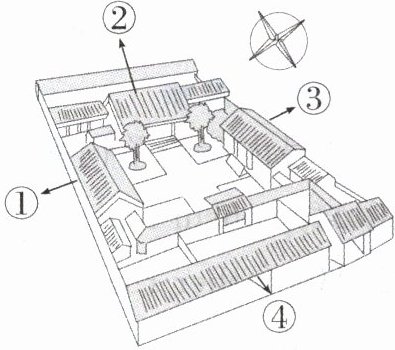
The whole building usually faces south, with a main room on the northern side, an opposite room in the south, and eastern and western wings(厢房) on each side. The old usually live in the main room which has good lighting and temperature all year round, while the young would live in other wings.
Today, influenced by social changes, most houses have been taken down while the others that remain till these days are mostly improved to make them fit for today's modern living. This makes Siheyuan a valuable memory of the old Beijing city.
Luckily, architects(建筑师) have been trying to achieve a perfect mix of the modern and the traditional culture. For example, the place where athletes stayed during the 2022 Winter Olympics in Beijing was designed in the shape of Siheyuan.
Siheyuan's symmetrical(对称的) design and shared spaces show the values deep in Chinese people's hearts, such as belief in balance and the importance of family and respect for older people. No matter how society has changed, Siheyuan is always seen as a symbol of China's rich culture. When you come to Beijing, do visit a Siheyuan to feel the heart of Beijing's culture!
(
A. Nature and animal.
B. Food and health.
C. Science and technology.
D. Travel and culture.
(
A. ①
B. ②
C. ③
D. ④
(
A. "Si" means four directions and "he" means wealth and happiness.
B. The big gate of Siheyuan is usually painted red, green and black.
C. Most of the Siheyuan houses aren't kept well because of social changes.
D. Siheyuan shows the importance of family and cares for the young.
(
A. ①/②③/④⑤/⑥
B. ①/②③/④/⑤⑥
C. ①/②/③④⑤/⑥
D. ①/②③/④⑤⑥
Walking in the hutongs of Beijing, you'll see a yard with houses and walls on all four sides. It is called "Siheyuan", a traditional building in China. "Si" means east, west, south and north and "he" shows the traditional values of Chinese families.
The big gate was painted red, because red is the symbol of luck and happiness. Behind the gate, a large screen wall would stand. In the centre of the Siheyuan, the courtyard was planted with trees and flowers, with two stony paths leading to the houses on each side.
The whole building usually faces south, with a main room on the northern side, an opposite room in the south, and eastern and western wings(厢房) on each side. The old usually live in the main room which has good lighting and temperature all year round, while the young would live in other wings.
Today, influenced by social changes, most houses have been taken down while the others that remain till these days are mostly improved to make them fit for today's modern living. This makes Siheyuan a valuable memory of the old Beijing city.
Luckily, architects(建筑师) have been trying to achieve a perfect mix of the modern and the traditional culture. For example, the place where athletes stayed during the 2022 Winter Olympics in Beijing was designed in the shape of Siheyuan.
Siheyuan's symmetrical(对称的) design and shared spaces show the values deep in Chinese people's hearts, such as belief in balance and the importance of family and respect for older people. No matter how society has changed, Siheyuan is always seen as a symbol of China's rich culture. When you come to Beijing, do visit a Siheyuan to feel the heart of Beijing's culture!
(
D
)1. In what column(栏目) can you read the passage in the newspaper?A. Nature and animal.
B. Food and health.
C. Science and technology.
D. Travel and culture.
(
B
)2. Which position shows where the old people live in Siheyuan?A. ①
B. ②
C. ③
D. ④
(
C
)3. What can we know from the passage?A. "Si" means four directions and "he" means wealth and happiness.
B. The big gate of Siheyuan is usually painted red, green and black.
C. Most of the Siheyuan houses aren't kept well because of social changes.
D. Siheyuan shows the importance of family and cares for the young.
(
A
)4. Which of the following shows the structure of this passage? (①=Paragraph 1, ②=Paragraph 2...)A. ①/②③/④⑤/⑥
B. ①/②③/④/⑤⑥
C. ①/②/③④⑤/⑥
D. ①/②③/④⑤⑥
答案
1~4 DBCA
解析
【分析】
1. 第1题:需判断文章所属栏目,文章围绕中国传统建筑四合院展开,介绍其文化内涵,属于文化与旅游范畴,据此分析选项。
2. 第2题:先定位文章中关于老人居住位置的描述,找到“main room on the northern side, The old usually live in the main room”,结合图示的方位(指南针指示方向,②指向北侧),对应位置即可。
3. 第3题:逐一分析选项,对照原文内容判断正误:A选项“he”的含义错误;B选项大门颜色错误;C选项符合原文;D选项对价值观描述错误。
4. 第4题:梳理文章各段落内容,划分结构:①段引入四合院;②③段介绍布局与内部结构;④⑤段说明现状与现代融合尝试;⑥段总结文化意义,对应选项结构。
【解析】
1. 第1题:文章主要介绍北京四合院这一中国传统建筑,体现其文化价值,与旅游和文化栏目相关,A(自然动物)、B(饮食健康)、C(科技)均不匹配,故选D。
2. 第2题:根据原文“The whole building usually faces south, with a main room on the northern side... The old usually live in the main room”,可知老人住北侧主屋;结合图示,②指向北侧,对应位置,故选B。
3. 第3题:A项:原文“he shows the traditional values of Chinese families”,并非财富,错误;B项:原文“big gate was painted red”,无绿黑,错误;C项:原文“most houses have been taken down while the others that remain till these days are mostly improved”,说明大部分因社会变化未保留好,正确;D项:原文体现重视家庭和尊重老人,非关心年轻人,错误,故选C。
4. 第4题:段落划分:①段引入四合院;②③段介绍四合院的建筑布局与内部结构;④⑤段说明其现状及现代融合的尝试;⑥段总结文化意义,对应结构为①/②③/④⑤/⑥,故选A。
【答案】
1.D 2.B 3.C 4.A
【知识点】
阅读理解细节理解、阅读理解主旨大意、文章结构分析
【点评】
本题为英语阅读理解题,考查细节定位、主旨判断及文章结构分析,需结合原文关键信息逐一验证选项,难度适中,需准确提取文本内容。
【难度系数】
0.5
1. 第1题:需判断文章所属栏目,文章围绕中国传统建筑四合院展开,介绍其文化内涵,属于文化与旅游范畴,据此分析选项。
2. 第2题:先定位文章中关于老人居住位置的描述,找到“main room on the northern side, The old usually live in the main room”,结合图示的方位(指南针指示方向,②指向北侧),对应位置即可。
3. 第3题:逐一分析选项,对照原文内容判断正误:A选项“he”的含义错误;B选项大门颜色错误;C选项符合原文;D选项对价值观描述错误。
4. 第4题:梳理文章各段落内容,划分结构:①段引入四合院;②③段介绍布局与内部结构;④⑤段说明现状与现代融合尝试;⑥段总结文化意义,对应选项结构。
【解析】
1. 第1题:文章主要介绍北京四合院这一中国传统建筑,体现其文化价值,与旅游和文化栏目相关,A(自然动物)、B(饮食健康)、C(科技)均不匹配,故选D。
2. 第2题:根据原文“The whole building usually faces south, with a main room on the northern side... The old usually live in the main room”,可知老人住北侧主屋;结合图示,②指向北侧,对应位置,故选B。
3. 第3题:A项:原文“he shows the traditional values of Chinese families”,并非财富,错误;B项:原文“big gate was painted red”,无绿黑,错误;C项:原文“most houses have been taken down while the others that remain till these days are mostly improved”,说明大部分因社会变化未保留好,正确;D项:原文体现重视家庭和尊重老人,非关心年轻人,错误,故选C。
4. 第4题:段落划分:①段引入四合院;②③段介绍四合院的建筑布局与内部结构;④⑤段说明其现状及现代融合的尝试;⑥段总结文化意义,对应结构为①/②③/④⑤/⑥,故选A。
【答案】
1.D 2.B 3.C 4.A
【知识点】
阅读理解细节理解、阅读理解主旨大意、文章结构分析
【点评】
本题为英语阅读理解题,考查细节定位、主旨判断及文章结构分析,需结合原文关键信息逐一验证选项,难度适中,需准确提取文本内容。
【难度系数】
0.5
