

 登录
登录
三、信息还原(每小题2分,满分10分)
阅读下面短文,从方框中选出能填入空白处的最佳选项。选项中有两项多余。
Your family history is the story of your family members in the past. This includes your parents, grandparents, great-grandparents, aunts, uncles, and cousins. 31 It can help you feel more connected to your roots and understand your identity better. Here's how you can start learning about your family.
Talk to your family. 32 You can ask them if you can record them on audio or video, or you can take written notes. To get the conversation going, ask a few fun questions about their life growing up, such as "What was school like for you?" You can also ask about big events that changed your family's life.
Look at old photos together. Sometimes, simple objects at home can bring back powerful memories. Ask your family if they have any old photos they can share with you. Look at them together, and ask them to share what they remember about the day the photo was taken. You might ask about the people, clothes, or place in the photo. 33
Build a family tree. To better understand how your family is connected, you can ask a parent or grandparent to help you fill out a family tree. At the bottom of the tree will be you and your brothers or sisters. Above you will be your parents, and above them, you can see your grandparents. 34 You can also add aunts, uncles and cousins to make the tree complete.
35 All the stories and pictures you find can be saved in a creative and meaningful way. Making a memory book is an amazing idea. It can include family photos, your family tree, and interesting stories you've learned. You may want to keep it in a safe place and show it to your children someday. This way, your family history can be remembered for many years.
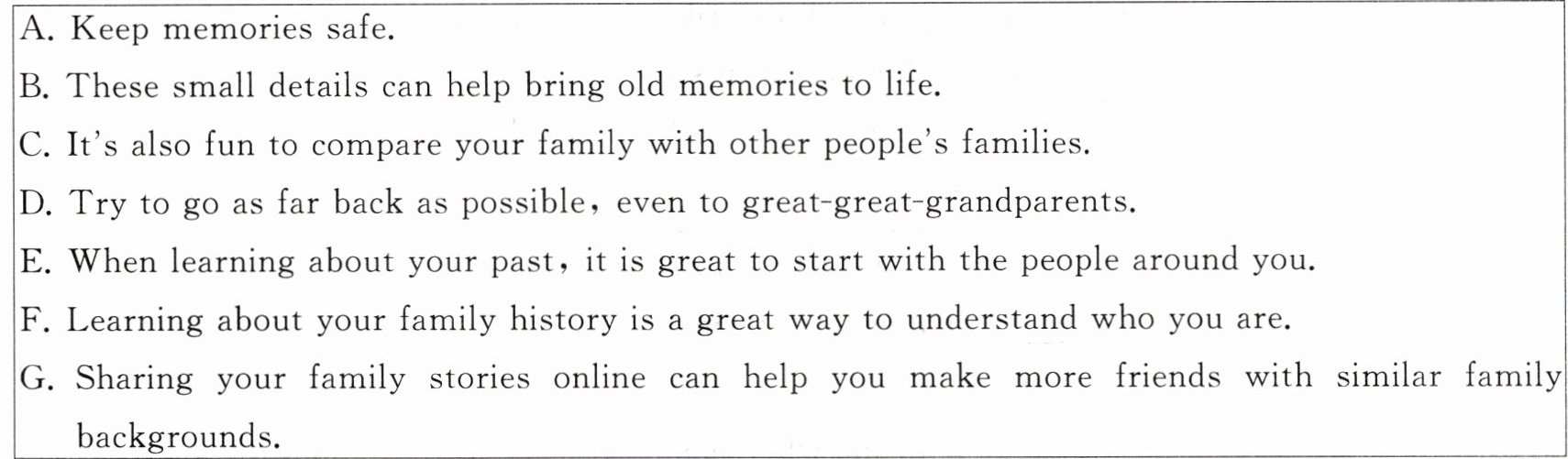
31.
32.
33.
34.
35.
阅读下面短文,从方框中选出能填入空白处的最佳选项。选项中有两项多余。
Your family history is the story of your family members in the past. This includes your parents, grandparents, great-grandparents, aunts, uncles, and cousins. 31 It can help you feel more connected to your roots and understand your identity better. Here's how you can start learning about your family.
Talk to your family. 32 You can ask them if you can record them on audio or video, or you can take written notes. To get the conversation going, ask a few fun questions about their life growing up, such as "What was school like for you?" You can also ask about big events that changed your family's life.
Look at old photos together. Sometimes, simple objects at home can bring back powerful memories. Ask your family if they have any old photos they can share with you. Look at them together, and ask them to share what they remember about the day the photo was taken. You might ask about the people, clothes, or place in the photo. 33
Build a family tree. To better understand how your family is connected, you can ask a parent or grandparent to help you fill out a family tree. At the bottom of the tree will be you and your brothers or sisters. Above you will be your parents, and above them, you can see your grandparents. 34 You can also add aunts, uncles and cousins to make the tree complete.
35 All the stories and pictures you find can be saved in a creative and meaningful way. Making a memory book is an amazing idea. It can include family photos, your family tree, and interesting stories you've learned. You may want to keep it in a safe place and show it to your children someday. This way, your family history can be remembered for many years.
31.
F
32.
E
33.
B
34.
D
35.
A
答案
三、信息还原
【文章大意】本文是一篇说明文,主要介绍了如何了解自己的家族史。
31~35 FEBD A
【文章大意】本文是一篇说明文,主要介绍了如何了解自己的家族史。
31~35 FEBD A
解析
【分析】
这是一篇说明文类的七选五信息还原题,主题围绕如何了解家族史展开。解题时首先通读全文,明确文章整体脉络:先引入家族史的意义,再分点介绍了解家族史的不同实操方法。接下来逐空定位上下文,通过匹配段落主题、句间逻辑呼应来筛选选项:
1. 第31空位于首段,空前刚对家族史下定义,空后介绍家族史的作用,需要一个承上启下、点明家族史价值的句子;
2. 第32空位于“和家人交谈”的段落开头,需要贴合“从身边人入手了解过往”的逻辑,引出后续和家人访谈的操作;
3. 第33空位于看老照片的段落末尾,空前提到询问照片里的人物、服饰、地点等细节,需要衔接这些细节的作用;
4. 第34空位于搭建家谱的段落中,空前介绍家谱从自身向上延伸到父母、祖父母,需要顺着家谱的层级逻辑,说明可以进一步追溯更早的祖辈;
5. 第35空是最后一段的主题句,空后全段围绕保存家族相关的记忆、制作纪念册展开,需要对应“妥善留存记忆”的核心主题。最后排除和全文内容不匹配的多余选项即可得到答案。
【解析】
31. 空前提到家族史是过往家庭成员的故事,空后说明它能帮你联结根源、更好理解自身身份,F选项“了解你的家族史是认识自我的好方式”既承接前文对家族史的定义,又呼应空后介绍的作用,承上启下。
32. 本段主题是和家人交流了解家族过往,空后介绍可以对家人访谈录音、记笔记,E选项“当了解你的过往时,从身边的人开始是很棒的”刚好对应段落开头“和家人交谈”的核心,引出后续和身边亲属访谈的操作。
33. 本段主题是一起翻看老照片,空前提到你可以询问照片里的人物、服饰、拍摄地点等内容,B选项“这些小细节可以帮你唤醒旧日的回忆”里的“这些小细节”刚好指代前文提到的人物、衣服、地点等内容,逻辑衔接紧密。
34. 本段主题是搭建家谱,空前提到家谱从你开始,向上依次是父母、祖父母,D选项“尽可能往更早的祖辈追溯,甚至到曾曾祖父母”顺着家谱向上延伸的逻辑,说明可以进一步拓展家谱的时间跨度,和后文补充叔伯、堂亲完善家谱的内容衔接自然。
35. 空处是本段的主题句,空后全段介绍把收集到的故事、照片做成纪念册,妥善存放让家族史长久流传,A选项“妥善保存记忆”精准概括本段核心内容,作为主题句统领全段。
其余多余选项的内容在全文中没有对应呼应,属于干扰项。
【答案】
31. F
32. E
33. B
34. D
35. A
【知识点】
七选五信息还原,语篇逻辑衔接,语境匹配
【点评】
本题选取贴近生活的家族史主题,考点清晰,重点考查学生对说明文体的整体结构把握能力,以及对句间指代、内容呼应逻辑的判断能力。解题时只需紧扣段落主题,瞻前顾后匹配内容,很容易排除干扰项,整体难度适中,适合巩固信息还原类题型的解题技巧。
【难度系数】
0.6
这是一篇说明文类的七选五信息还原题,主题围绕如何了解家族史展开。解题时首先通读全文,明确文章整体脉络:先引入家族史的意义,再分点介绍了解家族史的不同实操方法。接下来逐空定位上下文,通过匹配段落主题、句间逻辑呼应来筛选选项:
1. 第31空位于首段,空前刚对家族史下定义,空后介绍家族史的作用,需要一个承上启下、点明家族史价值的句子;
2. 第32空位于“和家人交谈”的段落开头,需要贴合“从身边人入手了解过往”的逻辑,引出后续和家人访谈的操作;
3. 第33空位于看老照片的段落末尾,空前提到询问照片里的人物、服饰、地点等细节,需要衔接这些细节的作用;
4. 第34空位于搭建家谱的段落中,空前介绍家谱从自身向上延伸到父母、祖父母,需要顺着家谱的层级逻辑,说明可以进一步追溯更早的祖辈;
5. 第35空是最后一段的主题句,空后全段围绕保存家族相关的记忆、制作纪念册展开,需要对应“妥善留存记忆”的核心主题。最后排除和全文内容不匹配的多余选项即可得到答案。
【解析】
31. 空前提到家族史是过往家庭成员的故事,空后说明它能帮你联结根源、更好理解自身身份,F选项“了解你的家族史是认识自我的好方式”既承接前文对家族史的定义,又呼应空后介绍的作用,承上启下。
32. 本段主题是和家人交流了解家族过往,空后介绍可以对家人访谈录音、记笔记,E选项“当了解你的过往时,从身边的人开始是很棒的”刚好对应段落开头“和家人交谈”的核心,引出后续和身边亲属访谈的操作。
33. 本段主题是一起翻看老照片,空前提到你可以询问照片里的人物、服饰、拍摄地点等内容,B选项“这些小细节可以帮你唤醒旧日的回忆”里的“这些小细节”刚好指代前文提到的人物、衣服、地点等内容,逻辑衔接紧密。
34. 本段主题是搭建家谱,空前提到家谱从你开始,向上依次是父母、祖父母,D选项“尽可能往更早的祖辈追溯,甚至到曾曾祖父母”顺着家谱向上延伸的逻辑,说明可以进一步拓展家谱的时间跨度,和后文补充叔伯、堂亲完善家谱的内容衔接自然。
35. 空处是本段的主题句,空后全段介绍把收集到的故事、照片做成纪念册,妥善存放让家族史长久流传,A选项“妥善保存记忆”精准概括本段核心内容,作为主题句统领全段。
其余多余选项的内容在全文中没有对应呼应,属于干扰项。
【答案】
31. F
32. E
33. B
34. D
35. A
【知识点】
七选五信息还原,语篇逻辑衔接,语境匹配
【点评】
本题选取贴近生活的家族史主题,考点清晰,重点考查学生对说明文体的整体结构把握能力,以及对句间指代、内容呼应逻辑的判断能力。解题时只需紧扣段落主题,瞻前顾后匹配内容,很容易排除干扰项,整体难度适中,适合巩固信息还原类题型的解题技巧。
【难度系数】
0.6
