

 登录
登录
C Read and write(根据句意及首字母提示,完成句子)
1 There's a red light. The bus s
2 I can't see any t
3 You should k
4 We m
5 They are d
6 Follow the r
1 There's a red light. The bus s
tops
.2 I can't see any t
raffic
lights here.3 You should k
eep
your classroom clean.4 We m
ustn't
run quickly on the road.5 They are d
rivers
. They drive taxis.6 Follow the r
ules
and stay safe on the road.答案
1 stops 2 traffic 3 keep 4 mustn't 5 drivers 6 rules
解析
【分析】
我们可以结合句子语境、生活常识和首字母提示来逐个解题:
1. 前半句提到“红灯”,根据交通规则,公交车此时应该停下,首字母为s,主语“The bus”是第三人称单数,一般现在时中谓语动词要用第三人称单数形式,所以要想到动词stop的第三人称单数形式。
2. 句子说“看不到任何______灯”,结合首字母t,生活中常见的“交通灯”是traffic lights,所以填traffic。
3. “keep sth. clean”是固定搭配,意为“保持某物干净”,句子表达“你应该保持教室干净”,首字母为k,所以填keep。
4. 根据生活常识,路上不可以快跑,首字母为m,mustn't表示“禁止,不可以”,符合语境,所以填mustn't。
5. 后半句说“他们开出租车”,说明他们是司机,首字母为d,主语是“They”,要用复数形式drivers。
6. “follow the rules”是固定短语,意为“遵守规则”,句子表达“遵守规则,在路上保持安全”,首字母为r,所以填rules。
【解析】
1. 语境:红灯时公交车停下,主语是第三人称单数,一般现在时谓语动词用第三人称单数形式,stop的第三人称单数是stops,故填stops。
2. 结合交通场景,“traffic lights”是固定表达“交通灯”,符合首字母提示,故填traffic。
3. “keep+宾语+形容词”是固定结构,表示“使某物保持某种状态”,should后接动词原形,故填keep。
4. 根据安全常识,路上禁止快跑,mustn't表示禁止,符合语境和首字母提示,故填mustn't。
5. 开出租车的人是司机,主语是复数“They”,所以driver要用复数形式drivers,故填drivers。
6. “follow the rules”是固定短语,意为“遵守规则”,符合“路上保持安全”的语境,故填rules。
【答案】
1 stops 2 traffic 3 keep 4 mustn't 5 drivers 6 rules
【知识点】
固定短语搭配、主谓一致、情态动词用法
【点评】
本题考查交通相关的英语词汇及日常行为规范的表达,需要结合语境、生活常识和首字母提示解题,同时要注意语法细节,比如主谓一致、名词单复数、情态动词的否定形式等,有助于巩固基础词汇和常用句型。
【难度系数】
0.7
我们可以结合句子语境、生活常识和首字母提示来逐个解题:
1. 前半句提到“红灯”,根据交通规则,公交车此时应该停下,首字母为s,主语“The bus”是第三人称单数,一般现在时中谓语动词要用第三人称单数形式,所以要想到动词stop的第三人称单数形式。
2. 句子说“看不到任何______灯”,结合首字母t,生活中常见的“交通灯”是traffic lights,所以填traffic。
3. “keep sth. clean”是固定搭配,意为“保持某物干净”,句子表达“你应该保持教室干净”,首字母为k,所以填keep。
4. 根据生活常识,路上不可以快跑,首字母为m,mustn't表示“禁止,不可以”,符合语境,所以填mustn't。
5. 后半句说“他们开出租车”,说明他们是司机,首字母为d,主语是“They”,要用复数形式drivers。
6. “follow the rules”是固定短语,意为“遵守规则”,句子表达“遵守规则,在路上保持安全”,首字母为r,所以填rules。
【解析】
1. 语境:红灯时公交车停下,主语是第三人称单数,一般现在时谓语动词用第三人称单数形式,stop的第三人称单数是stops,故填stops。
2. 结合交通场景,“traffic lights”是固定表达“交通灯”,符合首字母提示,故填traffic。
3. “keep+宾语+形容词”是固定结构,表示“使某物保持某种状态”,should后接动词原形,故填keep。
4. 根据安全常识,路上禁止快跑,mustn't表示禁止,符合语境和首字母提示,故填mustn't。
5. 开出租车的人是司机,主语是复数“They”,所以driver要用复数形式drivers,故填drivers。
6. “follow the rules”是固定短语,意为“遵守规则”,符合“路上保持安全”的语境,故填rules。
【答案】
1 stops 2 traffic 3 keep 4 mustn't 5 drivers 6 rules
【知识点】
固定短语搭配、主谓一致、情态动词用法
【点评】
本题考查交通相关的英语词汇及日常行为规范的表达,需要结合语境、生活常识和首字母提示解题,同时要注意语法细节,比如主谓一致、名词单复数、情态动词的否定形式等,有助于巩固基础词汇和常用句型。
【难度系数】
0.7
D Look, read and complete(看图,补全句子)
1 We can see this sign in the park. It means we
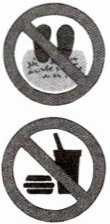
2 We can see this sign
3 We can see this sign
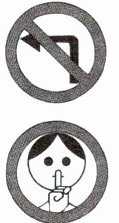
4 We can see this sign
1 We can see this sign in the park. It means we
can't/mustn't/shouldn't walk
on the grass (草坪).2 We can see this sign
in the library/on the metro/in a bookshop
. It means we can't/mustn't/shouldn't eat or drink there
.3 We can see this sign
in the street/on the road
. It means we can't/mustn't/shouldn't turn left
.4 We can see this sign
in the library/reading room
. It means we can't/mustn't/shouldn't talk loudly there
.答案
1 can't/mustn't/shouldn't walk 2 in the library/on the metro/in a bookshop, we can't/mustn't/shouldn't eat or drink there 3 in the street/on the road, we can't/mustn't/shouldn't turn left 4 in the library/reading room, we can't/mustn't/shouldn't talk loudly there
解析
【分析】
解题时需结合生活常识判断公共标志的适用场景与含义:
1. 第1题,公园草坪的标志是禁止踩踏,需填写表示“禁止/不应该”的情态动词加“走路”的动词原形;
2. 第2题,禁止吃喝的标志常见于图书馆、地铁、书店等需保持整洁的场所,要对应写出地点和禁止的行为;
3. 第3题,禁止左转的标志多在街道、马路上,明确地点后写出禁止左转的表达;
4. 第4题,禁止大声喧哗的标志常出现在图书馆、阅览室等需安静的地方,据此填写地点和禁止行为。
思考时先回忆常见公共标志的英语表达,再结合情态动词(can't/mustn't/shouldn't)表禁止的用法完成句子。
【解析】
1. 第1题:公园草坪的标志为禁止踩踏,用can't/mustn't/shouldn't(表禁止、不应该)+动词原形walk,故填can't/mustn't/shouldn't walk;
2. 第2题:禁止吃喝的标志常见场景为in the library/on the metro/in a bookshop,对应的含义是we can't/mustn't/shouldn't eat or drink there;
3. 第3题:禁止左转的标志常出现在in the street/on the road,含义是we can't/mustn't/shouldn't turn left;
4. 第4题:禁止大声喧哗的标志多见于in the library/reading room,含义是we can't/mustn't/shouldn't talk loudly there。
【答案】
1 can't/mustn't/shouldn't walk
2 in the library/on the metro/in a bookshop, we can't/mustn't/shouldn't eat or drink there
3 in the street/on the road, we can't/mustn't/shouldn't turn left
4 in the library/reading room, we can't/mustn't/shouldn't talk loudly there
【知识点】
1. 公共标志英语表达
2. 情态动词表禁止
3. 场景词汇运用
【点评】
本题结合生活常识考查英语在公共场景中的运用,既要求学生掌握常见公共标志的语义表达,也考查了情态动词表禁止的用法,有助于提升学生将英语知识与生活实际结合的能力。
【难度系数】
0.7
解题时需结合生活常识判断公共标志的适用场景与含义:
1. 第1题,公园草坪的标志是禁止踩踏,需填写表示“禁止/不应该”的情态动词加“走路”的动词原形;
2. 第2题,禁止吃喝的标志常见于图书馆、地铁、书店等需保持整洁的场所,要对应写出地点和禁止的行为;
3. 第3题,禁止左转的标志多在街道、马路上,明确地点后写出禁止左转的表达;
4. 第4题,禁止大声喧哗的标志常出现在图书馆、阅览室等需安静的地方,据此填写地点和禁止行为。
思考时先回忆常见公共标志的英语表达,再结合情态动词(can't/mustn't/shouldn't)表禁止的用法完成句子。
【解析】
1. 第1题:公园草坪的标志为禁止踩踏,用can't/mustn't/shouldn't(表禁止、不应该)+动词原形walk,故填can't/mustn't/shouldn't walk;
2. 第2题:禁止吃喝的标志常见场景为in the library/on the metro/in a bookshop,对应的含义是we can't/mustn't/shouldn't eat or drink there;
3. 第3题:禁止左转的标志常出现在in the street/on the road,含义是we can't/mustn't/shouldn't turn left;
4. 第4题:禁止大声喧哗的标志多见于in the library/reading room,含义是we can't/mustn't/shouldn't talk loudly there。
【答案】
1 can't/mustn't/shouldn't walk
2 in the library/on the metro/in a bookshop, we can't/mustn't/shouldn't eat or drink there
3 in the street/on the road, we can't/mustn't/shouldn't turn left
4 in the library/reading room, we can't/mustn't/shouldn't talk loudly there
【知识点】
1. 公共标志英语表达
2. 情态动词表禁止
3. 场景词汇运用
【点评】
本题结合生活常识考查英语在公共场景中的运用,既要求学生掌握常见公共标志的语义表达,也考查了情态动词表禁止的用法,有助于提升学生将英语知识与生活实际结合的能力。
【难度系数】
0.7
