

 登录
登录
B
In East China's Anhui Province, there's a famous alley(小巷), Liuchi Alley. The 2-metre-wide alley separates a pair of grey walls. At first sight it may seem common, but to those who know its history, it means much more than its appearance would suggest. During holidays, the alley fills with visitors each day.
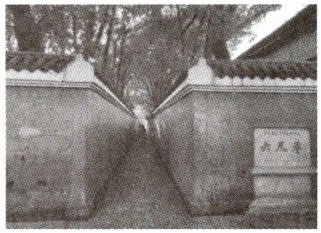
Its name comes from the Chinese word for six and chi—a traditional Chinese unit of length that corresponds to one-third of a metre.
It was so named because of its width. In the early Qing Dynasty, it served as the boundary(边界) between the households of two families. To the south was the Zhang family and to the north the Wu family. Both had male members in high positions within the court of Emperor Kangxi. But the two families quarrelled(争吵).
The point of their quarrel was the boundary between their two houses and which family had the right to build a wall on the dividing line.
After trying but failing at mediation(调解), the Zhangs wrote to Zhang Ying, their most prominent family member and a trusted top official in the emperor's court. His response(回复), which is still celebrated in the form of a poem, did not provide the support for which his family had hoped. Instead, he called for his family to step back one metre from the boundary. His suggestion moved the two families so much, the story goes, that both did exactly that. ▲
Although the walls by the alley are replicas(仿制品), people are still attracted to the area because of its backstory. To them, the story is about how to get along with other people. And it has often been cited to talk about the qualities of a kind person, a cultured family, or a good official.
The local government has made great efforts to restore the area to its original glory(昔日辉煌). It was reopened to visitors last year.
(
A. natural beauty
B. design style
C. educational value
D. new appearance
(
A. The Zhangs failed in the quarrel at last.
B. The Wu family stepped back one metre as well.
C. They solved their problem through mediation.
D. The two families quarrelled about the length of the alley.
(
A. So they built the alley.
B. As a result, they quarrelled worse.
C. Thus the alley was born.
D. In this way, the two families became one.
(
A. It's as good as new now.
B. Tourists like its old appearance.
C. Restoring it is unnecessary.
D. The government tries to give full play to its role.
In East China's Anhui Province, there's a famous alley(小巷), Liuchi Alley. The 2-metre-wide alley separates a pair of grey walls. At first sight it may seem common, but to those who know its history, it means much more than its appearance would suggest. During holidays, the alley fills with visitors each day.
Its name comes from the Chinese word for six and chi—a traditional Chinese unit of length that corresponds to one-third of a metre.
It was so named because of its width. In the early Qing Dynasty, it served as the boundary(边界) between the households of two families. To the south was the Zhang family and to the north the Wu family. Both had male members in high positions within the court of Emperor Kangxi. But the two families quarrelled(争吵).
The point of their quarrel was the boundary between their two houses and which family had the right to build a wall on the dividing line.
After trying but failing at mediation(调解), the Zhangs wrote to Zhang Ying, their most prominent family member and a trusted top official in the emperor's court. His response(回复), which is still celebrated in the form of a poem, did not provide the support for which his family had hoped. Instead, he called for his family to step back one metre from the boundary. His suggestion moved the two families so much, the story goes, that both did exactly that. ▲
Although the walls by the alley are replicas(仿制品), people are still attracted to the area because of its backstory. To them, the story is about how to get along with other people. And it has often been cited to talk about the qualities of a kind person, a cultured family, or a good official.
The local government has made great efforts to restore the area to its original glory(昔日辉煌). It was reopened to visitors last year.
(
C
)34. According to the passage, people go on a visit to Liuchi Alley mostly for its C
.A. natural beauty
B. design style
C. educational value
D. new appearance
(
B
)35. Which of the following is TRUE according to the story?A. The Zhangs failed in the quarrel at last.
B. The Wu family stepped back one metre as well.
C. They solved their problem through mediation.
D. The two families quarrelled about the length of the alley.
(
C
)36. Which sentence should be filled in "▲"?A. So they built the alley.
B. As a result, they quarrelled worse.
C. Thus the alley was born.
D. In this way, the two families became one.
(
D
)37. What does the last paragraph imply(暗示) about the alley?A. It's as good as new now.
B. Tourists like its old appearance.
C. Restoring it is unnecessary.
D. The government tries to give full play to its role.
答案
B
【语篇解读】本文是一篇记叙文。文章讲述了安徽省著名的六尺巷背后关于两家人通过退让解决争端的历史故事,传递了和谐相处的重要性。
34. C 细节理解题。根据“it means much more than its appearance would suggest”以及全文内容可知,人们去参观六尺巷是因为其教育价值。故选 C。
35. B 细节理解题。根据“Instead, he called for his family to step back one metre from the boundary. His suggestion moved the two families so much, the story goes, that both did exactly that.”可知,张英让他的家人后退一米,这种行为也让吴家深受感动,于是吴家也后退了一米。故选 B。
36. C 补全文章题。根据“Instead, he called for his family to step back one metre from the boundary. His suggestion moved the two families so much, the story goes, that both did exactly that.”可知,张吴两家各自后退一米,从而形成了今天的六尺巷;选项 C“这条小巷就这样诞生了”符合语境。故选 C。
37. D 推理判断题。根据“The local government has made great efforts to restore the area to its original glory. It was reopened to visitors last year.(当地政府为恢复这一地区原有的辉煌作出了巨大努力。它于去年重新向游客开放。)”可推知,政府在努力使六尺巷充分发挥其作用。故选 D。
【语篇解读】本文是一篇记叙文。文章讲述了安徽省著名的六尺巷背后关于两家人通过退让解决争端的历史故事,传递了和谐相处的重要性。
34. C 细节理解题。根据“it means much more than its appearance would suggest”以及全文内容可知,人们去参观六尺巷是因为其教育价值。故选 C。
35. B 细节理解题。根据“Instead, he called for his family to step back one metre from the boundary. His suggestion moved the two families so much, the story goes, that both did exactly that.”可知,张英让他的家人后退一米,这种行为也让吴家深受感动,于是吴家也后退了一米。故选 B。
36. C 补全文章题。根据“Instead, he called for his family to step back one metre from the boundary. His suggestion moved the two families so much, the story goes, that both did exactly that.”可知,张吴两家各自后退一米,从而形成了今天的六尺巷;选项 C“这条小巷就这样诞生了”符合语境。故选 C。
37. D 推理判断题。根据“The local government has made great efforts to restore the area to its original glory. It was reopened to visitors last year.(当地政府为恢复这一地区原有的辉煌作出了巨大努力。它于去年重新向游客开放。)”可推知,政府在努力使六尺巷充分发挥其作用。故选 D。
解析
【分析】
这是一篇中国传统文化主题的记叙文阅读理解,解题时首先通读全文,理清核心脉络:先介绍六尺巷的基本信息,再讲它的历史由来,最后说明它的当代价值。之后逐题回到原文对应定位:第34题需要找到游客到访的核心动因,跳出表层景观的描述,抓住文本强调的背后的处世道理;第35题是细节判断题,逐个选项和原文内容比对排除错误项;第36题是语句回填题,结合空格前后的逻辑关系,判断两家各退一米之后的自然结果;第37题是推理判断题,结合最后一段政府的举措,推导背后的目的,不要被表层描述误导。
【解析】
34. 细节理解题:根据原文第一段"it means much more than its appearance would suggest",以及倒数第二段"the story is about how to get along with other people. And it has often been cited to talk about the qualities of a kind person, a cultured family, or a good official",可知六尺巷的核心吸引力是它传递的谦让、待人处世的道理,属于教育价值,排除A自然美景、B设计风格、D新外观三个选项,因此选C。
35. 细节判断题:
A选项:张家在争吵中失败,不符合原文,张家是主动选择退让,并非争吵落败,错误;
B选项:吴家也后退了一米,对应原文"His suggestion moved the two families so much...that both did exactly that",这里的that指代前文提到的从边界后退一米,符合原文,正确;
C选项:他们通过调解解决问题,和原文"After trying but failing at mediation"表述矛盾,调解已经失败,错误;
D选项:两家为巷子的长度争吵,和原文"The point of their quarrel was the boundary between their two houses and which family had the right to build a wall on the dividing line"表述矛盾,争吵的核心是房屋边界,错误。
因此选B。
36. 语句回填题:空格前提到两家都按照张英的建议各后退一米,原本的边界位置空出了两米的通道,六尺巷就此自然形成。A选项"所以他们建了巷子"不符合史实,巷子并非刻意主动修建;B选项"他们争吵得更厉害"和原文两家和解的逻辑完全相反;D选项"两个家庭合并成一家"不符合故事内容,只有C选项"这条小巷就此诞生"完全符合上下文逻辑,因此选C。
37. 推理判断题:最后一段提到当地政府投入大量精力恢复该区域的昔日荣光,重新向游客开放,本质是依托六尺巷的文化内涵,充分发挥它传递传统美德的教育作用。A选项"它现在和全新的一样"不符合原文提到的墙体是仿制品的表述;B选项"游客喜欢它的旧外观"原文没有提及;C选项"修复它没有必要"和原文表述完全相悖,因此选D。
【答案】
34.C 35.B 36.C 37.D
【知识点】
阅读理解细节查找,语篇逻辑推理,六尺巷文化常识
【点评】
本题选取中国传统美德相关的六尺巷故事作为阅读素材,既考察学生的信息定位、文本理解能力,也渗透了传统文化教育。题目以细节题为主,难度梯度平缓,学生只要耐心回到原文比对信息,基本都能得到正确答案。
【难度系数】
0.7
这是一篇中国传统文化主题的记叙文阅读理解,解题时首先通读全文,理清核心脉络:先介绍六尺巷的基本信息,再讲它的历史由来,最后说明它的当代价值。之后逐题回到原文对应定位:第34题需要找到游客到访的核心动因,跳出表层景观的描述,抓住文本强调的背后的处世道理;第35题是细节判断题,逐个选项和原文内容比对排除错误项;第36题是语句回填题,结合空格前后的逻辑关系,判断两家各退一米之后的自然结果;第37题是推理判断题,结合最后一段政府的举措,推导背后的目的,不要被表层描述误导。
【解析】
34. 细节理解题:根据原文第一段"it means much more than its appearance would suggest",以及倒数第二段"the story is about how to get along with other people. And it has often been cited to talk about the qualities of a kind person, a cultured family, or a good official",可知六尺巷的核心吸引力是它传递的谦让、待人处世的道理,属于教育价值,排除A自然美景、B设计风格、D新外观三个选项,因此选C。
35. 细节判断题:
A选项:张家在争吵中失败,不符合原文,张家是主动选择退让,并非争吵落败,错误;
B选项:吴家也后退了一米,对应原文"His suggestion moved the two families so much...that both did exactly that",这里的that指代前文提到的从边界后退一米,符合原文,正确;
C选项:他们通过调解解决问题,和原文"After trying but failing at mediation"表述矛盾,调解已经失败,错误;
D选项:两家为巷子的长度争吵,和原文"The point of their quarrel was the boundary between their two houses and which family had the right to build a wall on the dividing line"表述矛盾,争吵的核心是房屋边界,错误。
因此选B。
36. 语句回填题:空格前提到两家都按照张英的建议各后退一米,原本的边界位置空出了两米的通道,六尺巷就此自然形成。A选项"所以他们建了巷子"不符合史实,巷子并非刻意主动修建;B选项"他们争吵得更厉害"和原文两家和解的逻辑完全相反;D选项"两个家庭合并成一家"不符合故事内容,只有C选项"这条小巷就此诞生"完全符合上下文逻辑,因此选C。
37. 推理判断题:最后一段提到当地政府投入大量精力恢复该区域的昔日荣光,重新向游客开放,本质是依托六尺巷的文化内涵,充分发挥它传递传统美德的教育作用。A选项"它现在和全新的一样"不符合原文提到的墙体是仿制品的表述;B选项"游客喜欢它的旧外观"原文没有提及;C选项"修复它没有必要"和原文表述完全相悖,因此选D。
【答案】
34.C 35.B 36.C 37.D
【知识点】
阅读理解细节查找,语篇逻辑推理,六尺巷文化常识
【点评】
本题选取中国传统美德相关的六尺巷故事作为阅读素材,既考察学生的信息定位、文本理解能力,也渗透了传统文化教育。题目以细节题为主,难度梯度平缓,学生只要耐心回到原文比对信息,基本都能得到正确答案。
【难度系数】
0.7
