

 登录
登录
任务三:阅读理解B(10分)
When we buy a house, we all want to have nice neighbours, because most of us think that it is helpful to live with some good neighbours. But what kind of neighbour is good? The answers are different from person to person. Here are my answers.
First, it is very important to respect each other. If our neighbours try to know more about our life, how will we feel? He or she may also talk with others about our life. Do you want to live with him or her any more? The answer is “No”. We will feel very annoyed to have this kind of neighbour and move away quickly.
Next, a good neighbour is always ready to give us a hand when we need him or her. For example, if we are not at home, our good neighbours will watch our house for us.
Finally, a good neighbour should love the environment. He or she never puts rubbish ( 垃 圾 ) here and there, because a good environment can make us comfortable and happy.
I think we all should learn to be good neighbours, and I also hope everyone will have good neighbours and live a happy life.
(
A. Because they can share food with us.
B. Because it is helpful to live with good neighbours.
C. Because they can make us feel nervous.
D. Because they can make our life rich.
(
A. Angry. B. Lucky. C. Excited. D. Glad.
(
A. Tired and sick. B. Strong and bored.
C. Cold and free. D. Comfortable and happy.
(
A. Good neighbours talk with others about our life.
B. Good neighbours never watch your house when you are out.
C. People should learn to be good neighbours.
D. Good neighbours put rubbish everywhere.
(
A. ①②③④ / ⑤ B. ① / ②③④⑤ C. ① / ②③④ / ⑤ D. ① / ②③ / ④⑤
When we buy a house, we all want to have nice neighbours, because most of us think that it is helpful to live with some good neighbours. But what kind of neighbour is good? The answers are different from person to person. Here are my answers.
First, it is very important to respect each other. If our neighbours try to know more about our life, how will we feel? He or she may also talk with others about our life. Do you want to live with him or her any more? The answer is “No”. We will feel very annoyed to have this kind of neighbour and move away quickly.
Next, a good neighbour is always ready to give us a hand when we need him or her. For example, if we are not at home, our good neighbours will watch our house for us.
Finally, a good neighbour should love the environment. He or she never puts rubbish ( 垃 圾 ) here and there, because a good environment can make us comfortable and happy.
I think we all should learn to be good neighbours, and I also hope everyone will have good neighbours and live a happy life.
(
B
) 16. Why do we want to have nice neighbours?A. Because they can share food with us.
B. Because it is helpful to live with good neighbours.
C. Because they can make us feel nervous.
D. Because they can make our life rich.
(
A
) 17. What does the underlined word “annoyed” in Paragraph 2 mean?A. Angry. B. Lucky. C. Excited. D. Glad.
(
D
) 18. How will you feel if you live in a good environment?A. Tired and sick. B. Strong and bored.
C. Cold and free. D. Comfortable and happy.
(
C
) 19. Which of the following is TRUE?A. Good neighbours talk with others about our life.
B. Good neighbours never watch your house when you are out.
C. People should learn to be good neighbours.
D. Good neighbours put rubbish everywhere.
(
C
) 20. [新考法+篇章结构] What’s the structure of the passage?(Paragraph 1= ① ,...)A. ①②③④ / ⑤ B. ① / ②③④⑤ C. ① / ②③④ / ⑤ D. ① / ②③ / ④⑤
答案
任务三 答案速查 16.B 17.A 18.D 19.C 20.C
【主旨大意】本文主要讨论了作者认为好邻居应具备的三个特点:相互尊重、乐于助人、爱护环境。
16. B 【点拨】细节理解题。根据“When we buy a house, we all want to have nice neighbours, because most of us think that it is helpful to live with some good neighbours.”可知,我们想要好邻居是因为和好邻居一起生活有帮助。故选B。
17. A 【点拨】词义猜测题。根据“If our neighbours try to know more about our life... Do you want to live with him or her any more? The answer is ‘No’.”可知,当邻居试图过多了解我们的生活并和别人谈论我们的生活时,我们不想再和这样的邻居一起生活,由此可推测“annoyed”意思是“生气的”。故选A。
18. D 【点拨】细节理解题。根据“because a good environment can make us comfortable and happy”可知,在好的环境中我们会感到舒适和快乐。故选D。
19. C 【点拨】细节理解题。根据“I think we all should learn to be good neighbours, and I also hope everyone will have good neighbours and live a happy life.”可知人们应该学会做个好邻居。故选C。
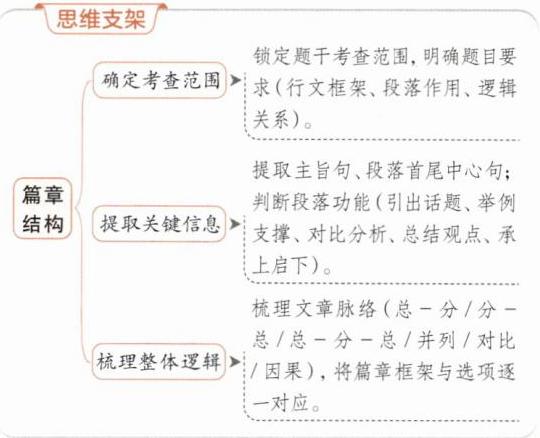
20. C 【点拨】篇章结构题。通读全文可知,文章第一段提出问题“But what kind of neighbour is good?”,引出关于好邻居的讨论;第二、三、四段分别从尊重彼此、乐于助人、爱护环境三个方面阐述好邻居的标准;最后一段总结,呼吁大家成为好邻居。整体结构为“总—分—总”,因此C选项符合。故选C。
解析
【分析】
针对该阅读理解题目,首先明确各题考查类型:16、18、19题为细节理解题,17题为词义猜测题,20题为篇章结构题。解题思路为:1. 细节理解题需精准定位原文对应语句,匹配选项内容;2. 词义猜测题需结合上下文语境,分析作者的情感态度推测词义;3. 篇章结构题需梳理各段落的核心功能,明确文章整体结构,再对应选项判断。
【解析】
16. 细节理解题:定位原文第一段关键句“When we buy a house, we all want to have nice neighbours, because most of us think that it is helpful to live with some good neighbours.”,可知想要好邻居的原因是与好邻居同住有帮助,对应选项B。
17. 词义猜测题:根据第二段上下文,邻居过多了解并谈论我们的生活,导致我们不想再与其同住,由此推测“annoyed”意为“生气的”,对应选项A。
18. 细节理解题:定位原文第四段关键句“because a good environment can make us comfortable and happy”,可知在好环境中会感到舒适和快乐,对应选项D。
19. 细节理解题:定位原文最后一段关键句“I think we all should learn to be good neighbours”,可知C选项正确;A选项中“谈论我们的生活”是不好邻居的行为,B选项好邻居会帮忙看家,D选项好邻居不随地扔垃圾,均错误。
20. 篇章结构题:梳理段落功能:①段引出“好邻居是什么样”的话题;②③④段分别阐述好邻居的三个标准;⑤段总结呼吁大家做个好邻居,整体为“总-分-总”结构,对应选项C。
【答案】
任务三 答案速查 16.B 17.A 18.D 19.C 20.C
【知识点】
阅读理解、细节理解、篇章结构
【点评】
本题围绕“好邻居的标准”展开,涵盖细节理解、词义猜测、篇章结构三类题型,其中篇章结构为新考法,需学生梳理文章脉络,整体难度适中,能有效考查学生的阅读理解与篇章分析能力。
【难度系数】
0.6
针对该阅读理解题目,首先明确各题考查类型:16、18、19题为细节理解题,17题为词义猜测题,20题为篇章结构题。解题思路为:1. 细节理解题需精准定位原文对应语句,匹配选项内容;2. 词义猜测题需结合上下文语境,分析作者的情感态度推测词义;3. 篇章结构题需梳理各段落的核心功能,明确文章整体结构,再对应选项判断。
【解析】
16. 细节理解题:定位原文第一段关键句“When we buy a house, we all want to have nice neighbours, because most of us think that it is helpful to live with some good neighbours.”,可知想要好邻居的原因是与好邻居同住有帮助,对应选项B。
17. 词义猜测题:根据第二段上下文,邻居过多了解并谈论我们的生活,导致我们不想再与其同住,由此推测“annoyed”意为“生气的”,对应选项A。
18. 细节理解题:定位原文第四段关键句“because a good environment can make us comfortable and happy”,可知在好环境中会感到舒适和快乐,对应选项D。
19. 细节理解题:定位原文最后一段关键句“I think we all should learn to be good neighbours”,可知C选项正确;A选项中“谈论我们的生活”是不好邻居的行为,B选项好邻居会帮忙看家,D选项好邻居不随地扔垃圾,均错误。
20. 篇章结构题:梳理段落功能:①段引出“好邻居是什么样”的话题;②③④段分别阐述好邻居的三个标准;⑤段总结呼吁大家做个好邻居,整体为“总-分-总”结构,对应选项C。
【答案】
任务三 答案速查 16.B 17.A 18.D 19.C 20.C
【知识点】
阅读理解、细节理解、篇章结构
【点评】
本题围绕“好邻居的标准”展开,涵盖细节理解、词义猜测、篇章结构三类题型,其中篇章结构为新考法,需学生梳理文章脉络,整体难度适中,能有效考查学生的阅读理解与篇章分析能力。
【难度系数】
0.6
