

 登录
登录
三、情景交际
从方框中选择适当的句子补全对话。
Jane: Did you travel to some places during the summer vacation, Tom?
Tom: Yes, my family and I had a trip in Great Britain.
Jane: 1.
Tom: We stayed there for a week.
Jane: Great! What places of interest have you visited?
Tom: Well, I’ve visited many.
Jane: Which one is your favorite?
Tom: 2.
Jane: Wonderful! 3.
Tom: Sure. It’s a symbol of Great Britain. It weighs more than 13 tons.
Jane: By the way, 4.
Tom: Yes, a little.
Jane: How did you communicate with local people?
Tom: It’s easy. 5.
Jane: How clever! Thank you for your sharing.
Tom: It’s my pleasure.
A. I think Big Ben is my favorite among them.
B. can you speak English?
C. By using a translation app.
D. How long did you stay there?
E. It must be very beautiful.
从方框中选择适当的句子补全对话。
Jane: Did you travel to some places during the summer vacation, Tom?
Tom: Yes, my family and I had a trip in Great Britain.
Jane: 1.
D
Tom: We stayed there for a week.
Jane: Great! What places of interest have you visited?
Tom: Well, I’ve visited many.
Jane: Which one is your favorite?
Tom: 2.
A
Jane: Wonderful! 3.
E
Tom: Sure. It’s a symbol of Great Britain. It weighs more than 13 tons.
Jane: By the way, 4.
B
Tom: Yes, a little.
Jane: How did you communicate with local people?
Tom: It’s easy. 5.
C
Jane: How clever! Thank you for your sharing.
Tom: It’s my pleasure.
A. I think Big Ben is my favorite among them.
B. can you speak English?
C. By using a translation app.
D. How long did you stay there?
E. It must be very beautiful.
答案
1. D 2. A 3. E 4. B 5. C
解析
【分析】本题为情景交际补全对话,需结合上下文的问答逻辑选择合适的句子。首先,根据Tom的回答可推断Jane的提问方向,依次对应停留时长、最喜欢的景点、对景点的评价、是否会说英语、交流方式等问题,匹配对应选项。
【解析】1. 由Tom的回答“We stayed there for a week.”可知,Jane询问的是停留时长,对应选项D;2. Jane问“Which one is your favorite?”,Tom需回答最喜欢的景点,对应选项A;3. Tom提到最喜欢大本钟,Jane接着对该景点进行评价,对应选项E;4. Tom回答“Yes, a little.”,结合后续交流问题,可知Jane询问的是是否会说英语,对应选项B;5. Jane问交流方式,Tom需回答具体方法,对应选项C。
【答案】1.D 2.A 3.E 4.B 5.C
【知识点】情景交际补全对话、日常交际用语
【点评】本题考查日常情景对话的逻辑匹配,需结合上下文问答关系选择合适句子,注重日常交际用语的运用,难度适中。
【难度系数】0.5
【解析】1. 由Tom的回答“We stayed there for a week.”可知,Jane询问的是停留时长,对应选项D;2. Jane问“Which one is your favorite?”,Tom需回答最喜欢的景点,对应选项A;3. Tom提到最喜欢大本钟,Jane接着对该景点进行评价,对应选项E;4. Tom回答“Yes, a little.”,结合后续交流问题,可知Jane询问的是是否会说英语,对应选项B;5. Jane问交流方式,Tom需回答具体方法,对应选项C。
【答案】1.D 2.A 3.E 4.B 5.C
【知识点】情景交际补全对话、日常交际用语
【点评】本题考查日常情景对话的逻辑匹配,需结合上下文问答关系选择合适句子,注重日常交际用语的运用,难度适中。
【难度系数】0.5
一、根据中文意思完成句子
1. 在上课铃响前,学生们一个接一个地走进教室。
Before the bell rang, the students came into the classroom
2. 这种漂亮的小花在英语中被叫作“茉莉”。
This kind of beautiful small flower
3. 多和说母语的人聊天对你来说是练习英语的好方法。
It is a good way for you to practice English to
4. 文化差异会决定我们如何使用肢体语言。
5. 她会拉小提琴,而且她也会弹钢琴。
She can play the violin, and she can
1. 在上课铃响前,学生们一个接一个地走进教室。
Before the bell rang, the students came into the classroom
one
by
one
.2. 这种漂亮的小花在英语中被叫作“茉莉”。
This kind of beautiful small flower
is
called
jasmine (茉莉) in English.3. 多和说母语的人聊天对你来说是练习英语的好方法。
It is a good way for you to practice English to
talk
with
the native
speakers
more.4. 文化差异会决定我们如何使用肢体语言。
Cultural
differences
can decide how we use body language.5. 她会拉小提琴,而且她也会弹钢琴。
She can play the violin, and she can
also
play
the
piano
.答案
1. one by one
2. is called
3. talk with the native speakers
4. Cultural differences
5. play the piano, too/also play the piano
2. is called
3. talk with the native speakers
4. Cultural differences
5. play the piano, too/also play the piano
解析
【分析】
本题为根据中文完成英语句子的基础题型,需结合句意匹配对应的英语固定表达,同时注意语态、名词形式、句子结构等细节。解题时先理解每句中文含义,再回忆相关英语短语、语法结构,确保填写内容符合语法和语义要求。
【解析】
1. 句意:在上课铃响前,学生们一个接一个地走进教室。“一个接一个”对应的固定英语短语为one by one,故填该短语。
2. 句意:这种漂亮的小花在英语中被叫作“茉莉”。此处需用一般现在时的被动语态,结构为“am/is/are + 过去分词”,主语“this kind of beautiful small flower”为单数,be动词用is,call的过去分词为called,故填is called。
3. 句意:多和说母语的人聊天对你来说是练习英语的好方法。此处为“It is + 名词 + (for sb.) to do sth.”结构,“和……聊天”是talk with,“说母语的人”是native speakers,故填talk with the native speakers。
4. 句意:文化差异会决定我们如何使用肢体语言。“文化差异”对应的英语名词短语为Cultural differences,作主语时首字母大写,故填该短语。
5. 句意:她会拉小提琴,而且她也会弹钢琴。结合前文“play the violin”,“也会弹钢琴”可表达为play the piano, too(放句末)或also play the piano(放情态动词后),符合参考答案要求。
【答案】
1. one by one
2. is called
3. talk with the native speakers
4. Cultural differences
5. play the piano, too/also play the piano
【知识点】
固定短语搭配、被动语态、名词短语作主语
【点评】
本题考查初中英语基础词汇、短语及核心语法(被动语态、句子结构),题型常规,侧重基础运用,适合巩固英语基础知识点。
【难度系数】
0.6
本题为根据中文完成英语句子的基础题型,需结合句意匹配对应的英语固定表达,同时注意语态、名词形式、句子结构等细节。解题时先理解每句中文含义,再回忆相关英语短语、语法结构,确保填写内容符合语法和语义要求。
【解析】
1. 句意:在上课铃响前,学生们一个接一个地走进教室。“一个接一个”对应的固定英语短语为one by one,故填该短语。
2. 句意:这种漂亮的小花在英语中被叫作“茉莉”。此处需用一般现在时的被动语态,结构为“am/is/are + 过去分词”,主语“this kind of beautiful small flower”为单数,be动词用is,call的过去分词为called,故填is called。
3. 句意:多和说母语的人聊天对你来说是练习英语的好方法。此处为“It is + 名词 + (for sb.) to do sth.”结构,“和……聊天”是talk with,“说母语的人”是native speakers,故填talk with the native speakers。
4. 句意:文化差异会决定我们如何使用肢体语言。“文化差异”对应的英语名词短语为Cultural differences,作主语时首字母大写,故填该短语。
5. 句意:她会拉小提琴,而且她也会弹钢琴。结合前文“play the violin”,“也会弹钢琴”可表达为play the piano, too(放句末)或also play the piano(放情态动词后),符合参考答案要求。
【答案】
1. one by one
2. is called
3. talk with the native speakers
4. Cultural differences
5. play the piano, too/also play the piano
【知识点】
固定短语搭配、被动语态、名词短语作主语
【点评】
本题考查初中英语基础词汇、短语及核心语法(被动语态、句子结构),题型常规,侧重基础运用,适合巩固英语基础知识点。
【难度系数】
0.6
二、看图写话
根据每小题所提供的提示词,写出一个与图画情景相符的句子。
1.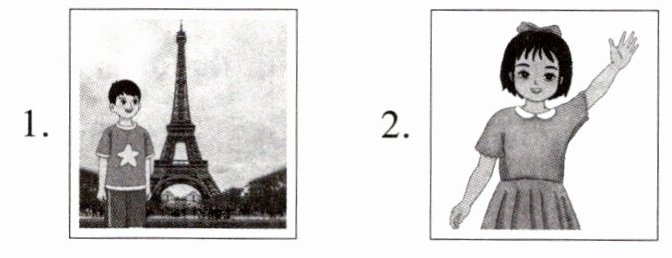
travel, last month
2.
now
3.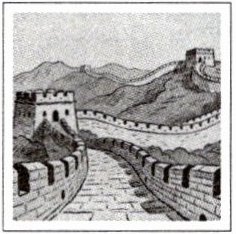
symbol
4.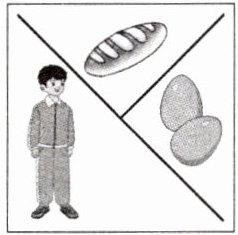
either breakfast
1.
2.
3.
4.
根据每小题所提供的提示词,写出一个与图画情景相符的句子。
1.
travel, last month
2.
now
3.
symbol
4.
either breakfast
1.
The boy (He) traveled to France last month.
/The boy (He) traveled to Paris last month.
2.
She is waving now.
/The girl is waving now.
3.
The Great Wall is a symbol of China.
4.
The boy/He has either bread or two eggs for breakfast.
答案
1. The boy (He) traveled to France last month./The boy (He) traveled to Paris last month.
2. She is waving now./The girl is waving now.
3. The Great Wall is a symbol of China.
4. The boy/He has either bread or two eggs for breakfast.
2. She is waving now./The girl is waving now.
3. The Great Wall is a symbol of China.
4. The boy/He has either bread or two eggs for breakfast.
解析
【分析】
首先观察每小题的提示词与对应图画,根据提示词的时态/结构要求,结合图画的人物、场景,组织符合语法的句子:1. 提示词last month是一般过去时的时间标志,需用travel的过去式,结合图画人物组织旅行相关句子;2. 提示词now是现在进行时的标志,需用“be+动词现在分词”结构,结合图画动作组织句子;3. 提示词symbol需结合“a symbol of...”的常用搭配,对应图画标志性事物组织句子;4. 提示词either...or...用于连接并列成分,结合breakfast组织饮食相关句子。
【解析】
1. 由last month可知用一般过去时,travel的过去式为traveled,结合图画人物,可写为The boy traveled to France last month;
2. 由now可知用现在进行时,结构为am/is/are + doing,结合图画挥手动作,可写为She is waving now;
3. 结合symbol的常用搭配“a symbol of”,对应图画的长城,可写为The Great Wall is a symbol of China;
4. either...or...连接早餐食物,结合图画人物,可写为The boy has either bread or two eggs for breakfast。
【答案】
1. The boy (He) traveled to France last month./The boy (He) traveled to Paris last month.
2. She is waving now./The girl is waving now.
3. The Great Wall is a symbol of China.
4. The boy/He has either bread or two eggs for breakfast.
【知识点】
一般过去时、现在进行时、either...or...结构
【点评】
本题为基础英语看图写句题,考察时态运用、固定搭配及句式组织能力,需结合提示词和图画情景完成句子,是英语学习的基础题型。
【难度系数】
0.3
首先观察每小题的提示词与对应图画,根据提示词的时态/结构要求,结合图画的人物、场景,组织符合语法的句子:1. 提示词last month是一般过去时的时间标志,需用travel的过去式,结合图画人物组织旅行相关句子;2. 提示词now是现在进行时的标志,需用“be+动词现在分词”结构,结合图画动作组织句子;3. 提示词symbol需结合“a symbol of...”的常用搭配,对应图画标志性事物组织句子;4. 提示词either...or...用于连接并列成分,结合breakfast组织饮食相关句子。
【解析】
1. 由last month可知用一般过去时,travel的过去式为traveled,结合图画人物,可写为The boy traveled to France last month;
2. 由now可知用现在进行时,结构为am/is/are + doing,结合图画挥手动作,可写为She is waving now;
3. 结合symbol的常用搭配“a symbol of”,对应图画的长城,可写为The Great Wall is a symbol of China;
4. either...or...连接早餐食物,结合图画人物,可写为The boy has either bread or two eggs for breakfast。
【答案】
1. The boy (He) traveled to France last month./The boy (He) traveled to Paris last month.
2. She is waving now./The girl is waving now.
3. The Great Wall is a symbol of China.
4. The boy/He has either bread or two eggs for breakfast.
【知识点】
一般过去时、现在进行时、either...or...结构
【点评】
本题为基础英语看图写句题,考察时态运用、固定搭配及句式组织能力,需结合提示词和图画情景完成句子,是英语学习的基础题型。
【难度系数】
0.3
