

 登录
登录
五、热点素材阅读理解。
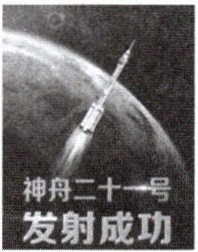
At 11:44 p. m., on October 31, 2025, *Shenzhou-21* was successfully launched from the Jiuquan Satellite Launch Centre. Carried by the Long March 2F Y21 carrier rocket, the spaceship entered its predetermined orbit(预定轨道)about 10 minutes later, with astronauts Zhang Lu, Wu Fei, and Zhang Hongzhang in good condition. This was the 37th flight mission of China's manned space programme(载人航天工程)and the final manned mission of 2025, marking solid progress in China's aerospace cause(航天事业).
A major highlight was its ultra-fast autonomous rendezvous and docking(自主交会对接). At 3:22 on November 1, only 3. 5 hours after the launch, the spaceship docked with the Tianhe core module(天和核心舱)of China's space station. This set a new record for China's manned space missions, showing the maturity of its docking technology. The scheme balanced efficiency and safety, greatly improving the space station's in-orbit operation efficiency(在轨运行效率).
Soon after, the 7th “space meeting” in China's aerospace history happened. The *Shenzhou-21* crew met the *Shenzhou-20* crew, who had been on orbit for over 180 days. They conducted a 5-day in-orbit handover(在轨交接), including file and equipment transfer, ensuring the space station's stable operation.
During their stay, the crew completed many scientific projects, including China's first in-orbit rodent mammal experiment(在轨啮齿类哺乳动物实验)to support long-term manned spaceflight(长期载人航天). They also installed space debris protection devices(空间碎片防护装置)and performed extravehicular activities(出舱活动)for equipment maintenance. The rocket had nearly 20 technical improvements, and the return capsule(返回舱)was optimized to enhance load capacity.
As a key mission in the space station's application phase, *Shenzhou-21* improved the station's operation capability and accumulated experience for future tasks. It showcases China's growing aerospace strength and inspires people to pursue dreams in science and space exploration.
(
A. About 10 minutes.
B. 3. 5 hours.
C. 5 days.
D. Over 180 days.
(
A. It has no room for further improvement.
B. It is developing rapidly and has strong strength.
C. It only focuses on manned space missions.
D. It has never set any records in space technology.
(
A. Completing many scientific projects including a rodent mammal experiment.
B. Installing space debris protection devices outside the station.
C. Conducting a 5-day in-orbit handover with *Shenzhou-20* crew.
D. Making nearly 20 technical improvements to the rocket.
(
A. ①/②③④/⑤
B. ①②/③④/⑤
C. ①/②③/④⑤
D. ①②③/④/⑤
(
A. Astronauts preparing for space missions.
B. Middle school students interested in space.
C. Scientists researching rocket technology.
D. Engineers designing space stations.
At 11:44 p. m., on October 31, 2025, *Shenzhou-21* was successfully launched from the Jiuquan Satellite Launch Centre. Carried by the Long March 2F Y21 carrier rocket, the spaceship entered its predetermined orbit(预定轨道)about 10 minutes later, with astronauts Zhang Lu, Wu Fei, and Zhang Hongzhang in good condition. This was the 37th flight mission of China's manned space programme(载人航天工程)and the final manned mission of 2025, marking solid progress in China's aerospace cause(航天事业).
A major highlight was its ultra-fast autonomous rendezvous and docking(自主交会对接). At 3:22 on November 1, only 3. 5 hours after the launch, the spaceship docked with the Tianhe core module(天和核心舱)of China's space station. This set a new record for China's manned space missions, showing the maturity of its docking technology. The scheme balanced efficiency and safety, greatly improving the space station's in-orbit operation efficiency(在轨运行效率).
Soon after, the 7th “space meeting” in China's aerospace history happened. The *Shenzhou-21* crew met the *Shenzhou-20* crew, who had been on orbit for over 180 days. They conducted a 5-day in-orbit handover(在轨交接), including file and equipment transfer, ensuring the space station's stable operation.
During their stay, the crew completed many scientific projects, including China's first in-orbit rodent mammal experiment(在轨啮齿类哺乳动物实验)to support long-term manned spaceflight(长期载人航天). They also installed space debris protection devices(空间碎片防护装置)and performed extravehicular activities(出舱活动)for equipment maintenance. The rocket had nearly 20 technical improvements, and the return capsule(返回舱)was optimized to enhance load capacity.
As a key mission in the space station's application phase, *Shenzhou-21* improved the station's operation capability and accumulated experience for future tasks. It showcases China's growing aerospace strength and inspires people to pursue dreams in science and space exploration.
(
B
)1. How long did it take *Shenzhou-21* to dock with the Tianhe core module after the launch?A. About 10 minutes.
B. 3. 5 hours.
C. 5 days.
D. Over 180 days.
(
B
)2. What can we infer from the passage about China's aerospace industry?A. It has no room for further improvement.
B. It is developing rapidly and has strong strength.
C. It only focuses on manned space missions.
D. It has never set any records in space technology.
(
D
)3. Which of the following is NOT part of the *Shenzhou-21* crew's in-orbit tasks?A. Completing many scientific projects including a rodent mammal experiment.
B. Installing space debris protection devices outside the station.
C. Conducting a 5-day in-orbit handover with *Shenzhou-20* crew.
D. Making nearly 20 technical improvements to the rocket.
(
A
)4. 新考法 What is the structure of the passage?A. ①/②③④/⑤
B. ①②/③④/⑤
C. ①/②③/④⑤
D. ①②③/④/⑤
(
B
)5. 新考法 Who is the passage most likely written for?A. Astronauts preparing for space missions.
B. Middle school students interested in space.
C. Scientists researching rocket technology.
D. Engineers designing space stations.
答案
五、1. B 【点拨】根据文章第二段第二句“At 3:22 on November 1, only 3.5 hours after the launch, the spaceship docked with the Tianhe core module(天和核心舱) of China's space station.”可知选 B。
2. B 【点拨】根据文章最后一段中的“It showcases China's growing aerospace strength”可知,中国航天实力不断增强,发展迅速。故选 B。
3. D 【点拨】根据文章第三、四段可知,乘组的任务包括“完成多项科学项目(含啮齿类哺乳动物实验)”(A 选项)、“安装空间碎片防护装置”(B 选项)、“与神舟二十号乘组进行 5 天在轨交接”(C 选项)。D 选项“对火箭进行近 20 项技术改进”在第四段最后一句提及,但主语是“the rocket”(火箭),并非乘组的在轨任务,而是发射前的技术优化。故选 D。
4. A 【点拨】第一段介绍神舟二十一号的基本信息;第二段讲核心亮点(快速对接)、第三段讲太空会面与在轨交接、第四段讲在轨任务,这三段均为具体任务细节;第五段总结任务意义。因此结构为“总起—分述—总结”。故选 A。
5. B 【点拨】文章语言简洁,术语配中文注释,内容涵盖发射、任务、意义等基础信息,无过于专业的深度研究内容,适合对太空感兴趣的中学生阅读。故选 B。
2. B 【点拨】根据文章最后一段中的“It showcases China's growing aerospace strength”可知,中国航天实力不断增强,发展迅速。故选 B。
3. D 【点拨】根据文章第三、四段可知,乘组的任务包括“完成多项科学项目(含啮齿类哺乳动物实验)”(A 选项)、“安装空间碎片防护装置”(B 选项)、“与神舟二十号乘组进行 5 天在轨交接”(C 选项)。D 选项“对火箭进行近 20 项技术改进”在第四段最后一句提及,但主语是“the rocket”(火箭),并非乘组的在轨任务,而是发射前的技术优化。故选 D。
4. A 【点拨】第一段介绍神舟二十一号的基本信息;第二段讲核心亮点(快速对接)、第三段讲太空会面与在轨交接、第四段讲在轨任务,这三段均为具体任务细节;第五段总结任务意义。因此结构为“总起—分述—总结”。故选 A。
5. B 【点拨】文章语言简洁,术语配中文注释,内容涵盖发射、任务、意义等基础信息,无过于专业的深度研究内容,适合对太空感兴趣的中学生阅读。故选 B。
解析
【分析】
这是一篇航天主题的英语阅读理解题,解题时可以按照不同题型的特点分步思考:1. 细节类题目直接带着题干的关键词回到原文定位,找到对应语句比对选项即可得出答案;2. 推理类题目先排除明显和原文矛盾的错误选项,再结合全文主旨筛选正确表述;3. 篇章结构题先逐段梳理段落核心作用,把功能一致的段落归为同一部分,匹配对应选项;4. 判断目标读者的题目,结合文本的语言难度、内容深浅、是否有注释等特征,排除不符合的受众即可。
【解析】
1. 细节定位:根据原文第二段第二句"At 3:22 on November 1, only 3.5 hours after the launch, the spaceship docked with the Tianhe core module of China's space station",明确神舟二十一号发射后仅用3.5小时就和天和核心舱完成对接,直接对应选项B。
2. 推理判断:用排除法验证选项:A选项“没有进一步提升空间”和原文积累经验为后续任务铺路的表述矛盾;C选项“只关注载人航天任务”不符合原文提及的各类科学实验、技术迭代的内容;D选项“从未创造航天技术纪录”和原文提到的创造中国载人航天对接新纪录矛盾,结合最后一段"It showcases China's growing aerospace strength"的表述,可知中国航天发展迅速、实力强劲,选B。
3. 细节比对:逐一核对选项:A对应第四段提到的完成含在轨啮齿类哺乳动物实验在内的多项科学项目;B对应第四段提到的安装空间碎片防护装置;C对应第三段提到的和神舟二十号乘组开展5天在轨交接;D选项的火箭近20项技术改进是发射前对火箭的地面优化工作,不属于航天员在轨执行的任务,符合题干选非的要求,选D。
4. 篇章结构梳理:第一段总起,介绍神舟二十一号发射成功的基础背景信息;第2、3、4段分别介绍快速自主对接亮点、乘组在轨交接、各类在轨任务细节,属于分述部分;第五段总结本次任务的价值和中国航天的意义,整体是总-分-总结构,对应划分方式①/②③④/⑤,选A。
5. 受众推断:文本对所有专业航天术语都配套了中文注释,内容偏向科普介绍,没有涉及火箭研发、空间站设计的深度专业内容,不适合航天员、科研人员、工程师这类专业群体,面向的是对太空感兴趣的中学生,选B。
【答案】
1.B 2.B 3.D 4.A 5.B
【知识点】
细节信息定位,篇章结构判断,文本推理判断
【点评】
本题结合我国最新航天热点命题,在常规阅读考点基础上加入了篇章结构推断、目标受众推断的新颖考法,既考查学生的信息提取和逻辑梳理能力,也渗透了航天科普相关的正向引导,难度梯度设置合理。
【难度系数】
0.7
这是一篇航天主题的英语阅读理解题,解题时可以按照不同题型的特点分步思考:1. 细节类题目直接带着题干的关键词回到原文定位,找到对应语句比对选项即可得出答案;2. 推理类题目先排除明显和原文矛盾的错误选项,再结合全文主旨筛选正确表述;3. 篇章结构题先逐段梳理段落核心作用,把功能一致的段落归为同一部分,匹配对应选项;4. 判断目标读者的题目,结合文本的语言难度、内容深浅、是否有注释等特征,排除不符合的受众即可。
【解析】
1. 细节定位:根据原文第二段第二句"At 3:22 on November 1, only 3.5 hours after the launch, the spaceship docked with the Tianhe core module of China's space station",明确神舟二十一号发射后仅用3.5小时就和天和核心舱完成对接,直接对应选项B。
2. 推理判断:用排除法验证选项:A选项“没有进一步提升空间”和原文积累经验为后续任务铺路的表述矛盾;C选项“只关注载人航天任务”不符合原文提及的各类科学实验、技术迭代的内容;D选项“从未创造航天技术纪录”和原文提到的创造中国载人航天对接新纪录矛盾,结合最后一段"It showcases China's growing aerospace strength"的表述,可知中国航天发展迅速、实力强劲,选B。
3. 细节比对:逐一核对选项:A对应第四段提到的完成含在轨啮齿类哺乳动物实验在内的多项科学项目;B对应第四段提到的安装空间碎片防护装置;C对应第三段提到的和神舟二十号乘组开展5天在轨交接;D选项的火箭近20项技术改进是发射前对火箭的地面优化工作,不属于航天员在轨执行的任务,符合题干选非的要求,选D。
4. 篇章结构梳理:第一段总起,介绍神舟二十一号发射成功的基础背景信息;第2、3、4段分别介绍快速自主对接亮点、乘组在轨交接、各类在轨任务细节,属于分述部分;第五段总结本次任务的价值和中国航天的意义,整体是总-分-总结构,对应划分方式①/②③④/⑤,选A。
5. 受众推断:文本对所有专业航天术语都配套了中文注释,内容偏向科普介绍,没有涉及火箭研发、空间站设计的深度专业内容,不适合航天员、科研人员、工程师这类专业群体,面向的是对太空感兴趣的中学生,选B。
【答案】
1.B 2.B 3.D 4.A 5.B
【知识点】
细节信息定位,篇章结构判断,文本推理判断
【点评】
本题结合我国最新航天热点命题,在常规阅读考点基础上加入了篇章结构推断、目标受众推断的新颖考法,既考查学生的信息提取和逻辑梳理能力,也渗透了航天科普相关的正向引导,难度梯度设置合理。
【难度系数】
0.7
