

 登录
登录
Ⅳ. Read, choose and write(读一读,选择合适的句子完成对话,把字母代号填在横线上。有一项多余)
A. It can record and play sound.
B. Who invented it?
C. Look at this picture of a light bulb.
D. I want to be an inventor in the future.
E. Can you give me another example?
F. She is good at making new things.
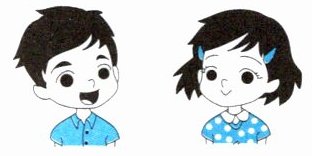
Shenshen: Xiaopu, what are you reading?
Xiaopu: I’m reading a book about great inventions. 1.
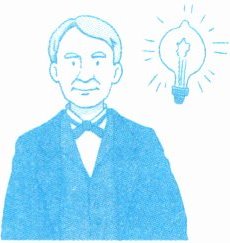
Shenshen: Oh, the light bulb! 2.
Xiaopu: Thomas Edison invented it. He is known as the “King of Inventors”. He never gave up even after failing many times.
Shenshen: Really? 3.
Xiaopu: Yes! The phonograph (留声机) is another great invention. 4.
Shenshen: That’s true. Inventors are so creative and important. 5.
Xiaopu: Me too! I want to be a scientist to explore the world and invent useful things one day.
A. It can record and play sound.
B. Who invented it?
C. Look at this picture of a light bulb.
D. I want to be an inventor in the future.
E. Can you give me another example?
F. She is good at making new things.
Shenshen: Xiaopu, what are you reading?
Xiaopu: I’m reading a book about great inventions. 1.
C
It helps us see in the dark.Shenshen: Oh, the light bulb! 2.
B
Xiaopu: Thomas Edison invented it. He is known as the “King of Inventors”. He never gave up even after failing many times.
Shenshen: Really? 3.
E
Xiaopu: Yes! The phonograph (留声机) is another great invention. 4.
A
Shenshen: That’s true. Inventors are so creative and important. 5.
D
Xiaopu: Me too! I want to be a scientist to explore the world and invent useful things one day.
答案
1. C 2. B 3. E 4. A 5. D
解析
【分析】
本题为英语补全对话题,解题思路是先通读对话,明确话题围绕“伟大发明”展开,再结合每个空格前后的语境逻辑匹配选项:1. 空格后提到“帮助我们在黑暗中看见”,对应灯泡,需引出灯泡的句子;2. 空格后回答发明者,需提问发明者的句子;3. 空格后提到另一个发明,需请求举例的句子;4. 空格前说留声机,需描述其功能的句子;5. 空格后说想当科学家,需表达未来想当发明家的句子。
【解析】
1. 空格后“It helps us see in the dark.”对应灯泡的作用,选项C“Look at this picture of a light bulb.”引出灯泡,符合语境,故选C;
2. 空格后回答发明者是Thomas Edison,选项B“Who invented it?”提问发明者,符合语境,故选B;
3. 空格后提到留声机是另一个伟大发明,选项E“Can you give me another example?”请求再举例子,符合语境,故选E;
4. 空格前说留声机是伟大发明,选项A“It can record and play sound.”描述留声机的功能,符合语境,故选A;
5. 空格后回答“Me too! I want to be a scientist...”,选项D“I want to be an inventor in the future.”表达未来想当发明家,符合语境,故选D。
【答案】
1.C 2.B 3.E 4.A 5.D
【知识点】
补全对话、英语日常交际用语
【点评】
本题围绕“伟大发明”话题,考查学生对英语对话语境的理解与逻辑匹配能力,题型基础,注重日常交际用语的运用,适合巩固英语对话基础。
【难度系数】
0.6
本题为英语补全对话题,解题思路是先通读对话,明确话题围绕“伟大发明”展开,再结合每个空格前后的语境逻辑匹配选项:1. 空格后提到“帮助我们在黑暗中看见”,对应灯泡,需引出灯泡的句子;2. 空格后回答发明者,需提问发明者的句子;3. 空格后提到另一个发明,需请求举例的句子;4. 空格前说留声机,需描述其功能的句子;5. 空格后说想当科学家,需表达未来想当发明家的句子。
【解析】
1. 空格后“It helps us see in the dark.”对应灯泡的作用,选项C“Look at this picture of a light bulb.”引出灯泡,符合语境,故选C;
2. 空格后回答发明者是Thomas Edison,选项B“Who invented it?”提问发明者,符合语境,故选B;
3. 空格后提到留声机是另一个伟大发明,选项E“Can you give me another example?”请求再举例子,符合语境,故选E;
4. 空格前说留声机是伟大发明,选项A“It can record and play sound.”描述留声机的功能,符合语境,故选A;
5. 空格后回答“Me too! I want to be a scientist...”,选项D“I want to be an inventor in the future.”表达未来想当发明家,符合语境,故选D。
【答案】
1.C 2.B 3.E 4.A 5.D
【知识点】
补全对话、英语日常交际用语
【点评】
本题围绕“伟大发明”话题,考查学生对英语对话语境的理解与逻辑匹配能力,题型基础,注重日常交际用语的运用,适合巩固英语对话基础。
【难度系数】
0.6
Ⅴ. Read and write(读句子,根据上下文用括号内单词的适当形式完成短文)
Thomas Edison was a great
Thomas Edison was a great
scientist
(science). His inventions
(invention) changed the world. We should be creative
(create) and try to think of new ways to solve problems
(problem). It’s important to to work
(work) hard and never give up on your dreams. Scientists need to have a lot of knowledge to explore
(explore) the unknown world (未知世界). Yuan Longping’s contribution to agriculture made him known
(know) worldwide.答案
1. scientist 2. inventions 3. creative 4. problems 5. to work 6. to explore 7. known
解析
【分析】
通读短文理解语境,结合空格前后的语法结构(如冠词、物主代词、be动词、固定句型等),以及括号内单词的词性,转换为正确形式填空。具体思路:1. 空格前有冠词和形容词,需将表学科的名词转换为表人的名词;2. 物主代词后需用可数名词复数;3. be动词后需用形容词作表语;4. 动词solve后接可数名词复数表泛指;5. 固定句型需用不定式;6. 此处用不定式作目的状语;7. 固定结构需用过去分词表被动。
【解析】
1. 空格前有不定冠词a和形容词great,需填名词,science(科学)对应的表示人的名词是scientist(科学家),故填scientist。
2. 空格前是形容词性物主代词his,需填名词,invention(发明)为可数名词,爱迪生的发明不止一项,用复数形式inventions,故填inventions。
3. 空格前是be动词,需填形容词作表语,create(创造)对应的形容词是creative(有创造力的),故填creative。
4. 空格前是动词solve,此处指解决各类问题,problem为可数名词,用复数形式problems,故填problems。
5. 固定句型It's important to do sth(做某事很重要),需用动词不定式,故填to work。
6. 此处不定式作目的状语,表“有大量知识来探索未知世界”,故填to explore。
7. 固定结构make sb done(使某人被……),此处指袁隆平被全世界知晓,用过去分词known,故填known。
【答案】
scientist, inventions, creative, problems, to work, to explore, known
【知识点】
英语词性转换;固定句型;非谓语动词
【点评】
本题考查英语基础语法中的词性变化、固定搭配及非谓语动词用法,属于英语基础题型,侧重考查学生对核心语法点的掌握,整体难度较低。
【难度系数】
0.7
通读短文理解语境,结合空格前后的语法结构(如冠词、物主代词、be动词、固定句型等),以及括号内单词的词性,转换为正确形式填空。具体思路:1. 空格前有冠词和形容词,需将表学科的名词转换为表人的名词;2. 物主代词后需用可数名词复数;3. be动词后需用形容词作表语;4. 动词solve后接可数名词复数表泛指;5. 固定句型需用不定式;6. 此处用不定式作目的状语;7. 固定结构需用过去分词表被动。
【解析】
1. 空格前有不定冠词a和形容词great,需填名词,science(科学)对应的表示人的名词是scientist(科学家),故填scientist。
2. 空格前是形容词性物主代词his,需填名词,invention(发明)为可数名词,爱迪生的发明不止一项,用复数形式inventions,故填inventions。
3. 空格前是be动词,需填形容词作表语,create(创造)对应的形容词是creative(有创造力的),故填creative。
4. 空格前是动词solve,此处指解决各类问题,problem为可数名词,用复数形式problems,故填problems。
5. 固定句型It's important to do sth(做某事很重要),需用动词不定式,故填to work。
6. 此处不定式作目的状语,表“有大量知识来探索未知世界”,故填to explore。
7. 固定结构make sb done(使某人被……),此处指袁隆平被全世界知晓,用过去分词known,故填known。
【答案】
scientist, inventions, creative, problems, to work, to explore, known
【知识点】
英语词性转换;固定句型;非谓语动词
【点评】
本题考查英语基础语法中的词性变化、固定搭配及非谓语动词用法,属于英语基础题型,侧重考查学生对核心语法点的掌握,整体难度较低。
【难度系数】
0.7
Ⅵ. Read and finish the tasks(我们身边有许多有用的小发明,读一读,完成任务)
The helpful pencil
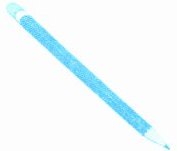
Making a mistake when you write is okay because of a clever invention—the pencil with an eraser! It has two helpful tools in one. Here is how to use it:
First, hold the pencil firmly in your hand. You can write or draw on paper with the pointed lead. If you make a mistake, don’t worry! Simply turn the pencil around.
Now, press the eraser on the paper and rub (擦;磨擦) it gently back and forth (来回地;反复地). The wrong mark will disappear (消失)!
Then, turn the pencil back and continue (继续) writing. It’s so easy to correct your work!
This simple invention makes learning much easier!
Task 1: Find and circle(圈出短文里使用带橡皮的铅笔必须用到的两样工具和一个身体部位的单词)
Task 2: Read and match(读读下面步骤,按照短文内容正确匹配)
Step 1 — (
Step 2 — (
Step 3 — (
Step 4 — (
The helpful pencil
Making a mistake when you write is okay because of a clever invention—the pencil with an eraser! It has two helpful tools in one. Here is how to use it:
First, hold the pencil firmly in your hand. You can write or draw on paper with the pointed lead. If you make a mistake, don’t worry! Simply turn the pencil around.
Now, press the eraser on the paper and rub (擦;磨擦) it gently back and forth (来回地;反复地). The wrong mark will disappear (消失)!
Then, turn the pencil back and continue (继续) writing. It’s so easy to correct your work!
This simple invention makes learning much easier!
Task 1: Find and circle(圈出短文里使用带橡皮的铅笔必须用到的两样工具和一个身体部位的单词)
Task 2: Read and match(读读下面步骤,按照短文内容正确匹配)
Step 1 — (
C
) A. Press the eraser on the paper and rub it.Step 2 — (
D
) B. Turn the pencil back and continue writing.Step 3 — (
A
) C. Hold the pencil in your hand to write.Step 4 — (
B
) D. Turn the pencil around to use the eraser.答案
Task 1: 圈出: pencil, eraser, hand
Task 2: Step 1—C Step 2—D Step 3—A Step 4—B
Task 2: Step 1—C Step 2—D Step 3—A Step 4—B
解析
【分析】
首先,Task1需从短文中提取使用带橡皮铅笔的核心要素:两样工具和一个身体部位,要定位原文对应词汇;Task2需梳理短文描述的使用步骤顺序,再与选项匹配,解题关键是准确对应原文的步骤逻辑。
【解析】
Task1:阅读短文,找到使用带橡皮铅笔必须用到的两样工具是pencil(铅笔)、eraser(橡皮),一个身体部位是hand(手),按要求圈出即可。
Task2:梳理短文步骤:
1. 第一步是握住铅笔书写,对应选项C;
2. 第二步是出错时转动铅笔使用橡皮,对应选项D;
3. 第三步是按压橡皮并擦拭,对应选项A;
4. 第四步是转回铅笔继续书写,对应选项B。
因此匹配结果为Step1—C,Step2—D,Step3—A,Step4—B。
【答案】
Task1: 圈出: pencil, eraser, hand
Task2: Step 1—C Step 2—D Step 3—A Step 4—B
【知识点】
英语阅读、信息提取、匹配题
【点评】
本题考查学生对英语短文的信息提取能力和步骤逻辑梳理能力,属于贴近生活的基础题型,易于理解。
【难度系数】
0.8
首先,Task1需从短文中提取使用带橡皮铅笔的核心要素:两样工具和一个身体部位,要定位原文对应词汇;Task2需梳理短文描述的使用步骤顺序,再与选项匹配,解题关键是准确对应原文的步骤逻辑。
【解析】
Task1:阅读短文,找到使用带橡皮铅笔必须用到的两样工具是pencil(铅笔)、eraser(橡皮),一个身体部位是hand(手),按要求圈出即可。
Task2:梳理短文步骤:
1. 第一步是握住铅笔书写,对应选项C;
2. 第二步是出错时转动铅笔使用橡皮,对应选项D;
3. 第三步是按压橡皮并擦拭,对应选项A;
4. 第四步是转回铅笔继续书写,对应选项B。
因此匹配结果为Step1—C,Step2—D,Step3—A,Step4—B。
【答案】
Task1: 圈出: pencil, eraser, hand
Task2: Step 1—C Step 2—D Step 3—A Step 4—B
【知识点】
英语阅读、信息提取、匹配题
【点评】
本题考查学生对英语短文的信息提取能力和步骤逻辑梳理能力,属于贴近生活的基础题型,易于理解。
【难度系数】
0.8
