

 登录
登录
五、看图,根据上下文提示补全对话。
A:
B: I often
A: I usually
B: That's
A: Would you like to go with me next time? B: Yes, I'd love to.
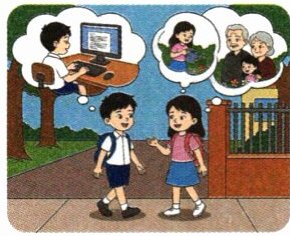
A:
What
do you often do
at weekends, Alex?B: I often
chat
with my friends on the internet
. What about
you?A: I usually
visit
my grandparents with
my parents. Sometimes I help them water
the flowers
. They have a nice garden.B: That's
great
.A: Would you like to go with me next time? B: Yes, I'd love to.
答案
What; do; chat; internet; about; visit; with; water; flowers; great
解析
【分析】
这是一道结合周末活动话题的对话补全题,解题时需紧扣上下文语境,运用日常交际用语和固定搭配来填写空缺。首先看第一句,A询问Alex周末的活动,用特殊疑问词What搭配助动词do;接着B回答自己的活动,“和朋友在网上聊天”对应固定表达chat with friends on the internet;然后B反问A的情况,用固定句式What about you?;A说明自己的活动,“和父母看望祖父母”是visit grandparents with parents,“帮他们浇花”是water the flowers;最后B对A的活动表示赞赏,用great。
【解析】
1. 第一句A问“你周末经常做什么?”,特殊疑问句用What提问,“做”用do,故填What、do;
2. B回答“我经常和朋友在网上聊天”,“聊天”是chat,“在网上”是on the internet,故填chat、internet;
3. B反问A的情况,固定表达为What about you?,故填about;
4. A说“我通常和父母去看望祖父母”,“看望”是visit,“和”用with,故填visit、with;
5. A补充“有时我帮他们浇花”,“浇花”是water the flowers,故填water、flowers;
6. B回应“那很棒”,用great,故填great。
【答案】
What; do; chat; internet; about; visit; with; water; flowers; great
【知识点】
日常交际用语、固定搭配、特殊疑问句
【点评】
本题围绕周末活动的日常话题展开,考查学生对对话中常用表达和固定短语的掌握,难度适中,需结合语境准确填写。
【难度系数】
0.6
这是一道结合周末活动话题的对话补全题,解题时需紧扣上下文语境,运用日常交际用语和固定搭配来填写空缺。首先看第一句,A询问Alex周末的活动,用特殊疑问词What搭配助动词do;接着B回答自己的活动,“和朋友在网上聊天”对应固定表达chat with friends on the internet;然后B反问A的情况,用固定句式What about you?;A说明自己的活动,“和父母看望祖父母”是visit grandparents with parents,“帮他们浇花”是water the flowers;最后B对A的活动表示赞赏,用great。
【解析】
1. 第一句A问“你周末经常做什么?”,特殊疑问句用What提问,“做”用do,故填What、do;
2. B回答“我经常和朋友在网上聊天”,“聊天”是chat,“在网上”是on the internet,故填chat、internet;
3. B反问A的情况,固定表达为What about you?,故填about;
4. A说“我通常和父母去看望祖父母”,“看望”是visit,“和”用with,故填visit、with;
5. A补充“有时我帮他们浇花”,“浇花”是water the flowers,故填water、flowers;
6. B回应“那很棒”,用great,故填great。
【答案】
What; do; chat; internet; about; visit; with; water; flowers; great
【知识点】
日常交际用语、固定搭配、特殊疑问句
【点评】
本题围绕周末活动的日常话题展开,考查学生对对话中常用表达和固定短语的掌握,难度适中,需结合语境准确填写。
【难度系数】
0.6
六、新考法 阅读理解。
1. (
(
2. (
3. (
4. (
5. (
(
6. (
7. (
8. (
(一)根据故事内容,将图片和对应的句子匹配。
A. At weekends, Lily, the cat, wakes up from her nap.
B. She jumps down from the bed. She sees a door.
C. She walks through the door. She sees a room.
D. She crosses(穿过) the room. She sees a chair.
E. She circles the chair. She sees a table.
F. She strolls(溜达) under the table. She sees a sofa.
G. She jumps up on the sofa. She sees Jack's lap(大腿).
H. Lily curls up on Jack's lap to nap.
(二)根据故事内容,判断正(T)误(F)。
(
(
(
(
1.
(C
)2. (
E
)3. (
G
)4. (
D
)5.
(F
)6. (
H
)7. (
A
)8. (
B
)(一)根据故事内容,将图片和对应的句子匹配。
A. At weekends, Lily, the cat, wakes up from her nap.
B. She jumps down from the bed. She sees a door.
C. She walks through the door. She sees a room.
D. She crosses(穿过) the room. She sees a chair.
E. She circles the chair. She sees a table.
F. She strolls(溜达) under the table. She sees a sofa.
G. She jumps up on the sofa. She sees Jack's lap(大腿).
H. Lily curls up on Jack's lap to nap.
(二)根据故事内容,判断正(T)误(F)。
(
T
)1. Lily jumps down from the bed after she takes a nap.(
T
)2. Jack is at home at weekends.(
F
)3. At last, Lily goes to her bed to nap.(
T
)4. The “nap” means “小睡” in Chinese.答案
(一)1. C 2. E 3. G 4. D 5. F 6. H 7. A 8. B
(二)1. T 2. T 3. F 4. T
(二)1. T 2. T 3. F 4. T
解析
【解析】
(一)图片句子匹配
1. 图1呈现小猫穿过门的场景,对应句子C:She walks through the door. She sees a room.
2. 图2呈现小猫绕着椅子走、旁边有桌子的场景,对应句子E:She circles the chair. She sees a table.
3. 图3呈现小猫跳上沙发、旁边坐着男孩的场景,对应句子G:She jumps up on the sofa. She sees Jack's lap(大腿).
4. 图4呈现小猫站在房间里、面前有椅子的场景,对应句子D:She crosses(穿过) the room. She sees a chair.
5. 图5呈现小猫在桌子下方、前方是沙发的场景,对应句子F:She strolls(溜达) under the table. She sees a sofa.
6. 图6呈现小猫蜷在男孩腿上睡觉的场景,对应句子H:Lily curls up on Jack's lap to nap.
7. 图7呈现小猫在床上睡醒伸懒腰的场景,对应句子A:At weekends, Lily, the cat, wakes up from her nap.
8. 图8呈现小猫从床上跳下、看向门的场景,对应句子B:She jumps down from the bed. She sees a door.
(二)正误判断
1. 原文A句说明小猫周末从午睡中醒来,之后B句描述它跳下床,和题干表述一致,判为T。
2. 故事里Jack周末出现在家中沙发上,说明他周末在家,和题干表述一致,判为T。
3. 原文H句说明最后小猫是蜷在Jack的腿上午睡,并非回到自己的床上,和题干表述不符,判为F。
4. 结合全文语境可以推断出nap的中文含义是“小睡”,和题干表述一致,判为T。
【答案】
(一)1. C 2. E 3. G 4. D 5. F 6. H 7. A 8. B
(二)1. T 2. T 3. F 4. T
【知识点】
图文匹配,细节理解,词义猜测
【点评】
本题属于小学英语趣味阅读题型,通过连贯的小猫行动故事串联考点,既考查学生结合图片抓取文本关键信息的能力,也融入了词义猜测的基础考查,整体难度适中,符合新考法图文结合的命题特点,能引导学生梳理故事的先后逻辑顺序。
【难度系数】
0.7
(一)图片句子匹配
1. 图1呈现小猫穿过门的场景,对应句子C:She walks through the door. She sees a room.
2. 图2呈现小猫绕着椅子走、旁边有桌子的场景,对应句子E:She circles the chair. She sees a table.
3. 图3呈现小猫跳上沙发、旁边坐着男孩的场景,对应句子G:She jumps up on the sofa. She sees Jack's lap(大腿).
4. 图4呈现小猫站在房间里、面前有椅子的场景,对应句子D:She crosses(穿过) the room. She sees a chair.
5. 图5呈现小猫在桌子下方、前方是沙发的场景,对应句子F:She strolls(溜达) under the table. She sees a sofa.
6. 图6呈现小猫蜷在男孩腿上睡觉的场景,对应句子H:Lily curls up on Jack's lap to nap.
7. 图7呈现小猫在床上睡醒伸懒腰的场景,对应句子A:At weekends, Lily, the cat, wakes up from her nap.
8. 图8呈现小猫从床上跳下、看向门的场景,对应句子B:She jumps down from the bed. She sees a door.
(二)正误判断
1. 原文A句说明小猫周末从午睡中醒来,之后B句描述它跳下床,和题干表述一致,判为T。
2. 故事里Jack周末出现在家中沙发上,说明他周末在家,和题干表述一致,判为T。
3. 原文H句说明最后小猫是蜷在Jack的腿上午睡,并非回到自己的床上,和题干表述不符,判为F。
4. 结合全文语境可以推断出nap的中文含义是“小睡”,和题干表述一致,判为T。
【答案】
(一)1. C 2. E 3. G 4. D 5. F 6. H 7. A 8. B
(二)1. T 2. T 3. F 4. T
【知识点】
图文匹配,细节理解,词义猜测
【点评】
本题属于小学英语趣味阅读题型,通过连贯的小猫行动故事串联考点,既考查学生结合图片抓取文本关键信息的能力,也融入了词义猜测的基础考查,整体难度适中,符合新考法图文结合的命题特点,能引导学生梳理故事的先后逻辑顺序。
【难度系数】
0.7
