

 登录
登录
二、阅读理解
A 热考内容 跨学科 KEY→P29
范畴:人与自我 主题:勤于动手 体裁:应用文 难度:★★★ 建议用时:6分钟 评价:/5
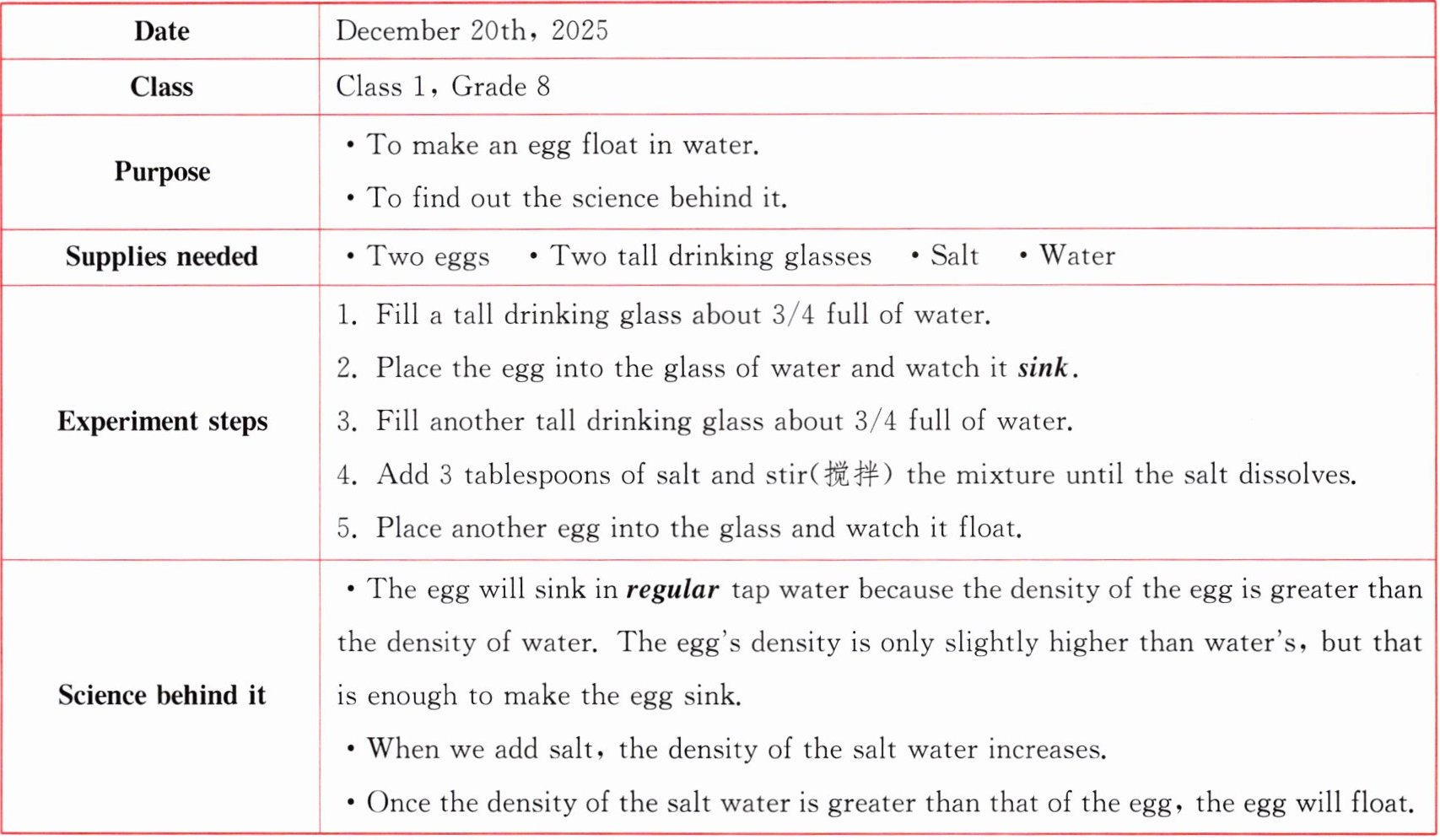
Can you make an egg float in water? In this simple science experiment, we take just a few minutes to test the law of density(密度)and discover just how easy it is to make an egg float! Here's a page from the school experiment report.
(
A. Eggs. B. Salt. C. Sugar. D. Water.
(
A. Because the egg becomes lighter and lighter.
B. Because the salt water's density is greater than the egg's.
C. Because the salt water is colder than regular water.
D. Because the egg's shape changes in salt water.
(
A. All objects will float in salt water.
B. The experiment will take a whole day to finish.
C. The egg's density changes when it is put into different types of water.
D. Adding more salt to the salt water may make the egg float higher.
(
A. ①②③④ B. ③④①② C. ①③②④ D. ③①②④
(
A. A record. B. A diary. C. A plan. D. A poster.
A 热考内容 跨学科 KEY→P29
范畴:人与自我 主题:勤于动手 体裁:应用文 难度:★★★ 建议用时:6分钟 评价:/5
Can you make an egg float in water? In this simple science experiment, we take just a few minutes to test the law of density(密度)and discover just how easy it is to make an egg float! Here's a page from the school experiment report.
(
C
)1. Which of the following is NOT needed in the experiment?A. Eggs. B. Salt. C. Sugar. D. Water.
(
B
)2. Why does the egg float in salt water?A. Because the egg becomes lighter and lighter.
B. Because the salt water's density is greater than the egg's.
C. Because the salt water is colder than regular water.
D. Because the egg's shape changes in salt water.
(
D
)3. What can we infer from the experiment?A. All objects will float in salt water.
B. The experiment will take a whole day to finish.
C. The egg's density changes when it is put into different types of water.
D. Adding more salt to the salt water may make the egg float higher.
(
B
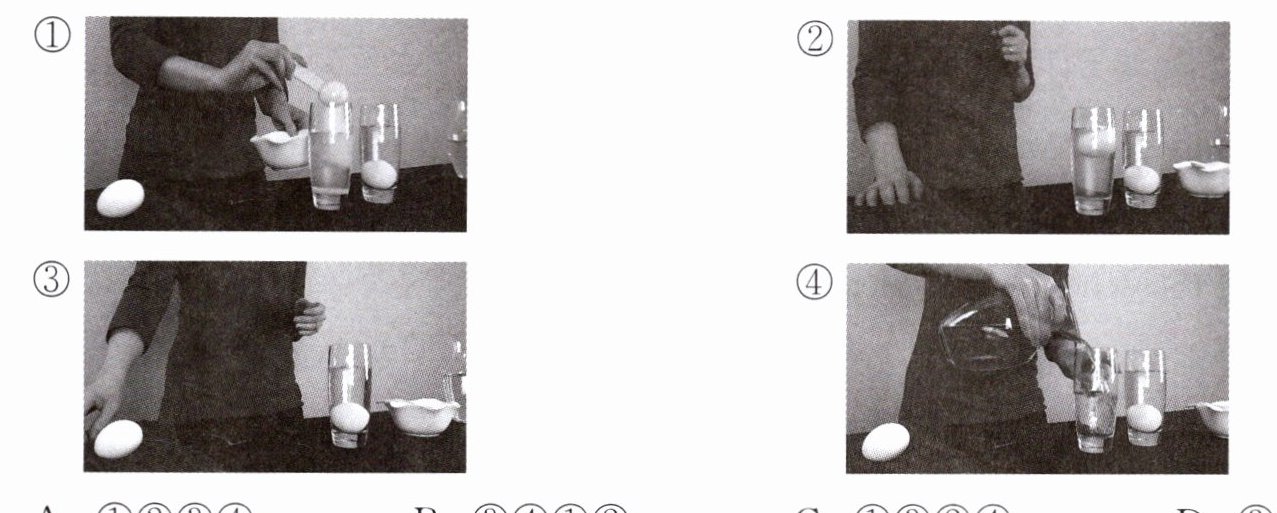
)4. 新考法·图片理解 According to the pictures, what is the CORRECT order of the experiment steps?A. ①②③④ B. ③④①② C. ①③②④ D. ③①②④
(
A
)5. What kind of text is the page?A. A record. B. A diary. C. A plan. D. A poster.
答案
[A] C B D B A
本材料是一份学校实验报告,介绍了八年级一班于2025年12月20日进行的“如何让鸡蛋在水中漂浮”的实验,包含实验目的、步骤及背后的科学原理。
1. C 细节理解题。实验所需材料中提到了鸡蛋、盐和水,未提及糖,因此糖不是必需的。
2. B 细节理解题。科学原理中明确说明,当盐水的密度大于鸡蛋的密度时,鸡蛋会漂浮,这是鸡蛋在盐水中漂浮的原因。
3. D 推理判断题。加盐越多,盐水密度越大,浮力越大,鸡蛋可能浮得更高,符合逻辑推断。
4. B 图片理解题。实验步骤为:③第一个玻璃杯装 3/4 水,放入鸡蛋,观察下沉;④第二个玻璃杯装 3/4 水;①第二个杯子加入盐,搅拌使盐溶解;②放入鸡蛋,观察漂浮。因此顺序选 B。
5. A 推理判断题。材料是学校实验报告的一页,记录了实验目的、材料、步骤和原理,属于实验记录。
本材料是一份学校实验报告,介绍了八年级一班于2025年12月20日进行的“如何让鸡蛋在水中漂浮”的实验,包含实验目的、步骤及背后的科学原理。
1. C 细节理解题。实验所需材料中提到了鸡蛋、盐和水,未提及糖,因此糖不是必需的。
2. B 细节理解题。科学原理中明确说明,当盐水的密度大于鸡蛋的密度时,鸡蛋会漂浮,这是鸡蛋在盐水中漂浮的原因。
3. D 推理判断题。加盐越多,盐水密度越大,浮力越大,鸡蛋可能浮得更高,符合逻辑推断。
4. B 图片理解题。实验步骤为:③第一个玻璃杯装 3/4 水,放入鸡蛋,观察下沉;④第二个玻璃杯装 3/4 水;①第二个杯子加入盐,搅拌使盐溶解;②放入鸡蛋,观察漂浮。因此顺序选 B。
5. A 推理判断题。材料是学校实验报告的一页,记录了实验目的、材料、步骤和原理,属于实验记录。
解析
【分析】
本题是跨学科的应用文阅读理解,围绕“鸡蛋漂浮实验”的实验报告展开。解题时需先通读全文把握实验核心内容(实验材料、步骤及密度原理),再针对不同题型采用对应方法:细节理解题定位原文找对应信息;推理判断题基于原文合理推断;图片理解题结合实验步骤逻辑排序,确保答案准确。
【解析】
1. 细节理解题:原文明确实验材料为鸡蛋、盐、水,未提及糖,因此糖不是实验必需物品,选C。
2. 细节理解题:科学原理指出,当盐水密度大于鸡蛋密度时,鸡蛋会漂浮,这是鸡蛋在盐水中漂浮的原因,选B。
3. 推理判断题:加盐越多,盐水密度越大,浮力越大,鸡蛋可能浮得更高,符合逻辑推断,选D。
4. 图片理解题:实验步骤逻辑为:③装水放鸡蛋(下沉)→④装水→①加盐搅拌→②放鸡蛋(漂浮),顺序为③④①②,选B。
5. 推理判断题:材料是学校实验报告的一页,记录实验目的、步骤等,属于实验记录,选A。
【答案】
C B D B A
【知识点】
阅读理解解题技巧、密度与浮力常识、应用文阅读
【点评】
本题结合科学实验的跨学科阅读理解,考查细节查找、推理判断及图片理解能力,需学生准确提取文本和图片信息,难度适中。
【难度系数】
0.6
本题是跨学科的应用文阅读理解,围绕“鸡蛋漂浮实验”的实验报告展开。解题时需先通读全文把握实验核心内容(实验材料、步骤及密度原理),再针对不同题型采用对应方法:细节理解题定位原文找对应信息;推理判断题基于原文合理推断;图片理解题结合实验步骤逻辑排序,确保答案准确。
【解析】
1. 细节理解题:原文明确实验材料为鸡蛋、盐、水,未提及糖,因此糖不是实验必需物品,选C。
2. 细节理解题:科学原理指出,当盐水密度大于鸡蛋密度时,鸡蛋会漂浮,这是鸡蛋在盐水中漂浮的原因,选B。
3. 推理判断题:加盐越多,盐水密度越大,浮力越大,鸡蛋可能浮得更高,符合逻辑推断,选D。
4. 图片理解题:实验步骤逻辑为:③装水放鸡蛋(下沉)→④装水→①加盐搅拌→②放鸡蛋(漂浮),顺序为③④①②,选B。
5. 推理判断题:材料是学校实验报告的一页,记录实验目的、步骤等,属于实验记录,选A。
【答案】
C B D B A
【知识点】
阅读理解解题技巧、密度与浮力常识、应用文阅读
【点评】
本题结合科学实验的跨学科阅读理解,考查细节查找、推理判断及图片理解能力,需学生准确提取文本和图片信息,难度适中。
【难度系数】
0.6
