

 登录
登录
Ⅵ. 根据短文内容,完成下列各题。
What is a time zone?
A time zone is one area with its own time. And there are twenty-four time zones in the world.
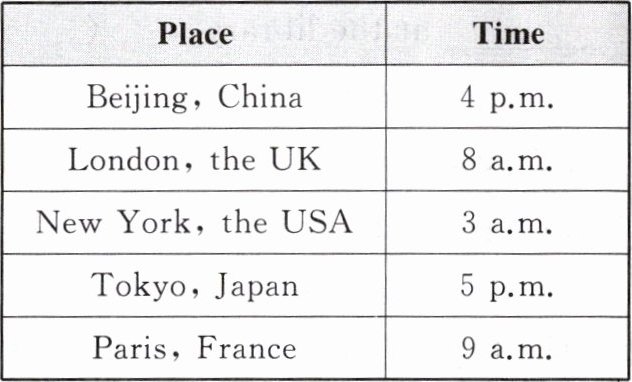
Here is a chart about the time of different places in November.
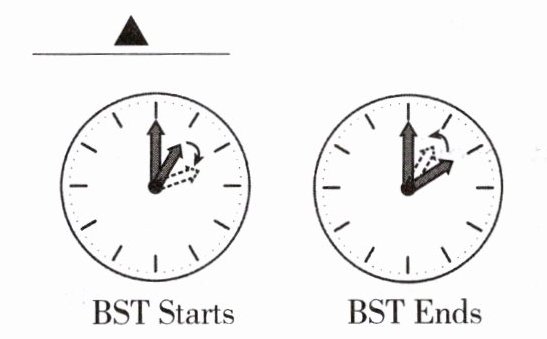
Yes. In the UK, people use British Summer Time so they change the clocks twice a year. When spring begins, they put the clock forwards by one hour. This gives more hours of daylight in the evening. In the middle of summer it gets dark at about 10 p.m.
In October, they put the clocks back by one hour. This means that students go to school in daylight. In the middle of winter, the sun rises late at about 8 a.m. and sets at about 4 p.m.
1. According to the chart about international time zones, when it is 4 p.m. in Beijing, it's in Paris.
2. Which sentence can we put in ""?
A. Do people have the clocks?
B. Do people change the clocks?
C. Does spring begin in March?
D. Does summer end in August?
3. When do people in the UK begin to put the clocks forwards by one hour?
4. You can get the knowledge from class.
What is a time zone?
A time zone is one area with its own time. And there are twenty-four time zones in the world.
Here is a chart about the time of different places in November.
Yes. In the UK, people use British Summer Time so they change the clocks twice a year. When spring begins, they put the clock forwards by one hour. This gives more hours of daylight in the evening. In the middle of summer it gets dark at about 10 p.m.
In October, they put the clocks back by one hour. This means that students go to school in daylight. In the middle of winter, the sun rises late at about 8 a.m. and sets at about 4 p.m.
1. According to the chart about international time zones, when it is 4 p.m. in Beijing, it's in Paris.
2. Which sentence can we put in ""?
A. Do people have the clocks?
B. Do people change the clocks?
C. Does spring begin in March?
D. Does summer end in August?
3. When do people in the UK begin to put the clocks forwards by one hour?
4. You can get the knowledge from class.
答案
Ⅵ. 1. 9 a.m. 2. B 3. When spring begins.
4. geography
4. geography
解析
【分析】
这是一篇结合时区常识的英语阅读理解题,解题思路如下:1. 先明确每道题的考点,第1题考察时区时差计算,回忆北京和巴黎的时区差,用北京时间减去时差即可得到巴黎时间;2. 第2题是补全问句,重点看空后答语的核心内容,匹配和答语对应的问句即可;3. 第3题是细节查找题,直接回到原文定位和"put the clocks forwards by one hour"相关的语句,直接提取对应信息;4. 第4题是常识推理,判断时区相关知识所属的学科即可。
【解析】
1. 时区基础常识:北京属于东八区,巴黎属于东一区,巴黎时间比北京时间晚7小时。当北京时间为下午4点(16:00),16-7=9,对应巴黎时间为上午9点,即9 a.m.。
2. 逻辑匹配题:空后答语的核心内容是介绍英国使用夏令时,一年两次调整时钟的规则,说明问句是询问人们是否会调整时钟。A选项“人们有钟表吗”、C选项“春天三月开始吗”、D选项“夏天八月结束吗”均和后文内容无关,只有B选项符合上下文逻辑。
3. 细节定位题:根据原文"When spring begins, they put the clock forwards by one hour."可直接得出答案。
4. 常识推理题:时区划分、不同地区时间差异的相关知识属于地理学科的学习范畴,因此对应的课程是地理课。
【答案】
1. 9 a.m.
2. B
3. When spring begins.
4. geography
【知识点】
阅读理解细节定位,时区基础常识,上下文逻辑推理
【点评】
本题兼顾英语阅读能力考察和跨学科常识积累,大部分题目可以通过快速定位原文得到答案,仅第1题和第4题需要结合基础生活常识判断,难度适中,能有效锻炼学生的信息提取和逻辑匹配能力。
【难度系数】
0.7
这是一篇结合时区常识的英语阅读理解题,解题思路如下:1. 先明确每道题的考点,第1题考察时区时差计算,回忆北京和巴黎的时区差,用北京时间减去时差即可得到巴黎时间;2. 第2题是补全问句,重点看空后答语的核心内容,匹配和答语对应的问句即可;3. 第3题是细节查找题,直接回到原文定位和"put the clocks forwards by one hour"相关的语句,直接提取对应信息;4. 第4题是常识推理,判断时区相关知识所属的学科即可。
【解析】
1. 时区基础常识:北京属于东八区,巴黎属于东一区,巴黎时间比北京时间晚7小时。当北京时间为下午4点(16:00),16-7=9,对应巴黎时间为上午9点,即9 a.m.。
2. 逻辑匹配题:空后答语的核心内容是介绍英国使用夏令时,一年两次调整时钟的规则,说明问句是询问人们是否会调整时钟。A选项“人们有钟表吗”、C选项“春天三月开始吗”、D选项“夏天八月结束吗”均和后文内容无关,只有B选项符合上下文逻辑。
3. 细节定位题:根据原文"When spring begins, they put the clock forwards by one hour."可直接得出答案。
4. 常识推理题:时区划分、不同地区时间差异的相关知识属于地理学科的学习范畴,因此对应的课程是地理课。
【答案】
1. 9 a.m.
2. B
3. When spring begins.
4. geography
【知识点】
阅读理解细节定位,时区基础常识,上下文逻辑推理
【点评】
本题兼顾英语阅读能力考察和跨学科常识积累,大部分题目可以通过快速定位原文得到答案,仅第1题和第4题需要结合基础生活常识判断,难度适中,能有效锻炼学生的信息提取和逻辑匹配能力。
【难度系数】
0.7
