

 登录
登录
训练3 体裁:说明文 主题:穿着打扮 难度:★★★★ 建议用时:8 min 正确率: /10
Long ago in ancient Egypt, the weather was very hot. People wore light and simple clothes made from linen(亚麻). This helped them stay cool. Clothes were often white because this color felt better in the hot sun. Men and women also liked to wear beautiful jewelry, like wide collars and bracelets. Their clothes and jewelry showed they loved art.
In Europe during the Middle Ages, around the 14th century, clothes told others if(是否) you were rich or poor. Rich people, like lords and ladies, wore long gowns made by good tailors. Poor people, like farmers, wore simple and loose clothes from rough wool or linen. These were better for work. Also,married women often covered their hair with veils. This followed the religious ideas of that time.
A big change came with the Industrial Revolution(工业革命) in the 18th and 19th centuries.
Now, machines in factories could make clothes very fast and cheaply. For the first time, "ready-to-wear" clothes became popular. People could buy them in new shops. Fashion began to change quickly. More people could follow fashion, not just the rich.
In the 20th century, people cared more about personal choice and comfort in clothes. After World War Ⅱ, young people started wearing jeans and T-shirts every day. Women wore trousers more often. Styles from different countries mixed together. This shows that modern life became less formal.
From old Egypt to today, what people wear is always tied to their time. Clothes are like a mirror. They show the weather, new machines, social rules, and the big ideas of their time.
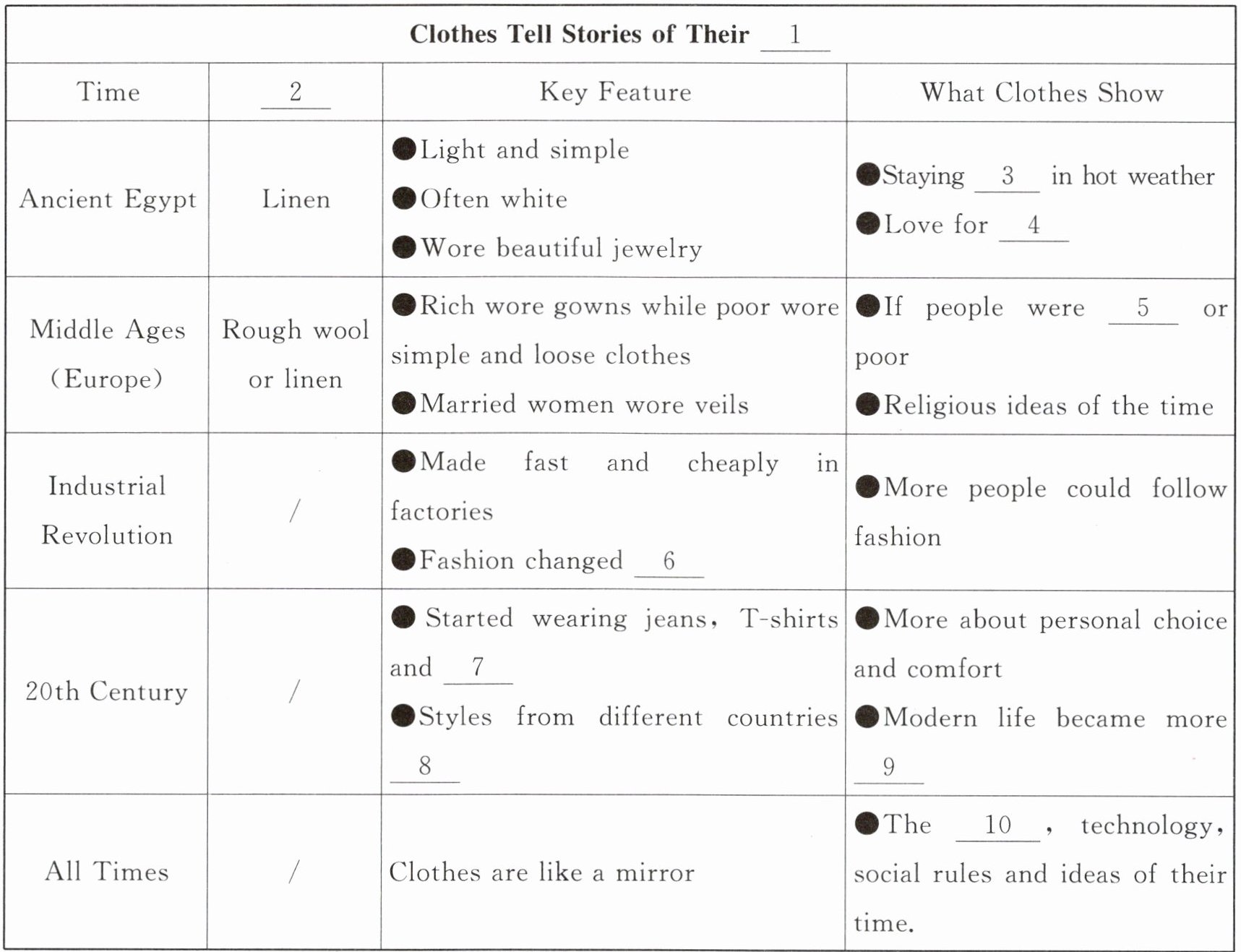
1.
Long ago in ancient Egypt, the weather was very hot. People wore light and simple clothes made from linen(亚麻). This helped them stay cool. Clothes were often white because this color felt better in the hot sun. Men and women also liked to wear beautiful jewelry, like wide collars and bracelets. Their clothes and jewelry showed they loved art.
In Europe during the Middle Ages, around the 14th century, clothes told others if(是否) you were rich or poor. Rich people, like lords and ladies, wore long gowns made by good tailors. Poor people, like farmers, wore simple and loose clothes from rough wool or linen. These were better for work. Also,married women often covered their hair with veils. This followed the religious ideas of that time.
A big change came with the Industrial Revolution(工业革命) in the 18th and 19th centuries.
Now, machines in factories could make clothes very fast and cheaply. For the first time, "ready-to-wear" clothes became popular. People could buy them in new shops. Fashion began to change quickly. More people could follow fashion, not just the rich.
In the 20th century, people cared more about personal choice and comfort in clothes. After World War Ⅱ, young people started wearing jeans and T-shirts every day. Women wore trousers more often. Styles from different countries mixed together. This shows that modern life became less formal.
From old Egypt to today, what people wear is always tied to their time. Clothes are like a mirror. They show the weather, new machines, social rules, and the big ideas of their time.
1.
Time
2. Material
3. cool
4. art
5. rich
答案
训练3 【语篇解读】本文是一篇说明文。文章主要介绍了不同历史时期服装特点及其反映的时代背景。
1. Time 【解析】文章最后一段“what people wear is always tied to their time”及表格下方内容,服装讲述的是它们所处时代的故事。故填Time。
2. Material 【解析】表格中“Linen”“Rough wool or linen”指的是各时期使用的面料。故填Material。
3. cool 【解析】第一段提到“People wore light and simple clothes made from linen. This helped them stay cool.”,说明穿亚麻服装是为了在炎热天气里保持凉爽。故填cool。
4. art 【解析】第一段提到“Their clothes and jewelry showed they loved art.”,说明古埃及人的服饰和珠宝体现了他们对艺术的热爱。故填art。
5. rich 【解析】第二段提到“clothes told others if you were rich or poor”,说明在中世纪,服装可以显示一个人是富有还是贫穷。故填rich。
6. quickly 【解析】第三段提到“Fashion began to change quickly.”,说明工业革命后时尚开始快速变化。故填quickly。
7. trousers 【解析】第四段提到“Women wore trousers more often.”,说明20世纪女性更常穿裤子。故填trousers。
8. mixed 【解析】第四段提到“Styles from different countries mixed together.”,说明不同国家的风格融合在一起。故填mixed。
9. informal 【解析】第四段提到“This shows that modern life became less formal.”,说明现代生活变得不那么正式。故填informal。
10. weather 【解析】最后一段“They show the weather, new machines, social rules, and the big ideas of their time.”,说明服装反映了当时的天气、技术、社会规则和思想。故填weather。
1. Time 【解析】文章最后一段“what people wear is always tied to their time”及表格下方内容,服装讲述的是它们所处时代的故事。故填Time。
2. Material 【解析】表格中“Linen”“Rough wool or linen”指的是各时期使用的面料。故填Material。
3. cool 【解析】第一段提到“People wore light and simple clothes made from linen. This helped them stay cool.”,说明穿亚麻服装是为了在炎热天气里保持凉爽。故填cool。
4. art 【解析】第一段提到“Their clothes and jewelry showed they loved art.”,说明古埃及人的服饰和珠宝体现了他们对艺术的热爱。故填art。
5. rich 【解析】第二段提到“clothes told others if you were rich or poor”,说明在中世纪,服装可以显示一个人是富有还是贫穷。故填rich。
6. quickly 【解析】第三段提到“Fashion began to change quickly.”,说明工业革命后时尚开始快速变化。故填quickly。
7. trousers 【解析】第四段提到“Women wore trousers more often.”,说明20世纪女性更常穿裤子。故填trousers。
8. mixed 【解析】第四段提到“Styles from different countries mixed together.”,说明不同国家的风格融合在一起。故填mixed。
9. informal 【解析】第四段提到“This shows that modern life became less formal.”,说明现代生活变得不那么正式。故填informal。
10. weather 【解析】最后一段“They show the weather, new machines, social rules, and the big ideas of their time.”,说明服装反映了当时的天气、技术、社会规则和思想。故填weather。
解析
【分析】本题是说明文类信息填空题,需结合表格栏目,定位原文对应段落的关键信息,逐一匹配空缺内容。解题时先明确表格各列含义,再根据每行的时间节点,找到原文对应描述,提取所需词汇填入表格。
【解析】1. 标题处,根据原文最后一段“what people wear is always tied to their time”,可知服装讲述的是所处时代的故事,故填Time;2. 表格第二列对应各时期服装的材料,原文提到古埃及用亚麻、中世纪用粗羊毛或亚麻,故填Material;3. 古埃及部分,原文“People wore light and simple clothes made from linen. This helped them stay cool”,可知穿亚麻服装是为了在炎热天气保持凉爽,故填cool;4. 古埃及部分,原文“Their clothes and jewelry showed they loved art”,可知服饰体现对艺术的热爱,故填art;5. 中世纪部分,原文“clothes told others if you were rich or poor”,可知服装显示人是富有还是贫穷,故填rich;6. 工业革命部分,原文“Fashion began to change quickly”,可知时尚变化快,故填quickly;7. 20世纪部分,原文“Women wore trousers more often”,可知当时女性常穿裤子,故填trousers;8. 20世纪部分,原文“Styles from different countries mixed together”,可知不同国家风格融合,故填mixed;9. 20世纪部分,原文“This shows that modern life became less formal”,可知现代生活不那么正式,故填informal;10. 最后一段“They show the weather, new machines, social rules, and the big ideas of their time”,可知服装反映天气等,故填weather。
【答案】1.Time 2.Material 3.cool 4.art 5.rich 6.quickly 7.trousers 8.mixed 9.informal 10.weather
【知识点】说明文阅读,信息定位,词义匹配
【点评】本文围绕服装与时代的关联展开,解题需精准提取原文关键信息,对应表格栏目完成填空,考查学生的信息查找与归纳能力,难度适中。
【难度系数】0.4
【解析】1. 标题处,根据原文最后一段“what people wear is always tied to their time”,可知服装讲述的是所处时代的故事,故填Time;2. 表格第二列对应各时期服装的材料,原文提到古埃及用亚麻、中世纪用粗羊毛或亚麻,故填Material;3. 古埃及部分,原文“People wore light and simple clothes made from linen. This helped them stay cool”,可知穿亚麻服装是为了在炎热天气保持凉爽,故填cool;4. 古埃及部分,原文“Their clothes and jewelry showed they loved art”,可知服饰体现对艺术的热爱,故填art;5. 中世纪部分,原文“clothes told others if you were rich or poor”,可知服装显示人是富有还是贫穷,故填rich;6. 工业革命部分,原文“Fashion began to change quickly”,可知时尚变化快,故填quickly;7. 20世纪部分,原文“Women wore trousers more often”,可知当时女性常穿裤子,故填trousers;8. 20世纪部分,原文“Styles from different countries mixed together”,可知不同国家风格融合,故填mixed;9. 20世纪部分,原文“This shows that modern life became less formal”,可知现代生活不那么正式,故填informal;10. 最后一段“They show the weather, new machines, social rules, and the big ideas of their time”,可知服装反映天气等,故填weather。
【答案】1.Time 2.Material 3.cool 4.art 5.rich 6.quickly 7.trousers 8.mixed 9.informal 10.weather
【知识点】说明文阅读,信息定位,词义匹配
【点评】本文围绕服装与时代的关联展开,解题需精准提取原文关键信息,对应表格栏目完成填空,考查学生的信息查找与归纳能力,难度适中。
【难度系数】0.4
