

 登录
登录
A
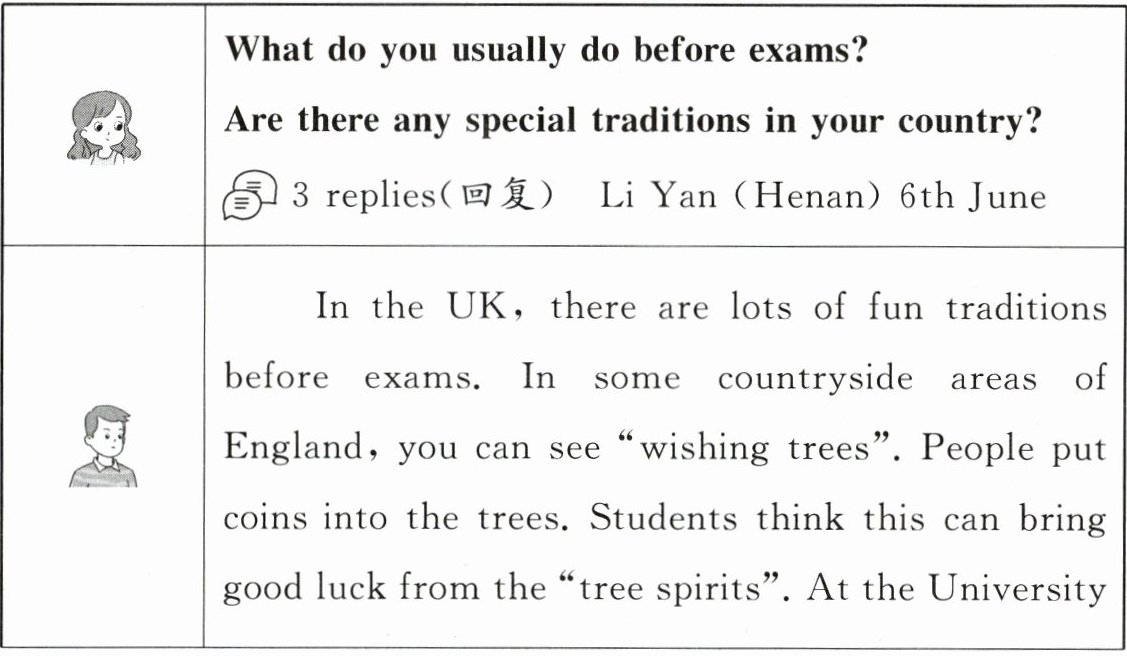
13. What do students in the UK do before exams?
A. Eat chicken. B. Put coins into trees.
C. Kiss a stone. D. Drink "exam tea".
14. Why do Korean students eat sticky food before exams?
A. Because it is delicious and many students like it a lot.
B. Because it helps them feel more relaxed before exams.
C. Because the word "stick" sounds like "pass" in Korean.
D. Because it makes them able to get higher grades in tests.
15. If a student in Türkiye enters the exam hall with their left
foot first, what might happen?
A. They might worry a lot about bad luck.
B. They might write wrong answers in exams.
C. They should touch his head for a third time.
D. The teacher will not allow them to come in.
16. What's the purpose目的 of all these traditions before
exams?
A. To celebrate after exams.
B. To bring good luck for exams.
C. To follow traditional rules.
D. To make students study harder.
17. Where can we probably find this passage?
A. In a newspaper. B. In a magazine.
C. On the internet. D. On a noticeboard.
13. What do students in the UK do before exams?
A. Eat chicken. B. Put coins into trees.
C. Kiss a stone. D. Drink "exam tea".
14. Why do Korean students eat sticky food before exams?
A. Because it is delicious and many students like it a lot.
B. Because it helps them feel more relaxed before exams.
C. Because the word "stick" sounds like "pass" in Korean.
D. Because it makes them able to get higher grades in tests.
15. If a student in Türkiye enters the exam hall with their left
foot first, what might happen?
A. They might worry a lot about bad luck.
B. They might write wrong answers in exams.
C. They should touch his head for a third time.
D. The teacher will not allow them to come in.
16. What's the purpose目的 of all these traditions before
exams?
A. To celebrate after exams.
B. To bring good luck for exams.
C. To follow traditional rules.
D. To make students study harder.
17. Where can we probably find this passage?
A. In a newspaper. B. In a magazine.
C. On the internet. D. On a noticeboard.
答案
【文章大意】本文是一篇说明文,主要讲了三个不同国家的人分享
了英国、韩国和土耳其学生在考试前的各种特殊传统,这些传统都
旨在为考试带来好运。
13. B 细节理解题。根据“In the UK,there are lots of fun
traditions before exams. In some countryside areas of England,
you can see ‘wishing trees’. People put coins into the trees.”可
知,英国学生考试前会往树上放硬币。故选B。
14. C 细节理解题。根据“In South Korea,we give our friends
sticky rice cakes before exams. This is because the
‘stick’ has the same sound as ‘pass’ in Korean.”可知,韩国学
生考试前吃糯米糕是因为“stick”在韩语中听起来像“pass”。
故选C。
15. A 细节理解题。根据“In Türkiye ... Always enter the exam
hall with your right foot first—stepping in with your left foot
means bad luck! This tradition is widely believed,and students
often feel worried about choosing the wrong foot.”可知,土耳
其学生如果左脚先进入考场,可能会担心带来坏运气。故
选A。
16. B 推理判断题。根据英国学生的“wishing trees”“Kissing
Stone”、韩国学生的糯米糕、土耳其学生的“exam tea”和进考
场的习俗等描述可知,这些传统的目的都是为考试带来好运。
故选B。
17. C 文章出处题。通读全文可知,文中出现了“3 replies”“Like”
“Comment”等网络交流中常见的词汇,由此可推断这篇文章
最可能在互联网上找到。故选C。
了英国、韩国和土耳其学生在考试前的各种特殊传统,这些传统都
旨在为考试带来好运。
13. B 细节理解题。根据“In the UK,there are lots of fun
traditions before exams. In some countryside areas of England,
you can see ‘wishing trees’. People put coins into the trees.”可
知,英国学生考试前会往树上放硬币。故选B。
14. C 细节理解题。根据“In South Korea,we give our friends
sticky rice cakes before exams. This is because the
‘stick’ has the same sound as ‘pass’ in Korean.”可知,韩国学
生考试前吃糯米糕是因为“stick”在韩语中听起来像“pass”。
故选C。
15. A 细节理解题。根据“In Türkiye ... Always enter the exam
hall with your right foot first—stepping in with your left foot
means bad luck! This tradition is widely believed,and students
often feel worried about choosing the wrong foot.”可知,土耳
其学生如果左脚先进入考场,可能会担心带来坏运气。故
选A。
16. B 推理判断题。根据英国学生的“wishing trees”“Kissing
Stone”、韩国学生的糯米糕、土耳其学生的“exam tea”和进考
场的习俗等描述可知,这些传统的目的都是为考试带来好运。
故选B。
17. C 文章出处题。通读全文可知,文中出现了“3 replies”“Like”
“Comment”等网络交流中常见的词汇,由此可推断这篇文章
最可能在互联网上找到。故选C。
解析
【分析】
这是一篇信息类阅读理解题,解题思路非常清晰:首先先明确每道题的考点,13-15题是细节理解题,只需要带着题干关键词回到原文对应国家的习俗描述部分定位信息,直接匹配正确选项即可;16题是主旨推理题,需要汇总所有不同国家考前传统的共同指向,排除不符合的干扰选项;17题是文章出处判断题,只需要抓住原文里的特殊标识“3 replies(3条回复)”这类网络互动特征,就能判断文本的来源。全程不需要复杂的推导,所有答案都有原文内容作为支撑。
【解析】
13. 细节定位:找到英国相关的原文描述“In the UK...you can see 'wishing trees'. People put coins into the trees. Students think this can bring good luck”,可知英国学生考前会往许愿树里投硬币,A吃鸡肉、C亲吻石头、D喝考试茶都不属于英国学生的考前习俗,排除ACD,选B。
14. 细节定位:找到韩国相关的原文描述“在韩国,考前大家会给朋友粘米糕,因为单词'stick'在韩语里的发音和'pass(考试通过)'一致”,可知对应选项C,A说食物美味、B帮助放松、D提升分数都不是原文给出的原因,排除ABD,选C。
15. 细节定位:找到土耳其相关的原文描述“进考场必须右脚先进,左脚先踏入意味着坏运气,学生选错脚之后普遍会非常担心”,可知对应选项A,B写错答案、C摸头三次、D老师禁止入场都不符合原文内容,排除BCD,选A。
16. 推理判断:汇总所有国家的考前传统,不管是投硬币求好运、吃粘糕寓意考试通过,还是右脚进考场规避坏运气,所有习俗的共同目的都是为考试带来好运,A考后庆祝、C遵守传统规则、D督促学生努力学习都不符合核心目的,排除ACD,选B。
17. 出处判断:原文出现了“3 replies(3条回复)”这类网络社交/论坛平台的典型互动标识,说明这是网友在线分享的内容,最有可能出现在互联网上,报纸、杂志、布告板都不会带有这类用户回复标识,排除ABD,选C。
【答案】
13. B 14. C 15. A 16. B 17. C
【知识点】
细节信息查找,阅读理解推理,文章出处判断
【点评】
本题整体难度偏低,绝大多数细节题都可以直接在原文找到对应答案,仅最后一道出处题需要学生留意文本里的互动类特殊标识,避免误选常见的报刊类干扰选项,重点考察学生快速定位文本信息、结合文本特征合理推导的基础阅读能力。
【难度系数】
0.7
这是一篇信息类阅读理解题,解题思路非常清晰:首先先明确每道题的考点,13-15题是细节理解题,只需要带着题干关键词回到原文对应国家的习俗描述部分定位信息,直接匹配正确选项即可;16题是主旨推理题,需要汇总所有不同国家考前传统的共同指向,排除不符合的干扰选项;17题是文章出处判断题,只需要抓住原文里的特殊标识“3 replies(3条回复)”这类网络互动特征,就能判断文本的来源。全程不需要复杂的推导,所有答案都有原文内容作为支撑。
【解析】
13. 细节定位:找到英国相关的原文描述“In the UK...you can see 'wishing trees'. People put coins into the trees. Students think this can bring good luck”,可知英国学生考前会往许愿树里投硬币,A吃鸡肉、C亲吻石头、D喝考试茶都不属于英国学生的考前习俗,排除ACD,选B。
14. 细节定位:找到韩国相关的原文描述“在韩国,考前大家会给朋友粘米糕,因为单词'stick'在韩语里的发音和'pass(考试通过)'一致”,可知对应选项C,A说食物美味、B帮助放松、D提升分数都不是原文给出的原因,排除ABD,选C。
15. 细节定位:找到土耳其相关的原文描述“进考场必须右脚先进,左脚先踏入意味着坏运气,学生选错脚之后普遍会非常担心”,可知对应选项A,B写错答案、C摸头三次、D老师禁止入场都不符合原文内容,排除BCD,选A。
16. 推理判断:汇总所有国家的考前传统,不管是投硬币求好运、吃粘糕寓意考试通过,还是右脚进考场规避坏运气,所有习俗的共同目的都是为考试带来好运,A考后庆祝、C遵守传统规则、D督促学生努力学习都不符合核心目的,排除ACD,选B。
17. 出处判断:原文出现了“3 replies(3条回复)”这类网络社交/论坛平台的典型互动标识,说明这是网友在线分享的内容,最有可能出现在互联网上,报纸、杂志、布告板都不会带有这类用户回复标识,排除ABD,选C。
【答案】
13. B 14. C 15. A 16. B 17. C
【知识点】
细节信息查找,阅读理解推理,文章出处判断
【点评】
本题整体难度偏低,绝大多数细节题都可以直接在原文找到对应答案,仅最后一道出处题需要学生留意文本里的互动类特殊标识,避免误选常见的报刊类干扰选项,重点考察学生快速定位文本信息、结合文本特征合理推导的基础阅读能力。
【难度系数】
0.7
