

 登录
登录
B
Strength in refusal
Do you find it hard to say no to others? In your opinion, what is the right way to say no?
Jiang Xiaoxue, 18, Lanzhou Xinya High School, Gansu
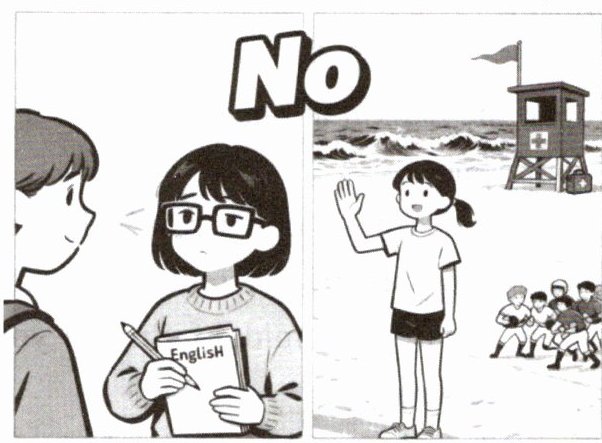
Sometimes it's hard to say no to friends, but I learned a good way last month. During the evening self-study, a classmate came to me. He wanted to copy my English homework. He even offered me his favourite snacks. At first, I wanted to say yes at the snacks and didn't want to make him upset. But then I thought: "Copying won't help him learn. If he keeps doing this, he'll never improve his English. And it's not right for me to let him cheat either."
So I said, "I'm sorry I can't let you copy. But after class, I can help you with the difficult parts of the homework." He was a little sad at first, but later he thanked me.
I think a good way to refuse is not just saying no directly. We can offer help instead. This way, people know we care about them, and they won't feel hurt. Saying no properly helps us be responsible (负责任的) too.
Peggy Lay, 16, New Zealand
One day my friends and I were playing by the sea. The waves were wild, and the lifeguards had already raised the red flag. Still, one of my friends whispered, "Let's sneak into (偷偷溜进) the water. No one will notice."
My heart raced. Part of me wanted to follow, just to show I wasn't scared. But another part reminded me of my surf lessons at school — we'd been told the rip current stories.
Finally, I shook my head and said, "Not today. I'm not risking it." My friend frowned, but then she laughed and said, "Fine, you win." We ended up playing touch rugby (触式橄榄球) on the beach until sunset. That day I learned something powerful: Refusing doesn't make you weaker — it puts you in control of your own life. For me, the real strength lies in choosing my own path, even if it means standing apart.
(
A. A kind of safe water activity.
B. A dangerous sea flow that pulls people away from the shore.
C. A story told by lifeguards to make kids scared.
D. A tool used for learning surfing.
(
A. After Jiang Xiaoxue said she'd help with homework
B. After Peggy Lay refused to sneak into the water
C. Before the question "Do you find it hard to say no to others?"
D. When Peggy Lay's friend whispered to her
(
A. Saying "no" will always make friends upset.
B. It's impossible to keep friends if we refuse them.
C. Only older students know how to say "no" correctly.
D. Refusing in a proper way can show both care and strength.
Strength in refusal
Do you find it hard to say no to others? In your opinion, what is the right way to say no?
Jiang Xiaoxue, 18, Lanzhou Xinya High School, Gansu
Sometimes it's hard to say no to friends, but I learned a good way last month. During the evening self-study, a classmate came to me. He wanted to copy my English homework. He even offered me his favourite snacks. At first, I wanted to say yes at the snacks and didn't want to make him upset. But then I thought: "Copying won't help him learn. If he keeps doing this, he'll never improve his English. And it's not right for me to let him cheat either."
So I said, "I'm sorry I can't let you copy. But after class, I can help you with the difficult parts of the homework." He was a little sad at first, but later he thanked me.
I think a good way to refuse is not just saying no directly. We can offer help instead. This way, people know we care about them, and they won't feel hurt. Saying no properly helps us be responsible (负责任的) too.
Peggy Lay, 16, New Zealand
One day my friends and I were playing by the sea. The waves were wild, and the lifeguards had already raised the red flag. Still, one of my friends whispered, "Let's sneak into (偷偷溜进) the water. No one will notice."
My heart raced. Part of me wanted to follow, just to show I wasn't scared. But another part reminded me of my surf lessons at school — we'd been told the rip current stories.
Finally, I shook my head and said, "Not today. I'm not risking it." My friend frowned, but then she laughed and said, "Fine, you win." We ended up playing touch rugby (触式橄榄球) on the beach until sunset. That day I learned something powerful: Refusing doesn't make you weaker — it puts you in control of your own life. For me, the real strength lies in choosing my own path, even if it means standing apart.
(
B
) 5. What does the underlined phrase "rip current" (in Peggy Lay's story) probably mean?A. A kind of safe water activity.
B. A dangerous sea flow that pulls people away from the shore.
C. A story told by lifeguards to make kids scared.
D. A tool used for learning surfing.
(
B
) 6. The sentence "It's easy to follow others, but it takes courage to stick to what's right." should be added to .A. After Jiang Xiaoxue said she'd help with homework
B. After Peggy Lay refused to sneak into the water
C. Before the question "Do you find it hard to say no to others?"
D. When Peggy Lay's friend whispered to her
(
D
) 7. What can we infer from the two students' experiences?A. Saying "no" will always make friends upset.
B. It's impossible to keep friends if we refuse them.
C. Only older students know how to say "no" correctly.
D. Refusing in a proper way can show both care and strength.
答案
5—7: BBD
解析
【分析】
这是一篇主题为“合理拒绝”的阅读理解题,3道小题分别对应词义猜测、语句还原、主旨推断三类常见阅读题型。解题时首先要先通读全文梳理两个学生的不同拒绝经历:第一位学生拒绝同学抄作业的请求同时主动提供帮助,第二位学生拒绝朋友违规下海的危险提议。解词义猜测题要定位到对应段落结合上下文的危险提示信息推导词义;解语句还原题要先理解待插入句子的含义,再逐一比对四个位置的上下文逻辑匹配度;解推断题要结合全文内容逐一排除明显不符合原文的错误选项,最终得到正确答案。
【解析】
1. 第5题:定位到Peggy的故事段落,前文明确提到海浪汹涌、救生员已经升起警示危险的红旗,朋友提出要偷偷溜进海里玩水,Peggy最终选择拒绝冒险,结合冲浪课学到的相关知识,可推断rip current是海边会将人带离岸边的危险海流。选项A的安全水上活动、选项C的哄骗孩子的故事、选项D的冲浪学习工具均不符合上下文语境,因此选B。
2. 第6题:先明确待插入句子的含义:“跟随他人的选择很容易,但坚守正确的事需要勇气”。逐一核对选项:A位置放在Jiang Xiaoxue提出帮同学讲解作业之后,对应“拒绝后提供帮助”的内容,和句子主题不匹配;B位置放在Peggy拒绝朋友偷偷下水的提议之后,刚好承接她没有为了证明自己不害怕就盲从朋友,坚持遵守安全规则的经历,逻辑完全通顺;C位置放在开篇提问前,没有上下文铺垫十分突兀;D位置放在朋友刚提出提议时,此时Peggy还没做出拒绝选择,插入句子逻辑不通,因此选B。
3. 第7题:逐一排除错误选项:A选项“说‘不’总会让朋友难过”和原文两个例子里朋友最终都表示理解的内容相悖;B选项“拒绝朋友就不可能维持友谊”完全不符合原文表述;C选项“只有年龄更大的学生才知道怎么正确说不”,文中16岁的Peggy也做到了合理拒绝,该表述错误;D选项“用恰当的方式拒绝既可以体现关心也能展现力量”,Jiang的经历体现了拒绝时对同学的关心,Peggy的经历体现了拒绝时对自身选择的掌控力、自身的力量,完全符合两个故事的共同结论,因此选D。
【答案】
5—7: BBD
【知识点】
词义猜测,语句还原,主旨推断
【点评】
本题围绕“学会合理拒绝”的正向主题展开,从细节理解、行文逻辑、主旨归纳三个维度考察学生的阅读能力,难度适中,既要求学生能精准定位原文信息,也要求学生结合上下文逻辑推导结论,同时能引导学生树立正确的人际交往观念和安全意识。
【难度系数】
0.7
这是一篇主题为“合理拒绝”的阅读理解题,3道小题分别对应词义猜测、语句还原、主旨推断三类常见阅读题型。解题时首先要先通读全文梳理两个学生的不同拒绝经历:第一位学生拒绝同学抄作业的请求同时主动提供帮助,第二位学生拒绝朋友违规下海的危险提议。解词义猜测题要定位到对应段落结合上下文的危险提示信息推导词义;解语句还原题要先理解待插入句子的含义,再逐一比对四个位置的上下文逻辑匹配度;解推断题要结合全文内容逐一排除明显不符合原文的错误选项,最终得到正确答案。
【解析】
1. 第5题:定位到Peggy的故事段落,前文明确提到海浪汹涌、救生员已经升起警示危险的红旗,朋友提出要偷偷溜进海里玩水,Peggy最终选择拒绝冒险,结合冲浪课学到的相关知识,可推断rip current是海边会将人带离岸边的危险海流。选项A的安全水上活动、选项C的哄骗孩子的故事、选项D的冲浪学习工具均不符合上下文语境,因此选B。
2. 第6题:先明确待插入句子的含义:“跟随他人的选择很容易,但坚守正确的事需要勇气”。逐一核对选项:A位置放在Jiang Xiaoxue提出帮同学讲解作业之后,对应“拒绝后提供帮助”的内容,和句子主题不匹配;B位置放在Peggy拒绝朋友偷偷下水的提议之后,刚好承接她没有为了证明自己不害怕就盲从朋友,坚持遵守安全规则的经历,逻辑完全通顺;C位置放在开篇提问前,没有上下文铺垫十分突兀;D位置放在朋友刚提出提议时,此时Peggy还没做出拒绝选择,插入句子逻辑不通,因此选B。
3. 第7题:逐一排除错误选项:A选项“说‘不’总会让朋友难过”和原文两个例子里朋友最终都表示理解的内容相悖;B选项“拒绝朋友就不可能维持友谊”完全不符合原文表述;C选项“只有年龄更大的学生才知道怎么正确说不”,文中16岁的Peggy也做到了合理拒绝,该表述错误;D选项“用恰当的方式拒绝既可以体现关心也能展现力量”,Jiang的经历体现了拒绝时对同学的关心,Peggy的经历体现了拒绝时对自身选择的掌控力、自身的力量,完全符合两个故事的共同结论,因此选D。
【答案】
5—7: BBD
【知识点】
词义猜测,语句还原,主旨推断
【点评】
本题围绕“学会合理拒绝”的正向主题展开,从细节理解、行文逻辑、主旨归纳三个维度考察学生的阅读能力,难度适中,既要求学生能精准定位原文信息,也要求学生结合上下文逻辑推导结论,同时能引导学生树立正确的人际交往观念和安全意识。
【难度系数】
0.7
