

 登录
登录
阅读短文,从方框中选择适当的词并用其正确形式填空,使短文通顺、意思完整。每空限填一词,每词限用一次。
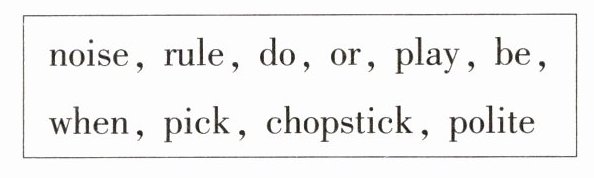
Table manners are important to Chinese. They include(包括)seating arrangement(安排), how to use 36.
Seating
In China, it's important to know how to 37.
Chopsticks
In China, we usually use chopsticks to eat. You should know the 40.
Other rules
※Don't make much 44.
※Don't talk 45.
Table manners are important to Chinese. They include(包括)seating arrangement(安排), how to use 36.
chopsticks
and some other rules.Seating
In China, it's important to know how to 37.
pick
your seat. The best seat is the one on the left, in the east 38. or
facing the door. Seats next to the best one 39. are
also good ones. If you are not sure where to sit, wait for the host to tell.Chopsticks
In China, we usually use chopsticks to eat. You should know the 40.
rules
of using chopsticks. Be 41. polite
when taking food with chopsticks. 42. Don’t
point at anyone with chopsticks. Don't 43. play
with chopsticks. Never suck(吮吸)the chopsticks.Other rules
※Don't make much 44.
noise
when eating or drinking.※Don't talk 45.
when
there is food in your mouth(嘴巴).答案
36. chopsticks 37. pick 38. or 39. are 40. rules
41. polite 42. Don’t 43. play 44. noise 45. when
41. polite 42. Don’t 43. play 44. noise 45. when
解析
【分析】
首先通读短文,明确短文围绕中国餐桌礼仪的座位安排、筷子使用及其他规则展开。解题时,需结合每个空所在的语境,从方框中选择合适的词汇,同时考虑词汇的形式变化:
1. 结合段落主题锁定相关词汇,如“Chopsticks”段落提示36空与筷子相关;
2. 分析句子结构判断所需词性,如be动词后接形容词、to后接动词原形、复数主语对应复数形式的be动词;
3. 借助固定搭配和日常常识确定词汇,如make noise、play with sth.等短语,以及餐桌礼仪规则;
4. 注意祈使句的否定形式,如42空需用Don’t引导否定祈使句。
【解析】
36. 根据后文“Chopsticks”段落可知此处讲使用筷子,chopsticks常用复数形式,故填chopsticks。
37. 语境表示“知道如何挑选座位”,how to后接动词原形,pick有“挑选”之意,故填pick。
38. “in the east”和“facing the door”是两种最佳座位的情况,为选择关系,用or连接,故填or。
39. 主语“Seats”是复数形式,对应的be动词用are,故填are。
40. 此处表示“使用筷子的规则”,rule为可数名词,结合语境用复数形式rules,故填rules。
41. be动词后接形容词,polite表示“礼貌的”,符合“用筷子夹食物时要礼貌”的语境,故填polite。
42. 根据餐桌礼仪,不能用筷子指着人,祈使句的否定形式用Don’t,故填Don’t。
43. play with sth.是固定搭配,意为“玩某物”,此处表示不要玩筷子,Don’t后接动词原形,故填play。
44. make noise是固定短语,意为“制造噪音”,符合“吃饭或喝水时不要制造太多噪音”的语境,故填noise。
45. 此处是时间状语从句,when表示“当……时候”,符合“当嘴里有食物时不要说话”的语境,故填when。
【答案】
36. chopsticks 37. pick 38. or 39. are 40. rules
41. polite 42. Don’t 43. play 44. noise 45. when
【知识点】
1. 词汇语境运用
2. 祈使句用法
3. 固定短语搭配
【点评】
本题围绕中国餐桌礼仪展开,考查学生对日常词汇、语法及固定搭配的掌握,贴近生活实际,既考查语言运用能力,也能帮助学生了解文化常识,需结合上下文语境和语法规则逐一确定答案。
【难度系数】
0.7
首先通读短文,明确短文围绕中国餐桌礼仪的座位安排、筷子使用及其他规则展开。解题时,需结合每个空所在的语境,从方框中选择合适的词汇,同时考虑词汇的形式变化:
1. 结合段落主题锁定相关词汇,如“Chopsticks”段落提示36空与筷子相关;
2. 分析句子结构判断所需词性,如be动词后接形容词、to后接动词原形、复数主语对应复数形式的be动词;
3. 借助固定搭配和日常常识确定词汇,如make noise、play with sth.等短语,以及餐桌礼仪规则;
4. 注意祈使句的否定形式,如42空需用Don’t引导否定祈使句。
【解析】
36. 根据后文“Chopsticks”段落可知此处讲使用筷子,chopsticks常用复数形式,故填chopsticks。
37. 语境表示“知道如何挑选座位”,how to后接动词原形,pick有“挑选”之意,故填pick。
38. “in the east”和“facing the door”是两种最佳座位的情况,为选择关系,用or连接,故填or。
39. 主语“Seats”是复数形式,对应的be动词用are,故填are。
40. 此处表示“使用筷子的规则”,rule为可数名词,结合语境用复数形式rules,故填rules。
41. be动词后接形容词,polite表示“礼貌的”,符合“用筷子夹食物时要礼貌”的语境,故填polite。
42. 根据餐桌礼仪,不能用筷子指着人,祈使句的否定形式用Don’t,故填Don’t。
43. play with sth.是固定搭配,意为“玩某物”,此处表示不要玩筷子,Don’t后接动词原形,故填play。
44. make noise是固定短语,意为“制造噪音”,符合“吃饭或喝水时不要制造太多噪音”的语境,故填noise。
45. 此处是时间状语从句,when表示“当……时候”,符合“当嘴里有食物时不要说话”的语境,故填when。
【答案】
36. chopsticks 37. pick 38. or 39. are 40. rules
41. polite 42. Don’t 43. play 44. noise 45. when
【知识点】
1. 词汇语境运用
2. 祈使句用法
3. 固定短语搭配
【点评】
本题围绕中国餐桌礼仪展开,考查学生对日常词汇、语法及固定搭配的掌握,贴近生活实际,既考查语言运用能力,也能帮助学生了解文化常识,需结合上下文语境和语法规则逐一确定答案。
【难度系数】
0.7
阅读短文,根据语篇要求填空,使短文通顺、意思完整。每空限填一词。
We all live in a smart world now. The internet(互联网)makes our life easy 46.
We all live in a smart world now. The internet(互联网)makes our life easy 46.
and
colorful. But sometimes, it's not safe to share our personal(个人的)information online. 47. For
example, when we talk with our friends on an App, the App will know who we are and who our friends are. So, let's start to protect our personal information. 48. Here/There
are some safety rules to keep our data(数据)safe. First, 49. be
careful when making friends online. Second, stop the Apps from tracking(追踪)you. Third, 50. don’t/never
put your money into the games online. At last, think before scanning(扫描)your face. If you are careful on the internet, you can enjoy a wonderful world.答案
46. and 47. For 48. Here/There 49. be 50. don’t/never
解析
【分析】
我们可以逐空结合语境和语法知识来思考:
1. 第46空:easy和colorful是并列的形容词,用来描述互联网让生活的状态,需要一个并列连词连接,所以想到用and。
2. 第47空:后面是举例说明网络信息不安全的情况,固定搭配“for example”表示“例如”,所以填For。
3. 第48空:下文要介绍安全规则,常用“Here are/There are”来引出下文的内容,表示“有一些……”,所以可以填Here或There。
4. 第49空:这是一个祈使句,careful是形容词,前面需要be动词构成系表结构,祈使句以动词原形开头,所以填be。
5. 第50空:根据语境,这里是给出安全建议,提醒不要把钱投入网络游戏,需要用否定祈使句,don’t或never都能表达否定的劝阻含义。
【解析】
46. 空格前后的easy和colorful是并列的形容词,共同修饰life,表并列关系,故填and。
47. “for example”是固定短语,意为“例如”,用于举例说明,句首首字母大写,故填For。
48. 此处要引出下文的安全规则,“Here are/There are”可用来表示“有一些……”,符合语境,故填Here/There。
49. 本句是祈使句,careful为形容词,需与be动词构成系表结构,祈使句用动词原形开头,故填be。
50. 根据语境,此处是提醒不要把钱投入网络游戏,是否定祈使句,可用don’t或never来表达否定劝阻,故填don’t/never。
【答案】
46. and 47. For 48. Here/There 49. be 50. don’t/never
【知识点】
并列连词用法;固定短语搭配;祈使句用法
【点评】
本题考查英语基础语法和固定短语的运用,结合语篇语境即可得出答案,侧重对学生日常语言积累和语境理解能力的考查,只要掌握基础知识点就能轻松作答。
【难度系数】
0.7
我们可以逐空结合语境和语法知识来思考:
1. 第46空:easy和colorful是并列的形容词,用来描述互联网让生活的状态,需要一个并列连词连接,所以想到用and。
2. 第47空:后面是举例说明网络信息不安全的情况,固定搭配“for example”表示“例如”,所以填For。
3. 第48空:下文要介绍安全规则,常用“Here are/There are”来引出下文的内容,表示“有一些……”,所以可以填Here或There。
4. 第49空:这是一个祈使句,careful是形容词,前面需要be动词构成系表结构,祈使句以动词原形开头,所以填be。
5. 第50空:根据语境,这里是给出安全建议,提醒不要把钱投入网络游戏,需要用否定祈使句,don’t或never都能表达否定的劝阻含义。
【解析】
46. 空格前后的easy和colorful是并列的形容词,共同修饰life,表并列关系,故填and。
47. “for example”是固定短语,意为“例如”,用于举例说明,句首首字母大写,故填For。
48. 此处要引出下文的安全规则,“Here are/There are”可用来表示“有一些……”,符合语境,故填Here/There。
49. 本句是祈使句,careful为形容词,需与be动词构成系表结构,祈使句用动词原形开头,故填be。
50. 根据语境,此处是提醒不要把钱投入网络游戏,是否定祈使句,可用don’t或never来表达否定劝阻,故填don’t/never。
【答案】
46. and 47. For 48. Here/There 49. be 50. don’t/never
【知识点】
并列连词用法;固定短语搭配;祈使句用法
【点评】
本题考查英语基础语法和固定短语的运用,结合语篇语境即可得出答案,侧重对学生日常语言积累和语境理解能力的考查,只要掌握基础知识点就能轻松作答。
【难度系数】
0.7
四、补全对话。
根据下面的对话情景,在每个空白处填上一个适当的句子,使对话的意思连贯、完整。
A: Mom, can I play on the phone?
B: 51.
A: Some rules about using phone? What rules will you make?
B: First, 52.
A: OK. I will not play when we are having meals. 53.
B: Fifteen minutes each time.
A: 54.
B: You can play three times every week.
A: What if(如果……会怎么样呢?)I forget the time and play for too long?
B: 55.
A: All right. I will not play on the phone the next day.
B: Follow the rules and enjoy yourself.
根据下面的对话情景,在每个空白处填上一个适当的句子,使对话的意思连贯、完整。
A: Mom, can I play on the phone?
B: 51.
Yes, you can/Yes/Sure
. But we have to make some rules about that.A: Some rules about using phone? What rules will you make?
B: First, 52.
don’t play on the phone when we are having meals
.A: OK. I will not play when we are having meals. 53.
How long can I play on the phone each time
?B: Fifteen minutes each time.
A: 54.
How many times/How often can I play every week
?B: You can play three times every week.
A: What if(如果……会怎么样呢?)I forget the time and play for too long?
B: 55.
You can’t play on the phone the next day
.A: All right. I will not play on the phone the next day.
B: Follow the rules and enjoy yourself.
答案
51. Yes, you can/Yes/Sure
52. don’t play on the phone when we are having meals
53. How long can I play on the phone each time
54. How many times/How often can I play every week
55. You can’t play on the phone the next day
52. don’t play on the phone when we are having meals
53. How long can I play on the phone each time
54. How many times/How often can I play every week
55. You can’t play on the phone the next day
解析
【分析】
这是一段关于制定玩手机规则的家庭对话,解题时需紧密结合上下文的问答逻辑来推断每个空白处的内容:
1. 第51空:A询问能否玩手机,B后句用"But"转折说要制定规则,说明妈妈同意了请求,所以应填肯定回应;
2. 第52空:B说第一条规则,A紧接着回应吃饭时不会玩,由此可推断规则内容是吃饭时不能玩手机;
3. 第53空:B的回答是“每次15分钟”,所以A的问题应该是询问每次能玩多久;
4. 第54空:B的回答是“每周三次”,所以A的问题是询问每周能玩的次数或频率;
5. 第55空:A问玩太久怎么办,A后续回应第二天不玩,说明妈妈的要求是第二天不能玩手机。
【解析】
51. 根据上文A的请求“Mom, can I play on the phone?”和下文的转折内容“But we have to make some rules about that.”,可知妈妈同意了A的请求,可填Yes, you can/Yes/Sure;
52. 根据下文A的回复“OK. I will not play when we are having meals.”,可知第一条规则是吃饭时不能玩手机,故填don’t play on the phone when we are having meals;
53. 根据下文B的回答“Fifteen minutes each time.”,可知A在询问每次玩手机的时长,故填How long can I play on the phone each time;
54. 根据下文B的回答“You can play three times every week.”,可知A在询问每周玩手机的次数或频率,故填How many times/How often can I play every week;
55. 根据下文A的回应“All right. I will not play on the phone the next day.”,可知妈妈规定玩太久的话第二天不能玩手机,故填You can’t play on the phone the next day。
【答案】
51. Yes, you can/Yes/Sure
52. don’t play on the phone when we are having meals
53. How long can I play on the phone each time
54. How many times/How often can I play every week
55. You can’t play on the phone the next day
【知识点】
情景交际、日常对话逻辑
【点评】
本题考查日常家庭场景中的情景交际能力,需要学生结合上下文的问答内容,准确推断空白处应填的句子,注重语言的连贯性和语境契合度,有助于提升学生的口语交际和逻辑推理能力。
【难度系数】
0.8
这是一段关于制定玩手机规则的家庭对话,解题时需紧密结合上下文的问答逻辑来推断每个空白处的内容:
1. 第51空:A询问能否玩手机,B后句用"But"转折说要制定规则,说明妈妈同意了请求,所以应填肯定回应;
2. 第52空:B说第一条规则,A紧接着回应吃饭时不会玩,由此可推断规则内容是吃饭时不能玩手机;
3. 第53空:B的回答是“每次15分钟”,所以A的问题应该是询问每次能玩多久;
4. 第54空:B的回答是“每周三次”,所以A的问题是询问每周能玩的次数或频率;
5. 第55空:A问玩太久怎么办,A后续回应第二天不玩,说明妈妈的要求是第二天不能玩手机。
【解析】
51. 根据上文A的请求“Mom, can I play on the phone?”和下文的转折内容“But we have to make some rules about that.”,可知妈妈同意了A的请求,可填Yes, you can/Yes/Sure;
52. 根据下文A的回复“OK. I will not play when we are having meals.”,可知第一条规则是吃饭时不能玩手机,故填don’t play on the phone when we are having meals;
53. 根据下文B的回答“Fifteen minutes each time.”,可知A在询问每次玩手机的时长,故填How long can I play on the phone each time;
54. 根据下文B的回答“You can play three times every week.”,可知A在询问每周玩手机的次数或频率,故填How many times/How often can I play every week;
55. 根据下文A的回应“All right. I will not play on the phone the next day.”,可知妈妈规定玩太久的话第二天不能玩手机,故填You can’t play on the phone the next day。
【答案】
51. Yes, you can/Yes/Sure
52. don’t play on the phone when we are having meals
53. How long can I play on the phone each time
54. How many times/How often can I play every week
55. You can’t play on the phone the next day
【知识点】
情景交际、日常对话逻辑
【点评】
本题考查日常家庭场景中的情景交际能力,需要学生结合上下文的问答内容,准确推断空白处应填的句子,注重语言的连贯性和语境契合度,有助于提升学生的口语交际和逻辑推理能力。
【难度系数】
0.8
