

 登录
登录
一、选出画线部分读音不同的一项。
(
(
(
(
(
(
C
)1. A. horse B. corner C. work(
B
)2. A. box B. both C. borrow(
B
)3. A. cookie B. choose C. bookcase(
B
)4. A. truth B. lunch C. ruler(
A
)5. A. war B. car C. farm答案
1-5 CBBBA
解析
【分析】本题为英语单词画线部分读音辨析题,需逐一分析每个小题中各选项画线部分的发音,对比找出读音不同的选项。核心思路是回忆每个单词的音标,确定画线字母/字母组合的发音,筛选出发音不一致的选项。
1. 分析or的发音:A. horse中or发/ɔː/,B. corner中or发/ɔː/,C. work中or发/ɜː/,不同项为C;
2. 分析o的发音:A. box中o发/ɒ/,B. both中o发/əʊ/,C. borrow中o发/ɒ/,不同项为B;
3. 分析oo的发音:A. cookie中oo发/ʊ/,B. choose中oo发/uː/,C. bookcase中oo发/ʊ/,不同项为B;
4. 分析u的发音:A. truth中u发/uː/,B. lunch中u发/ʌ/,C. ruler中u发/uː/,不同项为B;
5. 分析ar的发音:A. war中ar发/ɔː/,B. car中ar发/ɑː/,C. farm中ar发/ɑː/,不同项为A。
【解析】
1. A. horse /hɔːs/,画线or发音/ɔː/;B. corner /ˈkɔːnə(r)/,画线or发音/ɔː/;C. work /wɜːk/,画线or发音/ɜː/,故选C。
2. A. box /bɒks/,画线o发音/ɒ/;B. both /bəʊθ/,画线o发音/əʊ/;C. borrow /ˈbɒrəʊ/,画线o发音/ɒ/,故选B。
3. A. cookie /ˈkʊki/,画线oo发音/ʊ/;B. choose /tʃuːz/,画线oo发音/uː/;C. bookcase /ˈbʊkkeɪs/,画线oo发音/ʊ/,故选B。
4. A. truth /truːθ/,画线u发音/uː/;B. lunch /lʌntʃ/,画线u发音/ʌ/;C. ruler /ˈruːlə(r)/,画线u发音/uː/,故选B。
5. A. war /wɔː(r)/,画线ar发音/ɔː/;B. car /kɑː(r)/,画线ar发音/ɑː/;C. farm /fɑːm/,画线ar发音/ɑː/,故选A。
【答案】1-5 CBBBA
【知识点】英语单词读音辨析、字母组合发音
【点评】本题聚焦基础英语单词的字母及字母组合发音,考查学生对常见音标规则的掌握,题型常规,难度适中,适合巩固基础读音知识。
【难度系数】0.5
1. 分析or的发音:A. horse中or发/ɔː/,B. corner中or发/ɔː/,C. work中or发/ɜː/,不同项为C;
2. 分析o的发音:A. box中o发/ɒ/,B. both中o发/əʊ/,C. borrow中o发/ɒ/,不同项为B;
3. 分析oo的发音:A. cookie中oo发/ʊ/,B. choose中oo发/uː/,C. bookcase中oo发/ʊ/,不同项为B;
4. 分析u的发音:A. truth中u发/uː/,B. lunch中u发/ʌ/,C. ruler中u发/uː/,不同项为B;
5. 分析ar的发音:A. war中ar发/ɔː/,B. car中ar发/ɑː/,C. farm中ar发/ɑː/,不同项为A。
【解析】
1. A. horse /hɔːs/,画线or发音/ɔː/;B. corner /ˈkɔːnə(r)/,画线or发音/ɔː/;C. work /wɜːk/,画线or发音/ɜː/,故选C。
2. A. box /bɒks/,画线o发音/ɒ/;B. both /bəʊθ/,画线o发音/əʊ/;C. borrow /ˈbɒrəʊ/,画线o发音/ɒ/,故选B。
3. A. cookie /ˈkʊki/,画线oo发音/ʊ/;B. choose /tʃuːz/,画线oo发音/uː/;C. bookcase /ˈbʊkkeɪs/,画线oo发音/ʊ/,故选B。
4. A. truth /truːθ/,画线u发音/uː/;B. lunch /lʌntʃ/,画线u发音/ʌ/;C. ruler /ˈruːlə(r)/,画线u发音/uː/,故选B。
5. A. war /wɔː(r)/,画线ar发音/ɔː/;B. car /kɑː(r)/,画线ar发音/ɑː/;C. farm /fɑːm/,画线ar发音/ɑː/,故选A。
【答案】1-5 CBBBA
【知识点】英语单词读音辨析、字母组合发音
【点评】本题聚焦基础英语单词的字母及字母组合发音,考查学生对常见音标规则的掌握,题型常规,难度适中,适合巩固基础读音知识。
【难度系数】0.5
二、将方框内的单词按照画线部分的读音填写到对应的横线上。
reporter robot pork body tooth
June poor woo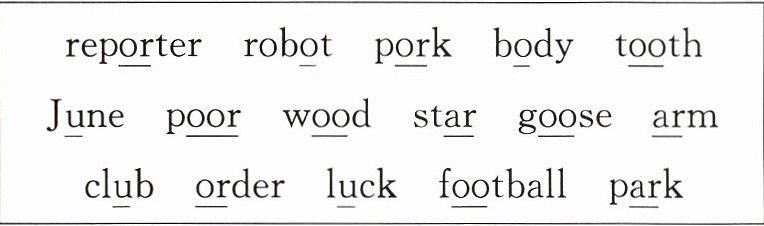 star goose arm
club order luck football park
1. /ɔː/
2. /ɒ/
3. /uː/
4. /ʊ/
5. /ɑː/
6. /ʌ/
reporter robot pork body tooth
June poor woo
star goose armclub order luck football park
1. /ɔː/
reporter pork poor order
2. /ɒ/
robot body
3. /uː/
tooth June goose
4. /ʊ/
wood football
5. /ɑː/
star arm park
6. /ʌ/
club luck
答案
1. reporter pork poor order
2. robot body
3. tooth June goose
4. wood football
5. star arm park
6. club luck
2. robot body
3. tooth June goose
4. wood football
5. star arm park
6. club luck
解析
【分析】
要完成本题,需先确定每个单词画线部分的读音,再将读音匹配的单词归类到对应音标类别中。步骤为:1. 逐个读出单词,明确画线部分的发音;2. 对照题目给出的音标,把发音一致的单词分到对应类别;3. 核对所有单词,确保分类准确。
【解析】
1. /ɔː/:reporter中or发/ɔː/,pork中or发/ɔː/,poor中oor发/ɔː/,order中or发/ɔː/,因此这些单词属于该类别;
2. /ɒ/:robot中o发/ɒ/,body中o发/ɒ/,属于该类别;
3. /uː/:tooth中oo发/uː/,June中u发/uː/,goose中oo发/uː/,属于该类别;
4. /ʊ/:wood中oo发/ʊ/,football中oo发/ʊ/,属于该类别;
5. /ɑː/:star中ar发/ɑː/,arm中ar发/ɑː/,park中ar发/ɑː/,属于该类别;
6. /ʌ/:club中u发/ʌ/,luck中u发/ʌ/,属于该类别。
【答案】
1. reporter, pork, poor, order;2. robot, body;3. tooth, June, goose;4. wood, football;5. star, arm, park;6. club, luck
【知识点】
英语单词读音、音标分类、元音发音
【点评】
本题考查基础英语单词中元音字母及组合的发音,是音标学习的常见题型,需学生掌握常见单词的读音。
【难度系数】
0.4
要完成本题,需先确定每个单词画线部分的读音,再将读音匹配的单词归类到对应音标类别中。步骤为:1. 逐个读出单词,明确画线部分的发音;2. 对照题目给出的音标,把发音一致的单词分到对应类别;3. 核对所有单词,确保分类准确。
【解析】
1. /ɔː/:reporter中or发/ɔː/,pork中or发/ɔː/,poor中oor发/ɔː/,order中or发/ɔː/,因此这些单词属于该类别;
2. /ɒ/:robot中o发/ɒ/,body中o发/ɒ/,属于该类别;
3. /uː/:tooth中oo发/uː/,June中u发/uː/,goose中oo发/uː/,属于该类别;
4. /ʊ/:wood中oo发/ʊ/,football中oo发/ʊ/,属于该类别;
5. /ɑː/:star中ar发/ɑː/,arm中ar发/ɑː/,park中ar发/ɑː/,属于该类别;
6. /ʌ/:club中u发/ʌ/,luck中u发/ʌ/,属于该类别。
【答案】
1. reporter, pork, poor, order;2. robot, body;3. tooth, June, goose;4. wood, football;5. star, arm, park;6. club, luck
【知识点】
英语单词读音、音标分类、元音发音
【点评】
本题考查基础英语单词中元音字母及组合的发音,是音标学习的常见题型,需学生掌握常见单词的读音。
【难度系数】
0.4
三、根据对话内容,在合适位置标出停顿符号。(短暂停顿用“|”,较长停顿用“||”)
Jane: Dad, can we go camping this Sunday?
Dad: Sure, dear. But we need to prepare some food first. Would you like to help with making sandwiches or buying drinks?
Jane: I’d like to make sandwiches.
Dad: Great, Jane! You will make really delicious sandwiches.
Jane: Dad, can we go camping this Sunday?
Dad: Sure, dear. But we need to prepare some food first. Would you like to help with making sandwiches or buying drinks?
Jane: I’d like to make sandwiches.
Dad: Great, Jane! You will make really delicious sandwiches.
答案
Jane:Dad, | can we go camping | this Sunday?
Dad:Sure, | dear. || But we need to prepare some food first. || Would you like to help with making sandwiches | or buying drinks?
Jane: I’d like to make sandwiches.
Dad: Great, | Jane! || You make really delicious sandwiches.
Dad:Sure, | dear. || But we need to prepare some food first. || Would you like to help with making sandwiches | or buying drinks?
Jane: I’d like to make sandwiches.
Dad: Great, | Jane! || You make really delicious sandwiches.
解析
【分析】首先明确停顿符号的使用规则:短暂停顿“|”用于句子中较小的意群之间(如称呼后、短语间),较长停顿“||”用于句子间的逻辑转换处或较大的意群分隔处。解题时需先拆分每句的语义意群,再根据停顿规则标注对应符号。
【解析】逐句拆分意群并标注:
1. Jane的语句:称呼后用短暂停顿,“can we go camping”为谓语+宾语意群,“this Sunday”为时间状语意群,分别标注短暂停顿,故为:Jane:Dad, | can we go camping | this Sunday?
2. Dad的第一句:称呼后用短暂停顿,“Sure, dear”后语义转换用较长停顿,“But we need to prepare some food first”为独立意群,后接问句用较长停顿,“making sandwiches or buying drinks”为选择意群用短暂停顿,故为:Dad:Sure, | dear. || But we need to prepare some food first. || Would you like to help with making sandwiches | or buying drinks?
3. Jane的答语句意完整,无额外停顿,故为:Jane: I’d like to make sandwiches.
4. Dad的第二句:称呼后用短暂停顿,“Great, Jane”后语义转换用较长停顿,“You will make really delicious sandwiches”为完整意群,故为:Dad: Great, | Jane! || You will make really delicious sandwiches.
【答案】Jane:Dad, | can we go camping | this Sunday?
Dad:Sure, | dear. || But we need to prepare some food first. || Would you like to help with making sandwiches | or buying drinks?
Jane: I’d like to make sandwiches.
Dad: Great, | Jane! || You will make really delicious sandwiches.
【知识点】英语口语停顿、意群划分
【点评】本题考查英语口语中依据意群划分停顿的基础应用,帮助学生掌握口语表达的停顿技巧,难度较低。
【难度系数】0.8
【解析】逐句拆分意群并标注:
1. Jane的语句:称呼后用短暂停顿,“can we go camping”为谓语+宾语意群,“this Sunday”为时间状语意群,分别标注短暂停顿,故为:Jane:Dad, | can we go camping | this Sunday?
2. Dad的第一句:称呼后用短暂停顿,“Sure, dear”后语义转换用较长停顿,“But we need to prepare some food first”为独立意群,后接问句用较长停顿,“making sandwiches or buying drinks”为选择意群用短暂停顿,故为:Dad:Sure, | dear. || But we need to prepare some food first. || Would you like to help with making sandwiches | or buying drinks?
3. Jane的答语句意完整,无额外停顿,故为:Jane: I’d like to make sandwiches.
4. Dad的第二句:称呼后用短暂停顿,“Great, Jane”后语义转换用较长停顿,“You will make really delicious sandwiches”为完整意群,故为:Dad: Great, | Jane! || You will make really delicious sandwiches.
【答案】Jane:Dad, | can we go camping | this Sunday?
Dad:Sure, | dear. || But we need to prepare some food first. || Would you like to help with making sandwiches | or buying drinks?
Jane: I’d like to make sandwiches.
Dad: Great, | Jane! || You will make really delicious sandwiches.
【知识点】英语口语停顿、意群划分
【点评】本题考查英语口语中依据意群划分停顿的基础应用,帮助学生掌握口语表达的停顿技巧,难度较低。
【难度系数】0.8
四、根据括号内的汉语提示填空。
1. We'll
2. Standing on the
3. Sam's parents are talking in the room while Sam is
4. If everyone tries to
5. Mary spent hours in the
6. The mother walked into the
1. We'll
invite
(邀请)all our friends to our new house-warming party.2. Standing on the
balcony
(阳台), we can enjoy the landscape of the city.3. Sam's parents are talking in the room while Sam is
packing
(打包)for a trip.4. If everyone tries to
sort
(把……分类)litter, the world will become much better.5. Mary spent hours in the
bathroom
(洗手间)making up to get ready for the party.6. The mother walked into the
bedroom
(卧室)quietly because the baby was sleeping.答案
1. invite 2. balcony 3. packing 4. sort 5. bathroom 6. bedroom
解析
【分析】
本题为根据汉语提示完成英语句子的填空题,解题思路是:先通读句子理解语境,再结合括号内的汉语释义确定所需单词,同时根据句子的语法结构(如时态、固定搭配、词性要求)调整单词的正确形式,确保填入的单词符合句子逻辑和语法规则。
【解析】
1. 句中助动词will后需接动词原形,“邀请”对应的英语动词为invite,故填invite;
2. “阳台”对应的英语名词为balcony,符合“站在阳台上欣赏城市风景”的语境,故填balcony;
3. 句子为现在进行时(结构:be + 现在分词),“打包”的现在分词形式为packing,故填packing;
4. 固定搭配try to do sth中,to后接动词原形,“把……分类”对应的英语动词为sort,故填sort;
5. “洗手间”对应的英语名词为bathroom,符合“在洗手间化妆准备派对”的语境,故填bathroom;
6. “卧室”对应的英语名词为bedroom,结合“宝宝在睡觉,妈妈轻手轻脚进入”的语境,故填bedroom。
【答案】
1. invite 2. balcony 3. packing 4. sort 5. bathroom 6. bedroom
【知识点】
英语词汇运用、动词形式变化
【点评】
本题考查基础英语词汇的识记与运用,涉及动词原形、现在分词等基本语法形式,属于英语基础题型,侧重考查学生对核心词汇的掌握程度。
【难度系数】
0.8
本题为根据汉语提示完成英语句子的填空题,解题思路是:先通读句子理解语境,再结合括号内的汉语释义确定所需单词,同时根据句子的语法结构(如时态、固定搭配、词性要求)调整单词的正确形式,确保填入的单词符合句子逻辑和语法规则。
【解析】
1. 句中助动词will后需接动词原形,“邀请”对应的英语动词为invite,故填invite;
2. “阳台”对应的英语名词为balcony,符合“站在阳台上欣赏城市风景”的语境,故填balcony;
3. 句子为现在进行时(结构:be + 现在分词),“打包”的现在分词形式为packing,故填packing;
4. 固定搭配try to do sth中,to后接动词原形,“把……分类”对应的英语动词为sort,故填sort;
5. “洗手间”对应的英语名词为bathroom,符合“在洗手间化妆准备派对”的语境,故填bathroom;
6. “卧室”对应的英语名词为bedroom,结合“宝宝在睡觉,妈妈轻手轻脚进入”的语境,故填bedroom。
【答案】
1. invite 2. balcony 3. packing 4. sort 5. bathroom 6. bedroom
【知识点】
英语词汇运用、动词形式变化
【点评】
本题考查基础英语词汇的识记与运用,涉及动词原形、现在分词等基本语法形式,属于英语基础题型,侧重考查学生对核心词汇的掌握程度。
【难度系数】
0.8
五、从方框中选择适当的短语并用其正确形式填空。
hang up clean up living room
hang out pack up
1. I like to
2. You should
3. We need
4. Mum puts fresh flowers in the
5. I decided
hang up clean up living room
hang out pack up
1. I like to
hang out
with my dog in the backyard on sunny days.2. You should
clean up
your desk before you leave the classroom.3. We need
to pack up
our camping things before it starts to rain.4. Mum puts fresh flowers in the
living room
to make it more beautiful.5. I decided
to hang up
some paintings on the wall to decorate(装饰) the room.答案
1. hang out 2. clean up 3. to pack up 4. living room 5. to hang up
解析
【分析】首先明确方框内各短语的含义及用法:hang up(悬挂)、clean up(清理)、living room(客厅)、hang out(闲逛)、pack up(收拾)。接着分析每个句子的语境,判断所需短语,再结合句子的语法结构(如like to do、should do、need to do、decide to do等)确定短语的正确形式,完成填空。
【解析】1. 句意为“晴天我喜欢和狗在后院闲逛”,hang out表示“闲逛”,符合语境,like to后接动词原形,故填hang out。2. 句意为“离开教室前你应该清理你的桌子”,clean up表示“清理”,should后接动词原形,故填clean up。3. 句意为“下雨前我们需要收拾露营用品”,pack up表示“收拾”,need to do是固定结构,故填to pack up。4. 句意为“妈妈把鲜花放在客厅让它更漂亮”,living room是名词短语“客厅”,符合语境,直接填入。5. 句意为“我决定在墙上挂一些画装饰房间”,hang up表示“悬挂”,decide to do是固定结构,故填to hang up。
【答案】1. hang out 2. clean up 3. to pack up 4. living room 5. to hang up
【知识点】动词短语辨析、动词不定式、名词短语
【点评】本题考查常用短语的词义辨析及语境运用,涉及多个固定搭配,属于基础题型,侧重对短语用法的掌握。
【难度系数】0.7
【解析】1. 句意为“晴天我喜欢和狗在后院闲逛”,hang out表示“闲逛”,符合语境,like to后接动词原形,故填hang out。2. 句意为“离开教室前你应该清理你的桌子”,clean up表示“清理”,should后接动词原形,故填clean up。3. 句意为“下雨前我们需要收拾露营用品”,pack up表示“收拾”,need to do是固定结构,故填to pack up。4. 句意为“妈妈把鲜花放在客厅让它更漂亮”,living room是名词短语“客厅”,符合语境,直接填入。5. 句意为“我决定在墙上挂一些画装饰房间”,hang up表示“悬挂”,decide to do是固定结构,故填to hang up。
【答案】1. hang out 2. clean up 3. to pack up 4. living room 5. to hang up
【知识点】动词短语辨析、动词不定式、名词短语
【点评】本题考查常用短语的词义辨析及语境运用,涉及多个固定搭配,属于基础题型,侧重对短语用法的掌握。
【难度系数】0.7
六、阅读理解。
Mrs Lin has three children and she makes them do housework. However, her mother-in-law(婆婆)doesn’t agree with her. She thinks Mrs Lin is too harsh and it is not the kids’ job to do housework.
Mrs Lin thinks their house is a place where all family members feel at home. No one in the family is more important than others, so each member should help with chores. She doesn’t ask her children to do the same chores, because their ages are different.
At the end of the day, after the kids finish playing with their toys, Mrs Lin asks them to put the toys away. If they don’t, they will have to say goodbye to their toys. Mrs Lin also asks her children to set the table at night and help clean the bathroom. She doesn’t think she is asking too much.
Mrs Lin knows the kids are tired after a long day’s study at school, but that’s life—harsh but real. She doesn’t want pay(付费)them for doing some chores. They live in the house, so they should help out with some things in the house. No one is going to pay them for cleaning up their rooms later in life and she is not about to start doing it now.
Some parents protect(保护)their children too much from anything hard and make their children’s lives too comfortable and safe, but Mrs Lin is not interested in that way. She hopes her children are able to look after themselves and to be independent(独立的)early.
1. What can we learn about Mrs Lin’s mother-in-law?
A. She doesn’t like doing housework.
B. She doesn’t get on well with the kids.
C. She doesn’t want Mrs Lin to do housework.
D. She doesn’t want the children to do housework.
2. The underlined word “harsh” in Paragraph 1 means “”.
A. unkind
B. angry
C. strange
D. comfortable
3. When Mrs Lin asks her children to do chores, .
A. she asks them to do different ones
B. she asks her mother-in-law for advice
C. she often asks them to do the hard ones
D. she often pays them some money at first
4. What does the underlined word “it” in Paragraph 4 refer to?
A. Paying the kids for cleaning up their rooms.
B. Protecting the kids too much from anything hard.
C. Making the children’s lives too comfortable and safe.
D. Asking the kids to help out with some things in the house.
5. What does the writer want to tell us in the last paragraph?
A. Parents should protect children.
B. It’s hard for parents to do all the chores at home.
C. Parents should help children become independent.
D. Children should be able to understand their parents.

Mrs Lin has three children and she makes them do housework. However, her mother-in-law(婆婆)doesn’t agree with her. She thinks Mrs Lin is too harsh and it is not the kids’ job to do housework.
Mrs Lin thinks their house is a place where all family members feel at home. No one in the family is more important than others, so each member should help with chores. She doesn’t ask her children to do the same chores, because their ages are different.
At the end of the day, after the kids finish playing with their toys, Mrs Lin asks them to put the toys away. If they don’t, they will have to say goodbye to their toys. Mrs Lin also asks her children to set the table at night and help clean the bathroom. She doesn’t think she is asking too much.
Mrs Lin knows the kids are tired after a long day’s study at school, but that’s life—harsh but real. She doesn’t want pay(付费)them for doing some chores. They live in the house, so they should help out with some things in the house. No one is going to pay them for cleaning up their rooms later in life and she is not about to start doing it now.
Some parents protect(保护)their children too much from anything hard and make their children’s lives too comfortable and safe, but Mrs Lin is not interested in that way. She hopes her children are able to look after themselves and to be independent(独立的)early.
1. What can we learn about Mrs Lin’s mother-in-law?
A. She doesn’t like doing housework.
B. She doesn’t get on well with the kids.
C. She doesn’t want Mrs Lin to do housework.
D. She doesn’t want the children to do housework.
2. The underlined word “harsh” in Paragraph 1 means “”.
A. unkind
B. angry
C. strange
D. comfortable
3. When Mrs Lin asks her children to do chores, .
A. she asks them to do different ones
B. she asks her mother-in-law for advice
C. she often asks them to do the hard ones
D. she often pays them some money at first
4. What does the underlined word “it” in Paragraph 4 refer to?
A. Paying the kids for cleaning up their rooms.
B. Protecting the kids too much from anything hard.
C. Making the children’s lives too comfortable and safe.
D. Asking the kids to help out with some things in the house.
5. What does the writer want to tell us in the last paragraph?
A. Parents should protect children.
B. It’s hard for parents to do all the chores at home.
C. Parents should help children become independent.
D. Children should be able to understand their parents.
答案
1-5 DAAAC
解析
【分析】
这是一篇关于家庭教育的英语阅读理解题,共5道题,涵盖细节理解、词义猜测考点。解题思路为:先通读全文把握主旨(林太太让孩子做家务以培养独立性,婆婆对此不赞同),再针对每道题回到原文定位相关语句,结合语境分析选项,选出正确答案。
【解析】
1. 细节理解题:根据第一段“her mother-in-law doesn’t agree with her. She thinks Mrs Lin is too harsh and it is not the kids’ job to do housework.”可知,婆婆认为孩子不该做家务,对应选项D。
2. 词义猜测题:结合上下文,婆婆反对林太太让孩子做家务,说她太“harsh”,林太太认为家庭成员应分担家务,故“harsh”在此处意为“苛刻的、不友善的”,对应选项A。
3. 细节理解题:根据第二段“She doesn’t ask her children to do the same chores, because their ages are different.”可知,林太太让孩子做不同的家务,对应选项A。
4. 词义猜测题:根据第四段“She doesn’t want pay them for doing some chores... No one is going to pay them for cleaning up their rooms later in life and she is not about to start doing it now.”可知,“it”指代“付费给孩子做家务”,对应选项A。
5. 细节理解题:最后一段“She hopes her children are able to look after themselves and to be independent early.”表明作者想传达父母应帮助孩子独立的观点,对应选项C。
【答案】
DAAAC
【知识点】
阅读理解、细节理解、词义猜测
【点评】
本文围绕“培养孩子独立性”的家庭教育话题展开,题目设置结合原文细节与词义语境分析,需学生准确提取信息、理解上下文逻辑,是适合初中阶段的常规阅读理解题型。
【难度系数】
0.6
这是一篇关于家庭教育的英语阅读理解题,共5道题,涵盖细节理解、词义猜测考点。解题思路为:先通读全文把握主旨(林太太让孩子做家务以培养独立性,婆婆对此不赞同),再针对每道题回到原文定位相关语句,结合语境分析选项,选出正确答案。
【解析】
1. 细节理解题:根据第一段“her mother-in-law doesn’t agree with her. She thinks Mrs Lin is too harsh and it is not the kids’ job to do housework.”可知,婆婆认为孩子不该做家务,对应选项D。
2. 词义猜测题:结合上下文,婆婆反对林太太让孩子做家务,说她太“harsh”,林太太认为家庭成员应分担家务,故“harsh”在此处意为“苛刻的、不友善的”,对应选项A。
3. 细节理解题:根据第二段“She doesn’t ask her children to do the same chores, because their ages are different.”可知,林太太让孩子做不同的家务,对应选项A。
4. 词义猜测题:根据第四段“She doesn’t want pay them for doing some chores... No one is going to pay them for cleaning up their rooms later in life and she is not about to start doing it now.”可知,“it”指代“付费给孩子做家务”,对应选项A。
5. 细节理解题:最后一段“She hopes her children are able to look after themselves and to be independent early.”表明作者想传达父母应帮助孩子独立的观点,对应选项C。
【答案】
DAAAC
【知识点】
阅读理解、细节理解、词义猜测
【点评】
本文围绕“培养孩子独立性”的家庭教育话题展开,题目设置结合原文细节与词义语境分析,需学生准确提取信息、理解上下文逻辑,是适合初中阶段的常规阅读理解题型。
【难度系数】
0.6
