

 登录
登录
AI DPSK原创 新素材 素材来源: Globe Trottin’
Kids
[2025 原创] Do you know that houses around the world look very different? They show us about cultures, weather, and materials. Let’s travel and see some interesting homes!
First, in North America, we find cozy log cabins. These lovely houses are made from wood logs. Early settlers built them in places like the USA. They feel warm and perfect for cold days. Next, in Europe, we see charming stone cottages. These old homes are made of strong stone, often with pretty gardens. You can find them in England. They look like something from a fairy tale! Then, in Asia, look at the colourful stilt houses. They stand high on wooden legs in countries like Vietnam. They help them stay safe from floods and keeps them cool. Their designs are full of culture. In Africa, some people live in nomadic tents. These special homes are made of fabric. Tribes use them. They can easily move their tents when they travel. Down in Australia, there are modern outback homesteads. These houses are in the big, hot desert. They are built to deal with the harsh weather and often use solar power. Our last stop is South America, where we see adobe houses. These traditional homes are made from special bricks of soil and straw. They keep the inside cool when hot and warm when cold.
So, homes are very diverse, just like people! Each house tells a story about the place and the people. No matter what a home looks like, the most important thing is the love inside it.
(
A. Size. B. Age.
C. Time. D. Places.
(
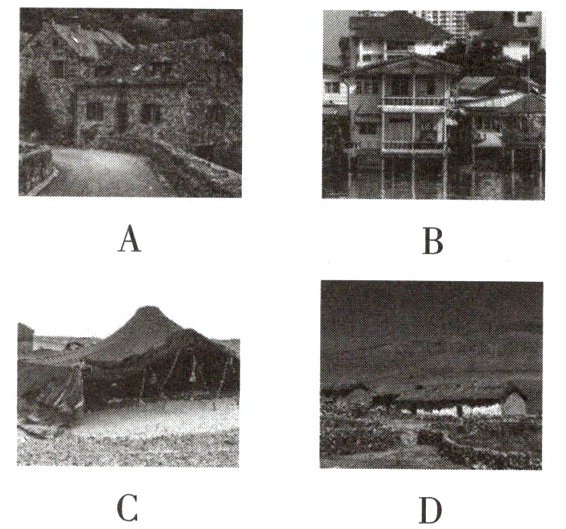
(
A. Stilt houses help people stay safe from floods.
B. Log cabins are mainly found in Asian countries.
C. Adobe houses can only keep people warm in winter.
D. Stone cottages in Europe are made from wood materials.
(
A. Expensive. B. Similar.
C. Different. D. Strong.
(
A. Modern houses are better than traditional ones.
B. All people should live in the same type of house.
C. Different cultures create different types of homes.
D. Weather is the most important factor in house building.
Kids
[2025 原创] Do you know that houses around the world look very different? They show us about cultures, weather, and materials. Let’s travel and see some interesting homes!
First, in North America, we find cozy log cabins. These lovely houses are made from wood logs. Early settlers built them in places like the USA. They feel warm and perfect for cold days. Next, in Europe, we see charming stone cottages. These old homes are made of strong stone, often with pretty gardens. You can find them in England. They look like something from a fairy tale! Then, in Asia, look at the colourful stilt houses. They stand high on wooden legs in countries like Vietnam. They help them stay safe from floods and keeps them cool. Their designs are full of culture. In Africa, some people live in nomadic tents. These special homes are made of fabric. Tribes use them. They can easily move their tents when they travel. Down in Australia, there are modern outback homesteads. These houses are in the big, hot desert. They are built to deal with the harsh weather and often use solar power. Our last stop is South America, where we see adobe houses. These traditional homes are made from special bricks of soil and straw. They keep the inside cool when hot and warm when cold.
So, homes are very diverse, just like people! Each house tells a story about the place and the people. No matter what a home looks like, the most important thing is the love inside it.
(
D
) 1. 新考法写作顺序 In what order does the passage introduce different houses?A. Size. B. Age.
C. Time. D. Places.
(
C
)2. 新考法图示理解 Which of the following is the house that African people live in?(
A
)3. Which of the following is true according to the passage?A. Stilt houses help people stay safe from floods.
B. Log cabins are mainly found in Asian countries.
C. Adobe houses can only keep people warm in winter.
D. Stone cottages in Europe are made from wood materials.
(
C
)4. What does the underlined word “diverse” mean?A. Expensive. B. Similar.
C. Different. D. Strong.
(
C
)5. What is the main message of the passage?A. Modern houses are better than traditional ones.
B. All people should live in the same type of house.
C. Different cultures create different types of homes.
D. Weather is the most important factor in house building.
答案
快速对答案 1—5 D C A C C
1. D 推理判断题。通读全文可知,文章按照地理位置的顺序介绍了不同地区的房屋。故选D项。
2. C 细节理解题。根据"In Africa, some people live in nomadic tents. These special homes are made of fabric."可知选C项。
3. A 细节理解题。根据"Then, in Asia, look at the colourful stilt houses. They stand high on wooden legs... stay safe from floods..."可知选A项。
4. C 词义猜测题。上文列举了世界各地不同类型的房屋,这说明房屋是多种多样的,结合just like people可知,diverse在此处意为"不同的"。故选C项。
5. C 主旨大意题。根据文章内容尤其是第一段的"Do you know that houses around the world look very different? They show us about cultures, weather, and materials."可知选C项。
1. D 推理判断题。通读全文可知,文章按照地理位置的顺序介绍了不同地区的房屋。故选D项。
2. C 细节理解题。根据"In Africa, some people live in nomadic tents. These special homes are made of fabric."可知选C项。
3. A 细节理解题。根据"Then, in Asia, look at the colourful stilt houses. They stand high on wooden legs... stay safe from floods..."可知选A项。
4. C 词义猜测题。上文列举了世界各地不同类型的房屋,这说明房屋是多种多样的,结合just like people可知,diverse在此处意为"不同的"。故选C项。
5. C 主旨大意题。根据文章内容尤其是第一段的"Do you know that houses around the world look very different? They show us about cultures, weather, and materials."可知选C项。
解析
【分析】
要解答这5道题,需结合文章内容逐一分析:
1. 第1题考查写作顺序,通读全文,文章依次介绍了北美洲、欧洲、亚洲、非洲、澳大利亚、南美洲的房屋,是按地理位置(地点)顺序展开,据此判断选项。
2. 第2题考查图示理解,需定位文中关于非洲房屋的描述,找到对应图示。
3. 第3题是细节理解题,需逐一核对每个选项与原文表述是否一致,排除错误选项。
4. 第4题是词义猜测题,结合前文列举的不同房屋的特点,推断“diverse”的含义。
5. 第5题考查主旨大意,需梳理文章核心内容,归纳主旨。
【解析】
1. 第1题:通读全文,文章按“北美洲→欧洲→亚洲→非洲→澳大利亚→南美洲”的地理位置顺序介绍不同地区的房屋,因此写作顺序为地点顺序,故选D。
2. 第2题:根据文中“In Africa, some people live in nomadic tents.”可知,非洲人居住的是游牧帐篷,对应图示中的C选项(帐篷),故选C。
3. 第3题:逐一分析选项:A项,文中提到亚洲的高脚屋“stay safe from floods”,表述正确;B项,木屋主要分布在北美洲,而非亚洲,错误;C项,土坯房能冬暖夏凉,并非仅保暖,错误;D项,欧洲石屋由石头制成,而非木头,错误。故选A。
4. 第4题:前文列举了世界各地不同类型的房屋,结合“just like people”可推断,“diverse”意为“不同的”,故选C。
5. 第5题:文章围绕“世界各地房屋不同,反映当地文化、天气与材料”展开,主旨是不同文化创造不同类型的房屋,故选C。
【答案】
D C A C C
【知识点】
阅读理解(细节理解、主旨大意),词义猜测,写作顺序
【点评】
本题是一篇介绍世界各地特色房屋的文化类阅读理解题,涵盖细节理解、推理判断、词义猜测、主旨大意及图示理解题型,考查学生对文章信息的提取、逻辑推理及主旨归纳能力,内容贴近生活,难度适中,能帮助学生巩固阅读理解的核心解题技能。
【难度系数】
0.7
要解答这5道题,需结合文章内容逐一分析:
1. 第1题考查写作顺序,通读全文,文章依次介绍了北美洲、欧洲、亚洲、非洲、澳大利亚、南美洲的房屋,是按地理位置(地点)顺序展开,据此判断选项。
2. 第2题考查图示理解,需定位文中关于非洲房屋的描述,找到对应图示。
3. 第3题是细节理解题,需逐一核对每个选项与原文表述是否一致,排除错误选项。
4. 第4题是词义猜测题,结合前文列举的不同房屋的特点,推断“diverse”的含义。
5. 第5题考查主旨大意,需梳理文章核心内容,归纳主旨。
【解析】
1. 第1题:通读全文,文章按“北美洲→欧洲→亚洲→非洲→澳大利亚→南美洲”的地理位置顺序介绍不同地区的房屋,因此写作顺序为地点顺序,故选D。
2. 第2题:根据文中“In Africa, some people live in nomadic tents.”可知,非洲人居住的是游牧帐篷,对应图示中的C选项(帐篷),故选C。
3. 第3题:逐一分析选项:A项,文中提到亚洲的高脚屋“stay safe from floods”,表述正确;B项,木屋主要分布在北美洲,而非亚洲,错误;C项,土坯房能冬暖夏凉,并非仅保暖,错误;D项,欧洲石屋由石头制成,而非木头,错误。故选A。
4. 第4题:前文列举了世界各地不同类型的房屋,结合“just like people”可推断,“diverse”意为“不同的”,故选C。
5. 第5题:文章围绕“世界各地房屋不同,反映当地文化、天气与材料”展开,主旨是不同文化创造不同类型的房屋,故选C。
【答案】
D C A C C
【知识点】
阅读理解(细节理解、主旨大意),词义猜测,写作顺序
【点评】
本题是一篇介绍世界各地特色房屋的文化类阅读理解题,涵盖细节理解、推理判断、词义猜测、主旨大意及图示理解题型,考查学生对文章信息的提取、逻辑推理及主旨归纳能力,内容贴近生活,难度适中,能帮助学生巩固阅读理解的核心解题技能。
【难度系数】
0.7
