

 登录
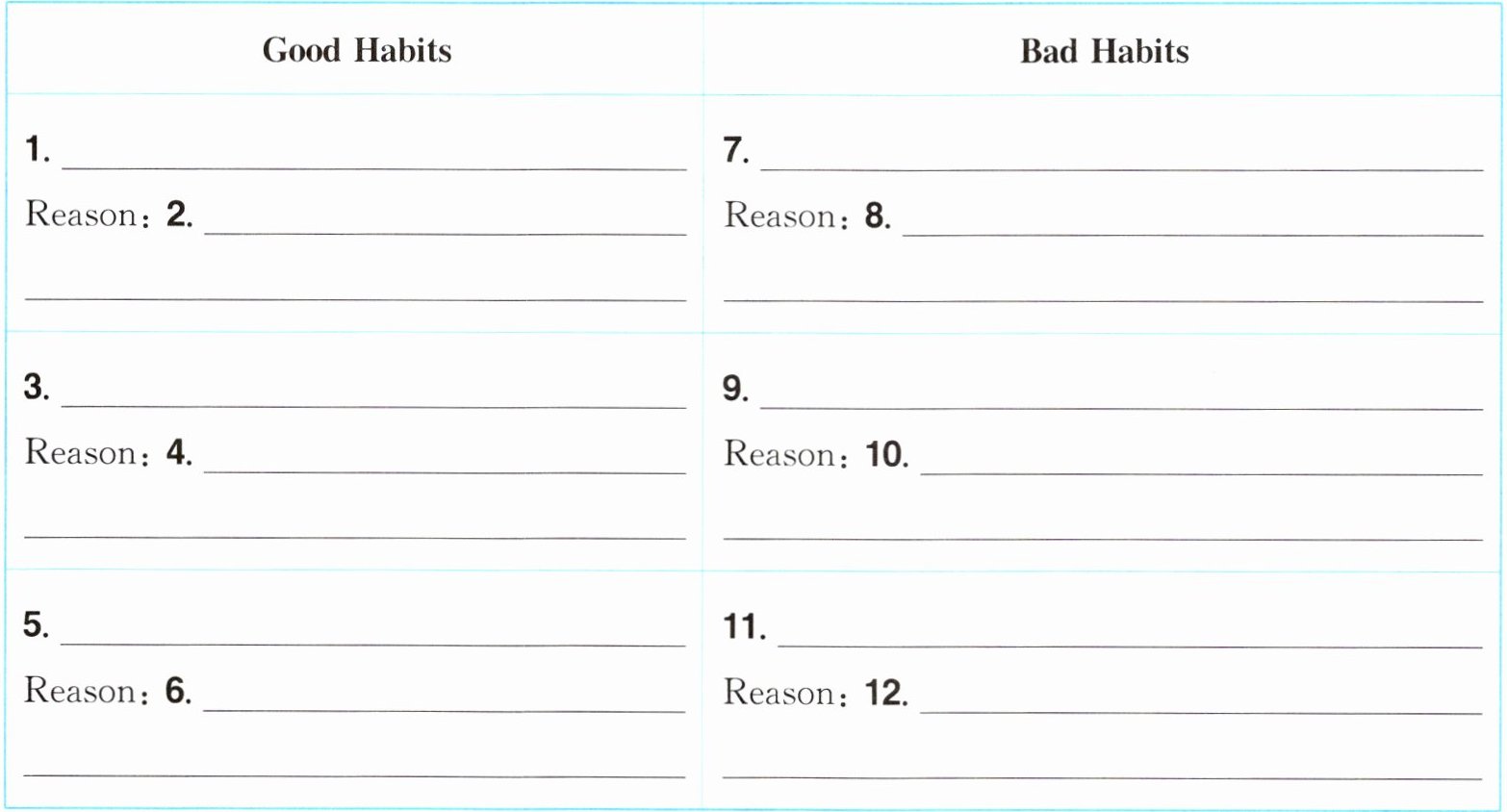
一 辨别习惯。观察下列图片中的行为,用1句话描述好习惯或坏习惯,并用1句话说明可以做或者不可以做的理由。

Good Habits
Bad Habits
1.
Reason: 2.
3.
Reason: 4.
5.
Reason: 6.
7.
Reason: 8.
9.
Reason: 10.
11.
Reason: 12.
Good Habits
Bad Habits
1.
Reason: 2.
3.
Reason: 4.
5.
Reason: 6.
7.
Reason: 8.
9.
Reason: 10.
11.
Reason: 12.
答案
1. Put school things in order.
2. It helps us keep things tidy for school.
3. Go to bed early.
4. It's good for our health.
5. Do exercise.
6. It makes us strong and healthy.
7. Read in bed.
8. It's bad for our eyes.
9. Climb trees.
10. It's dangerous and we may get hurt.
11. Not listening carefully in class.
12. We can't learn well if we don't listen carefully.
(答案不唯一,仅供参考)
解析
【分析】解题时,先明确题目要求:需区分行为属于好习惯还是坏习惯,用1句话描述该行为,再用1句话说明理由;接着结合日常常识判断行为属性,再组织符合英语表达的句子,好习惯说明益处,坏习惯说明弊端,确保句子准确简洁。
【解析】1. 该行为为好习惯,描述为Put school things in order;2. 理由是该行为能帮助我们为上学保持物品整洁,即It helps us keep things tidy for school;3. 该行为为好习惯,描述为Go to bed early;4. 理由是对健康有益,即It's good for our health;5. 该行为为好习惯,描述为Do exercise;6. 理由是能让我们强壮健康,即It makes us strong and healthy;7. 该行为为坏习惯,描述为Read in bed;8. 理由是对眼睛有害,即It's bad for our eyes;9. 该行为为坏习惯,描述为Climb trees;10. 理由是危险易受伤,即It's dangerous and we may get hurt;11. 该行为为坏习惯,描述为Not listening carefully in class;12. 理由是不认真听讲就学不好,即We can't learn well if we don't listen carefully。
【答案】1. Put school things in order.
2. It helps us keep things tidy for school.
3. Go to bed early.
4. It's good for our health.
5. Do exercise.
6. It makes us strong and healthy.
7. Read in bed.
8. It's bad for our eyes.
9. Climb trees.
10. It's dangerous and we may get hurt.
11. Not listening carefully in class.
12. We can't learn well if we don't listen carefully.
【知识点】英语日常表达、好习惯与坏习惯辨别
【点评】本题结合日常行为考察英语应用,贴近生活,难度较低,能帮助学生巩固日常英语表达和对好习惯、坏习惯的认知。
【难度系数】0.7
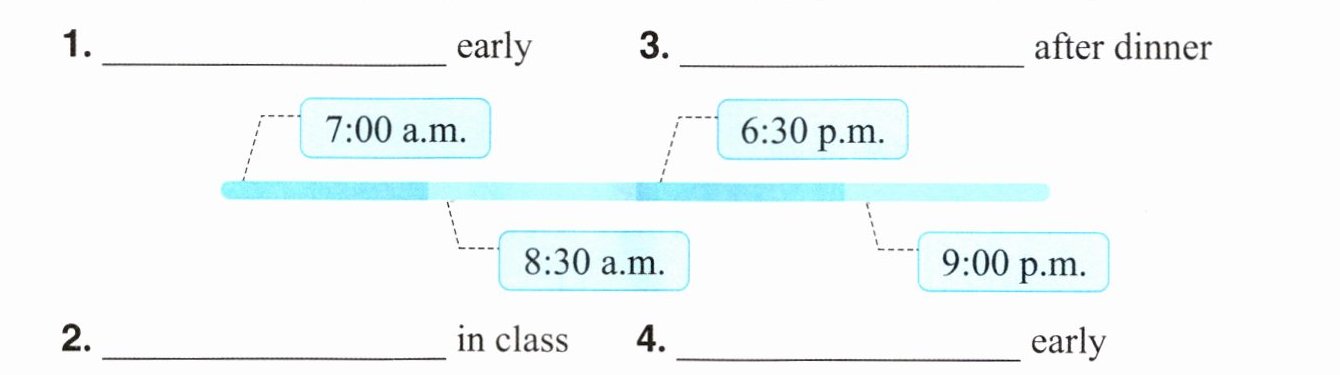
二 完成习惯时间轴。根据实际情况,完成你的日常习惯时间轴,再补全自我评价。
Self-evaluation:
5. I have
6. I want to break the habit of
Self-evaluation:
5. I have
good
habits. They make me healthy and happy
.6. I want to break the habit of
reading in bed
. Because it's bad for my eyes
.答案
1. get up
2. listen carefully
3. do homework
4. go to bed
5. good; healthy and happy
6. reading in bed; it's bad for my eyes
(答案不唯一,仅供参考)
2. listen carefully
3. do homework
4. go to bed
5. good; healthy and happy
6. reading in bed; it's bad for my eyes
(答案不唯一,仅供参考)
解析
【分析】首先观察时间轴的时间节点和对应描述:1. 7:00 a.m.对应early(早),早上7点的日常活动是起床;2. 8:30 a.m.对应in class(在课堂上),课堂常见行为是认真听讲;3. 6:30 p.m.对应after dinner(晚饭后),晚饭后常见活动是做作业;4. 9:00 p.m.对应early(早),晚上9点属于早睡时间;自我评价部分结合日常习惯填写,5题描述好习惯的影响,6题说出不良习惯及原因,答案不唯一。
【解析】1. 早上7点对应early的活动填get up(起床);2. 课堂上(in class)的常见行为填listen carefully(认真听讲);3. 晚饭后(after dinner)的常见活动填do homework(做作业);4. 晚上9点对应early的活动填go to bed(上床睡觉);5. 填表示“好的”形容词good,以及好习惯带来的结果healthy and happy(健康又快乐);6. 举例不良习惯如reading in bed(在床上读书),原因是it's bad for my eyes(对眼睛不好),答案不唯一。
【答案】1. get up;2. listen carefully;3. do homework;4. go to bed;5. good; healthy and happy;6. reading in bed; it's bad for my eyes(答案不唯一)
【知识点】日常习惯表达、时间相关短语、自我评价用语
【点评】本题结合日常作息时间,考查英语日常活动短语及自我评价简单句式,贴近生活,是基础练习。
【难度系数】0.3
