

 登录
三、信息还原
根据短文内容,从短文后的选项中选出填入空白处的最佳选项,选项中有两项为多余选项。
Ink brushes(毛笔)play an important part in Chinese culture. 1
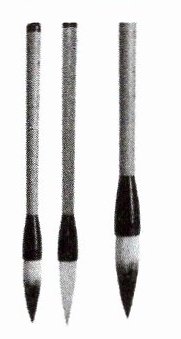
Xu Wenyi is from Wenzhou. He runs an ink brush shop with his two brothers. 2 Xu's father learned how to make the ink brush at 13,and ran the shop when he was ready. Xu also began to learn the skill at the same age. Xu and his brothers are the third generation(代)to run the family shop.
3 The first step is to choose the hair. Every winter,when animal hair is the best,Xu Wenyi goes to other cities to collect the hair. Next,Xu and his workers make the hair tidy. 4 After that,they cut the hair in different sizes. When the hair is finally ready,they think about other parts of an ink brush.
These days,the brothers try many new things. They make lanugo writing brushes(胎毛笔)and many new parents enjoy these brushes. The brothers also show how to make brushes in their shop. 5 Many culture lovers show great interest in the skill itself.
"We're happy to make good brushes for people," said Xu. "We want to pass on the skills if people are still writing with ink brushes. And we believe we can make better brushes by improving the skill."
A. Xu has rich experience in making ink brushes.
B. There are about 40 steps to make an ink brush.
C. Xu's grandfather set up(建立)the shop in 1900.
D. They are widely used in Chinese paintings and writings.
E. They sometimes bring their brushes to different cultural festivals.
F. It may take days,even a week,to get a small strand(缕)of brush hair.
G. The ink brushes are made of animal hair and the hair varies in different seasons.
1.
2.
3.
4.
5.
根据短文内容,从短文后的选项中选出填入空白处的最佳选项,选项中有两项为多余选项。
Ink brushes(毛笔)play an important part in Chinese culture. 1
Xu Wenyi is from Wenzhou. He runs an ink brush shop with his two brothers. 2 Xu's father learned how to make the ink brush at 13,and ran the shop when he was ready. Xu also began to learn the skill at the same age. Xu and his brothers are the third generation(代)to run the family shop.
3 The first step is to choose the hair. Every winter,when animal hair is the best,Xu Wenyi goes to other cities to collect the hair. Next,Xu and his workers make the hair tidy. 4 After that,they cut the hair in different sizes. When the hair is finally ready,they think about other parts of an ink brush.
These days,the brothers try many new things. They make lanugo writing brushes(胎毛笔)and many new parents enjoy these brushes. The brothers also show how to make brushes in their shop. 5 Many culture lovers show great interest in the skill itself.
"We're happy to make good brushes for people," said Xu. "We want to pass on the skills if people are still writing with ink brushes. And we believe we can make better brushes by improving the skill."
A. Xu has rich experience in making ink brushes.
B. There are about 40 steps to make an ink brush.
C. Xu's grandfather set up(建立)the shop in 1900.
D. They are widely used in Chinese paintings and writings.
E. They sometimes bring their brushes to different cultural festivals.
F. It may take days,even a week,to get a small strand(缕)of brush hair.
G. The ink brushes are made of animal hair and the hair varies in different seasons.
1.
D
2.
C
3.
B
4.
F
5.
E
答案
【文章大意】本文是一篇说明文,介绍了在中国文化中毛笔的重要性并讲述了许文义和他的兄弟经营毛笔店的故事。
1~5 DCBFE
1~5 DCBFE
解析
【分析】
本题为信息还原题(七选五),解题思路为:先通读全文把握主旨(介绍毛笔文化及许家制作毛笔的故事),再逐个分析每个空的前后语境,通过逻辑衔接、关键词对应匹配选项:1. 第1空需承接毛笔的重要性,说明其用途;2. 第2空需衔接店铺的传承,对应家族开店的起源;3. 第3空需总起做毛笔的步骤,引出下文的制作流程;4. 第4空需衔接整理毛笔毛到剪毛的过程,说明处理毛的耗时;5. 第5空需承接展示制作毛笔的行为,对应文化爱好者的兴趣。
【解析】
1. 第1空:前句提到“毛笔在中国文化中很重要”,选项D“它们被广泛用于中国画和书法”具体说明毛笔的用途,承接上文的重要性,故选D;
2. 第2空:前句说许家兄弟经营毛笔店,后句讲父亲学做毛笔,选项C“许的祖父在1900年建立了这家店”说明店铺的起源,对应后文的家族传承(父亲、第三代),故选C;
3. 第3空:后句开始介绍做毛笔的具体步骤,选项B“制作一支毛笔约有40个步骤”总起制作流程,引出下文的第一步选毛,故选B;
4. 第4空:前句提到“整理毛笔毛”,后句说“剪不同尺寸的毛”,选项F“一小缕毛笔毛可能需要花几天甚至一周的时间”说明处理毛的耗时,衔接整理毛到剪毛的过程,故选F;
5. 第5空:前句说兄弟在店里展示制作毛笔,后句提到文化爱好者对技艺感兴趣,选项E“他们有时带毛笔去不同的文化节日”是展示技艺的具体方式,承接上下文,故选E。
【答案】
1.D 2.C 3.B 4.F 5.E
【知识点】
信息还原题、语篇衔接、文化常识
【点评】
本题围绕中国传统毛笔文化展开,考查学生对语篇逻辑的理解和上下文衔接能力,需结合语境匹配选项,难度适中。
【难度系数】
0.5
