

 登录
登录
身心健康
Monday/Week 3
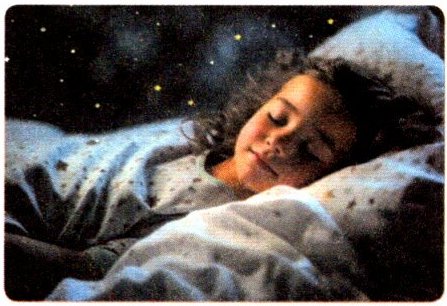
leep is important. It can make you happy, keep
you lively and help you focus. It's also the key
to children's brain development. Newborns
sleep most of their time.
However, although
lots of research has been
done into sleep in adults,
scientists know less about
sleep in young people aged
between 10 and 19. The period is an important
time for the development of people's brains, but this is
also a time when children tend to start going to bed later
and get less sleep.
To find out more about the influence sleep has on
children, researchers looked at data from a special
study. 3,222 children aged between 11 and 12 wore Fitbits
to record their sleeping situations. Fitbits are devices worn on the wrist, which is the part of your body
between your hand and your arm. They can tell when the
children fall asleep.
The children were put into three groups. Group 1
slept an average of 7 hours, 10 minutes per night. Group
2 slept an average of 7 hours, 21 minutes a night. Group 3
slept for an average of 7 hours and 25 minutes.
Across the three groups, there wasn't much difference
in the behavior of the children at school. But in reading
and problem-solving tests, there was a difference. Group
3 did better than Group 2, and Group 2 did better than
Group 1. This shows that good sleep can help the brain
work better.
Dr Wei Cheng, the researcher of the study, said, "We
need to look at why some children go to bed later and
sleep less than others. Is it because of video games or
phones, or their body clocks?"
▶题型: 阅读理解
▶主题: 生活习惯
▶语篇类型: 说明文
▶词数: 281
▶难度: ■■■■
▶建议用时: 6分钟
1 Why did researchers choose to study
11- to 12-year-olds?
A. Because they go to bed late.
B. Because they can use Fitbits.
C. Because their brains are developing.
D. Because they are easier to study.
2 Where should children wear Fitbits
when they sleep?
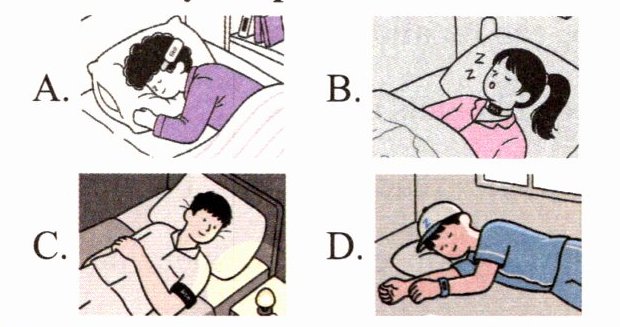
3 What did the study find about the
three groups' sleeping situations?
A. Group 1 slept the most at night.
B. Group 3 slept the most at night.
C. Group 1 slept longer than Group 2.
D. Group 2 slept longer than Group 3.
4 What do we know from the passage?
① Newborns sleep a lot.
② Sleep helps children focus in class.
③ Children need 7 hours of sleep
daily.
④ Good sleep improves problem-
solving skills.
A. ①②④ B. ①③④
C. ①②③ D. ②③④
5 In which part of a magazine can we
read this passage?
A. Art and people.
B. Life and health.
C. Language and culture.
D. Science and technology.
Monday/Week 3
leep is important. It can make you happy, keep
you lively and help you focus. It's also the key
to children's brain development. Newborns
sleep most of their time.
However, although
lots of research has been
done into sleep in adults,
scientists know less about
sleep in young people aged
between 10 and 19. The period is an important
time for the development of people's brains, but this is
also a time when children tend to start going to bed later
and get less sleep.
To find out more about the influence sleep has on
children, researchers looked at data from a special
study. 3,222 children aged between 11 and 12 wore Fitbits
to record their sleeping situations. Fitbits are devices worn on the wrist, which is the part of your body
between your hand and your arm. They can tell when the
children fall asleep.
The children were put into three groups. Group 1
slept an average of 7 hours, 10 minutes per night. Group
2 slept an average of 7 hours, 21 minutes a night. Group 3
slept for an average of 7 hours and 25 minutes.
Across the three groups, there wasn't much difference
in the behavior of the children at school. But in reading
and problem-solving tests, there was a difference. Group
3 did better than Group 2, and Group 2 did better than
Group 1. This shows that good sleep can help the brain
work better.
Dr Wei Cheng, the researcher of the study, said, "We
need to look at why some children go to bed later and
sleep less than others. Is it because of video games or
phones, or their body clocks?"
▶题型: 阅读理解
▶主题: 生活习惯
▶语篇类型: 说明文
▶词数: 281
▶难度: ■■■■
▶建议用时: 6分钟
1 Why did researchers choose to study
11- to 12-year-olds?
A. Because they go to bed late.
B. Because they can use Fitbits.
C. Because their brains are developing.
D. Because they are easier to study.
2 Where should children wear Fitbits
when they sleep?
3 What did the study find about the
three groups' sleeping situations?
A. Group 1 slept the most at night.
B. Group 3 slept the most at night.
C. Group 1 slept longer than Group 2.
D. Group 2 slept longer than Group 3.
4 What do we know from the passage?
① Newborns sleep a lot.
② Sleep helps children focus in class.
③ Children need 7 hours of sleep
daily.
④ Good sleep improves problem-
solving skills.
A. ①②④ B. ①③④
C. ①②③ D. ②③④
5 In which part of a magazine can we
read this passage?
A. Art and people.
B. Life and health.
C. Language and culture.
D. Science and technology.
答案
1. C 细节理解题。由第二段可知,科学家们对10到19岁的年轻人的睡眠知之甚少,这几年是大脑发育的重要时期。
2. D 图片配对题。由第三段第三句可知,Fitbits是一种佩戴在手和手臂之间的身体部位的设备,即手腕。wrist意为“手腕”。
3. B 推理判断题。由第四段最后三句可知,第一组平均每晚睡7小时10分钟;第二组平均每晚睡7小时21分钟;第三组平均每晚睡7小时25分钟。由此可推知,第三组晚上睡眠时间最长。
4. A 细节理解题。由第一段第二句可知,睡眠可以帮助人们集中注意力。由第一段最后一句可知,新生儿大部分时间都在睡觉。由倒数第二段第二、三句可知,每晚睡眠时间最长的第三组在阅读和问题解决测试中表现最好,由此可推知,好的睡眠能够改善问题解决能力。通读全文可知,文中未提及“孩子每天需要7小时睡眠”。
5. B 推理判断题。通读全文可知,本文主要围绕睡眠时长与儿童大脑功能的关系展开。由此可推知,本文属于生活和健康领域的内容。
2. D 图片配对题。由第三段第三句可知,Fitbits是一种佩戴在手和手臂之间的身体部位的设备,即手腕。wrist意为“手腕”。
3. B 推理判断题。由第四段最后三句可知,第一组平均每晚睡7小时10分钟;第二组平均每晚睡7小时21分钟;第三组平均每晚睡7小时25分钟。由此可推知,第三组晚上睡眠时间最长。
4. A 细节理解题。由第一段第二句可知,睡眠可以帮助人们集中注意力。由第一段最后一句可知,新生儿大部分时间都在睡觉。由倒数第二段第二、三句可知,每晚睡眠时间最长的第三组在阅读和问题解决测试中表现最好,由此可推知,好的睡眠能够改善问题解决能力。通读全文可知,文中未提及“孩子每天需要7小时睡眠”。
5. B 推理判断题。通读全文可知,本文主要围绕睡眠时长与儿童大脑功能的关系展开。由此可推知,本文属于生活和健康领域的内容。
